




Gilt Metal Hanging Lantern
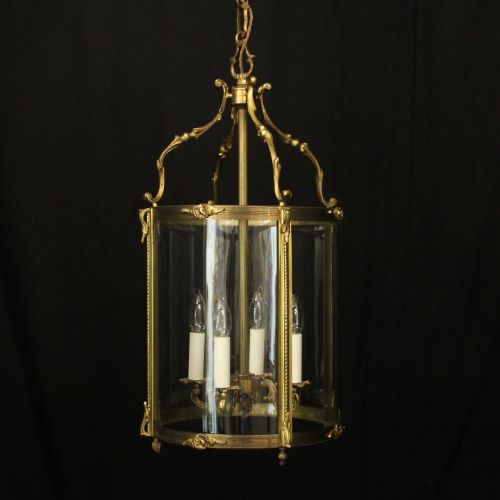
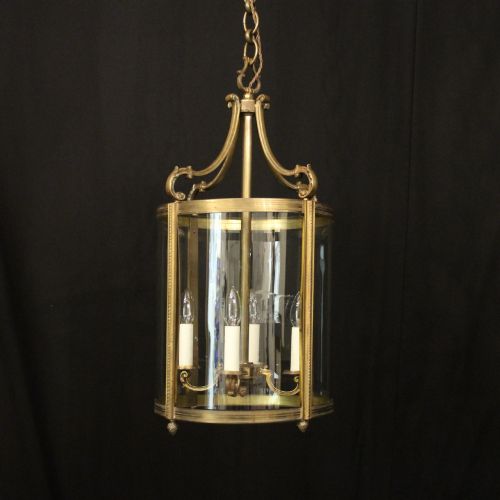
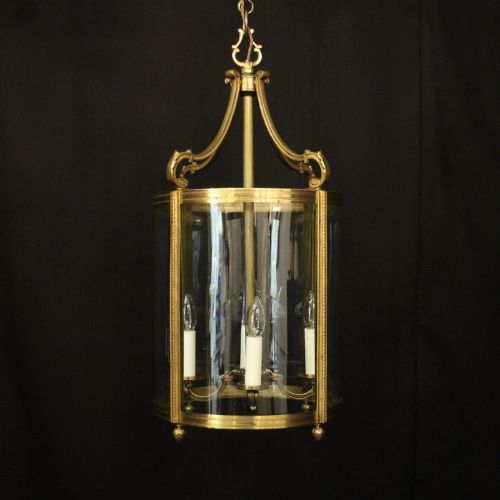
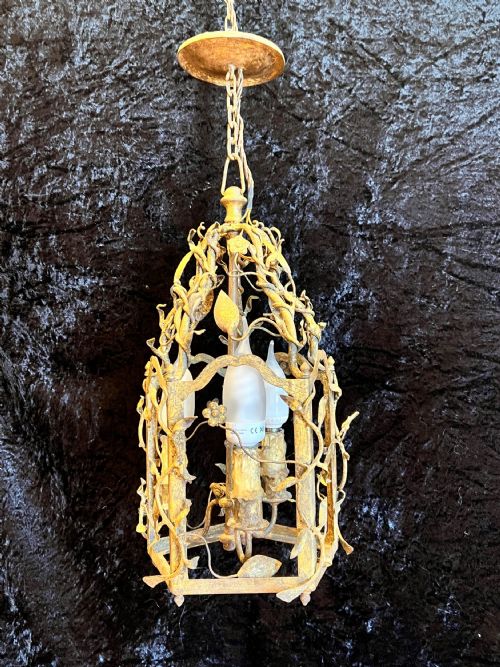
A gilt metal hanging lantern brings immediate warmth and architectural focus to an entrance hall, drawing the eye upwards with its polished metallic frame.

Gilt Metal Hanging Lantern
When you search for a gilt metal hanging lantern, you encounter overhead hall lighting primarily sourced from French and Italian workshops across the nineteenth and early twentieth centuries. These pieces typically take the form of hexagonal, convex, or multi-light pendant fixtures designed to illuminate vestibules and grand corridors.
Many of these hall lanterns and chandeliers draw direct inspiration from classical palace designs, notably Versailles, offering substantial decorative presence through cast metalwork and candle-arm configurations. Their primary function remains the provision of ambient overhead illumination within domestic circulation spaces.
How they were made
The construction relies heavily on cast bronze and brass frameworks that receive a surface application of gold leaf or gilt finish, providing a lustrous metallic sheen. Artisans assembled these structural cages to securely house individual glass panes, ranging from simple flat panels to complex bevelled and convex shapes.
Internal lighting components, whether configured for single bulbs or multiple candle arms, integrate directly into the central metal armature. Metal-working techniques include detailed chasing and casting of decorative motifs such as acanthus leaves, cartouches, and neoclassical ribbons.
One standout hexagonal lantern channels the grandeur of Versailles, proving that even a hallway light can nurture royal ambitions.
What varies in quality
The distinction between standard execution and superior craftsmanship lies in the crispness of the metal casting and the depth of the original gilding. Finer pieces display intricate hand-chased detail across the bronze or brass framework, whereas simpler examples rely on standard cast repetition without subsequent hand finish.
Glass selection significantly influences the character of the piece, with heavy bevelled or convex panes creating superior light refraction compared to plain flat glass. The structural integrity of the suspension loop and the thickness of the primary metal cage dictate the overall durability and balance of the hanging fixture.
The Gilt Metal Hanging Lantern Glossary
- Ormolu
- Gilded bronze, where finely ground gold-mercury amalgam is applied to a bronze base and fired. This technique produces a rich, matte yellow gold finish characteristic of fine decorative hardware.
- Bevelled glass
- Glass panes featuring an angled edge ground down along the perimeter. This treatment catches and refracts light into subtle prismatic colours.
- Convex glass
- Curved glass panels swelling outward from the frame. They project light more widely across an entryway than flat panes.
- French Louis XVI Style
- A neoclassical design vocabulary prioritising symmetry, straight lines, and classical motifs like urns and swags. It emerged during the late eighteenth century and saw frequent revivals.
- Chandelier
- A branched ceiling-mounted lighting fixture designed to hold multiple light sources. In historical contexts, these often share structural metal elements with enclosed lanterns.
Gilt Metal Hanging Lantern: Frequently Asked Questions
Where should a hanging lantern be placed?
These fixtures suit entrance halls, vestibules, and high-ceilinged landings where vertical clearance allows the piece to hang freely as a focal point.
Position them centrally in the space to ensure the light distributes evenly across surrounding architectural details and wall surfaces.
How do I determine the period of a lantern?
Dating relies on examining the casting techniques, the composition of the metal frame, and stylistic cues borrowed from specific revival periods like the nineteenth-century rococo or early twentieth-century neoclassical movements.
Inspect the assembly methods and screw types, as older handmade components differ significantly from later standardised manufacturing processes.
What is the difference between brass and bronze?
Bronze is an alloy primarily composed of copper and tin, offering high durability and a heavy feel, while brass is an alloy of copper and zinc with a brighter, yellower natural tone.
Both materials readily accept gold leaf or gilding, which unifies their surface appearance and protects the underlying metal from oxidation.
Are these lanterns wired for modern electricity?
Most surviving pieces have been retrofitted with internal electrical fittings to accommodate contemporary wiring standards while preserving the historic exterior framework.
Buyers should consult a qualified electrician to ensure the vintage suspension points and internal lamp holders meet current safety regulations.