

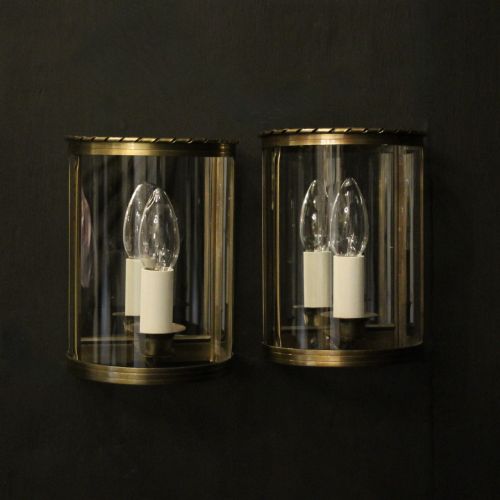
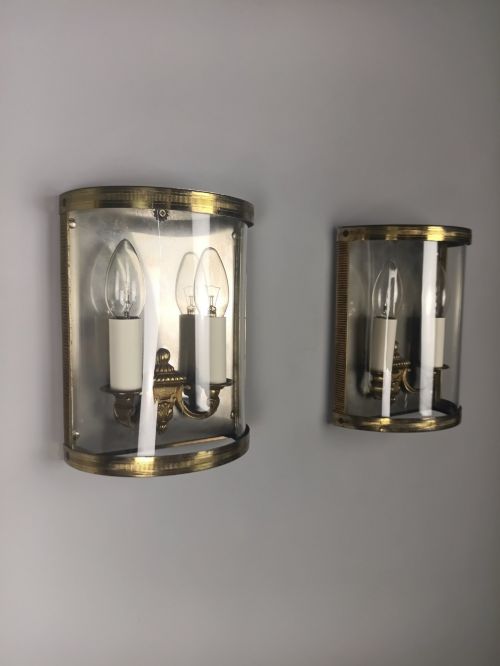
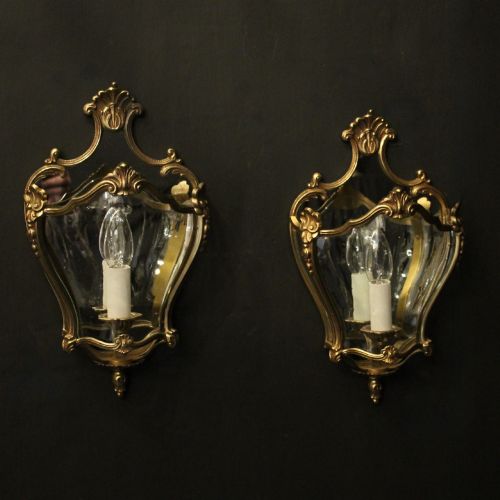


Pair French Lanterns
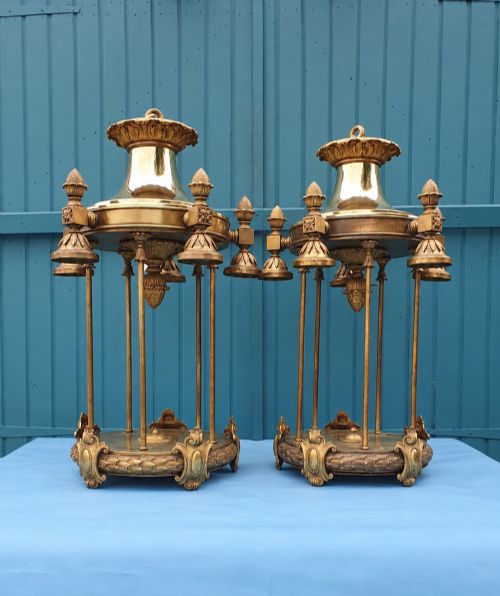
These pair french lanterns bring domestic illumination and architectural presence, combining metalwork and glass to shape light in an interior.
Pair French Lanterns
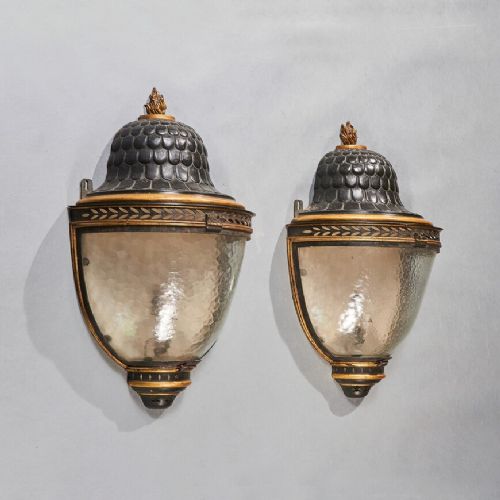
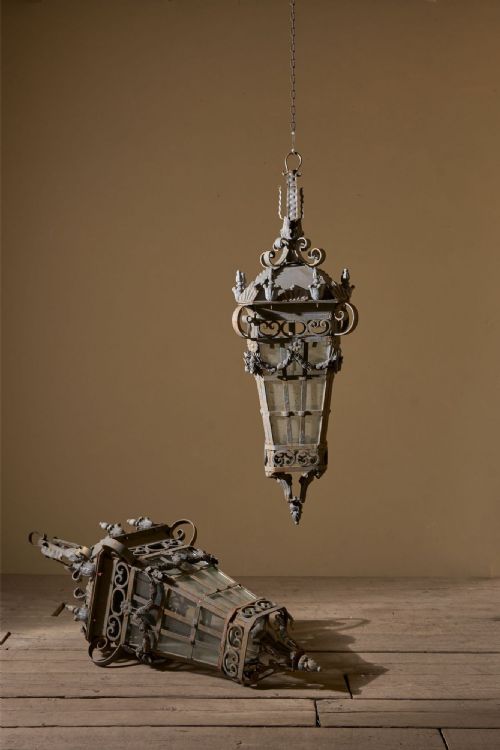
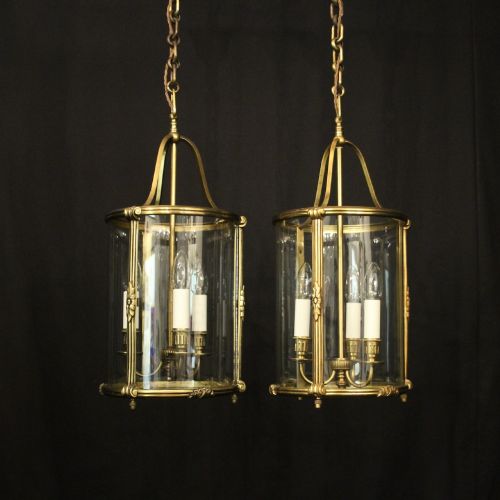
A buyer seeking pair french lanterns is looking at matched lighting fixtures designed to mount on walls or hang from ceilings. The phrase encompasses formats ranging from half lanterns and wall sconces to hanging hall lanterns and carriage lamps.
The versions met most frequently on this page span the nineteenth century and the early decades of the twentieth century, including the nineteen-hundreds, nineteen-twenties, and nineteen-thirties. These pieces emerge in styles reflecting French classical, neoclassical, empire, and chateau traditions.
Objects appear in configurations of single, twin, and triple lights, utilising glass panels that are flat, convex, or cut. The selection covers hallway fixtures, ceiling lights, and wall-mounted exterior or interior lighting.
How They Were Made
Construction relies heavily on metals combined with glass panes, utilising materials such as brass, bronze, gilded bronze, copper, steel, iron, zinc, and tole peinte. Metal frames are cast, forged, or soldered to hold curved and flat glass elements securely in place.
Surface finishes include parcel gilt, silver gilding, and patinated bronze, while tole lanterns incorporate painted tinplate. Components such as brackets, frames, and bezels demonstrate period metalworking methods suited to supporting weight and diffusing light.
Pair French Lanterns Retail Price Guide 2026
Typical asking prices for pair french lanterns among the pieces listed under this phrase on Sellingantiques today, from the lower quarter to the upper quarter. They describe what is for sale here now, not the wider market.
Some carriage lamps once lit horse-drawn journeys through French countryside before finding quiet retirement indoors.
What Varies in Quality
The hierarchy of quality rests on the precision of the metal casting and the finishing work applied to the frame. Heavier gauge metals, refined chased detailing on gilded bronze, and substantial mountings distinguish the upper tier of production from simpler utility pieces.
The integrity of the glass elements and the cohesion of the matched pair dictate overall desirability. Pairs that retain uniform patination, original mounting hardware, and well-preserved convex or cut glass demonstrate greater material integrity.
Daris
The Pair French Lanterns Glossary
- Half Lantern
- A wall-mounted lighting fixture flattened on one side to sit flush against a vertical surface. It projects outward into a room or hallway.
- Tole Peinte
- Painted sheet metal, frequently tinplate, utilised in decorative lighting fixtures. This technique allows for colourful painted surfaces on metal bodies.
- Convex Glass
- Curved glass panels fitted into lantern frames to diffuse light outward. This shape softens illumination while adding dimensional depth to the fixture.
- Parcel Gilt
- A decorative treatment where selected portions of an object are covered in gold leaf while other areas show the underlying metal. This method highlights specific mouldings and details.
Pair French Lanterns: Frequently Asked Questions
How do hall lanterns differ from wall lights?
Hall lanterns hang directly from ceilings by chains or stems to illuminate entry spaces from above. Wall lights mount flat against vertical surfaces to provide targeted illumination along corridors and rooms.
Both configurations share similar metal frames and glass enclosures but serve different architectural positions within a home. Choosing between them depends on ceiling height and the spatial requirements of the room.
What periods do these lanterns represent?
The available pieces originate primarily from the nineteenth century and the early decades of the twentieth century, specifically between nineteen hundred and nineteen thirty. Design influences draw upon French classical, empire, and neoclassical traditions.
Manufacturing methods and material choices evolved across these decades while maintaining traditional metalworking techniques. Dating relies on the structural characteristics, metal alloys, and stylistic vocabulary of each era.
Are these lanterns wired for electricity?
Many vintage and antique lanterns arrive equipped with electrical wiring added during past updates or recent servicing. Rewired fixtures incorporate internal lamp holders suited to standard modern bulbs.
Buyers should examine specific listings to determine the current wiring status of each fixture. Professional installation ensures safe integration into domestic electrical systems.