
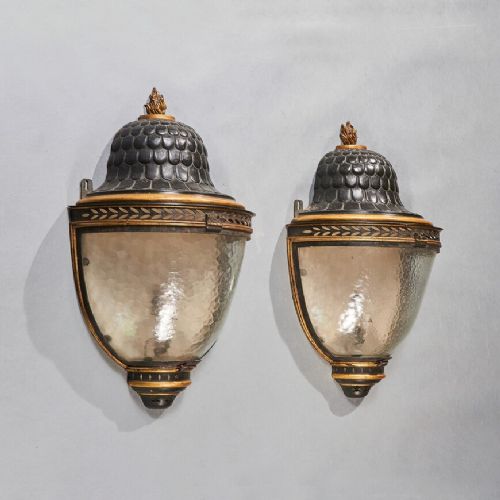
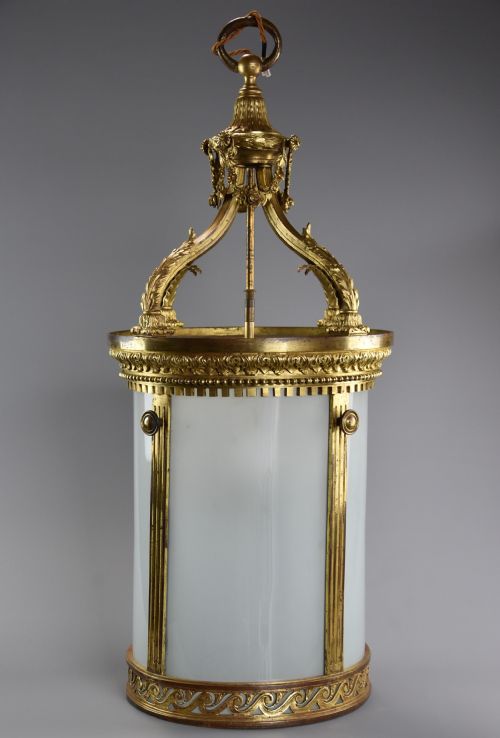
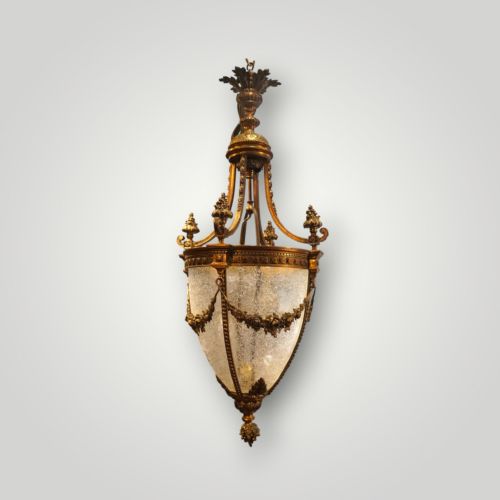
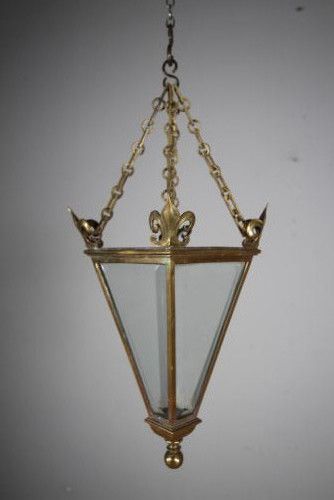
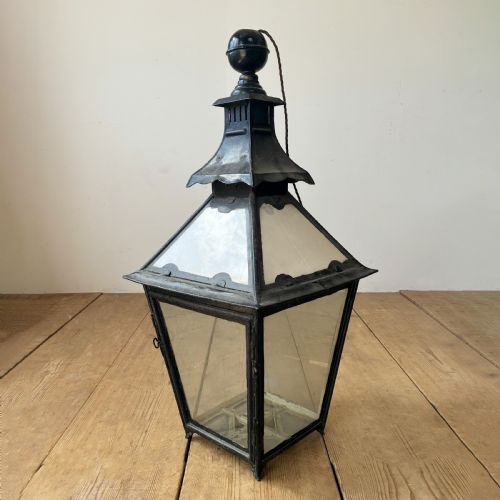
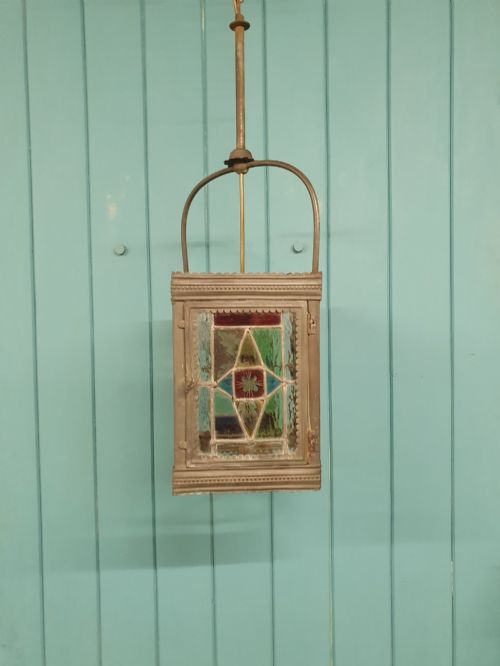


19th Century Hall Lantern
A 19th century hall lantern illuminates an entrance passage with architectural presence, combining functional entry lighting with decorative metalwork and glass.
19th Century Hall Lantern
A 19th century hall lantern is a hanging light fixture designed for corridors and entrance spaces, frequently appearing in hexagonal, cylindrical, or octagonal configurations. English and French workshops produced these pieces across the era, utilising geometric glass panes held within metal frames.
Hexagonal brass and gilt bronze examples dominate the selection, often drawing upon earlier French Regence or Louis XVI design motifs. Buyers frequently encounter variations in scale, ranging from compact vestibule lights to large porch fixtures.
Materials and Construction
Makers constructed these lanterns using cast bronze, brass, copper, and wrought iron, frequently applying parcel gilt or gilding to metal surfaces. Glazing panels comprise clear or tinted glass, sometimes leaded or secured within metal cames.
Foundry work combined cast decorative elements like ormolu mounts with structural framework, while tole peinte and giltwood appeared in specialised decorative pieces. Iron and copper served predominantly in exterior or robust interior hallway settings.
Listings feature items spanning the 19th century, including specific dates such as 1880 and 1890, alongside Edwardian examples.
Craftsmanship and Proportion
Quality rests in the crispness of the metal casting and the weight of the bronze or brass framework. Finer examples display intricate chased detail on gilt bronze mounts rather than simpler folded sheet metal.
Proportion and glass integrity dictate the standing of a piece, with heavy bevelled or curved glass panels indicating higher workshop standards than standard flat panes.
The 19th Century Hall Lantern Glossary
- Gilt Bronze
- Bronze metal treated with a gold application or mercury gilding to produce a rich metallic sheen. This material resists tarnishing and holds fine chased detail.
- Tole Peinte
- Painted sheet metal used in decorative light fittings and accessories. It provides distinct colour depth and surface texture.
- Hexagonal
- A six-sided geometric form commonly used for lantern bodies. This shape allows multiple glass panels to distribute light evenly across a hallway.
- Ormolu
- Finely chased and gilt bronze ornament applied to furniture and lighting fixtures. The technique creates bright golden highlights against darker bronze components.
- Parcel Gilt
- A finishing method where only specific portions of an object receive gold leaf or gilding. This highlights particular decorative carvings or metal details.
19th Century Hall Lantern: Frequently Asked Questions
How do I hang a heavy hall lantern?
These fixtures require secure anchorage into ceiling joists or adequate structural blocking rather than standard plaster fixings. Weight varies significantly between cast bronze models and lighter brass versions.
Professional electrical installation ensures the hanging chain and internal wiring support the specific weight safely.
Where should I place a hall lantern?
Entrances, hallways, and stairwells suit these hanging lights best, providing practical illumination for transitional spaces. Scale remains vital when matching the fixture dimensions to the ceiling height and floor area.
Position the lantern so adequate clearance remains underneath for passage.
How do I clean antique brass and glass?
Wipe metal surfaces carefully with a soft, dry cloth to remove dust without disturbing the patination. Avoid abrasive cleaners or harsh chemical polishes that strip original finishes.
Glass panels lift out on many designs for separate washing with mild soapy water.
Are these lanterns wired for modern electricity?
Most pieces adapt readily to standard electrical fittings while retaining their original internal structure. Rewiring should match contemporary safety standards.
Consult a qualified electrician to inspect vintage lamp holders and internal wiring configurations.