



Rococo Style Lantern
These rococo style lantern pieces bring ornamental curves and historic illumination to a room.
Rococo Style Lantern
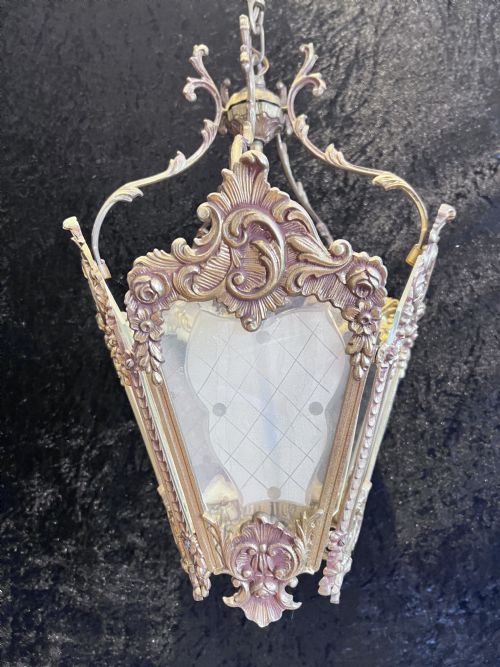
When you search for rococo style lantern, you are looking at decorative hanging lights and ceiling fixtures designed with the fluid asymmetry and organic curves characteristic of the style. Most examples on this page date from the nineteenth century up through the nineteen-thirties, drawing inspiration from eighteenth-century French Regence design.
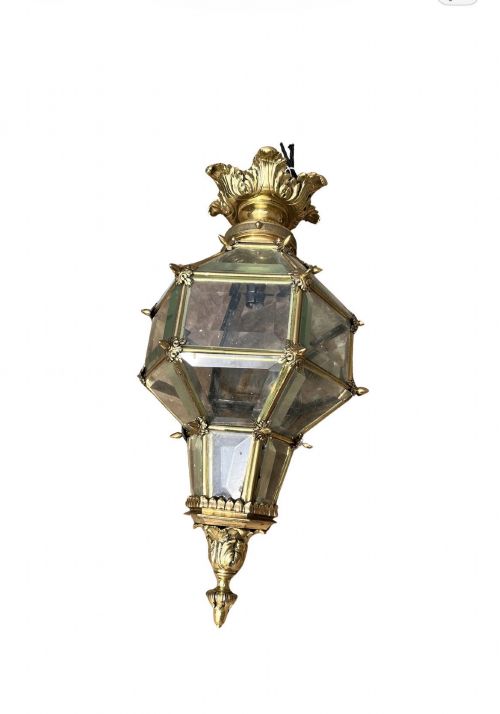
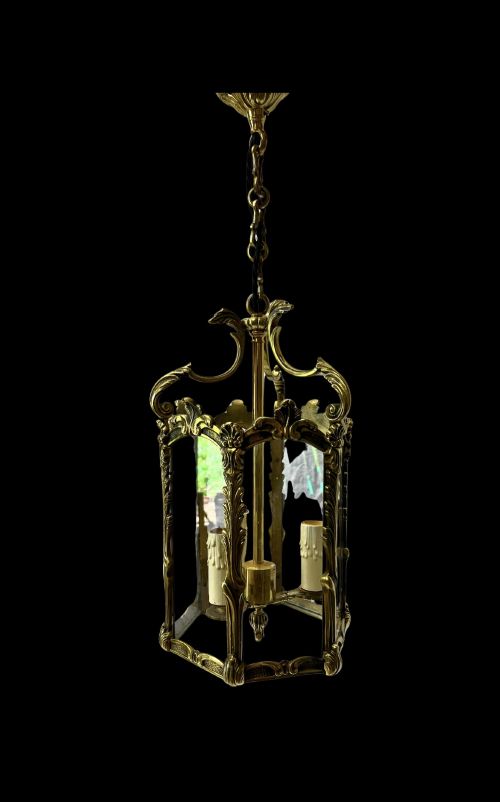
The forms appear primarily as hanging hall lanterns and ceiling lights, often featuring hexagonal or multi-sided frames. You will encounter pieces described as French Rococo, French Chateau, Rococo Revival, and Italian Rococo, reflecting continental origins alongside English interpretations.
These light fixtures serve as striking focal points in entrance halls, stairwells, and principal rooms. They bridge the gap between architectural fittings and decorative art, bringing period character and warm illumination to interiors.
How they were made
The construction of these pieces relies heavily on cast and worked metals such as brass, gilded bronze, gilt brass, and standard metal. Metalwork is frequently enhanced with gold leaf or surface gilding to catch the light, while other variations incorporate painted and gilded toleware.
Glazing forms a central part of the manufacturing process, utilising clear or etched glass panes fitted within the metal framework. Some examples also incorporate carved wooden elements such as giltwood alongside metal components to create elaborate pierced and scrollwork detailing.
Rococo Style Lantern Retail Price Guide 2026
Typical asking prices for rococo style lantern among the pieces listed under this phrase on Sellingantiques today, from the lower quarter to the upper quarter. They describe what is for sale here now, not the wider market.
Listings feature materials spanning brass, gilded bronze, toleware, giltwood, and gold leaf, with production dates ranging from the nineteenth century through the nineteen-thirties.
What varies in quality
Quality in these lanterns depends on the crispness of the cast metal ornamentation and the depth of the gilding or surface finish. Finer pieces display sharply defined rocaille motifs, scrolls, and acanthus leaves without the softening often seen in later reproductions.
The choice of materials also dictates the standard of the piece, with substantial gilded bronze and heavy brass frameworks sitting at a higher level than simpler sheet metal or plain toleware versions. Hand-etched glass and complex multi-light configurations further distinguish superior examples from basic single-light alternatives.
The Rococo Style Lantern Glossary
- Rococo Revival
- A nineteenth-century design movement that revived the ornate, asymmetrical curves and shell motifs of the original eighteenth-century French movement. This aesthetic heavily influences the cast metalwork and scrolling frames of these lanterns.
- Gilded Bronze
- A metal alloy treated with a fine layer of gold leaf or mercury gilding. This material provides a durable and luminous surface finish that resists tarnish over time.
- Giltwood
- Wood that has been prepared and coated with a thin layer of gold leaf. It appears on mixed-material lanterns to provide carved ornamental detailing.
- Regence
- An early eighteenth-century French transitional style known for heavy symmetry combined with emerging rocaille curves. Many nineteenth-century lanterns directly imitate this specific period design.
Rococo Style Lantern: Frequently Asked Questions
Where should a hanging lantern be placed?
These fixtures work best in high-ceilinged entrance halls, grand stairwells, or principal reception rooms where their decorative metalwork and glass panels can be viewed from multiple angles.
Because they hang downward from the ceiling, ensure you allow adequate clearance beneath the lowest point for pedestrian traffic.
How do I date a metal lantern?
Dating relies on examining the casting techniques, the type of metal used, and the style of any wiring or electrical components if they have been updated.
Nineteenth-century examples often display hand-finished brass, heavy gilded bronze, or traditional joinery methods that differ significantly from twentieth-century manufacturing processes.
Are these lanterns wired for electricity?
Many surviving examples have been electrified at some point in their history to accommodate modern light bulbs while retaining their historic exterior frames.
Some listings specifically mention electrified formats, while others may require professional rewiring to meet contemporary safety standards before installation.
What is the difference between brass and gilded bronze?
Brass is an alloy of copper and zinc with a naturally warm metallic tone that can be polished or left to age with a patina. Gilded bronze involves a bronze base applied with a layer of gold leaf or gold wash, offering a richer and more luminous surface.
Both materials were utilised extensively across different quality tiers of period lighting.