
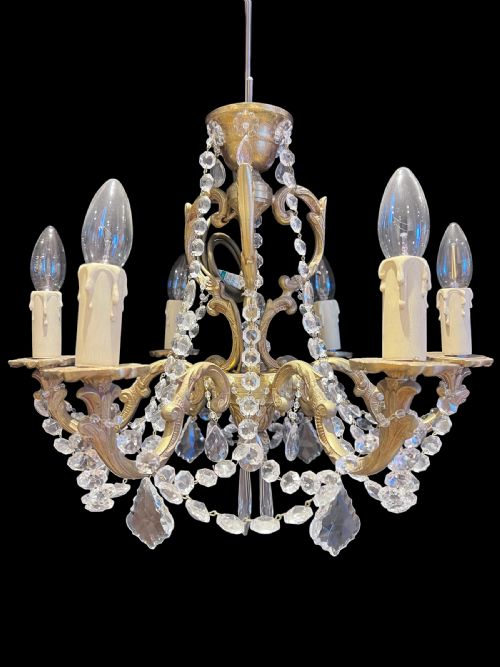

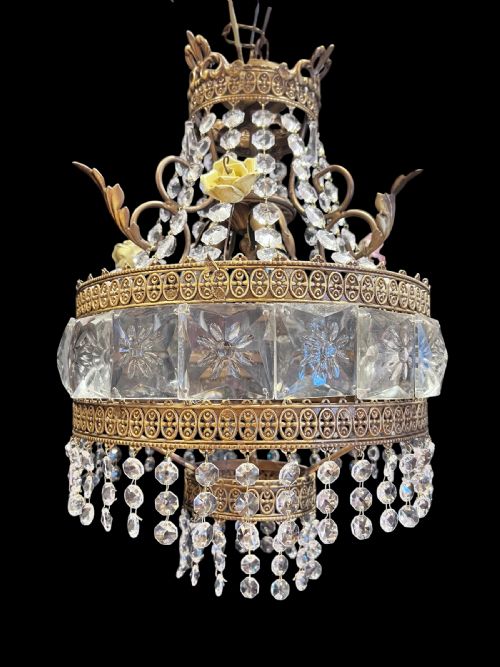


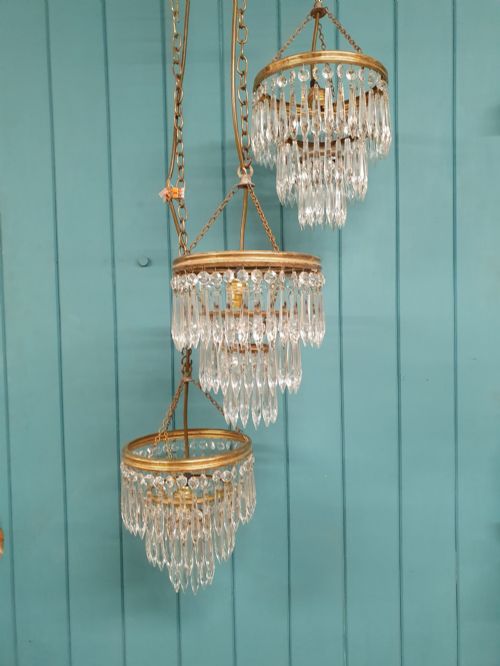
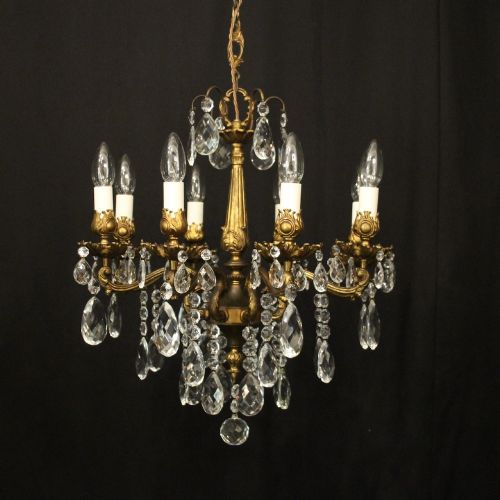
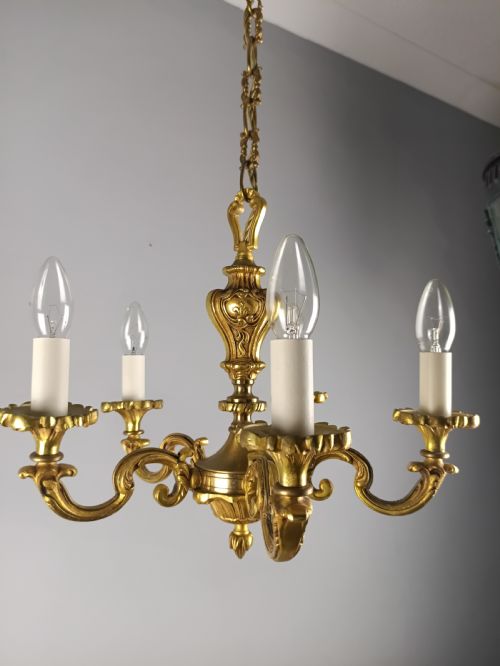
Gilt Brass Light Fitting
These gilt brass light fitting examples bring French chateau and Art Deco grandeur to ceiling lighting through enduring metalwork and crystal.
What these pieces are
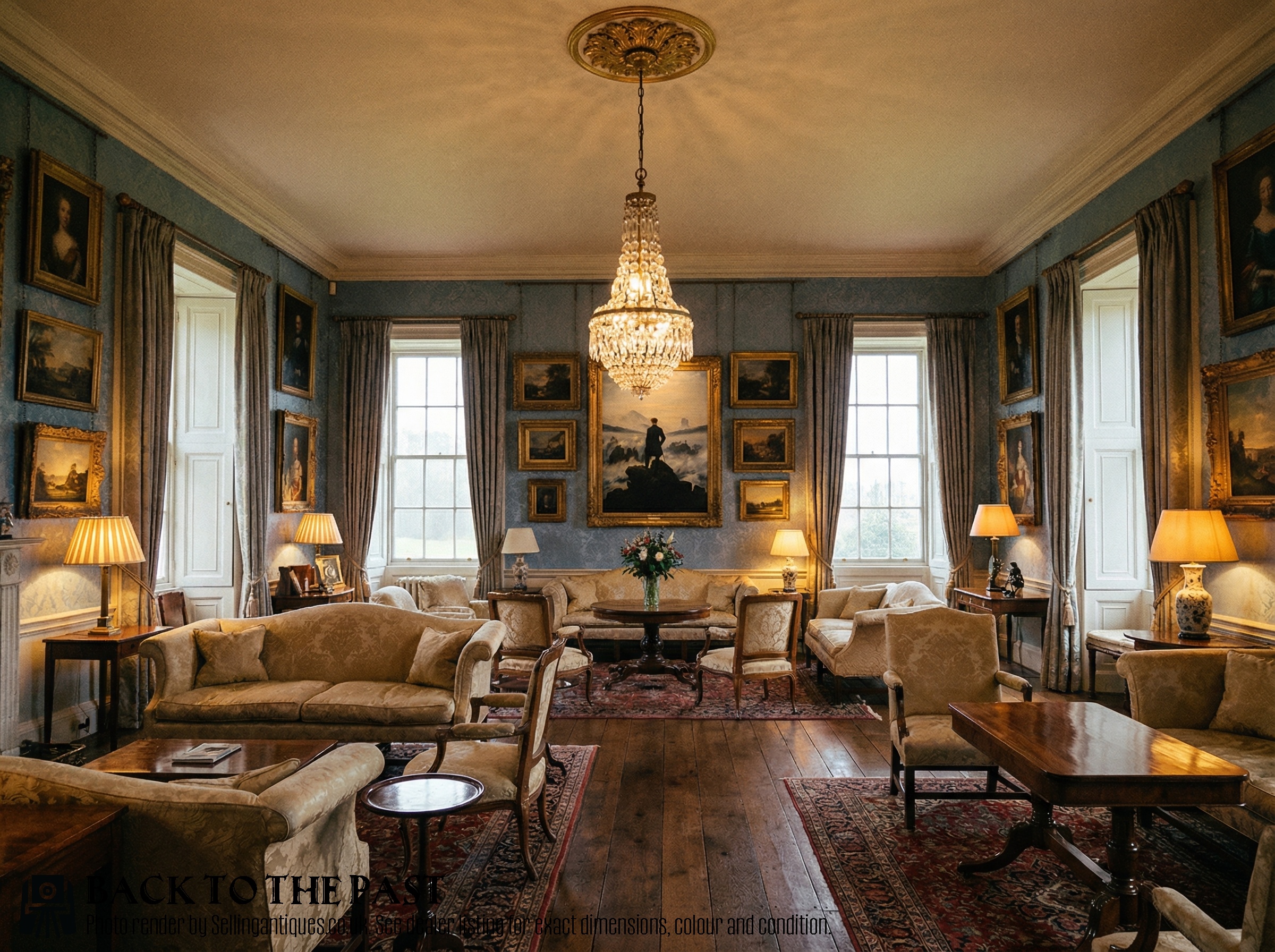
A gilt brass light fitting brings French chateau grandeur and Art Deco elegance directly to ceiling illumination. Buyers search for this phrase to find ornamental chandeliers and ceiling lights that anchor a room with period character.
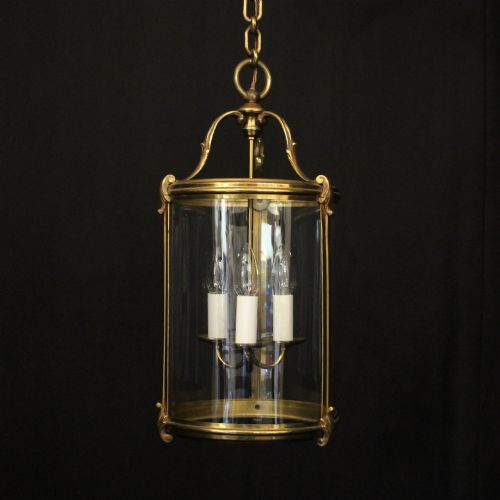
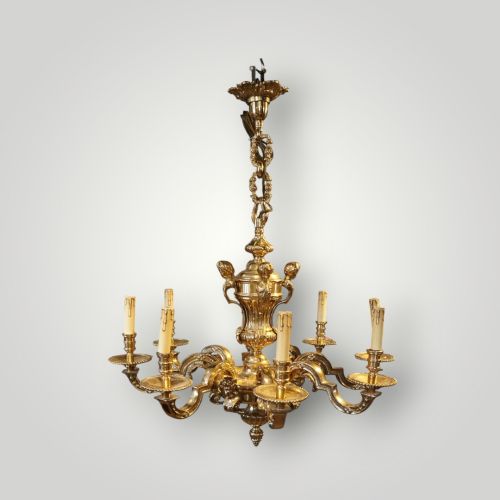
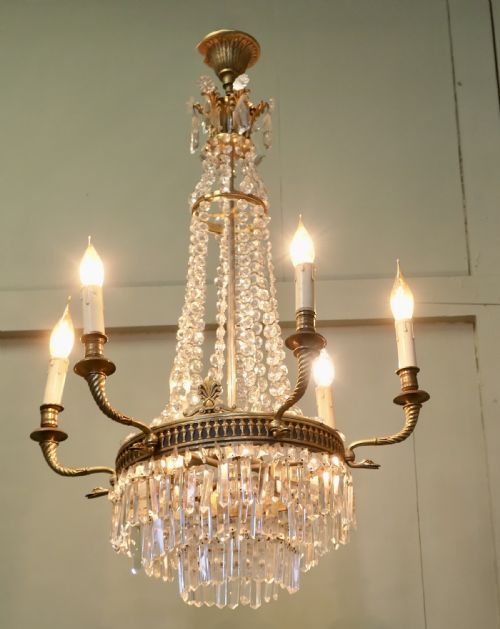
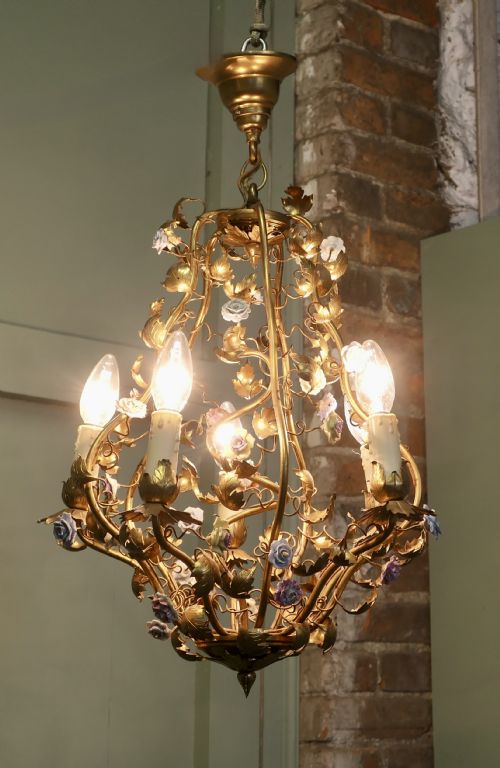
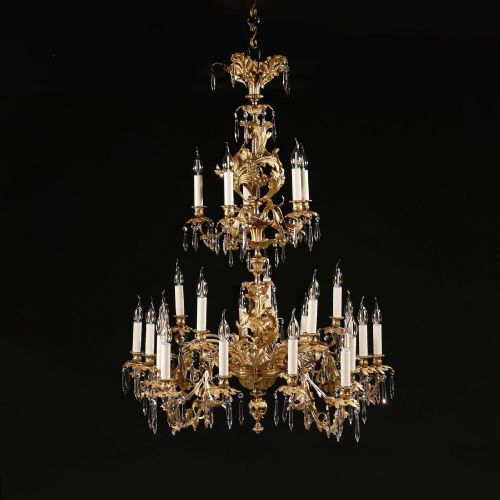
The selections available here span the Edwardian era through the 1920s and 1930s. Most examples take the form of multi-arm chandeliers, hall lanterns, and birdcage configurations adorned with glass drops.
French styling dominates the inventory, ranging from rococo revival flourishes to streamlined deco lines. Buyers encounter brass, gilded bronze, and gilt metal paired with cut crystal elements.
How they were made
Maker workshops utilised cast brass and bronze frameworks, applying gold-toned finishes to create the characteristic gilt surface. Structural arms support multiple lights while providing secure attachment points for hanging hardware.
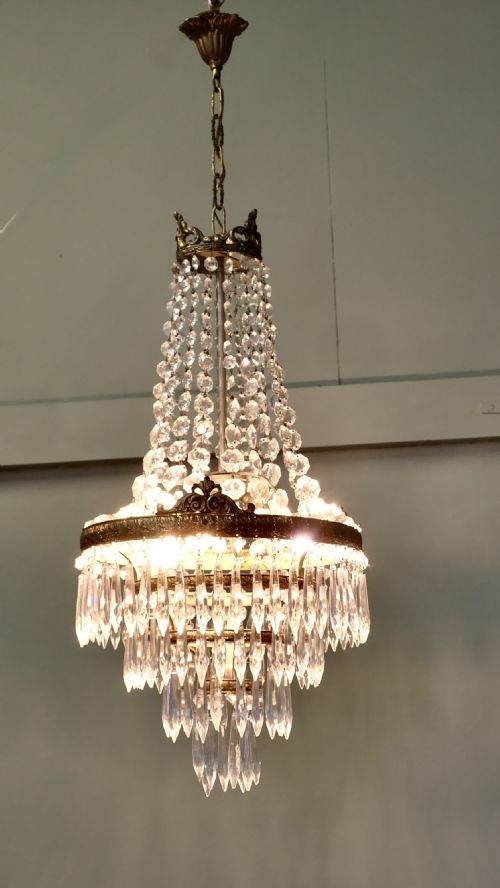
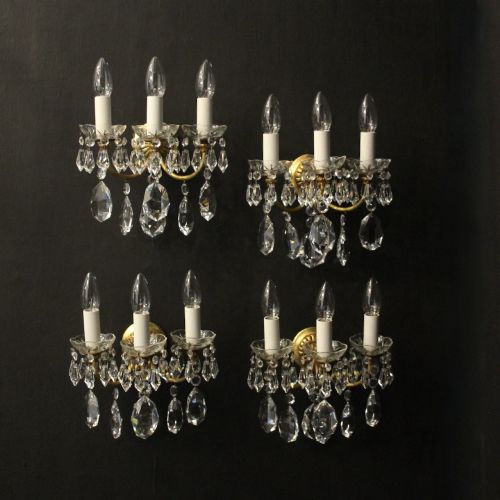
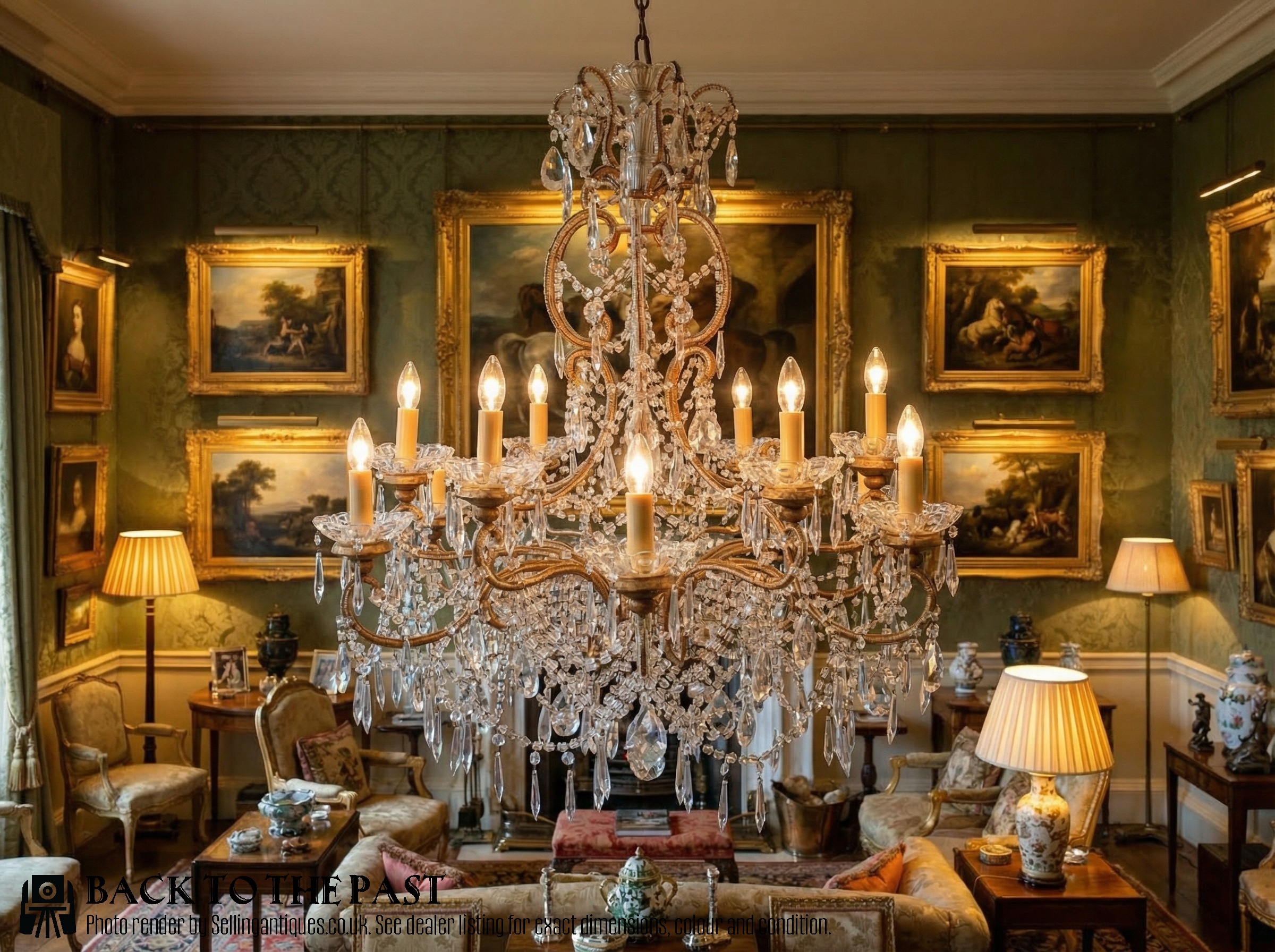
Artisans integrated glass and crystal components directly into the metal armature, suspending cut glass drops, swags, and lower bag sections from the main body. Precision cutting on the crystal elements maximises light refraction across the ceiling and walls.
Retail Price Guide 2026
Typical UK retail prices for gilt brass light fitting, calculated from the Sellingantiques database of over a million retail prices indexed since 2003. This retail price guide relies exclusively on Sellingantiques data; no external sources or auction records are used, so the figures do not describe the wider market.
Some fixtures include hidden lower bag sections designed solely to catch the stray sparkle of afternoon sunlight.
What varies in quality
Quality rests in the weight of the metal casting and the crispness of the chased detail along the gilt arms. Heavier bronze and brass structures demonstrate greater stability and retain finer decorative definition than lighter stamped alternatives.
The grade of the glass and crystal elevates a piece, distinguished by deep hand-cutting rather than simple moulded pressing. Complete sets of matching drops and integrated swags maintain the visual integrity intended by the original maker.
The Gilt Brass Light Fitting Glossary
- Gilt brass
- Metal alloy treated with a gold-coloured finish or gold leaf to provide a lustrous appearance. This surface treatment protects the base metal while reflecting interior illumination.
- Bag chandelier
- A lighting form featuring a gathered lower section resembling a bag or basket filled with crystal drops. This profile concentrates glass density beneath the central frame.
- Hall lantern
- An enclosed ceiling fixture designed specifically for narrow entrance spaces and corridors. These pieces protect the light source within a glazed or open metal framework.
- Cut crystal
- High-clarity glass shaped by grinding and polishing facets to enhance sparkle. The precise angles catch and disperse light throughout the surrounding space.
Frequently Asked Questions
How do I clean a gilt brass light fitting?
Dust the metal gently with a soft dry cloth to protect the gilt surface from abrasion. Avoid harsh chemical cleaners that can strip the gold-toned finish from the brass.
Remove glass and crystal drops individually for washing in lukewarm soapy water if needed. Dry them completely before rehanging them on the metal armature.
Are these lights suitable for low ceilings?
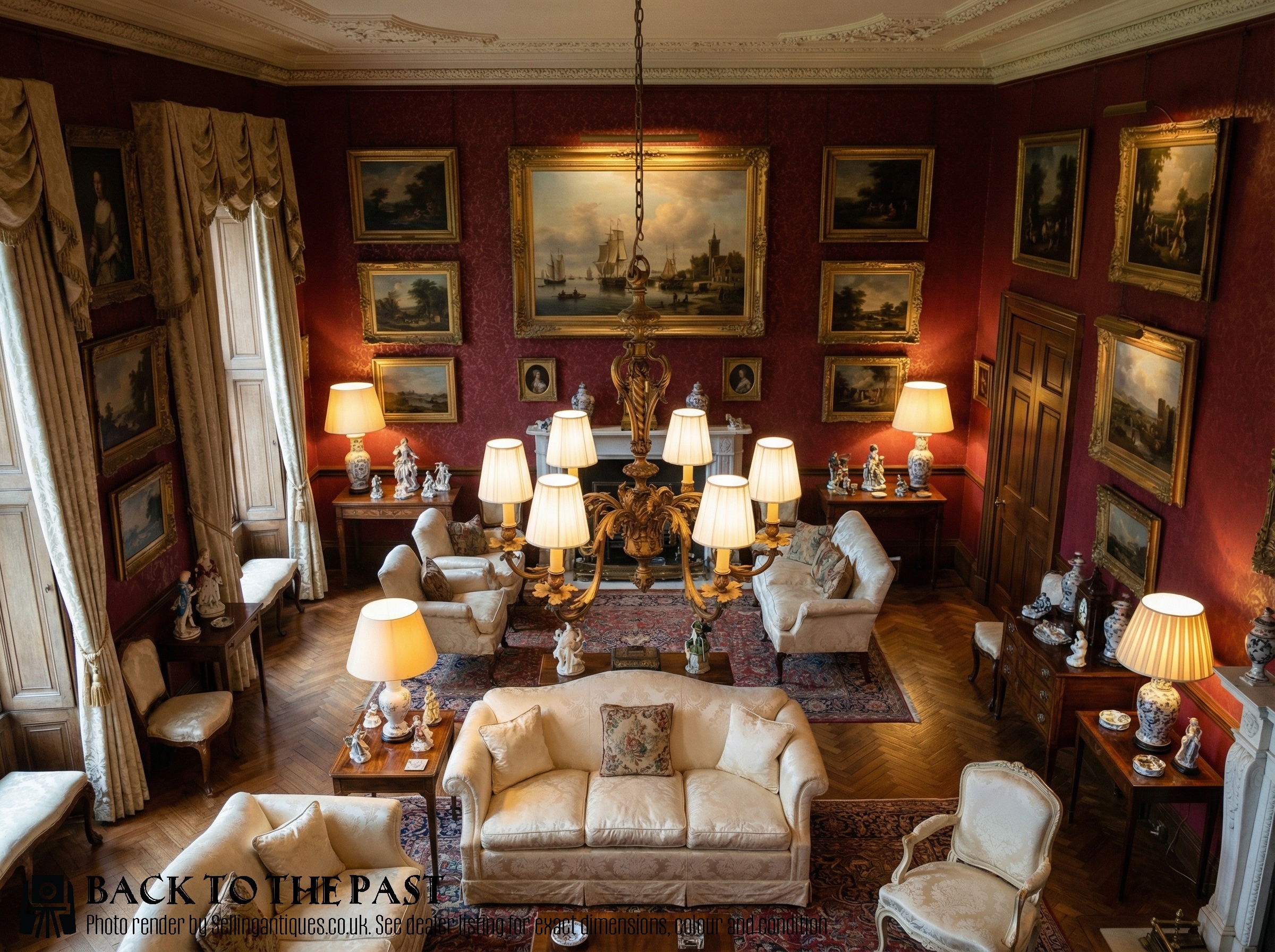
Most multi-arm chandeliers and hall lanterns require adequate vertical clearance to hang safely above living spaces. Smaller five-arm options and compact hall lanterns suit rooms with reduced ceiling heights better than massive twelve-arm fixtures.
Check the overall drop measurement of the fitting before purchase to ensure proper clearance. Professional installation helps adjust the hanging chain to the exact room dimensions.
How do I identify Art Deco lighting?
Art Deco lighting relies on geometric symmetry, streamlined silhouettes, and reduced ornamentation compared to earlier revival styles. These pieces often feature simplified arms and clean architectural lines.
Fixtures from the 1930s embrace this modern aesthetic while retaining traditional brass and glass materials. The resulting contrast delivers a distinct transitional character.