
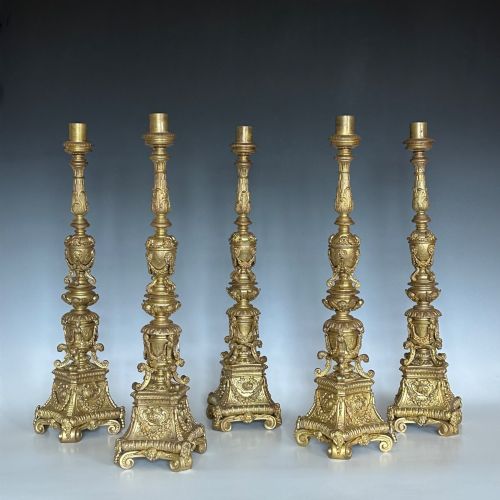
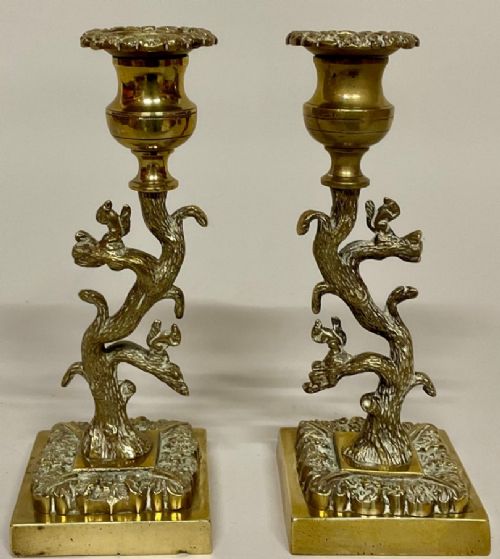
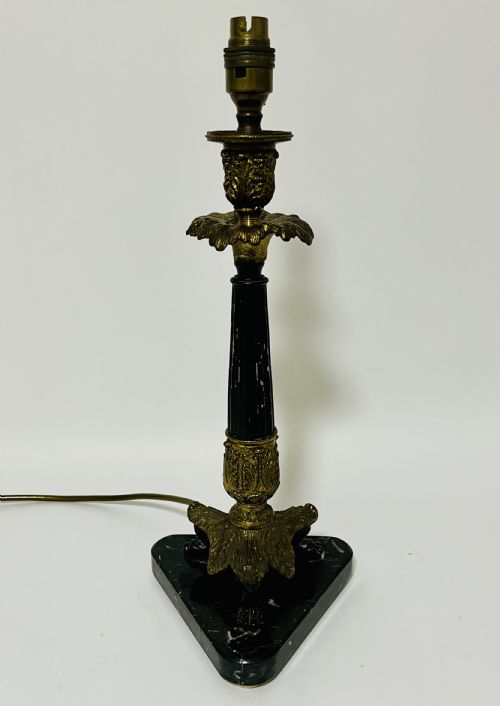
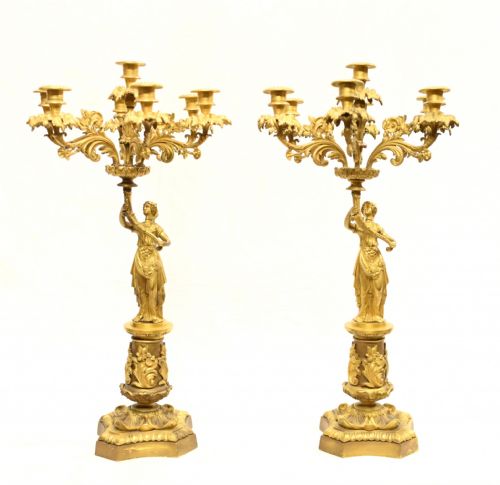


Gilt Metal Candlesticks
Gilt metal candlesticks bring weight and warm reflection to a room, catching candle flame or holding transformed wiring with equal grace.
Gilt Metal Candlesticks
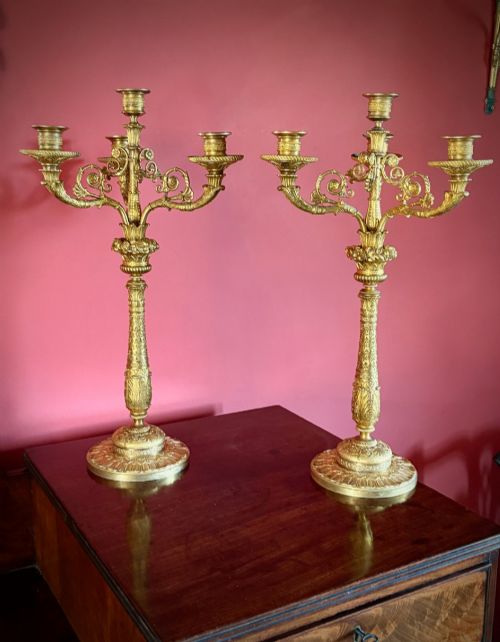
When you search for gilt metal candlesticks, you encounter a lineage of illumination spanning from compact chamber sticks to grand multi-arm candelabra and converted table lamps. The selection leans heavily towards nineteenth-century production, particularly French Empire, Regency, and Victorian iterations.
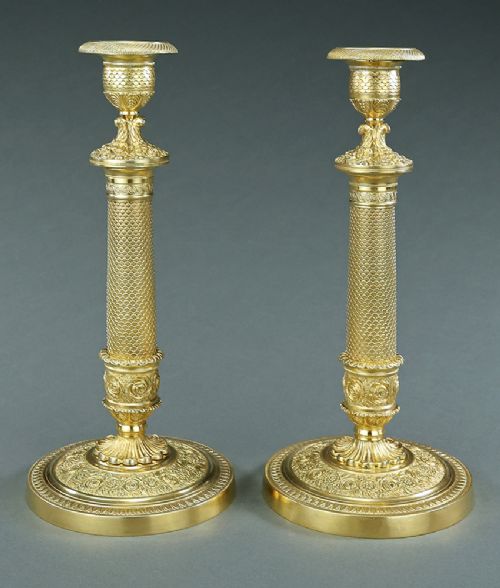
Makers and manufacturers utilised durable bronze, brass, and ormolu alongside slate and marble, creating forms shaped as sculptural trees, figural groups, or classical architectural columns. Many examples survive as matched pairs, bearing the heavy casting and rich gilding characteristic of their nineteenth-century workshops.
How they were made
The foundation of these objects rests on metal casting, predominantly utilising bronze, brass, and cast bronze. Molten metal was poured into detailed moulds to form intricate figures, foliate motifs, and structural bases.
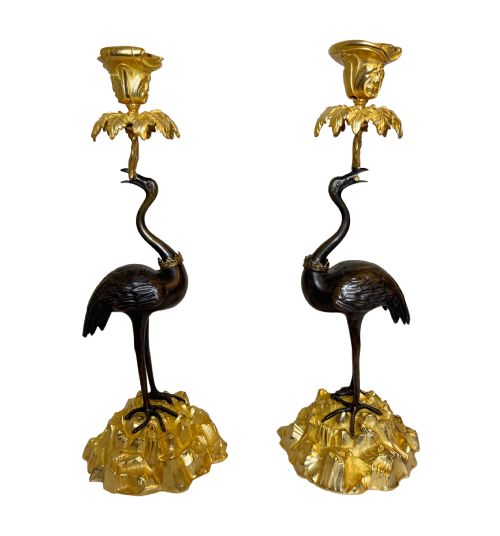
Gilding methods included traditional mercury ormolu and applied gilt layers to achieve a brilliant metallic sheen. Artisans frequently combined these gilded surfaces with contrasting patinated bronze, marble plinths, or slate bases.
The site records forms including chamber sticks, standard lamps, desk sets, and multi-arm candelabra alongside standard candlesticks.
What varies in quality
The distinction between tiers rests upon the crispness of the metal chasing and the depth of the original gilding. Finer pieces exhibit sharp relief in foliage, animal motifs, and human figures, whereas simpler items show softer, worn surface details.
Weight and structural composition also dictate standing; heavy cast ormolu and solid bronze assemblies paired with genuine marble or slate provide superior balance compared to lighter, hollow-cast alternatives.
Mappin & Webb's
The Gilt Metal Candlesticks Glossary
- Ormolu
- Finely ground high-carat gold applied to a bronze base using a mercury amalgamation technique. This historic process yields a durable, warm golden lustre unique to period pieces.
- Candelabra
- A branched candlestick designed to hold multiple candles simultaneously. They often feature removable upper arms to transform the piece into a standard single candlestick.
- Campana
- A bell-shaped socket or sconce found at the top of candlesticks. The flared rim safely catches wax drips and supports the base of the candle.
- Patinated bronze
- Bronze that has been chemically treated to produce a dark, aged surface tone. It creates a striking visual contrast when set against bright ormolu mountings.
- Bouillotte lamp
- An adjustable desk or table lamp featuring a central stem and a metal shade. Originally designed for card games, they utilise gilded brass and metal construction.
Gilt Metal Candlesticks: Frequently Asked Questions
Are these wired for electricity?
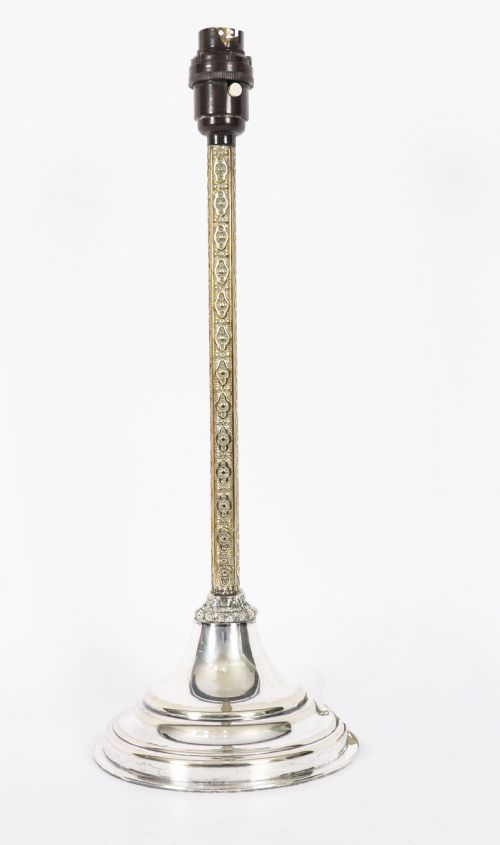
Many examples retain their original configuration as pure candle holders, while a significant portion arrived in the archive previously converted into table lamps or fitted for modern wiring.
Buyers can choose between keeping historical pieces unmodified for traditional candle use or utilising existing conversions for everyday lighting.
How do I identify French Empire pieces?
French Empire items typically display strict classical symmetry, incorporating motifs drawn from antiquity such as acanthus leaves, columns, and mythological figures. These pieces rely heavily on a combination of polished ormolu and dark patinated bronze.
They date from the early nineteenth century and possess a distinct architectural gravity that separates them from later, more ornate Victorian revivals.
What is the difference between ormolu and gilt bronze?
Ormolu specifically denotes the historic mercury gilding process applied to bronze objects during the eighteenth and nineteenth centuries. Gilt bronze is a broader term that can encompass various modern or traditional methods of applying gold leaf or paint to a bronze substrate.
Examining the depth of the finish under magnification often reveals the distinct residual texture left by historic mercury gilding.
How should I clean gilt metal?
Gilt surfaces require very gentle maintenance to preserve the delicate gold layer. Dusting with a dry, soft microfibre cloth is generally sufficient for regular upkeep.
Harsh chemical polishes, abrasive cloths, and liquid cleaners must be avoided entirely, as they strip away the thin historic gilding beneath.