

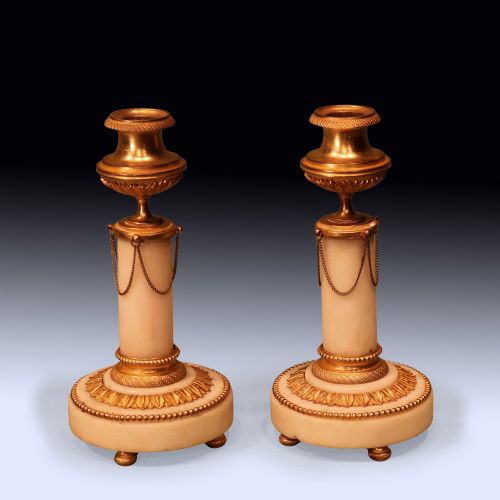


French Empire Candle Stands
French empire candle stands bring neoclassical grandeur to a room, combining heavy patinated metals with crisp classical detail.
French Empire Candle Stands
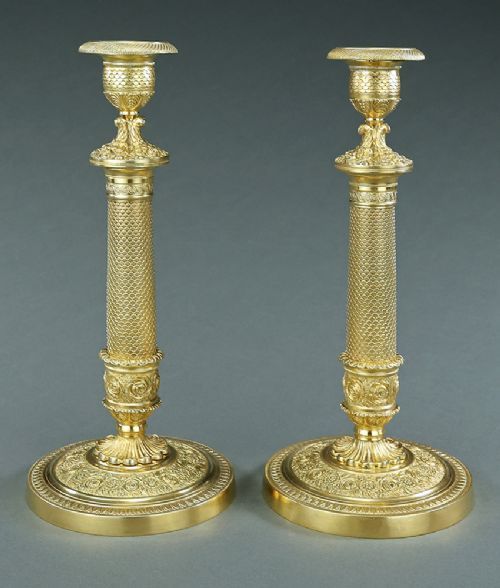
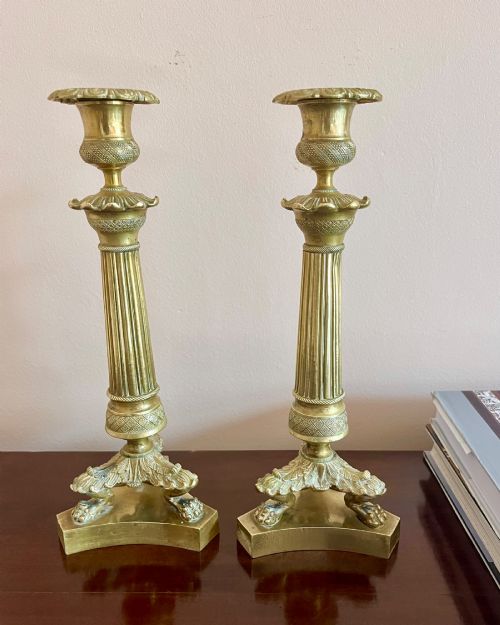
French empire candle stands comprise a focused group of lighting pieces, largely encountered as matched pairs of candlesticks and multi-branched candelabra dating from the nineteenth century. These objects draw heavily on classical antiquity, displaying architectural proportions, figural shafts, and formal symmetry designed to catch candlelight across a dining table or mantelpiece.
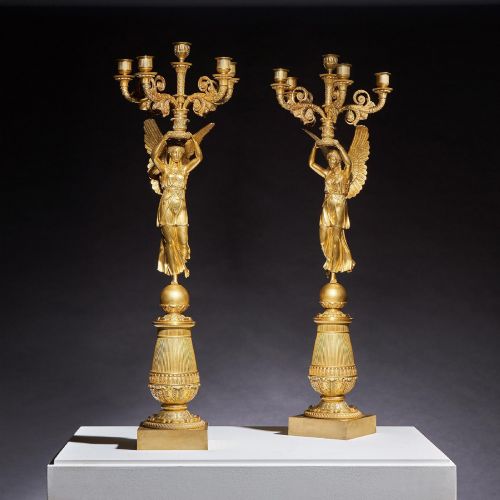
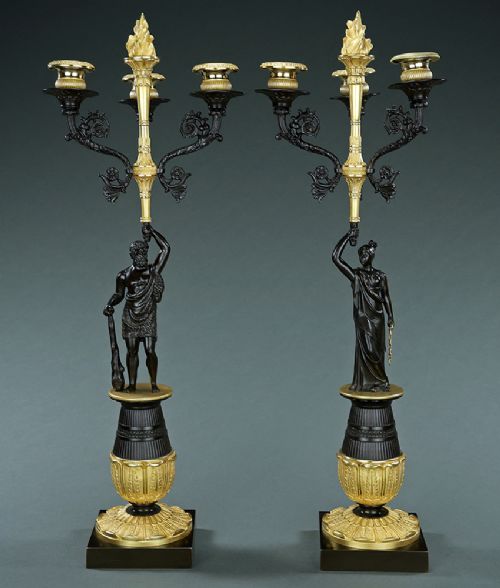
The selection on this page centres primarily upon nineteenth-century production, spanning the Regency, French Restoration, and later Victorian periods alongside direct French Empire output. Alongside standard candlesticks, buyers will find related lighting forms including inkstands with integrated candleholders, torcheres, and figural candelabra depicting subjects such as Hercules or putti.
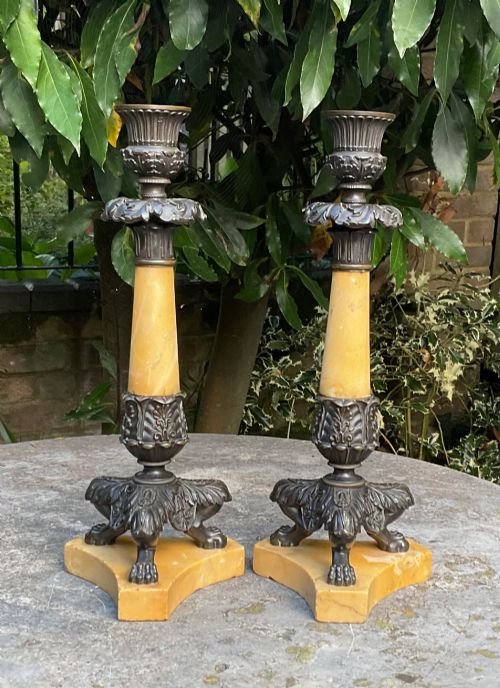
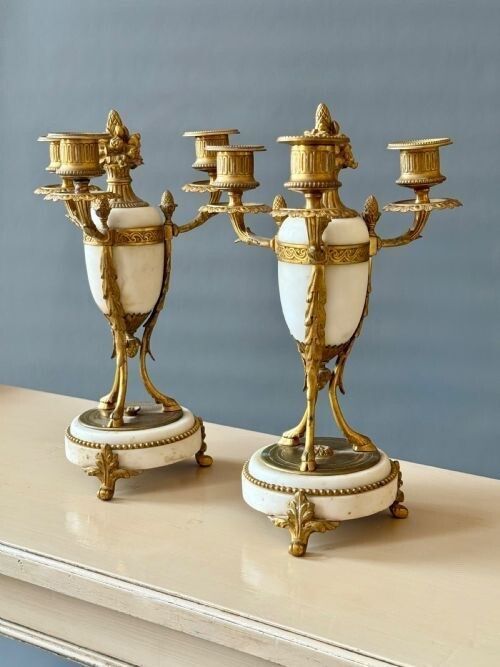
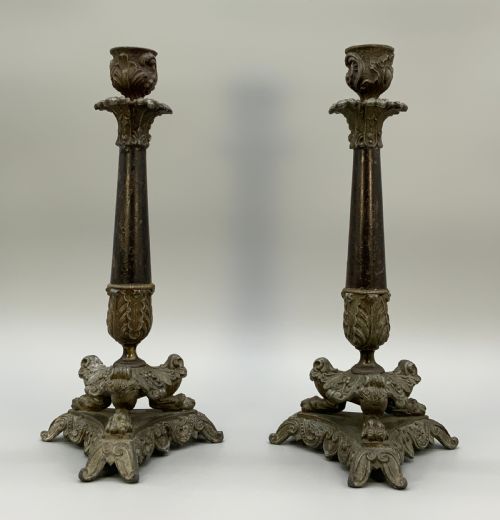
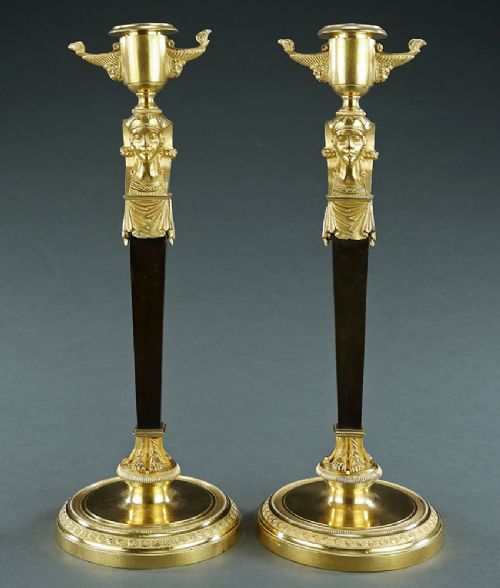
Most examples rely on a combination of cast metal and stone, frequently pairing dark patinated bronze with bright gilded bronze or ormolu mounts set atop marble bases. These pieces reflect broader European taste during the neoclassical revivals, incorporating stylistic echoes from Grand Tour travels and the Retour d'Egypte movement.
What varies in quality
The choice and integration of materials also signal grade, with top-tier pieces employing solid weights of heavy bronze and genuine polished marble rather than lighter cast metals or substitute stones. Furthermore, signed works attributed to known makers command greater regard for the precision of their assembly and the originality of their patination.
Several nineteenth-century models feature dolphins and putti perched upon the shafts, injecting playful marine and mythological themes into formal lighting.
Pierre Philippe Thomire·Rabiat·Auguste Cain
The French Empire Candle Stands Glossary
- Ormolu
- Gilt bronze produced by applying a mixture of gold amalgam to a bronze object and heating it until the mercury vaporised. This technique leaves a durable, rich golden surface that defines high-end nineteenth-century metalwork.
- Patinated bronze
- Bronze treated with chemical solutions to darken the surface to a deep brown or black tone. This dark finish creates a strong visual contrast against bright ormolu mounts and white marble plinths.
- Candelabra
- A branched lighting fixture designed to hold multiple candles simultaneously. These pieces often feature removable arms that allow them to function as single candlesticks.
- Torchere
- A tall decorative stand or pedestal originally intended to support a candle or lamp. Nineteenth-century versions frequently employ carved hardwoods or metal structures.
- Retour d'Egypte
- A design style inspired by Napoleon's campaign in Egypt, incorporating motifs such as sphinxes, pharaohs, and lotus leaves. This aesthetic heavily influenced French decorative arts during the early nineteenth century.
French Empire Candle Stands: Frequently Asked Questions
How do I clean french empire candle stands?
Maintenance requires only a soft, dry cloth to remove dust from the metal surfaces and stone bases. Avoid liquid cleaners, abrasives, or polishes, as these can strip the historic ormolu surface and damage the patination.
Water can seep into the joints or stain marble plinths, so moisture should be kept entirely away from the object. Gentle care preserves the original finish achieved during the nineteenth century.
Were these candle stands always gilded?
Many nineteenth-century examples combine bright gilded surfaces with dark patinated bronze to create a deliberate two-tone visual effect. Some simpler pieces relied entirely on polished brass or patinated bronze without the application of gold leaf.
Makers selected finishes based on the intended market and prevailing neoclassical tastes. The presence of both finishes together remains a hallmark of better workshop production.
How can I tell a French Empire piece from a Regency one?
French Empire pieces typically adhere strictly to continental neoclassical canons, featuring martial motifs, sphinxes, and precise architectural symmetry. Regency and Grand Tour equivalents produced in Britain often share these visual tropes due to concurrent design influences but may incorporate distinct native cabinet-making traditions.
Both styles emerged from the same broader classical revival, making direct comparison of the casting quality and materials the most reliable guide to origin.
Can I still use these for real candles?
These stands were engineered to hold wax candles safely during the nineteenth century, provided the sockets and drip pans remain intact. Modern tapered candles should fit securely within the cups without wobbling.
Care must be taken to prevent dripping wax from contacting the delicate ormolu or patinated bronze surfaces. Using fitted beeswax inserts helps protect the historical metalwork from heat damage.