

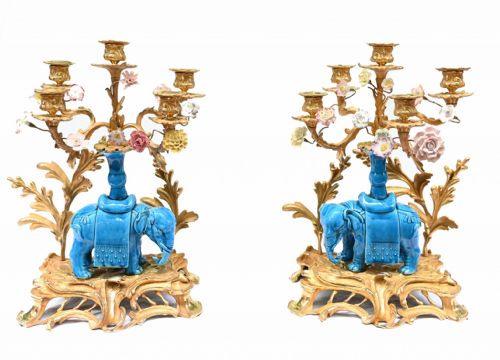
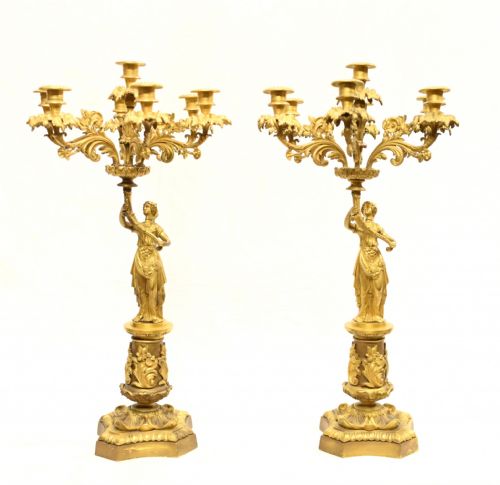


Gilt Metal Candle Holders
Gilt metal candle holders bring warmth and metallic brilliance to an interior, moving from table candlesticks to multi-arm candelabra.
Gilt Metal Candle Holders
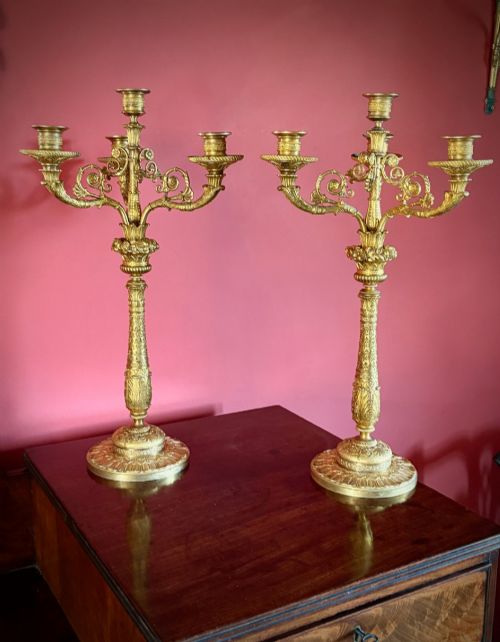
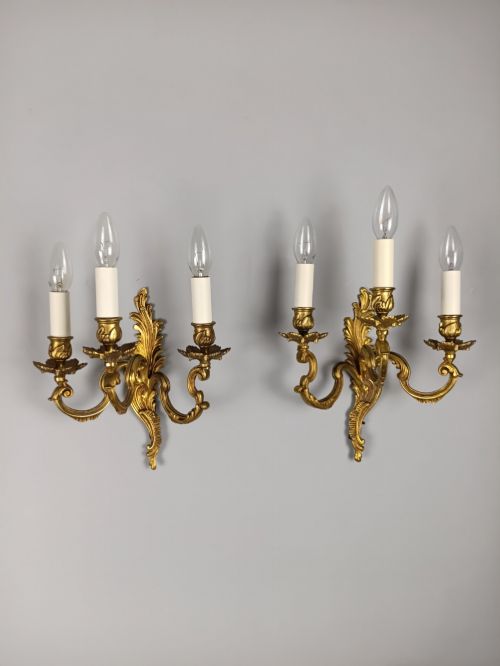
When you search for gilt metal candle holders, you encounter items spanning the nineteenth century alongside pieces from the Regency and later decades. The selection includes candlesticks, multi-arm candelabra, wall lights, and clock garnitures.
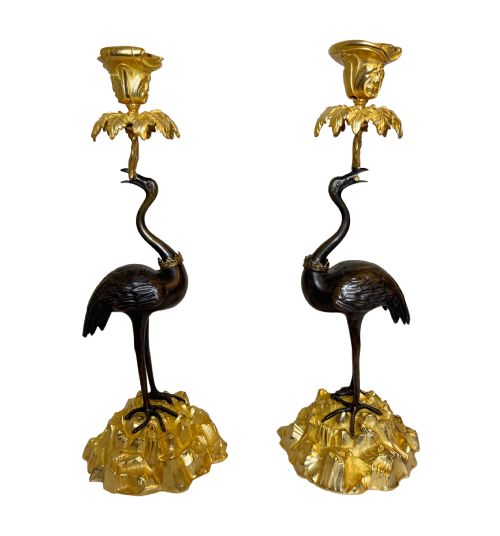
French workshops dominate the selection, bringing classical motifs, figural subjects, and animal themes into domestic lighting. These range from simple chamber sticks to large floor-standing or table pieces with heavy branching arms.
Pairs appear frequently across the periods, showing how these objects were designed to balance a mantelpiece or sideboard. Alongside standard brass and bronze, you find combinations involving white marble, slate, and porcelain.
Materials and Techniques
Foundries utilised metals such as bronze, brass, and patinated or gilded compositions to build the body of each piece. Mercury gilding or gold plating applied to bronze produced the rich ormolu surfaces seen on Regency and French Empire items.
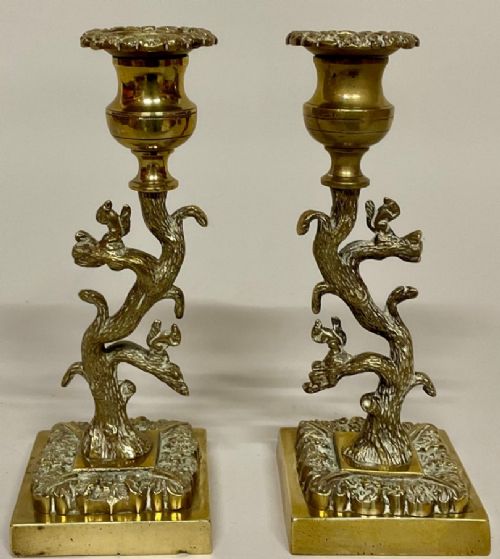
Casting allowed makers to shape complex figural motifs, from squirrels in trees to human figures and floral scrollwork. Chasing and finishing followed the cast, sharpening details in the metal before assembly.
Materials across the selection include ormolu, gilt bronze, brass, patinated bronze, and marble.
Distinctions in Execution
The integration of secondary materials like marble or slate affects the structural balance and overall visual weight. Fine examples maintain tight joins between the gilt metal elements and their stone or porcelain bases.
The Gilt Metal Candle Holders Glossary
- Ormolu
- Gilded bronze produced through an amalgamation of gold and mercury, creating a durable golden finish common in French decorative arts.
- Candelabra
- A branched lighting fixture designed to hold multiple candles simultaneously, often featuring removable arms or central finials.
- Garniture
- A set of decorative objects, typically a clock flanked by matching candelabra or vases, arranged together on a mantelpiece.
- Chasing
- The hand-tooling of a metal surface after casting to refine details and create texture.
- Campana
- A vase-shaped candle sconce resembling an inverted bell, frequently seen on Regency and Empire candlesticks.
Gilt Metal Candle Holders: Frequently Asked Questions
How do I clean gilt metal candle holders?
Dust gently with a soft dry cloth to avoid disturbing the thin gold surface layers. Avoid abrasive metal polishes that can strip the gilding from ormolu and bronze.
Moisture should be kept away from any incorporated marble, slate, or porcelain elements during cleaning.
Were these originally for candles or electricity?
These pieces were made strictly for wax or tallow candles before modern electrification existed. Many retain their original drip pans and sconces without any alteration for wiring.
When collectors use them today, they typically insert standard dinner candles that fit the original sockets.
How do I date a pair of candelabra?
Dating relies on stylistic clues such as the neoclassical severity of the Regency period versus the elaborate scrollwork of Rococo Revival pieces. Material combinations, such as the use of slate or specific porcelain inserts, also point to distinct decades.
Casting weight and the sharpness of the chasing provide further indicators of the period of manufacture.
What is the difference between ormolu and gilt bronze?
Ormolu specifically refers to high-status gilded bronze created through historical mercury amalgamation techniques. Gilt bronze is a broader term that can include various methods of applying gold finish to a bronze base.
Both materials yield the warm metallic lustre characteristic of nineteenth-century decorative lighting.