



Gilt Lacquered Side Table
These gilt lacquered side table examples bring together black lacquer, gold leaf and Chinoiserie decoration across centuries of craftsmanship.
Gilt Lacquered Side Table
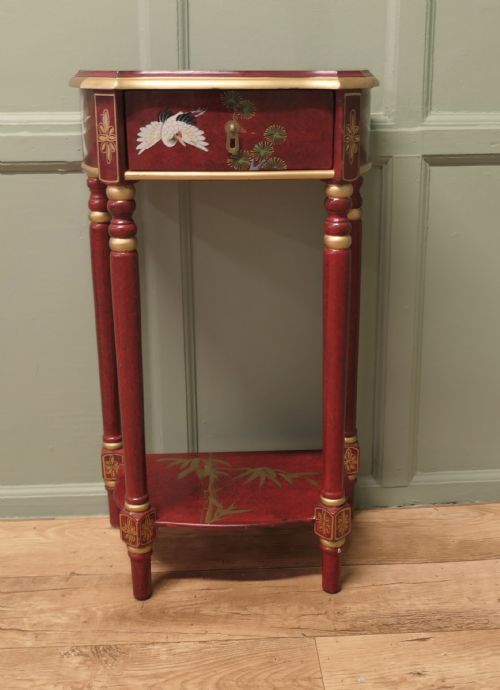
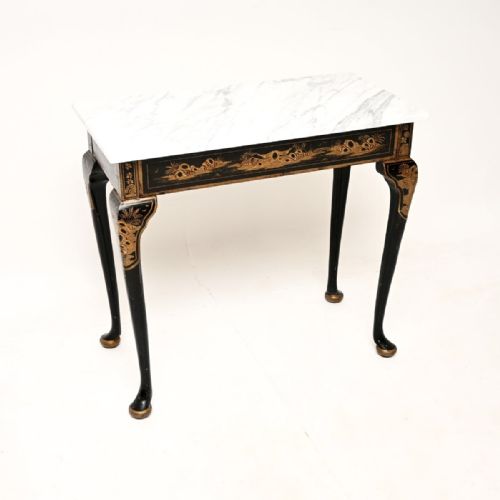
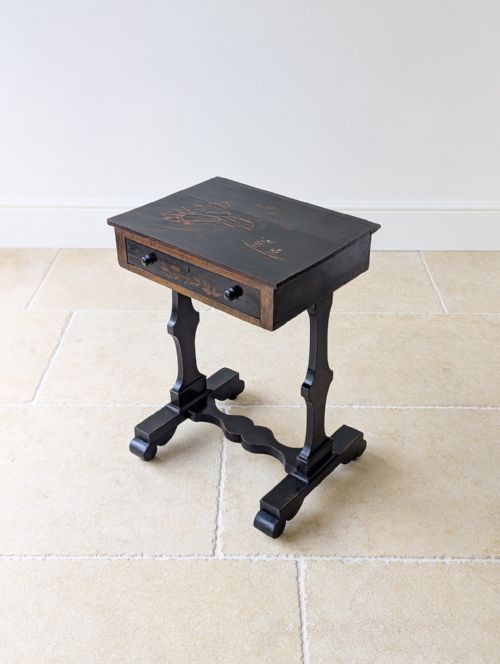
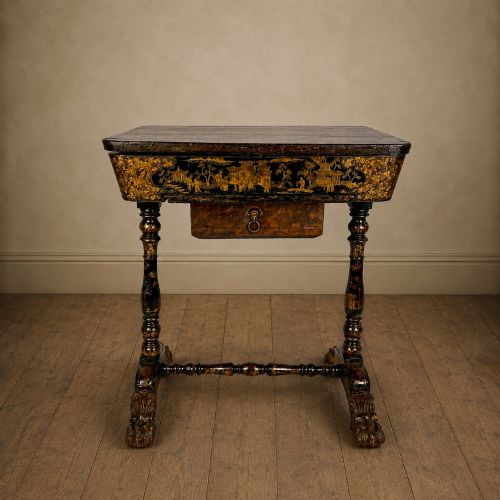
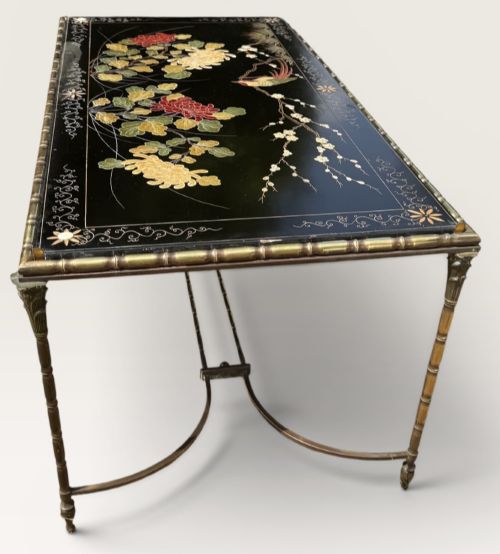
A gilt lacquered side table combines timber, lacquer and applied gold leaf, frequently taking the form of a low coffee table, work table or occasional piece. The selection ranges from Regency and Victorian Chinoiserie designs to Edwardian and mid-century interpretations.
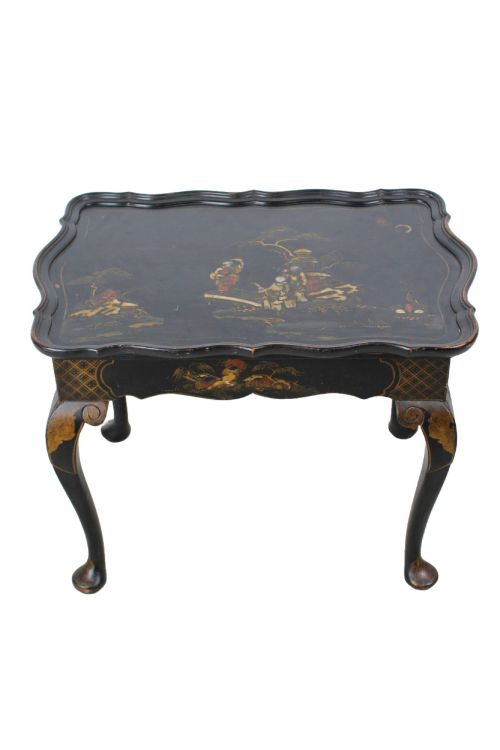
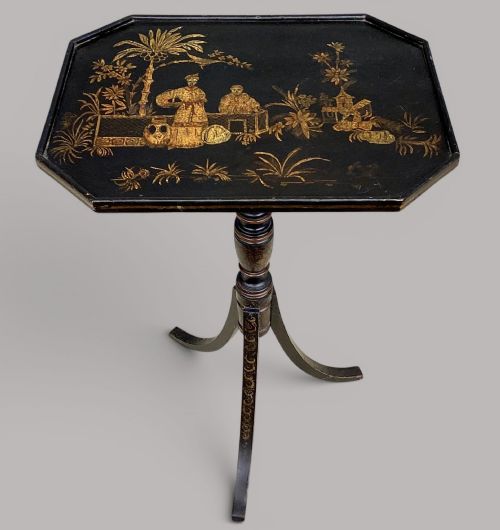
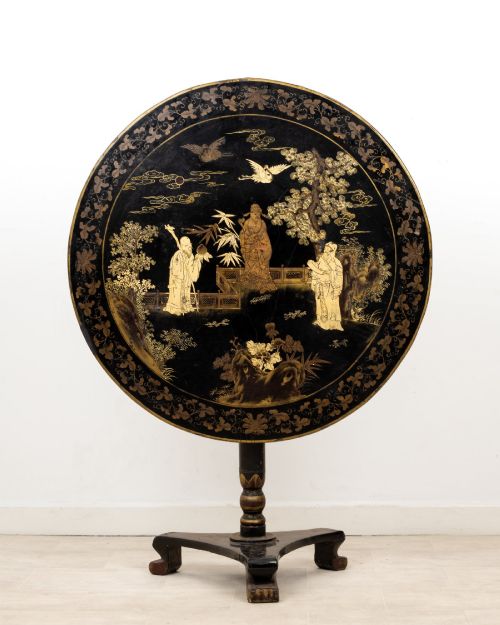
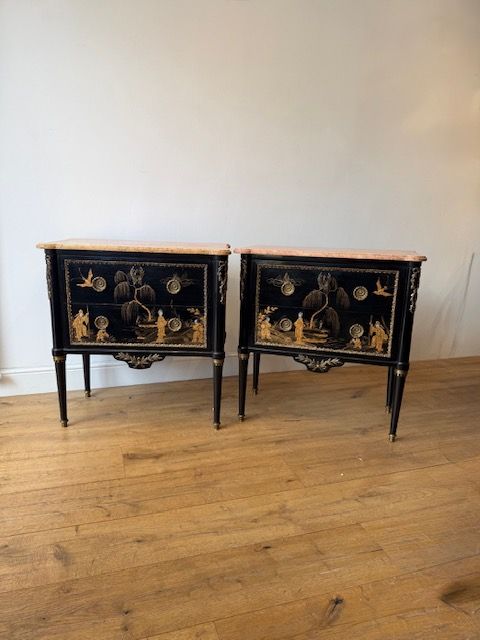
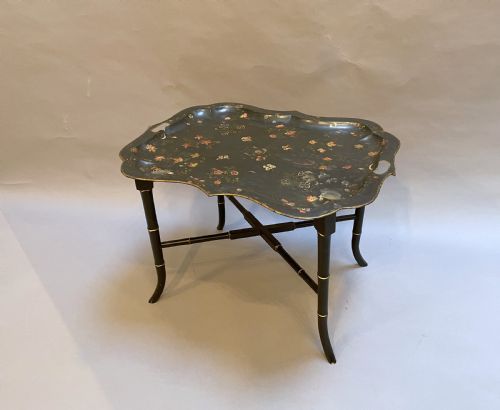
Most pieces seen here lean heavily on Chinoiserie decoration, employing hand-painted motifs in gold and red upon black or ebonised surfaces. Alongside standard side tables, the listings include tray tables, nests of tables and tilt-top formats dating from the eighteenth century onwards.
How they were made
Craftsmen built these tables using wood, papier-mâché and occasionally brass or ebonised timber as a foundation for multiple layers of lacquer. The hard, glossy surface provided an ideal ground for intricate hand-painted scenes and parcel gilt detailing.
Gold leaf and metallic powders were carefully applied to highlight figures, landscapes and floral patterns, often secured with protective varnish layers. Structural hardware like brass galleries and mounts supplemented the timber and papier-mâché bodies on select examples.
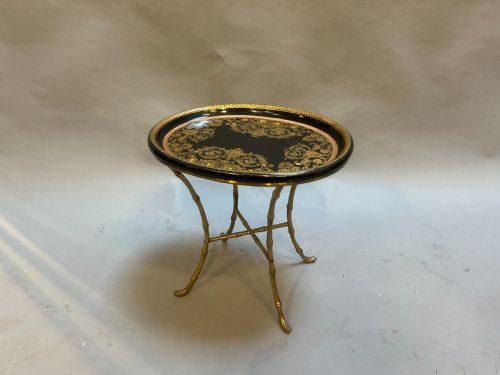
Several tables here began life as flat serving trays before finding a second career standing proudly on legs.
What varies in quality
The refinement of the hand-painted Chinoiserie ornamentation separates standard production from exceptional examples. Skilled artists rendered figures and foliage with depth and precision, whereas lesser pieces display repetitive or flat detailing.
The integrity of the underlying material, whether wood, ebonised timber or papier-mâché, dictates the longevity of the piece. Superior construction ensures the lacquer finish and applied gold leaf remain stable across the tiers and tilt-tops.
Maison Bagues·Henry Clay
The Gilt Lacquered Side Table Glossary
- Chinoiserie
- European artistic style reflecting Chinese motifs. Artisans applied whimsical landscapes, pagodas and figures in gold and colour upon dark lacquer.
- Papier-mâché
- Composite material made from paper pulp or sheets mixed with glue and pressed. It served as a smooth, durable base for lacquer and mother-of-pearl inlay.
- Ebonised wood
- Timber treated to resemble ebony. This dark, polished finish heightened the contrast of gilt decoration.
- Tray table
- Removable serving tray set upon a folding or fixed stand. Many nineteenth-century examples combine papier-mâché trays with later wooden supports.
- Tilt-top table
- Table featuring a mechanism allowing the surface to fold vertically when not in use. This mechanism saved space in smaller drawing rooms.
Gilt Lacquered Side Table: Frequently Asked Questions
What is a gilt lacquered side table?
A gilt lacquered side table is a decorative surface finished with dark lacquer and detailed with gold leaf or painted Chinoiserie motifs. These pieces span several centuries of design from the Georgian era to the mid-twentieth century.
They appear in various formats including work tables, tray tables and tilt-top occasional pieces. The distinctive black and gold palette makes them focal points in traditional and eclectic interiors.
How do I date a lacquer table?
Dating relies on observing the underlying construction materials, such as papier-mâché versus solid timber, alongside the specific stylistic traits of the period. Regency and Victorian examples often feature distinct leg turns and hand-painted motifs characteristic of those decades.
Checking for original hardware, brass mounts and the wear pattern of the lacquer provides further clues to a table's age. Later revival pieces emulate earlier Georgian or Queen Anne aesthetics with minor shifts in proportion and finish.
Were papier-mâché trays original to their stands?
Many papier-mâché trays were originally standalone serving pieces before being paired with custom wooden stands in the nineteenth century or later. This adaptation allowed decorative serving trays to function permanently as side or coffee tables.
Listings occasionally note whether a stand is contemporary to the tray or a later addition. Both configurations remain popular for domestic display.
How do I care for antique lacquer?
Antique lacquer requires gentle maintenance using a soft, dry cloth to remove dust without abrasive cleaners or excess moisture. Keeping tables away from direct sunlight and extreme humidity protects the delicate gold leaf and varnish.
Routine polishing is generally unnecessary and can damage the historical surface. Careful placement ensures the hand-painted Chinoiserie details endure.