
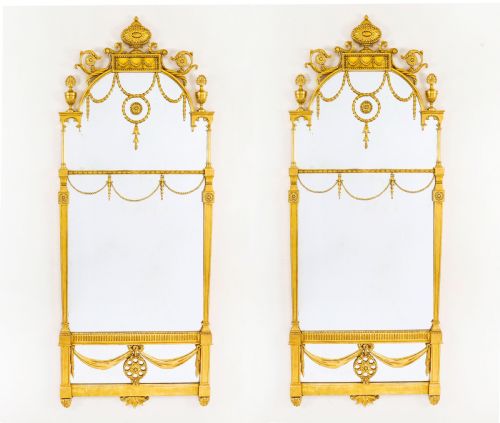
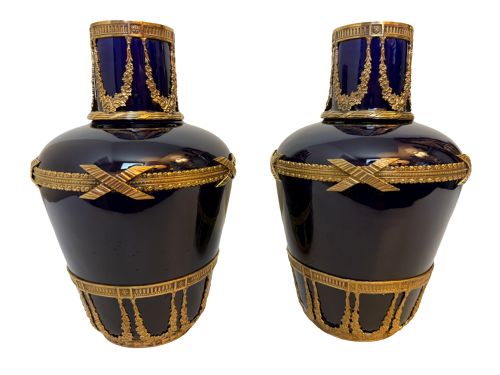


Gilt Glass Urn
Gilt glass urn selections bring together polished metallic lustre and coloured glass, offering a decorative centrepiece for traditional rooms.
Gilt Glass Urn
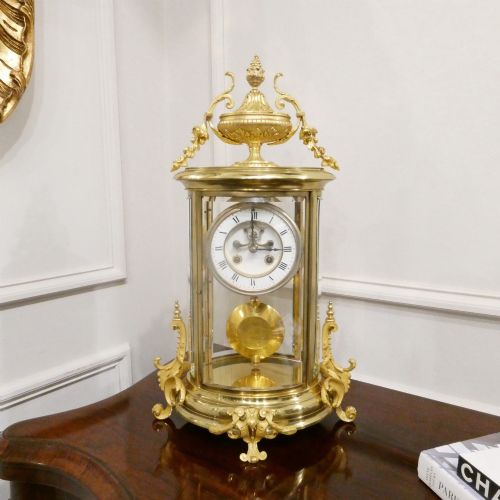
A gilt glass urn brings together the reflective qualities of metallic highlights and the transparent or opaque body of moulded vessels. When searching for a gilt glass urn, buyers encounter pieces spanning the Georgian, Victorian, and late nineteenth-century periods, alongside neoclassical revival designs. These items frequently manifest as decorative vases, table lamps, or clock garniture components rather than standalone architectural vessels.
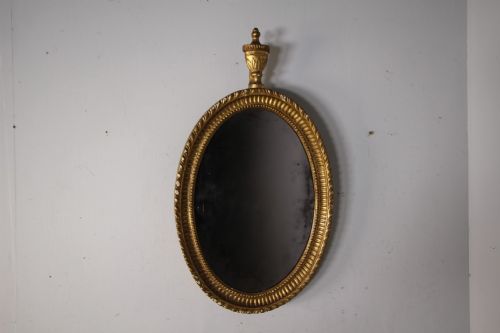
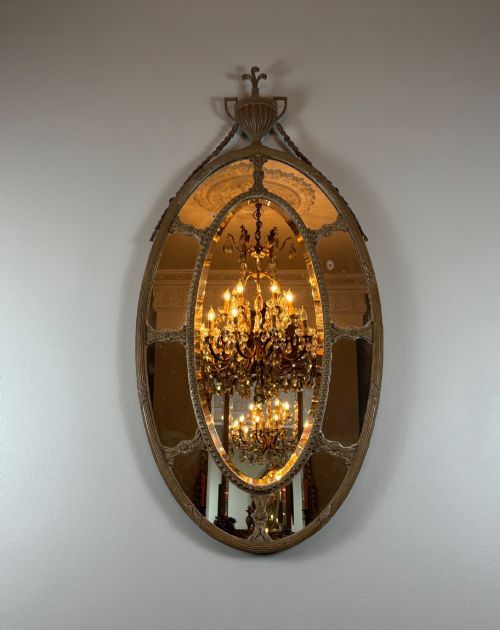
The objects stem predominantly from English, French, and Bohemian workshops, often displaying classical shapes influenced by Adam revival or neoclassical tastes. While the archive records related items such as convex glass wall mirrors and crystal bowls with paste gilt decoration, the core search centres on ornamental vessels combining glass and gilding.
Materials and construction techniques
Maker workshops utilised clear, crystal, opal, and coloured glass bases, shaped through blowing or moulding into ovoid and baluster profiles. Surface enrichment involved applying gold leaf, paste gilt, or enamel directly onto the glass body to create contrasting bands, swags, or floral motifs.
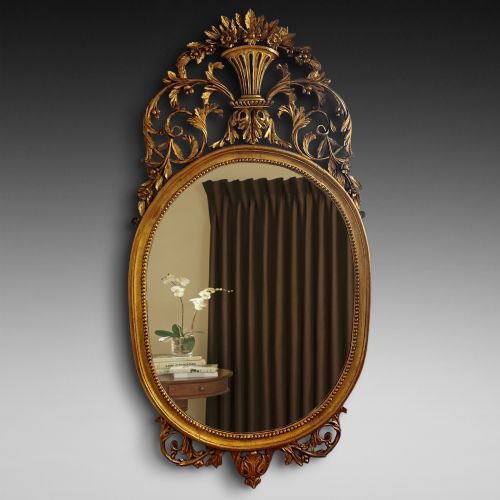
Many examples incorporate cast or chased ormolu, brass, and gilt bronze mounts that frame the glass body or serve as handles and pedestals. Wooden elements featuring gesso and carved giltwood appear on associated mirror frames and wall fixtures within the broader decorative suites.
Listings feature items spanning the Georgian, Victorian, and Edwardian periods, utilising materials such as ormolu, enamel, and crystal glass.
Distinctions in craftsmanship and finish
The refinement of the surface decoration separates standard production items from superior examples. Hand-painted enamel details and finely chased ormolu mounts indicate higher workshop investment compared to simple stamped metal fittings or uniform transfer printing.
The clarity and weight of the glass body, alongside the depth and intact state of the gold leaf or paste gilt, determine overall execution standard. Superior pieces maintain crisp relief in their gilt ornamentation and secure joins between the glass vessel and its metal or wooden mounts.
Samuel Marti
The Gilt Glass Urn Glossary
- Ormolu
- Gilded bronze or brass mounts applied to decorative objects and clock cases. This technique provides metallic contrast against glass and ceramic bodies.
- Paste gilt
- A method of applying gold decoration using a liquid medium rather than beaten leaf. It appears frequently on nineteenth-century European glassware.
- Clock garniture
- A set comprising a mantel clock flanked by matching decorative objects such as urns, vases, or candelabra. These matched suites dominated Victorian mantelpieces.
- Adam revival
- An eighteenth-century classical style revisited during the nineteenth century. It utilises symmetrical urn, swag, and ribbon motifs derived from antiquity.
- Opaline glass
- An opaque, milky glass popular during the Victorian era. It provides a dense pastel background for gilt and hand-painted surface decoration.
Gilt Glass Urn: Frequently Asked Questions
What is a gilt glass urn?
A gilt glass urn is a decorative vessel combining a glass body with gold leaf, paste gilt, or metallic mountings. These items functioned as ornamental display pieces in nineteenth-century interiors.
They reflect neoclassical and revival design trends, incorporating classical motifs like swags and foliate patterns.
How do I date a gilt glass piece?
Dating relies on examining the manufacturing techniques, glass colour palettes, and mount styles. Victorian and late nineteenth-century pieces often feature vibrant overlay glass or opaline bodies with applied paste gilding.
Earlier Georgian and Regency examples lean towards strict neoclassical symmetry, while later Victorian revival pieces introduce more ornate or eclectic brass and ormolu framing.
Where were these pieces made?
Production centres were concentrated in France, England, and Bohemia during the eighteenth and nineteenth centuries. Each region developed distinct specialisations in glassblowing, casing, and gilding techniques.
French workshops frequently paired glass vessels with detailed ormolu mounts, while Bohemian makers excelled in coloured and overlaid glass varieties.
How should I display them at home?
These vessels suit placement on mantelpieces, side tables, or within glazed display cabinets where light can interact with the glass and gilt surfaces. Pairing them with matching garniture elements or complementary mirrors creates a balanced period arrangement.
Positioning them away from direct heat sources helps preserve the stability of applied gold leaf and enamel decorations.