


Victorian Cranberry Vase
A victorian cranberry vase brings rich, deep red glass into a room, catching the light through trumpet shapes, epergnes, and jack-in-the-pulpit forms.
Victorian Cranberry Vase
When you search for a victorian cranberry vase, you encounter a distinct category of nineteenth-century glassware that ranges from simple trumpet stems to elaborate table centrepieces and mantel lustres. The pieces appearing here span the Victorian era, with notable representation from the eighteen-eighties and Bohemian workshops.
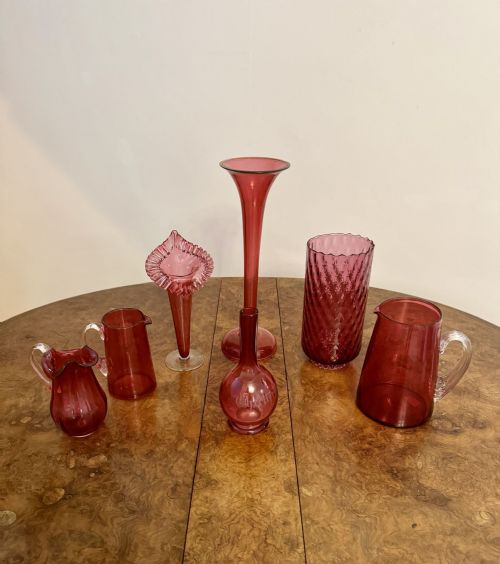
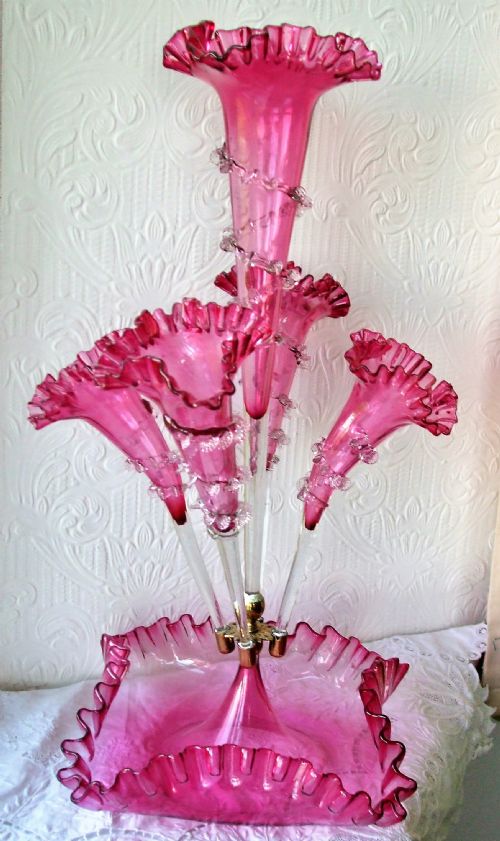
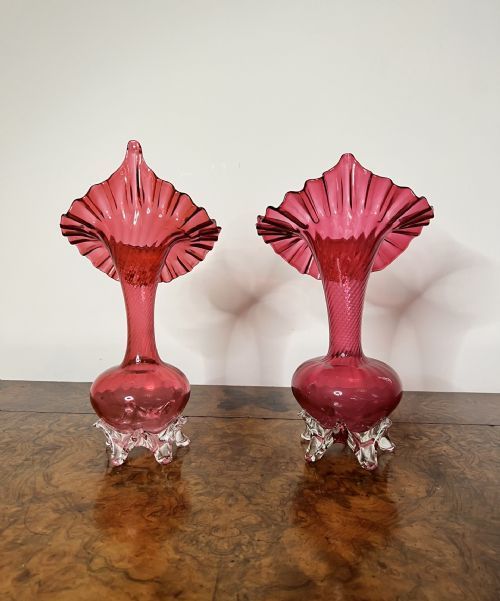
You meet various specific forms among these listings, including jack-in-the-pulpit vases with wide ruffled rims, towering floor vases, and multi-piece epergnes fitted with hanging baskets. Smaller examples, such as celery vases and bud vases, also appear frequently alongside larger decorative items.
The aesthetic bridges domestic utility and ornate display, often combining the signature pinkish-red glass with clear crystal, brass, or contrasting uranium green bases. English and Bohemian makers dominate the origins recorded across the archive and current listings.
Materials and Working Methods
The distinct colour of a victorian cranberry vase derives from the addition of gold chloride to the molten glass batch during production. Artisans shaped these pieces using traditional hand-blowing techniques, which accounts for the organic variations seen in frilled rims and crimped epergne edges.
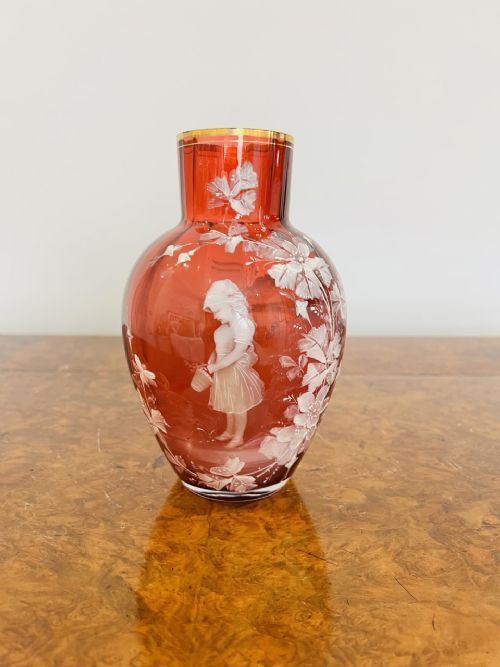
Many examples incorporate secondary materials and decorative embellishments such as gold leaf gilding, hand-painted enamel scenes, and cut crystal overlays. Base elements occasionally integrate contrasting uranium green glass or clear glass stems to support the primary bowl.
Judging Quality and Execution
Quality in these items rests upon the depth and uniformity of the glass colour, alongside the crispness of any cut crystal overlay or hand-painted enamel detail. Superior pieces display careful balance in complex forms like multi-horn epergnes and tall trumpet vases.
The refinement of the applied decoration, such as Mary Gregory style white enamel figures or intricate gilding, separates standard productionware from finer examples. The weight of the glass and the smoothness of the polished pontil mark also indicate the standard of craftsmanship.
The Victorian Cranberry Vase Glossary
- Cranberry Glass
- A transparent pinkish-red glass coloured with gold chloride. It became immensely popular during the nineteenth century for decorative tableware and mantel displays.
- Mary Gregory
- A style of white enamel painting depicting silhouetted Victorian children usually amidst foliage. It appears frequently on cranberry glass vases and jugs from the period.
- Epergne
- A large table centrepiece featuring a central bowl with multiple detachable arms or trumpets. These pieces often held fruit, flowers, or sweetmeats during formal dining.
- Jack in the Pulpit
- A specific nineteenth-century vase form characterised by a sweeping, flared, and folded rim resembling the shape of the arum lily. This silhouette required considerable skill from the glassblower to shape evenly.
- Mantel Lustre
- A decorative glass vase fitted with hanging crystal prisms around the rim. They sat upon fireplace mantelpieces to reflect candlelight throughout the room.
Victorian Cranberry Vase: Frequently Asked Questions
Are these vases safe for fresh flowers?
Most nineteenth-century glassware handles water safely, though you should check for hairline cracks or historic repairs before filling a vase. Hand-blown vessels often feature pontil marks on the base that indicate their age rather than a defect.
Empty the water promptly after use to prevent mineral deposits from clouding the interior of antique transparent glass. Acidic plant food or harsh detergents can damage delicate enamel work over time.
What is Mary Gregory glass?
Mary Gregory glass refers to pieces decorated with white enamel silhouettes of Victorian children playing outdoors. While named after an American decorator, most of these items originated in English and Bohemian factories during the nineteenth century.
The enamel work stands slightly proud of the cranberry glass surface when you run a finger gently across it. Quality varies from simple single figures to detailed woodland scenes.
How do I identify Bohemian pieces?
Bohemian glass from the Victorian period often employs heavy casing, rich gilding, and complex colour overlays. These items frequently feature panel cuts or opalescent thorn details alongside the standard cranberry tone.
Examine the weight and the depth of the glass layers, as Central European workshops favoured robust forms. Archival records here show notable examples featuring hand-painted portraits and heavy gold leaf.