


Enamel Painted Crystal
Enamel painted crystal objects combine clear glass and lead crystal with vibrant coloured decoration, offering a decorative focal point for any room.
Enamel Painted Crystal
When you search for enamel painted crystal, you encounter a selection of decorative nineteenth-century glassware and household items. The listings on this page span several decades of production, incorporating styles such as Victorian, Art Nouveau, and Bohemian.
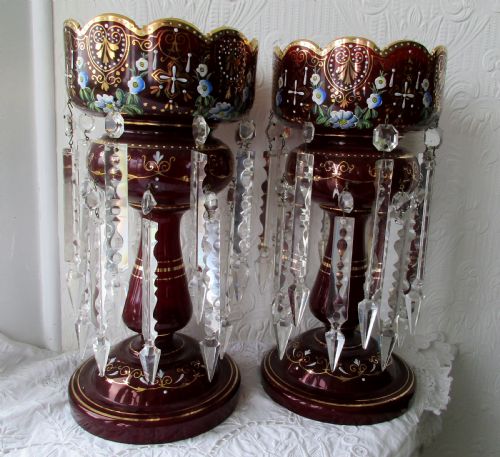
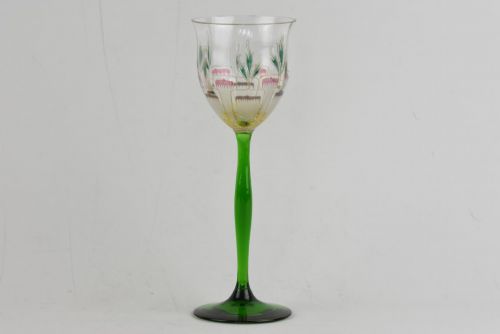
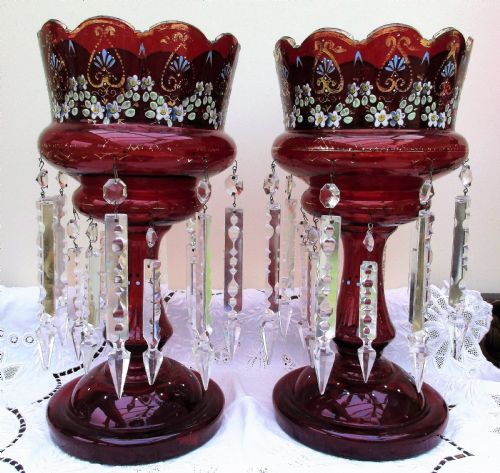
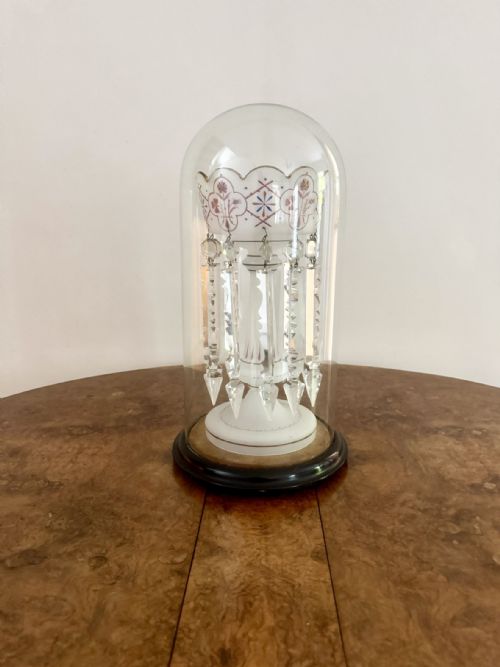
Mantel lustres form a prominent part of the selection, frequently appearing in ruby glass and overlay glass alongside crystal hock glasses and oil lamps. French regulator clocks and inkwells also represent the category, combining crystal components with painted enamel panels.
The objects originate from English, French, and German makers, dating primarily from the Victorian era up to nineteen-ten. Buyers are most likely to meet mantel lustres and hock glasses decorated with floral enamelling and gilt details.
How they were made
Maker workshops utilised clear lead crystal and coloured glass as the primary substrate for these pieces, shaping them into vases, clock cases, and drinking vessels. Glass-blowers formed the basic vessel shapes before applying layers of coloured glass or overlay techniques.
Craftsmen applied opaque and translucent enamels directly onto the glass surface by hand, often incorporating gold leaf and gilt brass mounts. Subsequent firing fixed the enamel pigments permanently to the crystal, creating durable decorative motifs.
Some mantel lustres spent their lives hidden in gloomy Victorian parlours, waiting patiently for a sunny afternoon to make the room sparkle.
What varies in quality
The precision and detail of the hand-painted enamel decoration dictate the standard of each piece, with finer brushwork separating superior examples from simpler ones. The clarity of the underlying crystal and the richness of the ruby or overlay glass also influence the overall standard.
The integration of metal elements, such as gilt brass mounts on clocks or the retention of original glass prisms on lustres, marks the difference between standard production items and finer specimens.
Theresienthal
The Enamel Painted Crystal Glossary
- Mantel lustre
- A decorative glass vase hung with cut glass prisms designed to catch the light on a fireplace mantel. These pieces frequently appear in pairs.
- Hock glass
- A tall wine glass with a coloured or clear bowl and stem, intended for white wine. Enamelled examples often feature detailed floral patterns.
- Overlay glass
- A technique where a layer of coloured glass is fused over a clear crystal base and partially cut away to reveal the contrasting layer beneath.
- Regulator clock
- A precision pendulum clock housed in a glass and metal case, allowing the movement to remain visible from multiple angles.
- Guilloche
- An intricate decorative pattern engraved into metal beneath a translucent layer of enamel.
Enamel Painted Crystal: Frequently Asked Questions
What are mantel lustres used for?
Mantel lustres served as decorative ornaments traditionally placed upon fireplace mantelpieces during the nineteenth century. Their hanging glass prisms refracted candlelight and daylight to brighten dim Victorian parlours.
While they functioned primarily as ornamental centrepieces rather than practical vessels, owners sometimes utilised them to hold small items or simply displayed them in pairs.
How do I clean enamelled glass?
Enamelled glass requires gentle maintenance to protect the painted decoration and any applied gold leaf. Dusting with a soft, dry cloth is usually sufficient for regular care.
Submerging these pieces in water should be avoided, particularly antique examples with gilt elements or fragile enamelling. Professional advice should be sought for deep cleaning.
How do I date an enamel painted crystal piece?
Dating relies on examining the manufacturing style, glass colour, and enamel motifs. Victorian pieces often display rich ruby tones and heavy floral designs, while nineteen-ten items may show Art Nouveau influences.
Mechanical components in items like clocks or the specific cut of crystal prisms also provide clues to the period of manufacture.
Where were these glass items made?
The pieces originate from various European centres of glass production, notably England, France, and Germany. Different regions developed distinct characteristics, such as Bohemian overlay techniques or English ruby glass lustres.
Factory production ranged from large German glassworks like Theresienthal to specialised French workshops producing crystal regulator clocks.