




Antique Flash Glass
Antique flash glass brings vibrant colour and layered depth to a room through cased vessels and lighting components created across the nineteenth and early twentieth centuries.
Antique Flash Glass
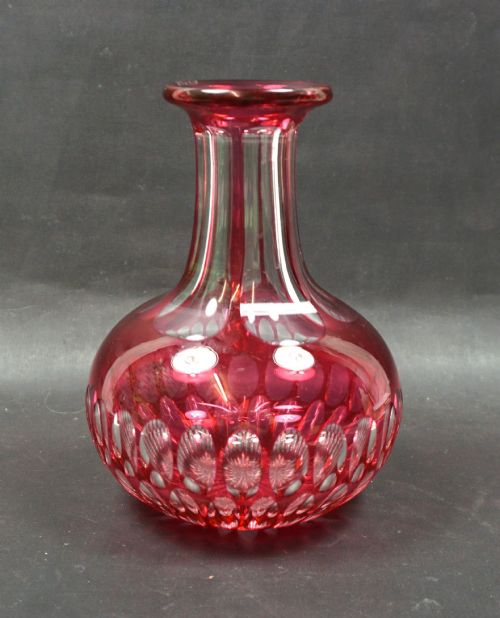
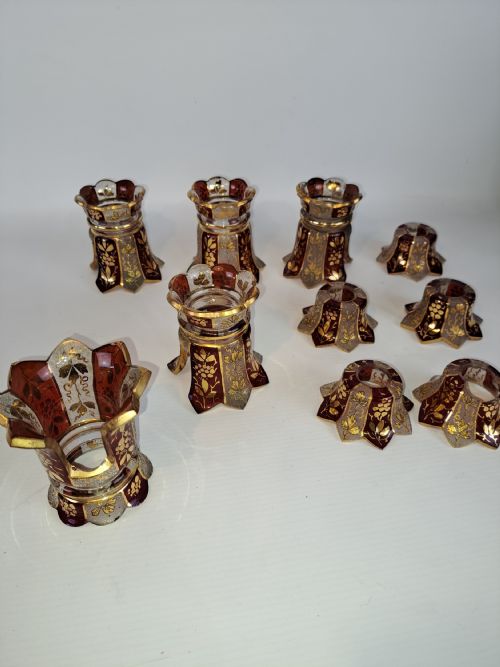
When you search for antique flash glass, you are looking at layered items where a thin stratum of coloured glass coats a clear or contrasting body. The pieces on this page span the eighteenth to the early twentieth centuries, taking the form of decanters, vases, champagne coupes, and chandelier parts.
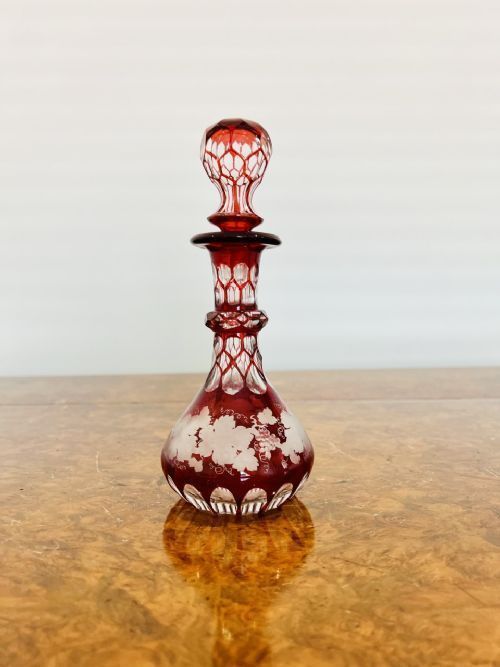
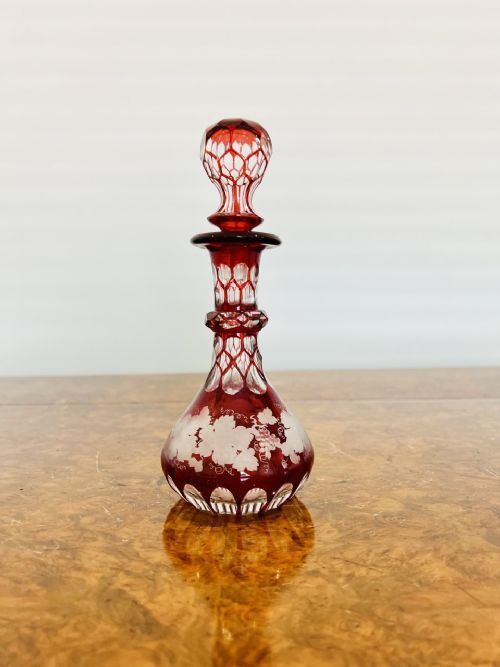
Victorian and Edwardian examples predominate, alongside Bohemian pieces that often feature rich ruby hues. English makers also produced striking decanters and carafes utilising this cased technique.
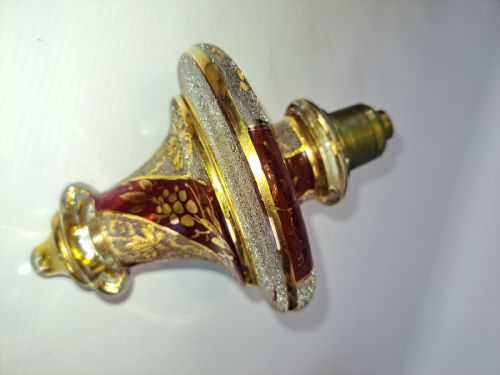
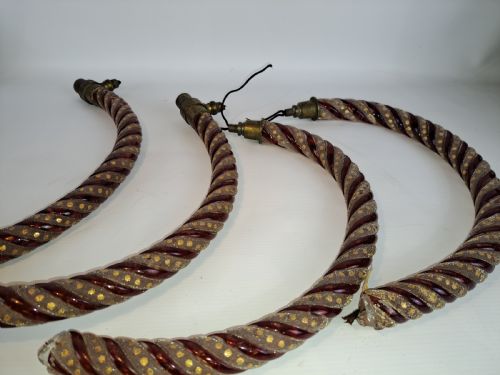
Functional tableware and decorative items sit alongside architectural lighting components such as chandelier arms and bowls. This variety reflects how extensively the method was applied across domestic and formal interiors.
How they were made
The technique relies on fusing a thin layer of coloured glass over a clear or different coloured crystal base while hot. Glassmakers then cut, engrave, or etch through the outer layer to expose the contrasting material beneath, creating sharp geometric or pictorial patterns.
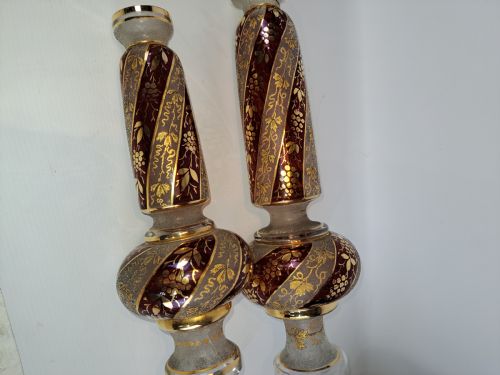
Many items incorporate additional embellishments such as gold leaf, enamel, and silver plate mounts. Bohemian and English workshops employed skilled hand-cutting and wheel-engraving to define motifs like birds, vines, and animal decorations.
Ganging bells meant to summon attention chime quietly through centuries of accumulated dust and careful polishing.
What varies in quality
Quality rests on the crispness of the wheel-cut or etched lines and the depth of the coloured overlay. Superior pieces show precise contrast where the top layer is removed cleanly without marking the clear crystal underneath.
The finesse of hand-applied gilding and enamel work also distinguishes finer items from standard production. Lustre, weight, and the clarity of the underlying crystal determine the overall standing of each vessel or component.
The Antique Flash Glass Glossary
- Flash glass
- A vessel or component made with a thin outer layer of coloured glass fused over a clear body. This allows craftsmen to cut through the outer skin to reveal the contrasting colour beneath.
- Overlay
- A thicker coating of coloured glass applied to a clear crystal base before cutting. It differs from flash glass by offering a deeper layer for heavier relief carving.
- Cranberry glass
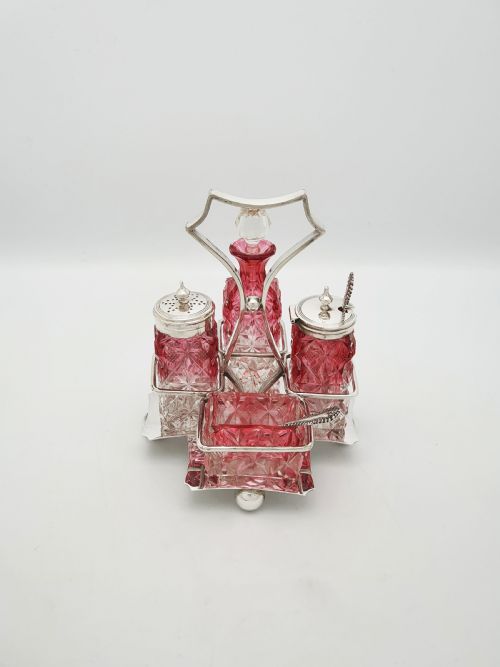
- A transparent pinkish-red glass coloured with gold chloride. It is frequently seen in Victorian decanters and cruet sets.
- Lustre
- A decorative glass vase or pedestal fitted with hanging glass prisms. These ornaments were popular in the Victorian period for reflecting candlelight.
- Champagne coupe
- A shallow, broad-bowled stemmed glass designed for sparkling wine. Flash glass versions feature coloured bowls and feet cut with intricate patterns.
Antique Flash Glass: Frequently Asked Questions
What is flash glass?
Flash glass is a two-layer material made by fusing a thin skin of coloured glass over a clear or contrasting crystal base. This method allows artisans to cut through the outer stratum to create patterned designs.
Craftsmen remove portions of the surface colour by wheel-engraving, etching, or cutting, leaving bright patterns that contrast sharply with the base material.
How do I clean antique flash glass?
Wash these pieces gently by hand using lukewarm water and mild soap. Avoid abrasive sponges or harsh detergents that can scratch the surface or damage gilding.
Dry them immediately with a soft cloth to prevent water spots, particularly around engraved channels and gilded rims where moisture might linger.
How can I tell Bohemian pieces apart?
Bohemian items frequently display deep ruby red colouration paired with heavy gilding, frosted panels, and detailed etching. They often take the form of vases, centrepiece bowls, and chandelier components.
English equivalents tend to focus on functional tableware such as decanters, carafes, and cruet sets, often utilising cranberry or green over crystal.
Can I use these decanters daily?
These decanters and carafes are sturdy enough for occasional service, though many collectors prefer to display them. Hand-washing is essential to preserve the exterior decoration.
Care should be taken with pieces featuring gold leaf or delicate surface engraving, as modern dishwashers will quickly ruin the finish.