
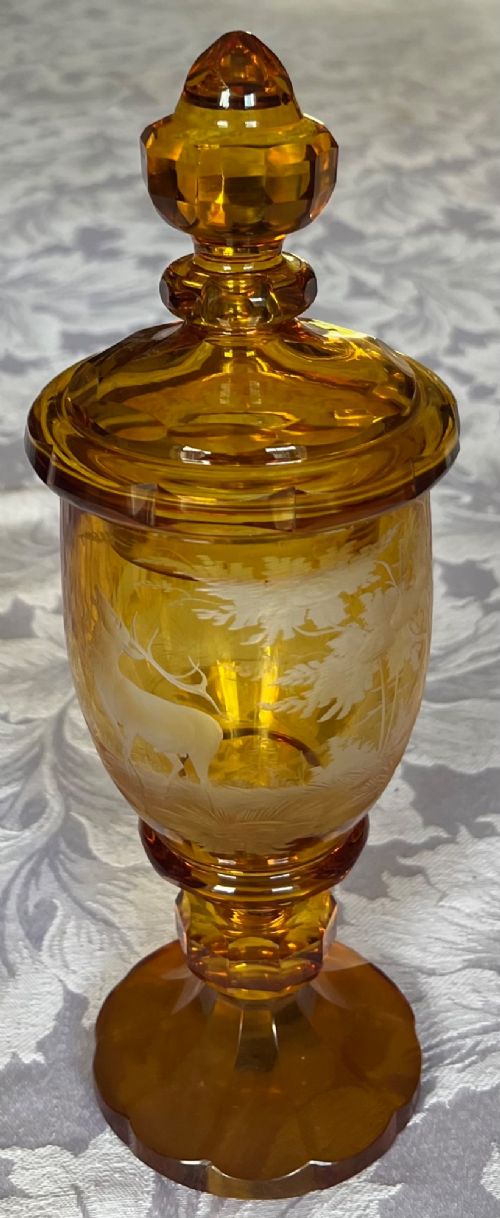


Bohemian Crystal Vase
A bohemian crystal vase brings remarkable colour and intricate cut glass into a room, catching the light in a way few other decorative objects manage.
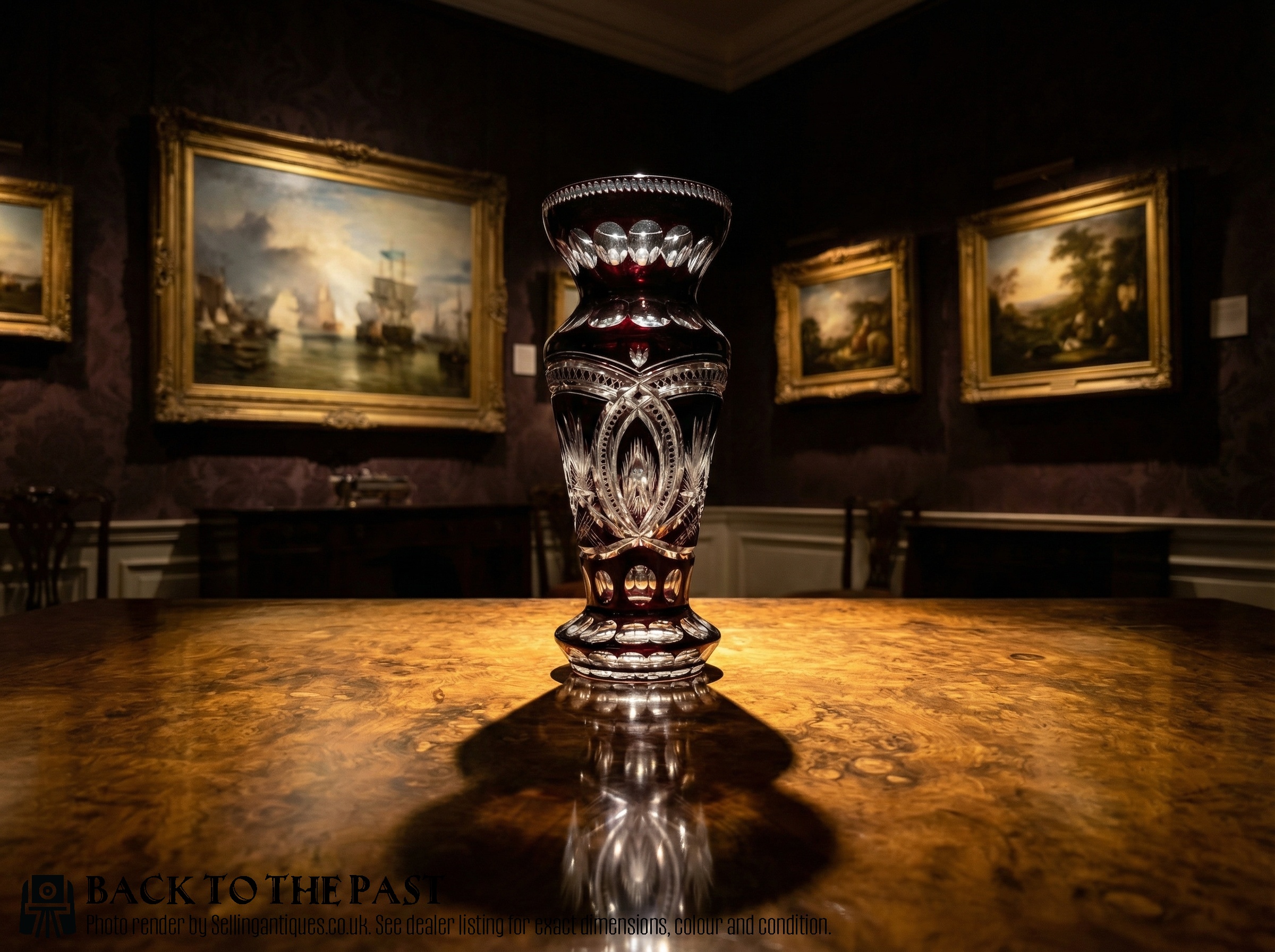
Bohemian Crystal Vase
When you search for a bohemian crystal vase, you encounter a striking range of decorative glassware designed to command attention on a mantelpiece or side table. The selection spans the Victorian period and the nineteenth century, showing the enduring appeal of traditional European glassmaking.
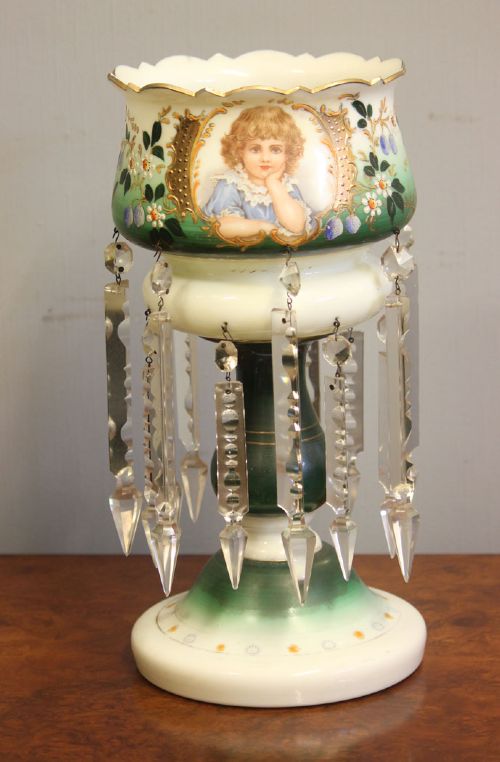
You are most likely to meet ruby glass and cobalt blue pieces on this page, often formed as lustres or lidded urns. These items combine utility with ornamental display, reflecting the rich aesthetic of nineteenth-century interiors.
How they were made
Maker's hands shaped these items using lead crystal and flash glass, applying techniques like cutting, etching, and engraving to create deep facets and clear patterns. Overlay methods allowed artisans to fuse contrasting layers of glass before cutting through the outer colour to reveal the clear or tinted layer beneath.
Gilt ornamentation and gold leaf details frequently highlight the rims and panels, while hand-painted enamel adds floral or geometric motifs. These decorative layers complete the surface before the pieces are finished for the drawing room.
Victorian mantel lustres doubled as early room-brighteners, their dangling glass prisms chiming softly whenever someone walked heavily across the floorboards.
What varies in quality
The distinction between standard examples and the finest pieces lies in the crispness of the glass cutting and the precision of the engraving. Sharp, deep facets catch light cleanly, whereas softer edges indicate hurried workmanship.
The application of gold leaf and enamel also separates the grades. Finely rendered hand-painted details and secure gilding elevate an object above simpler, more repetitive decoration.
The Bohemian Crystal Vase Glossary
- Crystal
- A clear, brilliant form of glass containing lead oxide for added weight and light refraction. It rings clearly when struck and allows for deep, sharp cutting.
- Flash glass
- A vessel formed of a thin layer of coloured glass applied over a base of clear or contrasting glass. Artisans cut through the outer layer to expose the colour underneath.
- Mantel lustre
- An ornamental vase fitted with hanging glass prisms designed to catch the candlelight. They sat upon fireplace mantels during the Victorian era.
- Overlay
- A technique where two or more distinct layers of glass are fused together before shaping and cutting. This method creates rich contrast in colour and opacity.
- Ruby glass
- A deep red decorative glass achieved by adding gold compounds to the molten batch. It served as a favoured background for cut and gilt decoration.
Bohemian Crystal Vase: Frequently Asked Questions
What is a bohemian crystal vase?
It is an ornamental glass vessel originating from the Bohemia region, known for deep cutting, rich colours, and skilled engraving.
These pieces served as prominent display items in nineteenth-century homes, often taking the form of vases, urns, or lustres.
How do I use a mantel lustre?
A mantel lustre functions primarily as a decorative garniture set, traditionally placed upon a fireplace mantel to reflect light.
The hanging glass prisms catch the flicker of candles or room light, creating a sparkling effect across the surface.
What makes ruby glass red?
The distinct red colour comes from the addition of gold chloride or gold nanoparticles into the molten glass mixture during production.
Glassmakers controlled the firing temperature to achieve the desired depth of crimson and ruby tones.
How can I tell the period?
Dating relies on observing the depth of the hand-cut facets, the style of the enamel work, and the presence of nineteenth-century forms like lustres.
Victorian examples frequently display cobalt blue or ruby flash glass combined with heavy gilding and prism drops.