
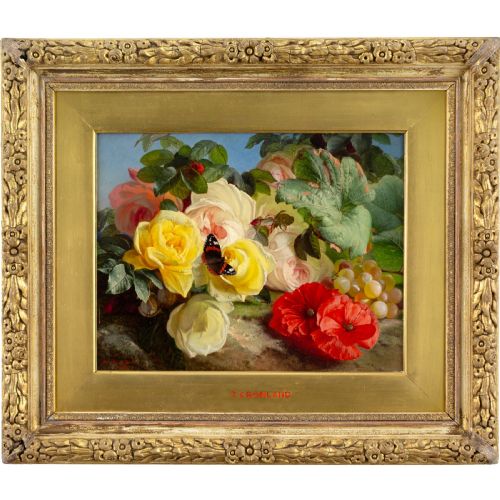
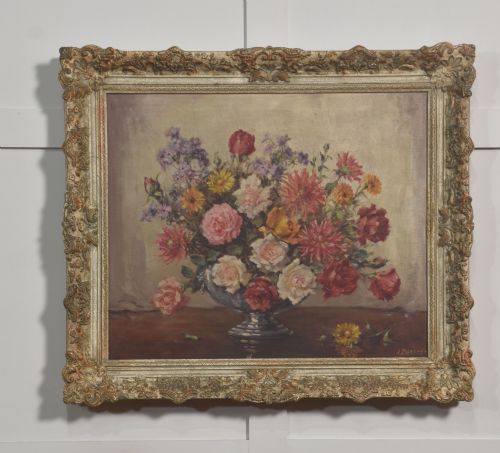
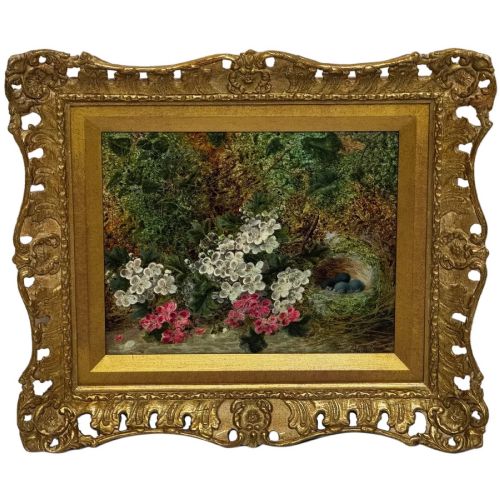
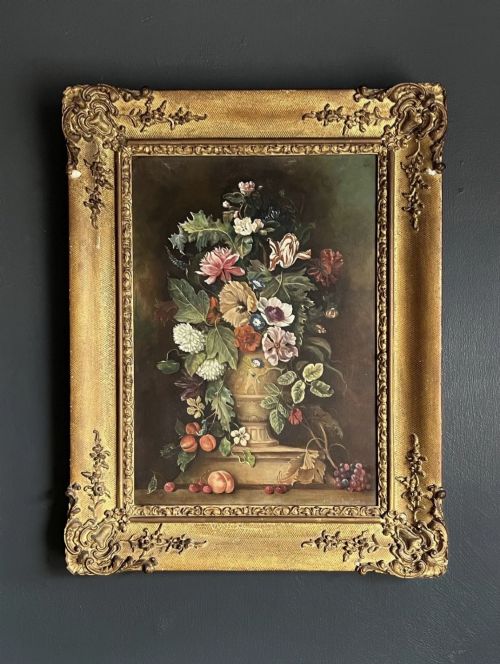
Gilt Framed Floral Art
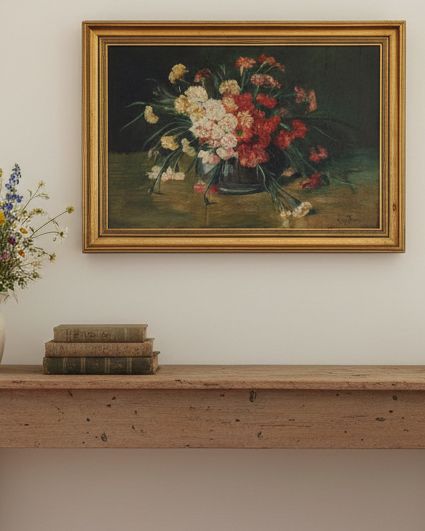
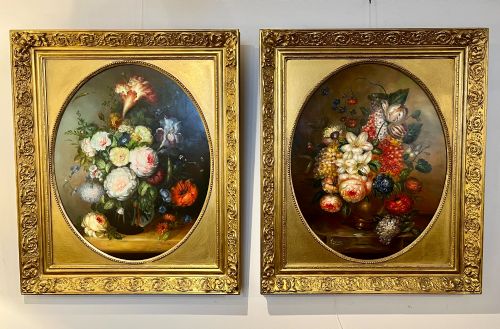
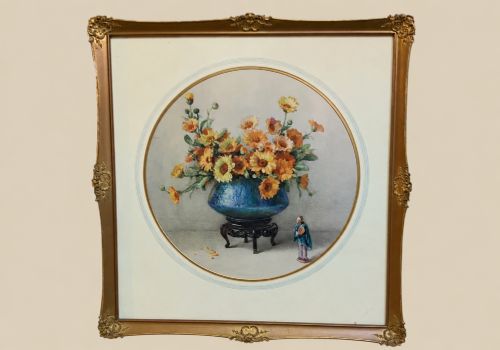
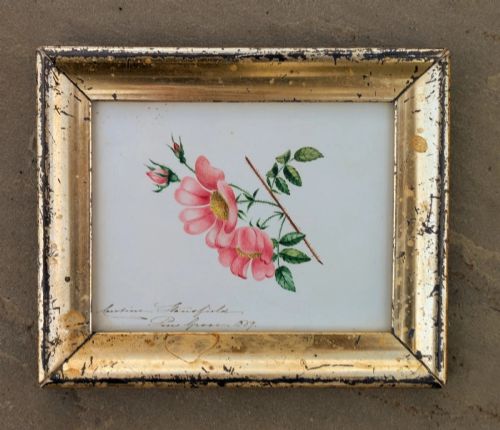
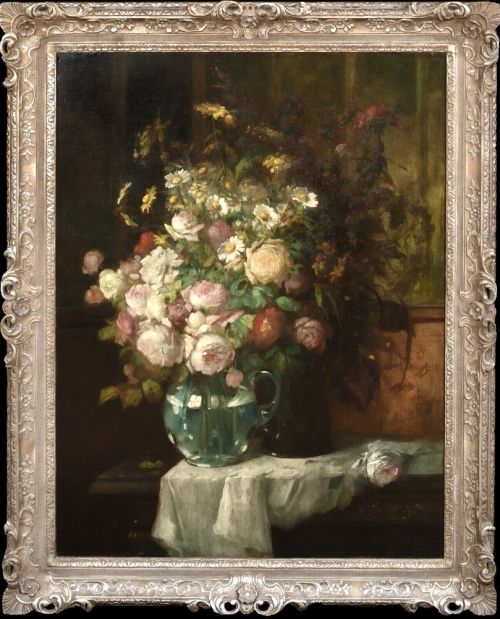
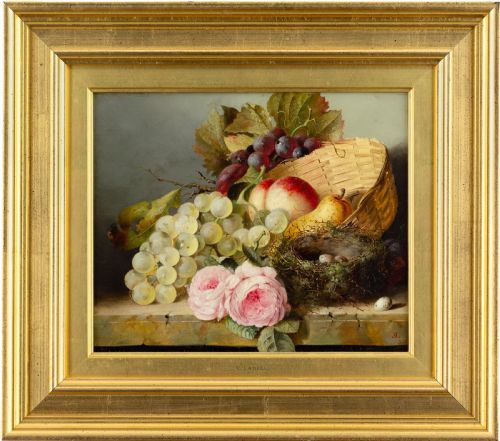
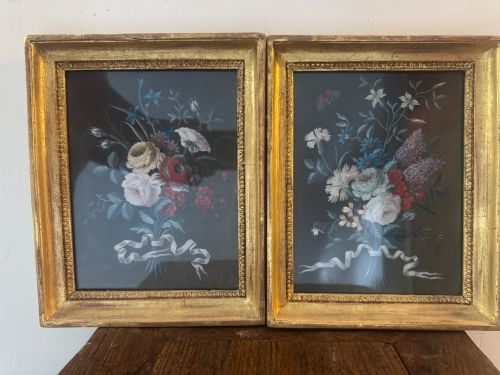
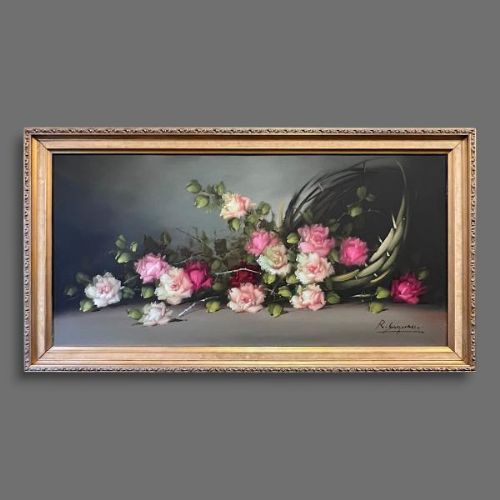
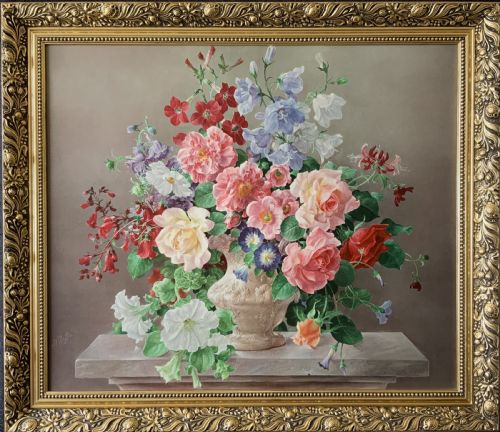
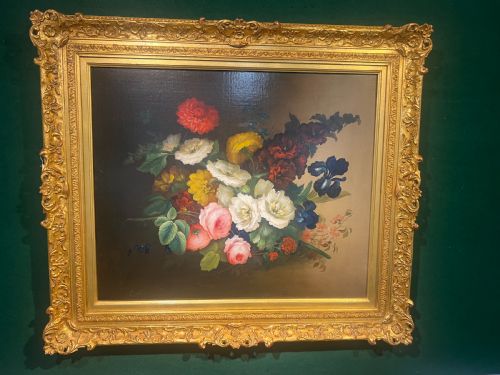
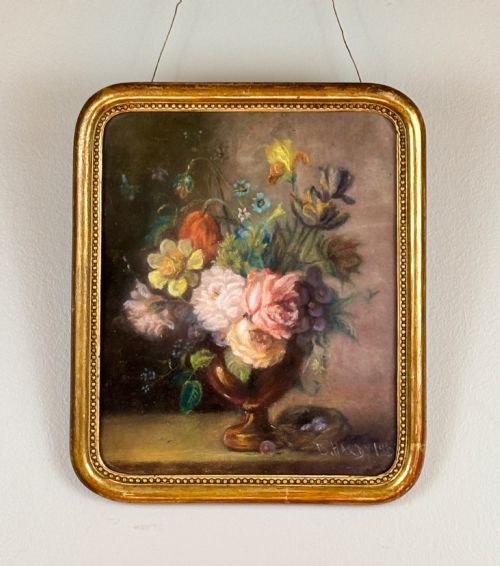
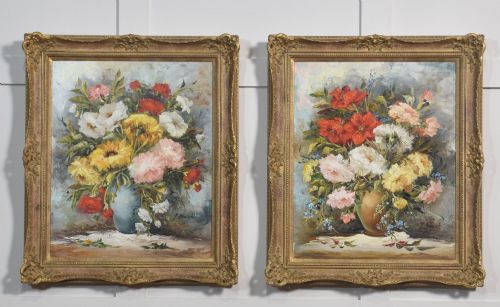
These pieces of gilt framed floral art bring together oil paint, watercolour and gouache within ornate surrounds.
Gilt Framed Floral Art
When you search for gilt framed floral art, you encounter oil paintings, watercolours, gouache and pastel works depicting botanical subjects. The selection spans the nineteenth century through to the mid-twentieth century, encompassing Victorian, Impressionist, Art Nouveau and Dutch Golden Age styles.
You are most likely to meet mid-nineteenth century oil paintings on canvas or board alongside twentieth-century impressionist floral displays. These works range from intimate studies of wild roses and carnations to large compositions featuring elaborate vases and wicker baskets filled with summer blooms.
The physical formats vary from single framed artworks and pairs to decorative cut paper pictures and oleograph prints. Each piece relies on its gilt frame to define its boundary and complement the natural colours of the subject matter.
How They Were Made
Artists applied oil paint, watercolour, gouache and pastel onto canvas, paper, board and silk to capture botanical subjects. Oil paintings on canvas often utilise layered brushwork to build texture, while watercolours and gouache employ delicate washes on paper.
The enclosing surrounds combine wood with gold leaf and gesso to create reflective metallic borders. Craftsmen carved or moulded the gesso frames to achieve ornate decorative profiles that matched the period aesthetic of the artwork.
A meticulous Regency artist once spent hours snipping paper flowers to assemble an intricate botanical portrait without a single drop of paint.
What Varies in Quality
The standard of execution in the painted floral subject distinguishes finer works from simpler decorative pieces. Skilled handling of light, shadow and botanical accuracy in oils or watercolours elevates a composition above standard academic studies.
The integrity and craftsmanship of the enclosing frame contribute significantly to the overall merit of the piece. Hand-gilded gesso surfaces and period wood construction demonstrate superior workshop origin compared to later replacements.
Theude Grönland·Oliver Clare·Konstantin Stoitzner·Edward Ladell·Harold Clayton·Edwin Steele·Manuela Bonati·Victor Simonin·Alice Anne Renshaw·Simon Pietersz Verelst·Amile Coppieters·Florence Hess·Paul Lelong
The Gilt Framed Floral Art Glossary
- Gesso
- A plaster mix applied to wood frames as a base for gilding. It provides a smooth surface for intricate moulding and gold leaf application.
- Gold Leaf
- Hammered gold beaten into extremely thin sheets. It is applied to frames over size to create a metallic surface.
- Gouache
- An opaque water-based medium containing pigment and gum. It produces matte, saturated colour blocks on paper.
- Oleograph
- A mechanical colour lithograph printed to imitate an oil painting. Texture is sometimes embossed into the surface to simulate canvas weave.
- Impressionism
- An art movement focusing on transient visual impressions through small, thin brush strokes. It prioritises accurate depiction of light in its changing qualities.
Gilt Framed Floral Art: Frequently Asked Questions
What periods do these floral artworks cover?
The listings span from the seventeenth century through the nineteenth century and into the mid-twentieth century. Works originate from various European schools including British, French, Dutch, Belgian and Austrian traditions.
Victorian and Edwardian eras are particularly well represented alongside mid-century impressionist interpretations of garden scenes and still life compositions.
How should I care for gilt framed art?
Keep painted works away from direct sunlight and excessive moisture to protect the pigments and canvas. Dust the frame gently with a dry, soft brush rather than liquid cleaners.
Maintain stable indoor temperatures to prevent the wood and gesso from expanding or cracking over time.
What materials are used besides oil paint?
Artists employed watercolour, gouache, pastel, mixed media and cut paper alongside traditional oil on canvas or board. Support materials include heavy paper, stretched canvas, wood panels and silk.
The enclosing elements combine timber substrates with moulded gesso and applied gold leaf.