



Gilt Chinoiserie Chest
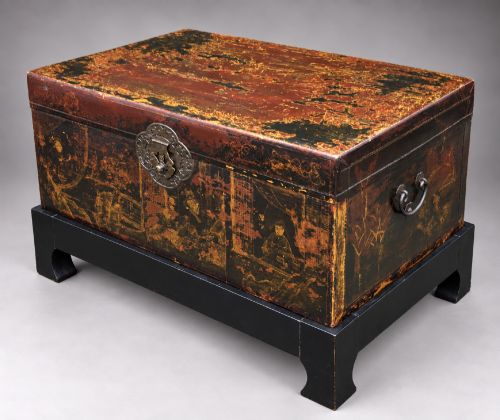
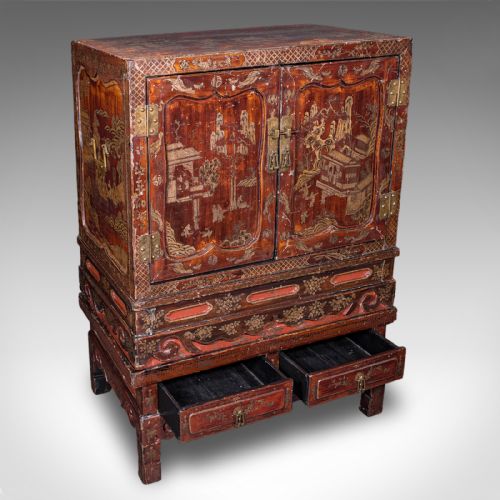
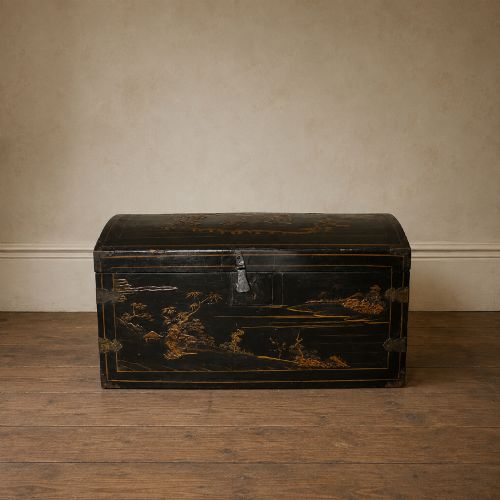
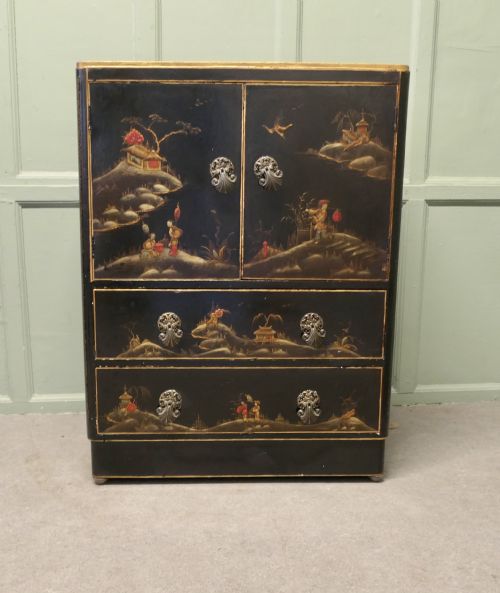
A gilt chinoiserie chest brings striking lacquerwork, gilded motifs and substantial storage together into a single dramatic focal point for the room.
Gilt Chinoiserie Chest
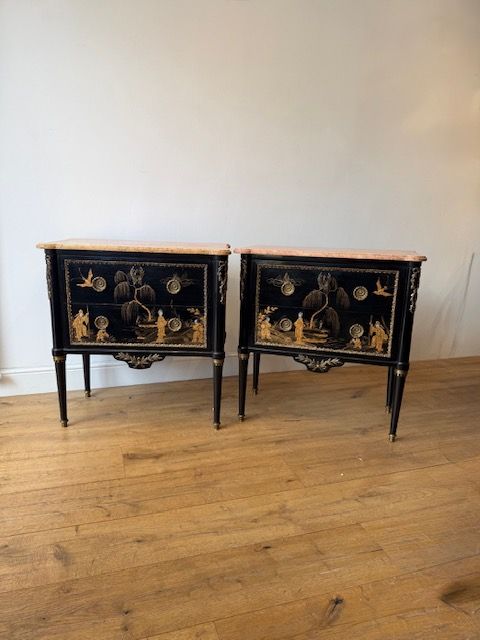
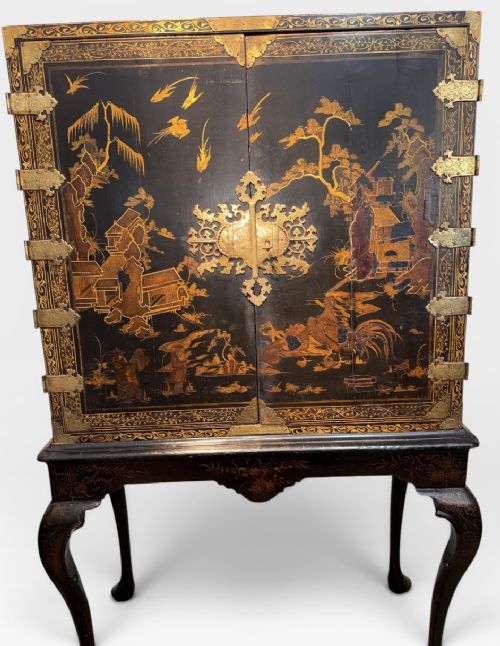
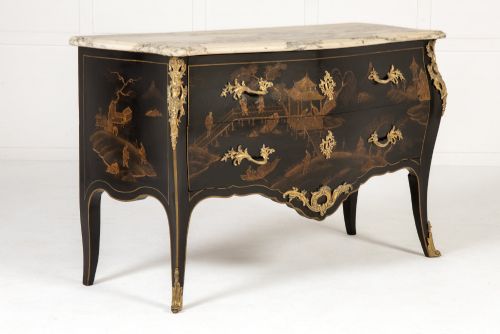
A gilt chinoiserie chest encompasses a variety of forms designed for storage and display, ranging from large blanket boxes and coffers to commodes, cupboards and cabinets on stands. These pieces emerge across several centuries, with examples spanning the eighteenth, nineteenth and early twentieth centuries.
The aesthetic draws heavily on traditional East Asian decorative traditions, interpreted through European and British taste via styles such as Queen Anne, Regency, William and Mary, and French Rococo Revival. Buyers will encounter both authentic Chinese Export pieces and British or continental interpretations utilising japanning and lacquer.
The most frequently met examples on this page are cabinets on stands, blanket boxes and commodes, often finished with distinctive dark lacquer surfaces. These vessels served practical storage needs while displaying intricate narrative scenes and ornamental motifs in gold.
How they were made
Construction relies primarily on wood carcases built from sturdy timber substrates, which are then prepared for multiple layers of lacquer. Artisans applied successive coats of varnish and pigment, frequently building up a deep black, green or grey ground before adding decorative details.
Gold leaf, gilt and penwork provide the signature metallic highlights, applied by hand to delineate figures, landscapes, flora and fauna across the surfaces. Brass handles, escutcheons and mounts are often incorporated to reinforce corners and drawers, combining structural metalwork with decorative flourish.
One unexpected tea caddy hides amongst the large cabinets and massive blanket boxes, proving that gilt chinoiserie comes in miniature too.
What varies in quality
The refinement of the hand-painted and gilded detailing determines much of the distinction between standard and exceptional pieces. Superior examples display crisp, densely detailed narrative scenes with precise linework in the gold leaf, whereas lesser pieces feature repetitive or coarser ornamentation.
The integrity of the lacquered surface and the stability of the underlying wood carcase dictate the enduring character of the object. Pieces that retain their original depth of finish without heavy modern intervention demonstrate superior craftsmanship from their period of origin.
Mercier Frères·Harrods
The Gilt Chinoiserie Chest Glossary
- Japanning
- European imitation of East Asian lacquerwork, developed during the seventeenth and eighteenth centuries using varnishes and raised metallic decoration. It allowed local cabinetmakers to satisfy the demand for oriental aesthetics.
- Chinoiserie
- European artistic style reflecting Chinese and wider Asian artistic influences, prominent in furniture and decorative arts from the seventeenth century onwards. It relies on imaginative depictions of figures, pavilions and natural motifs.
- Commode
- A low chest of drawers or cabinet introduced from France during the eighteenth century, often standing on relatively tall legs. They frequently served a decorative function in prominent rooms.
- Coffer
- A robust chest or box traditionally used for storing valuables, textiles or documents, typically fitted with a hinged lid. Early versions often sat directly on the floor before being elevated on stands in later periods.
- Cabinet on stand
- A freestanding storage cabinet elevated upon a dedicated supporting frame or table base, popular during the seventeenth and eighteenth centuries. This form lifted the decorative surface closer to eye level.
Gilt Chinoiserie Chest: Frequently Asked Questions
What is a gilt chinoiserie chest?
A gilt chinoiserie chest is a storage piece, such as a trunk, commode or cabinet, decorated with oriental-inspired lacquer and gold leaf motifs. These items combine practical storage with elaborate decorative surfaces.
Originating in various forms across centuries of European and Asian craftsmanship, they serve as prominent focal points in interior settings.
How do I date a lacquer cabinet?
Dating relies on examining the construction methods of the wooden carcase, the style of the mounts, and the specific characteristics of the lacquer and gilding. Cabinet styles shifted from seventeenth-century William and Mary stands to eighteenth-century Queen Anne designs and later revival periods.
Comparing the hardware, such as brass hinges and handles, with known period examples also assists in establishing an approximate age.
Where were these chests used?
Historically, these decorative cabinets and chests were placed in principal reception rooms, parlours and bedchambers where owners could display their refined taste to visitors. Their striking visual presence made them ideal for formal entertaining spaces.
Today, they continue to function as statement storage pieces in living rooms, hallways and dining spaces.
How do I care for antique lacquer?
Antique lacquer surfaces require gentle treatment, keeping them away from direct sunlight, excessive heat and sudden humidity changes to prevent the wood underneath from moving. Dusting should be performed softly with a dry, lint-free cloth.
Avoid using modern chemical polishes or water, as these can permanently damage the fragile historical layers of varnish and gold leaf.
What is the difference between a coffer and a commode?
A coffer is a deep box or chest, usually accessed via a hinged lid at the top, designed primarily for bulk storage of textiles or valuables. They often sit on low frames or stands.
A commode is constructed with drawers accessed from the front, functioning more like a low chest of drawers or side cabinet intended for display surfaces.