

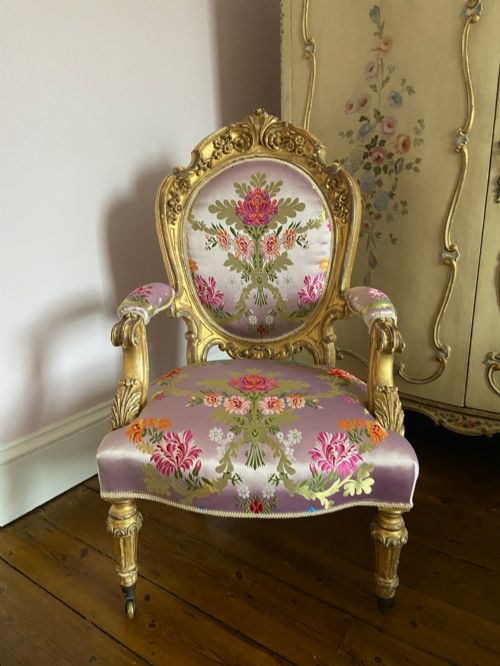
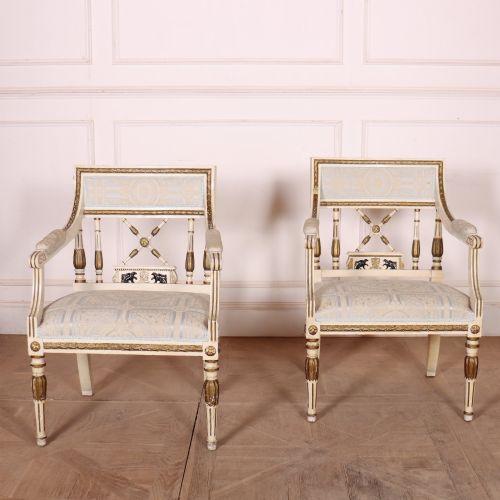
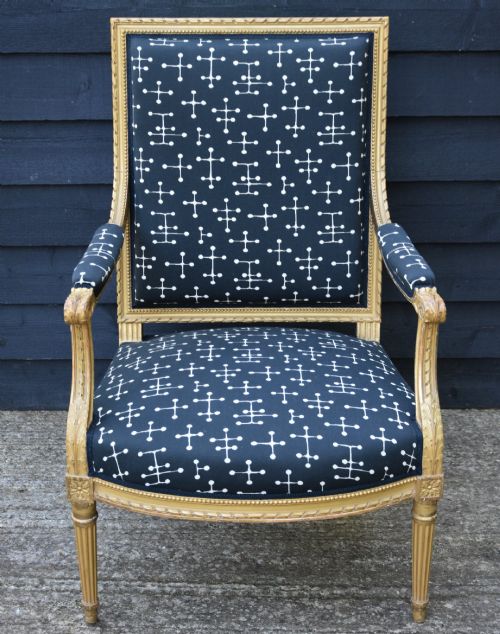
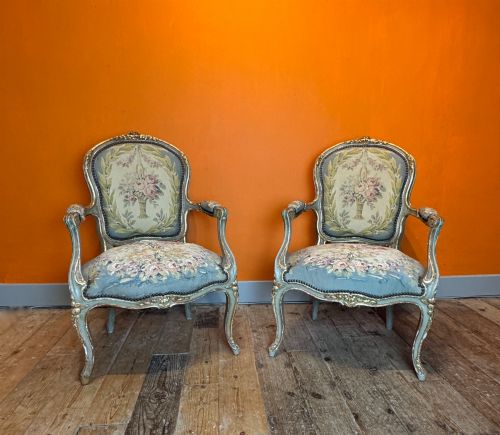
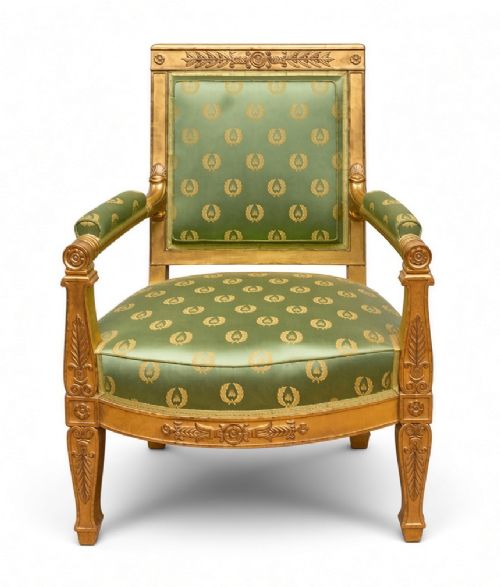
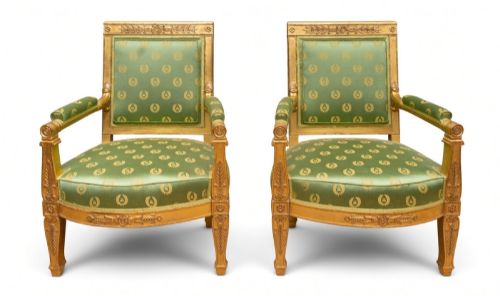
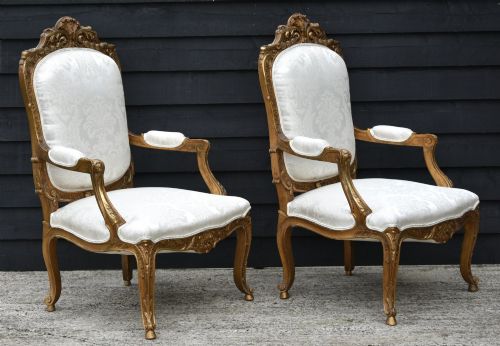
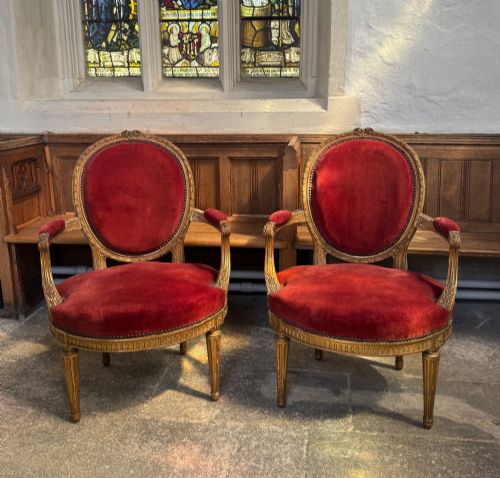
Gilt Carved Chairs
Gilt carved chairs bring theatrical warmth and continental glamour to a room through centuries of gilded woodwork and plush upholstery.
Gilt Carved Chairs
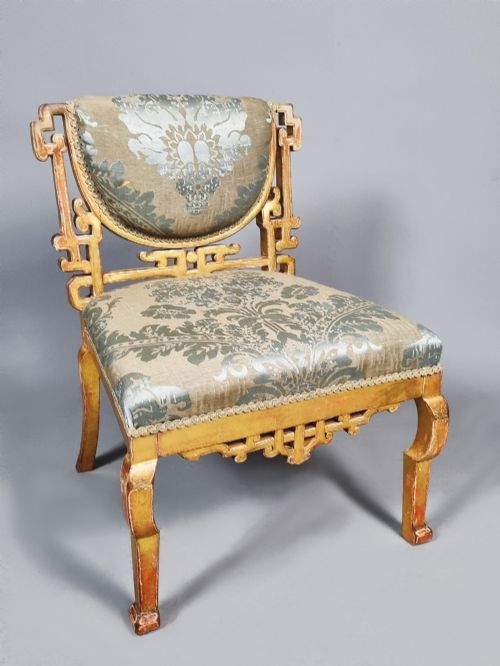
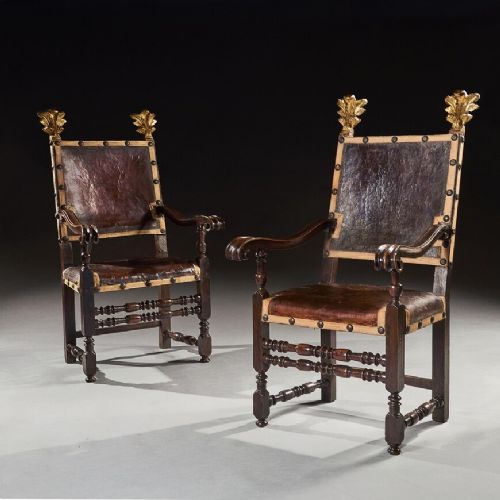
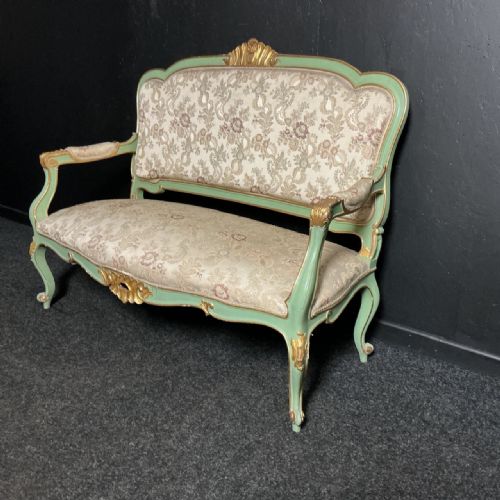
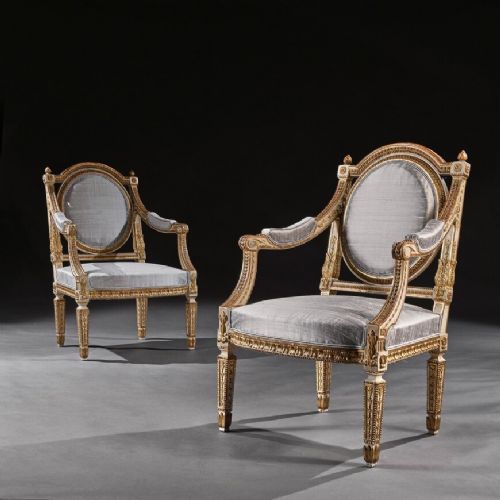
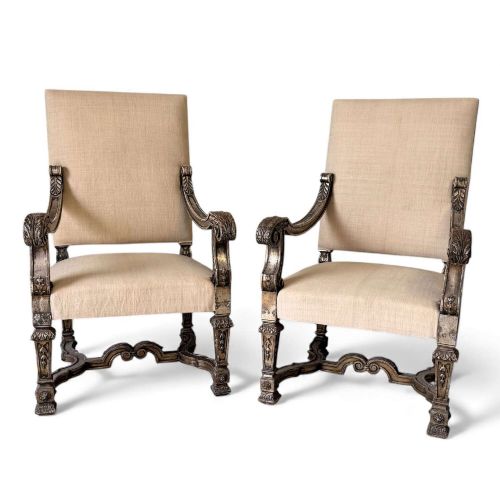
When searching for gilt carved chairs, buyers encounter an array of ornate seating designed primarily for formal reception rooms, salons, and libraries. The selection spans grand Italian Baroque armchairs, restrained Regency models, and elaborate Louis XVI style salon chairs.
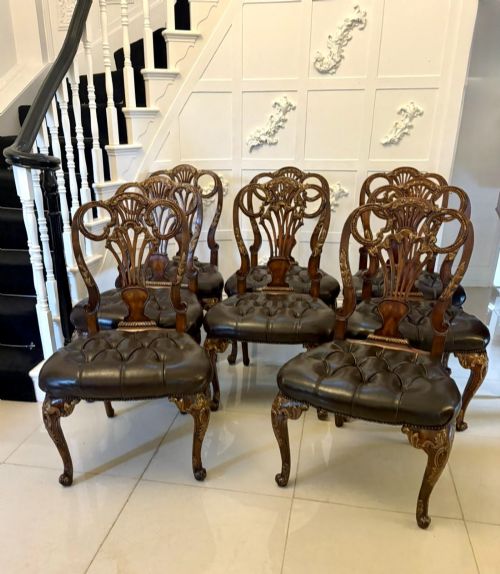
Armchairs, bergères, and open-framed fauteuils dominate the selection, frequently accompanied by dining chairs, side chairs, and occasional pieces. French and Italian craftsmanship shapes the core of the inventory, often featuring the classic vocabulary of the rococo and neoclassical movements.
Most examples originate from the nineteenth century, capturing a widespread Victorian and Edwardian appetite for continental revival styles. Earlier eighteenth-century pieces and twentieth-century interpretations also appear, offering varied expressions of carved and gilded timber.
How they were made
The structural framework relies on traditional hardwoods such as beech, walnut, and mahogany, shaped through careful hand carving to achieve deep relief ornamentation. Craftsmen applied gesso to the carved timber surface before laying fine sheets of gold leaf to create the characteristic luminous finish.
Parcel-gilt techniques often combine painted surfaces with exposed gilding to highlight specific architectural details on the frame. Upholstery traditions dictate the choice of covering materials, ranging from historic tapestries and leather to contemporary applications of silk, velvet, and patterned fabric.
Listings feature walnut, beech, and mahogany frames finished in gold leaf or paint.
What varies in quality
The depth and crispness of the wood carving distinguish superior examples from standard production, as master carvers achieved sharper undercut foliage and more fluid scrollwork. The integrity of the original gilding surface, whether aged with natural warmth or diminished by poor restoration, determines much of the visual authority.
Structural proportion and the harmony between frame design and upholstery choice dictate the overall success of the piece. Chairs retaining their original joinery, uncompromised frame rigidity, and period-appropriate textiles command greater consideration.
Waugh & Son·Jacob-Desmalter·Blaise Maucuy·Daniel Marot
The Gilt Carved Chairs Glossary
- Giltwood
- Timber that has been coated with thin sheets of gold leaf over a prepared gesso ground. This technique creates a rich, reflective surface characteristic of high-status historic furniture.
- Fauteuil
- An open-arm armchair originating in France, featuring upholstered back and seat panels with exposed wooden arms. These chairs were designed for formal comfort in eighteenth-century salons.
- Bergère
- A closed armchair with upholstered sides and a padded back, typically featuring a loose seat cushion. The style emerged in France to provide greater shelter from draughts.
- Parcel-gilt
- A decorative treatment where only specific portions of a wooden object are gilded while the remaining areas are painted or polished to show the natural grain. This method accentuates carved details and mouldings.
- Rococo
- An artistic style characterised by asymmetric scrollwork, shell motifs, and naturalistic curves that flourished during the eighteenth century and saw frequent nineteenth-century revivals.
Gilt Carved Chairs: Frequently Asked Questions
Where should I place a gilt carved armchair?
These decorative chairs work effectively as focal points in drawing rooms, bedrooms, or entrance halls where their reflective surfaces catch natural light. Pairing them with understated modern furnishings allows the elaborate woodwork to stand out without overwhelming the space.
Because historic gilded surfaces are sensitive to direct sunlight and heavy daily wear, positioning them away from bright windows helps preserve the gold leaf.
Can these chairs be used for everyday dining?
Dining chairs built with gilt frames serve well for formal meals, provided the structural joints remain entirely solid and secure. However, antique side chairs and salon chairs often feature lighter historic joinery that suits occasional seating better than rigorous daily use.
Checking the rigidity of the frame and the support beneath the seat helps determine whether a set can handle regular dining activity.
What is the difference between giltwood and parcel-gilt?
Giltwood describes furniture where the entire visible wooden surface is covered in gold leaf applied over a prepared plaster base. This creates an uninterrupted metallic sheen across the whole frame.
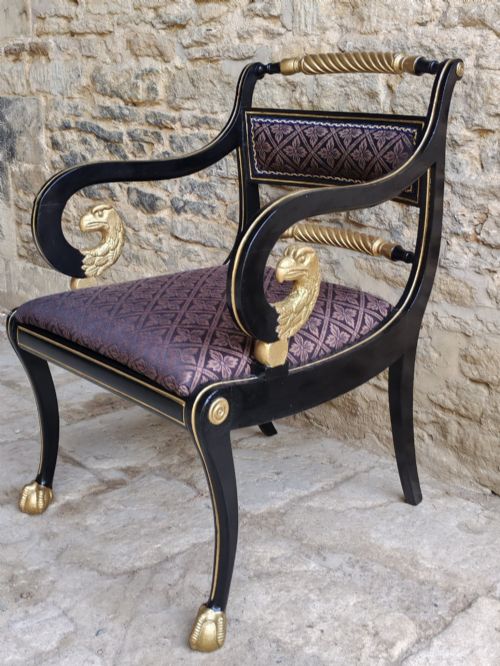
Parcel-gilt selectively applies gold leaf only to highlighted carvings, leaving the base timber exposed or painted in contrasting tones such as soft grey, green, or black.