





Gilded Dining Chairs
These gilded dining chairs bring unmistakable presence to a room, combining rich surface treatment with classical forms.
Gilded Dining Chairs
Gilded dining chairs are seating pieces finished with gold leaf, gilt, or paint to create a reflective surface, appearing across periods from the Regency era through to the 1930s. Buyers seeking these items encounter a mix of formal dining chairs, side chairs, and larger matching suites rooted in French taste.
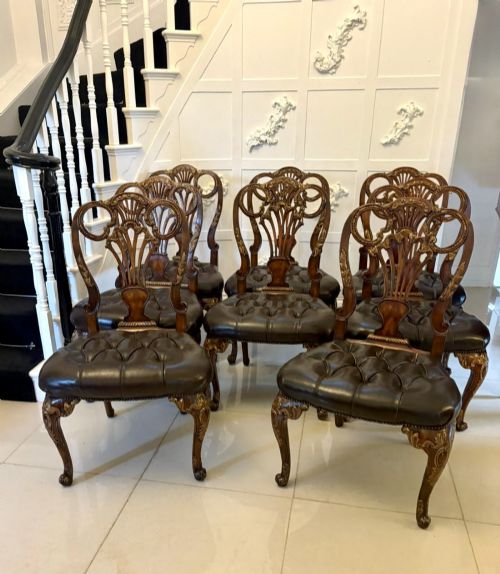
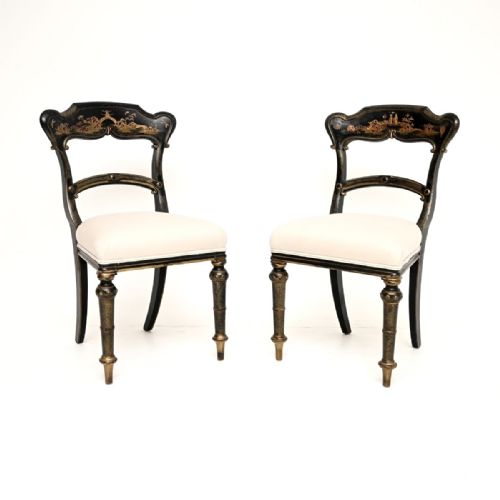
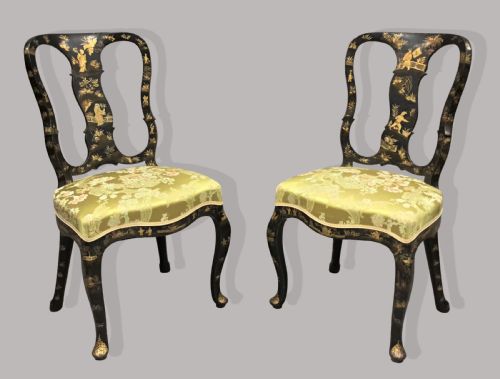
The selections on this page span styles such as Louis XVI, French Rococo, and Victorian Chinoiserie, alongside Edwardian and Regency pieces. Walnut, lacquered wood, and simulated bamboo form the structural foundations underneath the surface gilt and paint finishes.
Sets vary widely in scale, ranging from individual salon and hall chairs to matched dining sets of four, six, eight, or twelve pieces. Larger suites occasionally appear alongside pairs of armchairs and occasional chairs suitable for drawing rooms.
How they were made
Carved walnut and other timbers provide the structural framework for these chairs, shaped into classical silhouettes and stylistic flourishes. Artisans applied gold leaf, giltwood, or lacquer directly to the wooden foundations to achieve the characteristic metallic sheen.
Upholstery methods utilised traditional materials including fabric, velvet, and silk damask to finish the seats and backs. Caning also appears across several pieces as a lighter alternative to padded textiles.
Gilded Dining Chairs Retail Price Guide 2026
Typical asking prices for gilded dining chairs among the pieces listed under this phrase on Sellingantiques today, from the lower quarter to the upper quarter. They describe what is for sale here now, not the wider market.
One chair even comes ready for restoration, proving that every piece deserves a second act.
What varies in quality
The integrity of the underlying woodwork and the precision of the carving separate standard examples from finer works. Carved walnut frames display sharper detail and more robust construction than simpler turned or painted alternatives.
The application and preservation of the gold leaf or original gilt decoration dictate visual success. Intact original surface treatments hold greater distinction than later repaintings or heavy interventions.
Bruce J. Talbert
The Gilded Dining Chairs Glossary
- Giltwood
- Wood that has been prepared and coated with a thin layer of gold leaf. This technique creates a luminous, reflective surface finish on formal seating.
- Louis XVI Style
- A neoclassical design vocabulary characterised by straight tapering legs, geometric symmetry, and restrained classical ornament. It influences many of the French-inspired chairs in this category.
- Chinoiserie
- European artistic interpretation of Chinese and East Asian motifs, often executed in lacquer or japanning. This style appears on Victorian and later side and arm chairs.
- Caning
- Woven rattan or split cane utilised for chair seats and backs. It provides a flexible and decorative panel insert.
- Silk Damask
- A reversible figured fabric woven on a jacquard loom, frequently used for high-end upholstery. It adds texture and traditional pattern to formal dining suites.
Gilded Dining Chairs: Frequently Asked Questions
How do I clean gilded dining chairs?
Dust surfaces gently with a soft, dry cloth to protect the delicate gold leaf or gilt finish from abrasion. Avoid liquid cleaners and chemical polishes that can lift or dull the metallic layers.
Inspect the upholstery according to its specific textile type, using gentle vacuum attachments for fabrics like velvet or silk damask. Professional conservation is recommended for any deeper cleaning of antique surfaces.
Can I mix these chairs with a modern table?
Gilded chairs function effectively as statement pieces around contemporary dining tables, introducing contrast in texture and period. Their reflective surfaces catch light and break up heavy timber or glass arrangements.
Consider the seat height and arm clearance to ensure comfortable alignment with modern table dimensions. Pairing ornate French styles with minimalist tables creates a deliberate visual tension.
How do I identify a Louis XVI style chair?
Look for straight, fluted legs that taper toward the floor, contrasting with the curved cabriole legs of earlier Rococo designs. Backrests typically take oval, rectangular, or medallion shapes framed by carved classical details.
Rosettes at the joinery corners and carved acanthus leaves further signal this neoclassical French influence. These structural markers remain consistent whether the chair is from the nineteenth or early twentieth century.
Are large sets of gilded chairs difficult to find?
Matched suites consisting of six, eight, or twelve dining chairs occur less frequently than single pieces or pairs. Larger sets often originate from substantial dining rooms and country houses.
When available, these suites provide a uniform appearance around large dining tables. Individual salon or side chairs appear more regularly in smaller groups.