
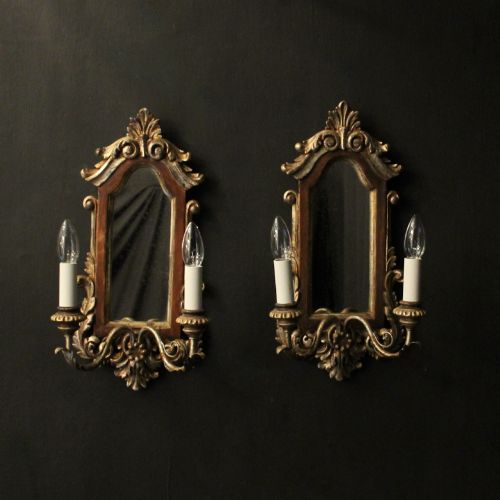
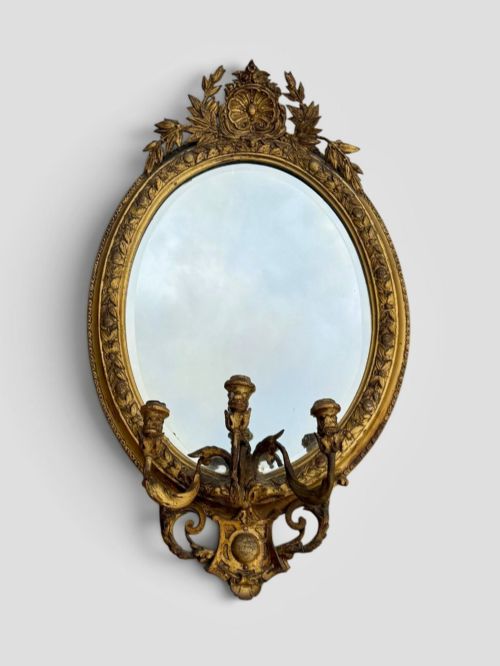
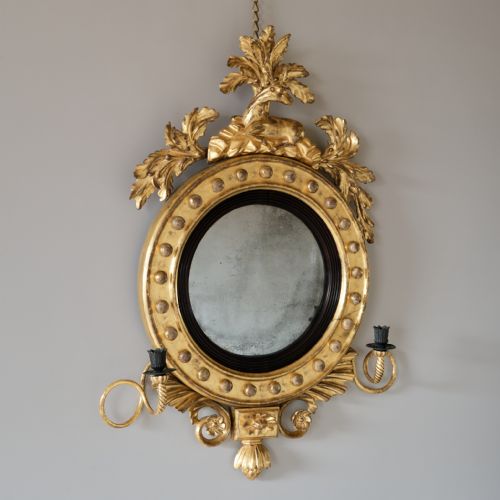
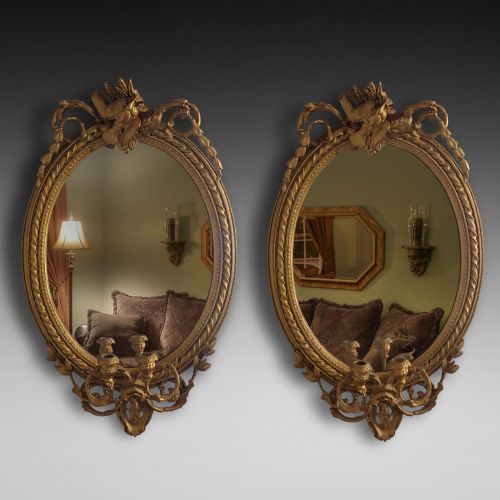

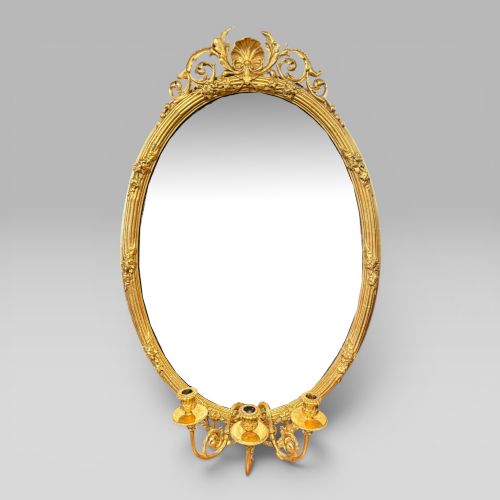

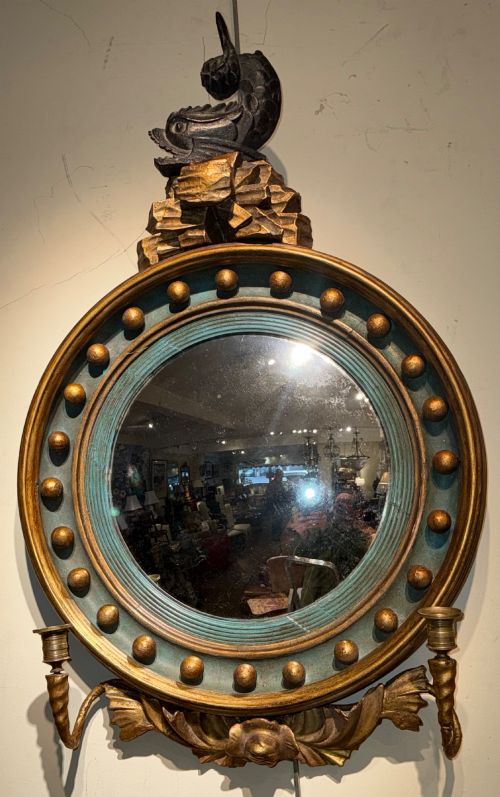


Gilt Candle Sconce Mirror
A gilt candle sconce mirror combines reflective glass and candle arms to illuminate dark rooms with reflected candlelight.
Gilt Candle Sconce Mirror
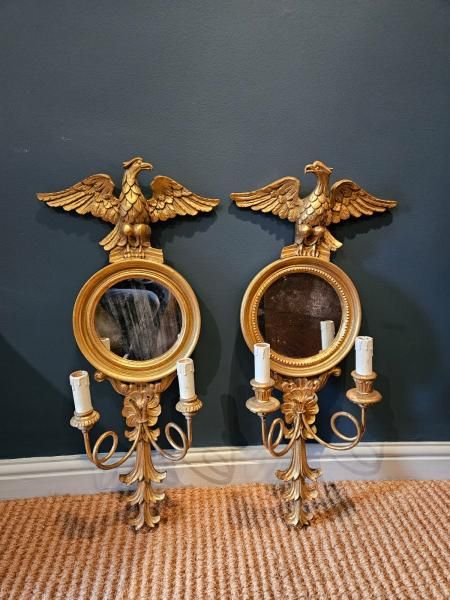
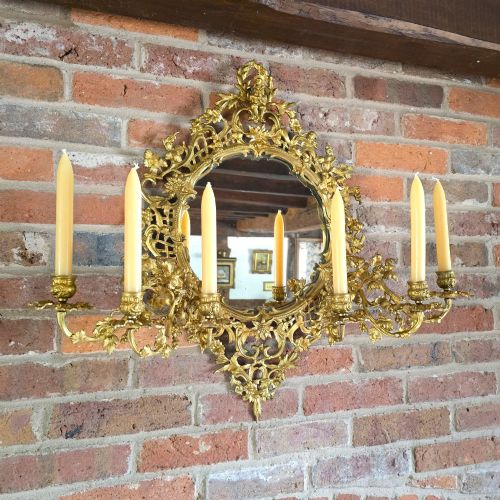
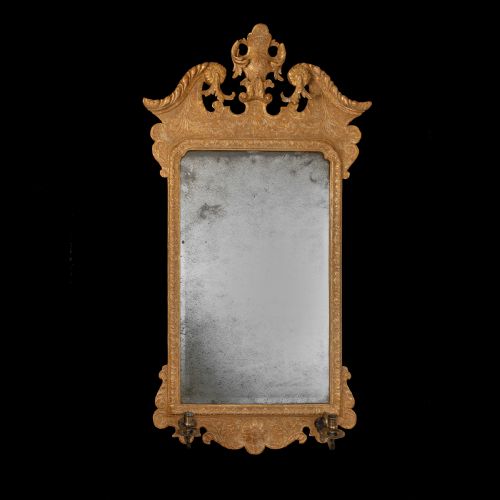
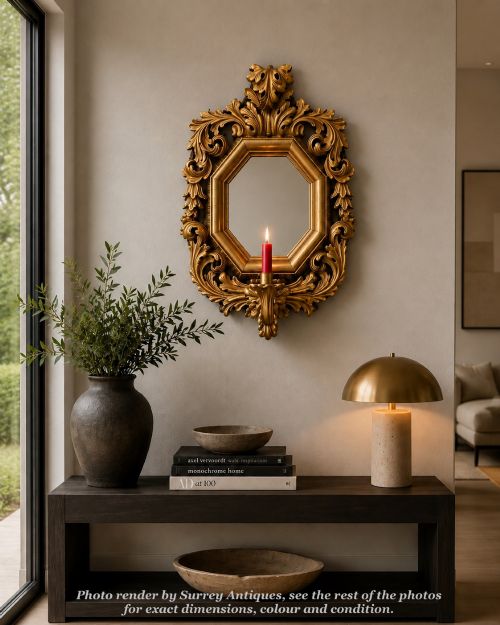
A gilt candle sconce mirror is a decorative wall-mounted light fitting that combines a reflective glass plate with integrated candle branches. When searching for a gilt candle sconce mirror, collectors encounter forms ranging from simple oval wall mirrors to ornate twin-arm girandoles.
The pieces on this page span several centuries, with examples originating from the eighteenth century through to the early twentieth century. Styles encompass Regency convex frames, Victorian gesso pieces, French Rococo Revival designs, and Italian polychrome work.
Makers and craftsmen produced these items using wood, gesso, brass, bronze, and giltwood. Buyers frequently find matching pairs of wall sconces and grand pier mirrors equipped to hold candles.
How they were made
Makers carved wooden foundations from timber, applying layers of gesso to build up intricate relief ornaments before gilding the surface. Gilt bronze and ormolu mounts were cast and chased separately before attachment to the main frame.
Mirror glass plates were silvered and fitted into rebates behind the frame, whilst brass or bronze candle arms were bolted firmly to the base or sides to support burning tapers safely.
Materials documented across the listings include giltwood, gesso, brass, bronze, and glass, spanning periods from the eighteenth century to the 1930s.
What varies in quality
The crispness of the carved detail or cast bronze ornamentation separates superior examples from mass-produced later copies. Hand-applied gilding shows depth and tonal variation that flat modern paints cannot replicate.
The retention of original mirror glass plates with authentic foxing adds historical integrity. Robust construction of the candle arms ensures the structural stability of heavy branch fixtures.
The Gilt Candle Sconce Mirror Glossary
- Girandole
- A decorative wall mirror featuring attached candle sconces or branches. These fixtures were designed to multiply the light of candles in evening rooms.
- Giltwood
- Timber covered with a thin layer of gold leaf over a prepared gesso ground. This technique creates a rich, metallic finish across carved frames.
- Gesso
- A plaster-like mixture applied to wood frames and carved into relief details before gilding. It provides a smooth base for gold leaf.
- Ormolu
- Gilded bronze mounts used extensively on French furniture and decorative mirrors. The technique involves applying a mercury-gold amalgam to cast bronze.
- Convex mirror
- A round mirror glass curved outward to provide a wide-angle reflection of the interior. These pieces gained popularity during the Regency period.
Gilt Candle Sconce Mirror: Frequently Asked Questions
What is a girandole mirror?
A girandole mirror is a reflective wall hanging that incorporates built-in arms or brackets designed to hold candles. These pieces functioned as both lighting apparatus and decorative wall art in historic interiors.
Craftsmen integrated metal candle branches directly into the wooden or gilt bronze frames. The reflective glass amplified the candle flames to brighten dark spaces.
How do I hang a heavy sconce mirror?
Hanging a heavy wall sconce mirror requires securing fixings directly into structural wall studs or using heavy-duty masonry anchors. The weight distribution relies heavily on the strength of the frame and the metal hanging loops at the back.
Professional installation is recommended for large giltwood and bronze pieces due to their substantial weight. Ensure the chosen bracket supports both the dead weight and the added torque of extended candle arms.
Were these mirrors used for real candles?
These mirrors were designed specifically to hold burning wax or tallow candles for interior illumination. The reflective glass multiplied the available light within the room.
Modern owners often use the sconces with traditional candles, though care must be taken with dripping wax. Many pieces show historic soot marks or wax residue from actual period use.
How do I date a gilt mirror?
Dating a gilt mirror involves examining the construction methods of the wooden frame, the composition of the gesso, and the characteristics of the glass plate. Stylistic markers such as Regency convex curves or Rococo Revival asymmetry also indicate the period.
Backboards, fixings, and screw types offer further clues to the age of the piece. Expert examination of the gilding technique helps distinguish eighteenth-century work from later revivals.