

Gold Wall Sconce Mirror
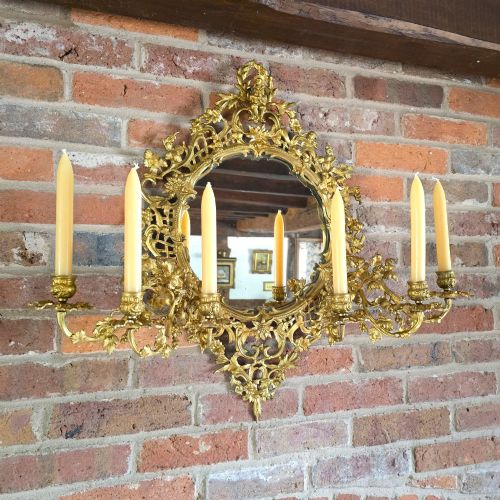
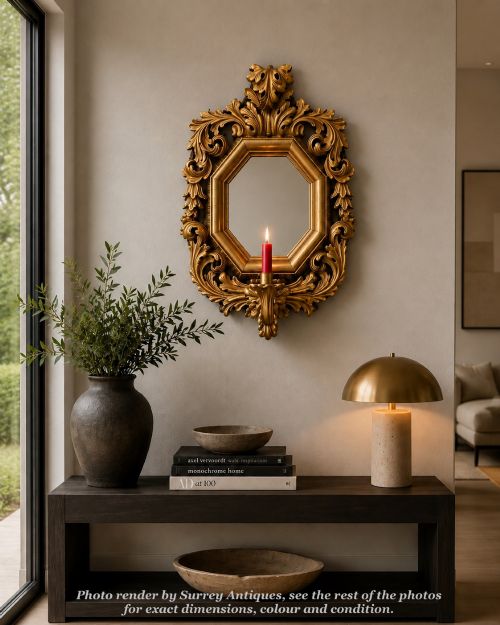
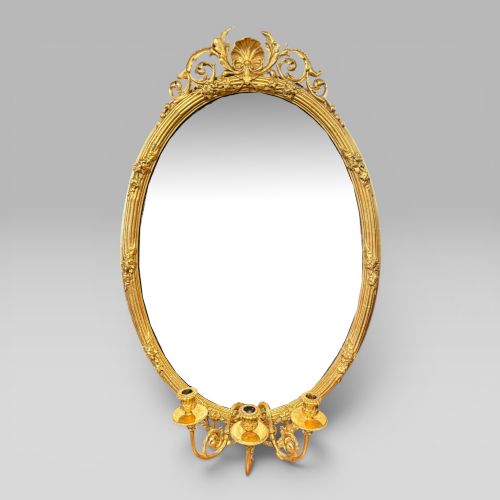
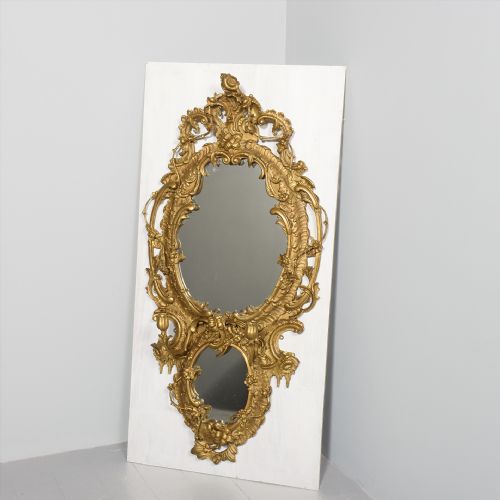
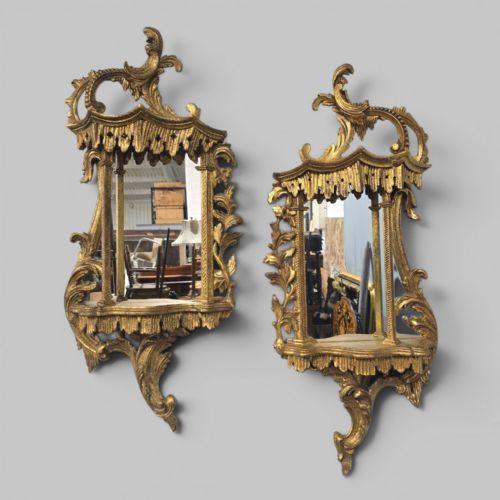
These gold wall sconce mirror pieces combine reflective glass with candle arms or gilded frames, bringing functional illumination and historic decorative presence to an interior.
Gold Wall Sconce Mirror
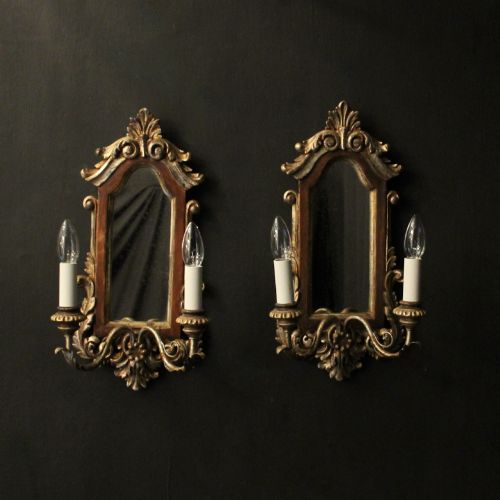
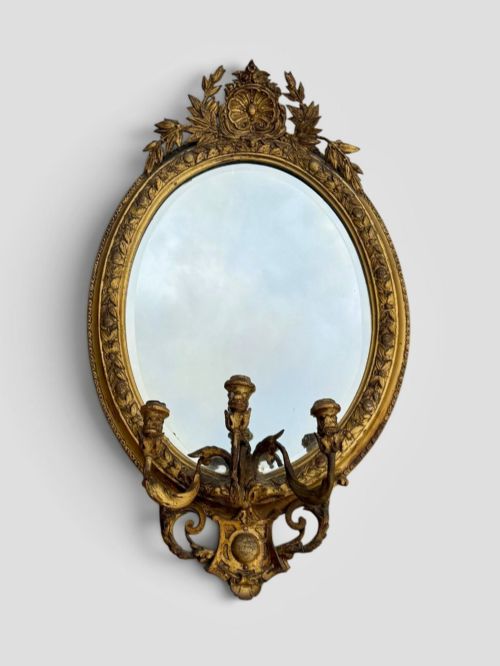
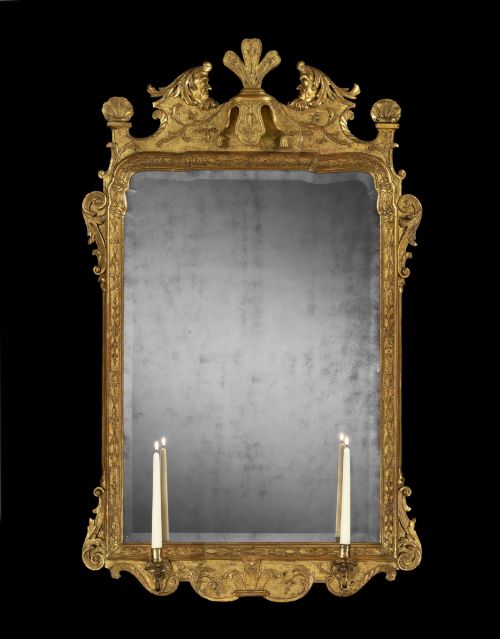
A gold wall sconce mirror combines reflective glass with integrated candle arms, wall lights, or display brackets, fulfilling both decorative and illumination purposes. Buyers searching for a gold wall sconce mirror will encounter various historic interpretations spanning the eighteenth, nineteenth, and early twentieth centuries.
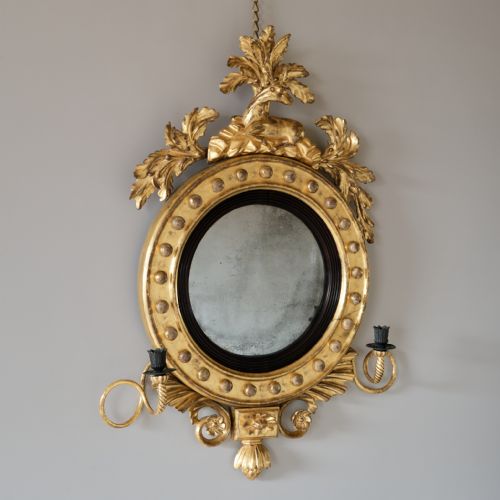
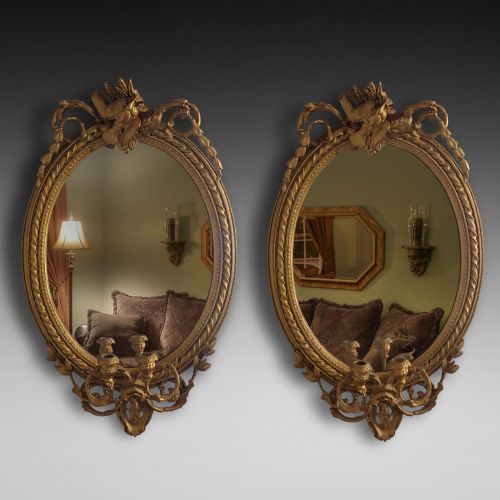
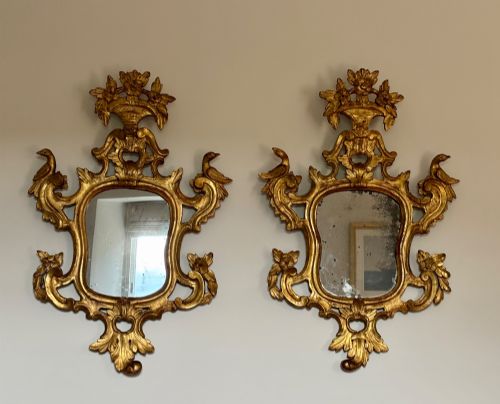
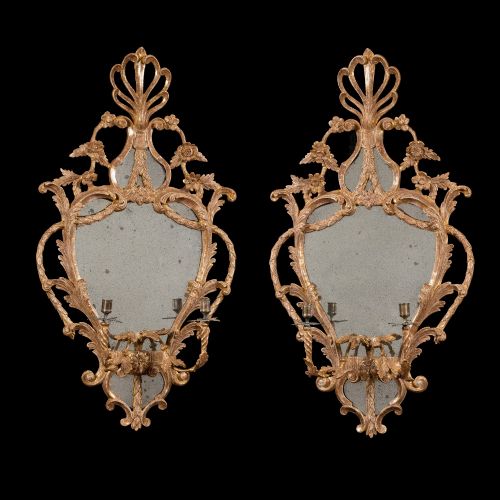
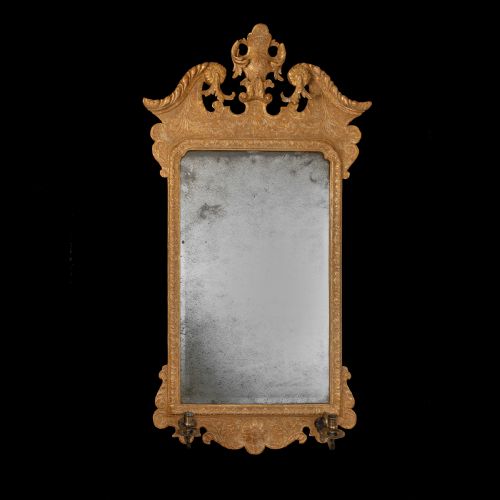
The selection ranges from grand George I and George II carved giltwood examples to Regency convex mirrors and Victorian girandoles. Italian Rococo, French styles, and Florentine designs also appear frequently among the listed pieces.
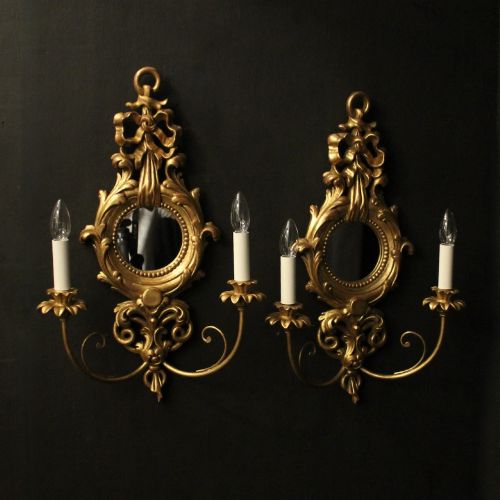
Many examples survive in pairs, featuring twin arms for candles or elaborate carved frames designed to catch and multiply candlelight in period rooms.
Materials and construction
Carved timber forms provide the structural foundation for many traditional pieces, overlaid with layers of gesso to create crisp relief detail before the application of gold leaf or gilt paint. Metal components, including brass and ormolu, appear in nineteenth and twentieth-century interpretations.
Mirror glass plates are set within these frames, sometimes showing age through foxing or original manufacture characteristics. Giltwood, mirrored glass, and gesso remain the predominant material combination across the historical periods represented.
Materials recorded on this page include traditional giltwood and gesso alongside later brass, ormolu, and metal interpretations.
Evaluating craftsmanship
Quality rests in the depth and sharpness of the hand-carved detail within the wood or gesso framing, where skilled work yields crisp acanthus leaves and scrolling motifs rather than soft, indistinct moulding. The preservation of the original gilding surface, whether gold leaf or historical paint, dictates the visual integrity of the piece.
Structural honesty and the integration of the sconce arms or candle branches to the main mirror frame also distinguish superior examples. Original mirror plates with authentic foxing contribute further to the integrity of earlier items.
Benjamin Goodison
The Gold Wall Sconce Mirror Glossary
- Girandole
- A branched wall sconce featuring a mirror back designed to reflect candlelight into a room. These fixtures often include two or more arms for candles.
- Gesso
- A plaster-like mixture applied to carved wood frames to provide a smooth, responsive surface for gilding. It allows for intricate relief ornamentation.
- Convex mirror
- A circular wall mirror with a curved, outward-bulging glass plate that offers a wide, panoramic reflection of the interior. These pieces frequently feature gilded spherical frames.
- Foxing
- The natural ageing of mirror glass, appearing as small dark spots or cloudiness within the reflective coating. This process occurs over decades due to chemical reactions behind the glass.
Gold Wall Sconce Mirror: Frequently Asked Questions
Where should I hang a wall sconce mirror?
These pieces suit spaces where artificial or natural light benefits from amplification, such as hallways, above mantelpieces, or flanking a principal piece of furniture.
Ensure the wall construction supports the weight of carved timber and glass, particularly for larger Regency convex or Victorian girandole examples.
How do I clean an antique gilt frame?
Dust gently with a dry, soft brush to remove surface particles without disturbing fragile gesso or gold leaf layers. Avoid commercial cleaning liquids or water, which can damage historic gilded surfaces.
Are the candle arms functional?
Many girandoles and wall sconces retain operational candle holders designed for wax tapers, though some owners choose to use them unlit for decorative purposes.
If utilising candles, ensure proper clearance from the reflective glass and surrounding wall surfaces.
How do I identify a Regency convex mirror?
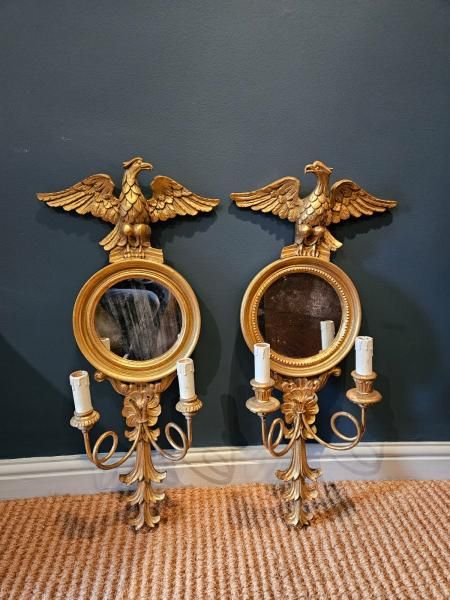
Regency convex examples typically feature a circular format housed within a heavy gilded frame, often surmounted by an eagle or carved cresting and surrounded by decorative balls.
The curved glass plate creates a distinct wide-angle reflection characteristic of the early nineteenth century.