



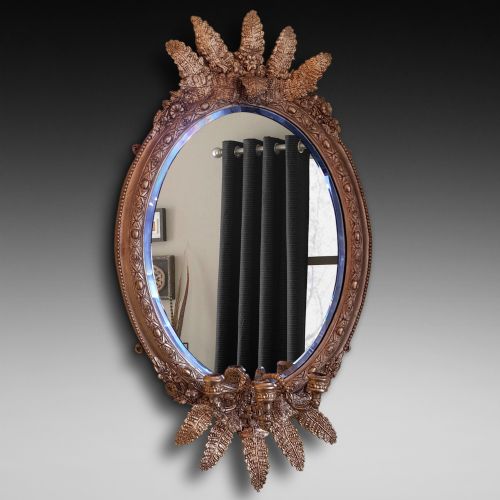
Oval Gilt Girandole Mirror
An oval gilt girandole mirror brings candlelight and reflective depth to a room through gilded frames and integrated sconces.
Oval Gilt Girandole Mirror
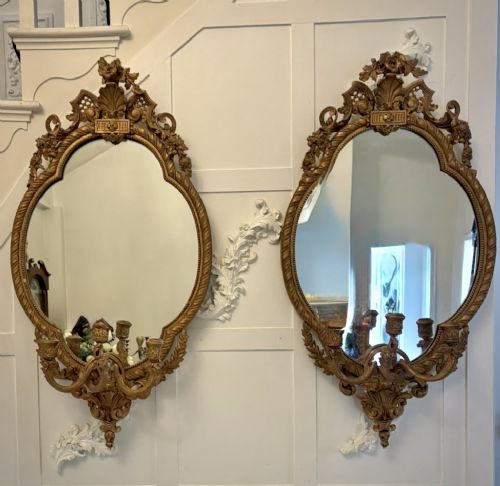
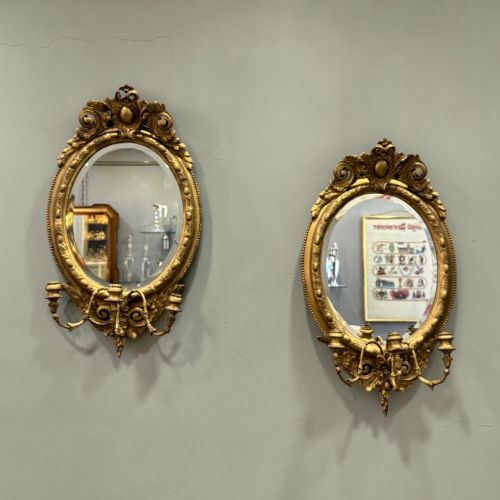
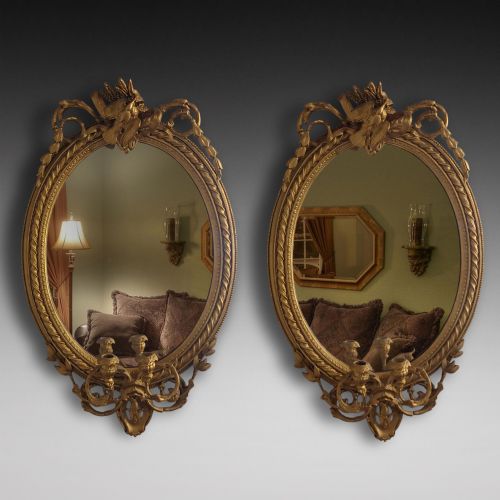
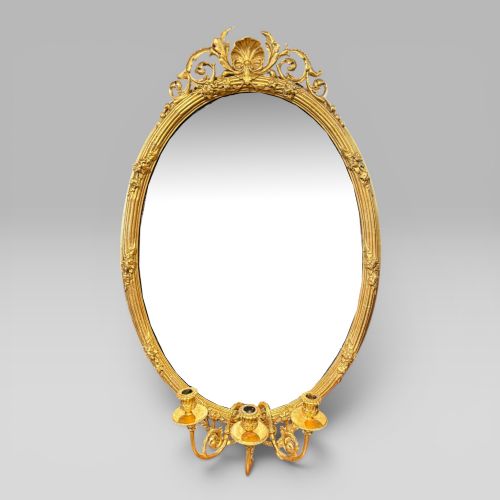
When you search for an oval gilt girandole mirror, you encounter wall-hung looking glasses equipped with candle sconces. These pieces combine illumination and reflection in a single compact form designed to hang on principal reception room walls.
The versions most frequently met on this page date from the nineteenth century, including Victorian and Regency eras. Many examples feature ornate cresting, rope twist frames, or figural details such as putto cresting above the glass.
Originating across English and French workshops, these wall mirrors span neoclassical restraint and elaborate rococo revival styles. They function equally well as standalone focal points or paired arrangements flanking a fireplace.
How they were made
Makers constructed the structural frames from timber, applying layers of gesso to carve intricate surface decoration before gilding. Water gilding or gold leaf application yielded a brilliant reflective surface across the wood and plaster substrate.
Metal components, including brass and gilt metal, formed the candle arms and sconces attached to the lower frame. Glass plates were silvered and fitted into the rabbet, held securely by wooden backing boards.
Oval Gilt Girandole Mirror Retail Price Guide 2026
Typical asking prices for oval gilt girandole mirror among the pieces listed under this phrase on Sellingantiques today, from the lower quarter to the upper quarter. They describe what is for sale here now, not the wider market.
Listings feature periods spanning the eighteenth century through the 1920s, utilising giltwood, gesso, brass, and glass.
What varies in quality
The depth and crispness of the carved gesso and woodwork distinguish finer examples from simpler production. Hand-chased mounts and finely proportioned rope twist motifs indicate superior craftsmanship.
The preservation of the original gilt surface and the clarity of the antique glass plate influence the overall integrity of the piece. Integrated candle sconces that retain their original construction show greater fidelity to the period.
The Oval Gilt Girandole Mirror Glossary
- Girandole
- A wall mirror featuring attached candle sconces designed to reflect artificial light. This form gained popularity in the eighteenth and nineteenth centuries for illuminating dark parlours.
- Gesso
- A plaster-like mixture applied to wooden frames as a base for carving and gilding. Artisans built up layers to model complex relief ornaments.
- Giltwood
- Timber coated with gold leaf or metallic powder over a prepared ground. It provides the characteristic bright finish seen on these mirrors.
- Putto
- A figure of a small chubby infant, often winged, used in the cresting of decorative frames. These sculptural elements frequently appear on nineteenth-century revival pieces.
- Looking glass
- A historical term for a mirror, referring to the reflective glass plate. Older plates often display slight distortions and foxing inherent to their manufacture.
Oval Gilt Girandole Mirror: Frequently Asked Questions
Where should I hang an oval gilt girandole mirror?
These mirrors suit principal reception rooms, hallways, or above mantelpieces where wall space allows for vertical orientation. Placing them opposite a window maximises natural light distribution across the interior.
Because they incorporate candle sconces, hanging them at eye level ensures the integrated arms function both visually and practically within the room's proportions.
How do I care for the gilt surface?
Dusting requires only a soft, dry brush to prevent accumulation in the carved crevices of the gesso and wood. Moisture and chemical cleaners damage the delicate gold leaf finish.
Glass plates tolerate standard glass cleaner applied sparingly to a cloth rather than sprayed directly onto the mirror, protecting the surrounding gilt frame from drips.
Can I burn real candles in the sconces?
Using traditional wax tapers is possible if the metal arms and drip pans remain structurally sound and securely fixed. Dripping wax requires careful removal to protect the lower frame.
Many owners choose unlit display to preserve the antique condition of the sconces and avoid heat proximity to the aged gilt surface.
How do I distinguish Regency from Victorian examples?
Regency pieces often display neoclassical restraint, featuring clean lines, reeded frames, and classical motifs dating around the early nineteenth century. Victorian pieces tend toward heavier ornamentation, including rococo revival scrolls and pronounced gesso relief.
Comparing the framing technique and overall weight helps identify the distinct design phases spanning the eighteenth to late nineteenth centuries.