

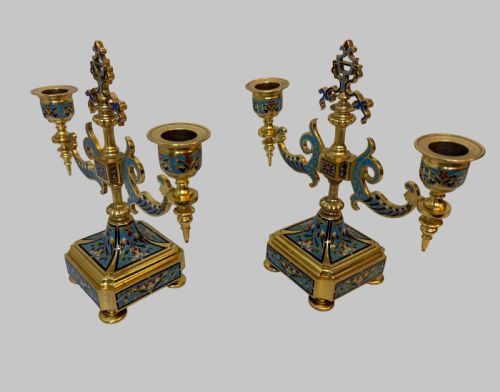


Gilt Bronze Table Candelabrum
A gilt bronze table candelabrum brings commanding height, warm metallic lustre and classical presence to a room, offering the ultimate decorative statement in nineteenth-century lighting.
Gilt Bronze Table Candelabrum
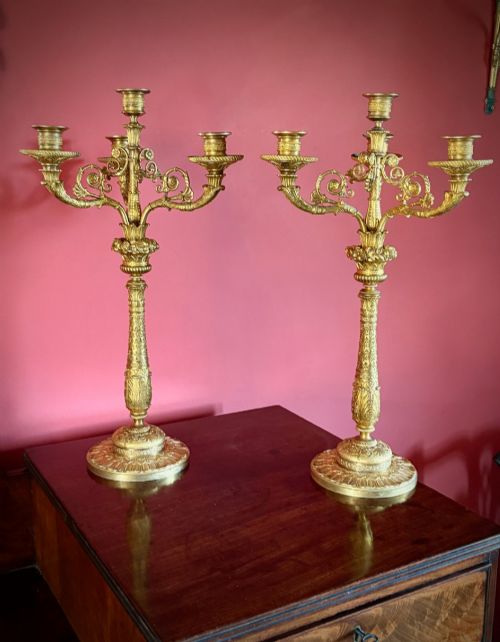
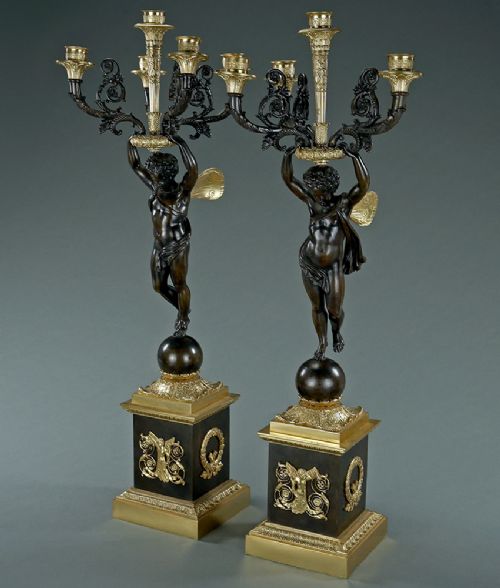
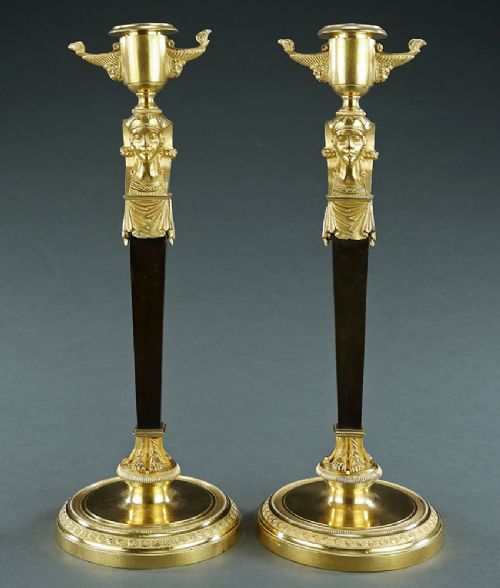
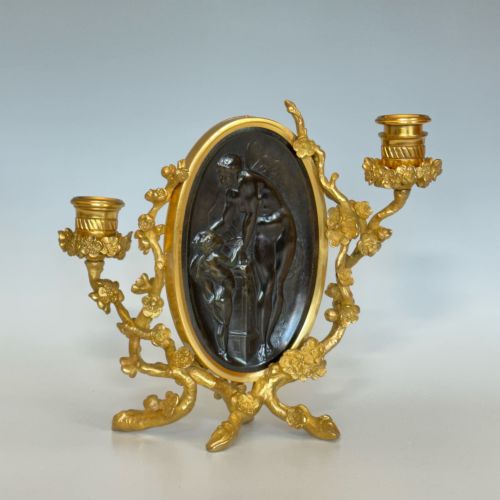
A gilt bronze table candelabrum is a multi-branched lighting fixture designed for interior display, combining sculptural metalwork with functional candle nozzles. These objects most frequently appear as matched pairs originating from nineteenth-century French workshops, spanning styles from Regency and Empire to Rococo Revival and Louis XVI.
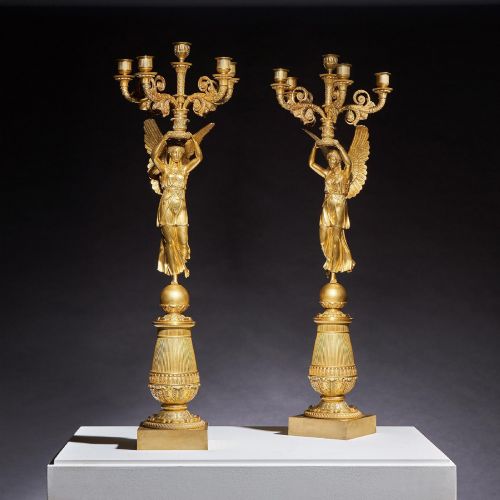
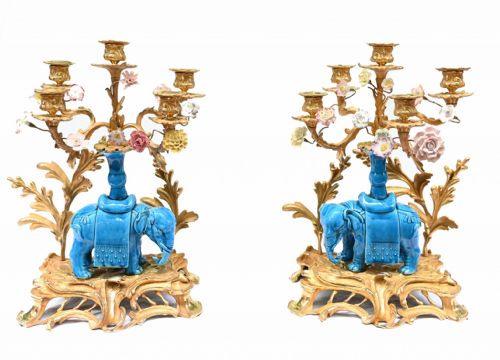
The physical form ranges from simple three-branch lights to large monumental pieces featuring figures, cherubs or classical urns. Many examples incorporate white marble bases, porcelain elements or champlevé enamel to enrich the primary metallic structure.
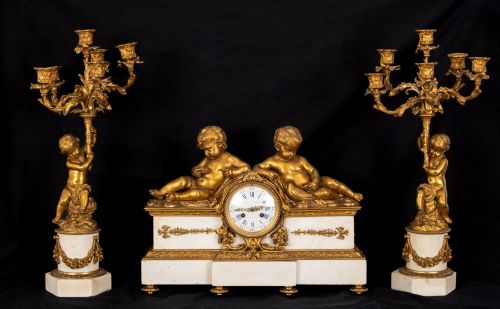
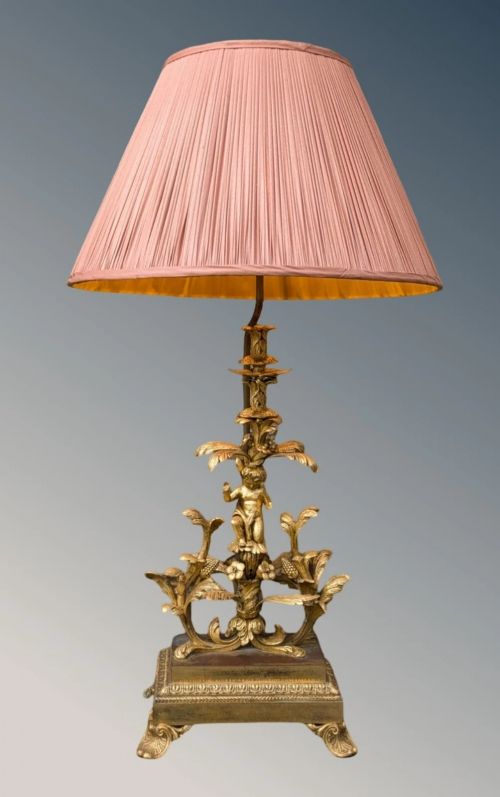
Beyond standalone candelabra, buyers encounter related garniture sets that pair central mantel clocks with matching side candelabra or candlesticks. Converted pieces adapted into table lamps also feature within this category, retaining their original cast bronze and ormolu bodies.
Materials and Construction Techniques
The primary construction relies on bronze and brass castings, shaped through traditional lost-wax or sand-casting methods to achieve intricate sculptural detail. Artisans then applied mercury gilding or modern electroplating to create the characteristic golden ormolu surface finish.
Complementary materials such as white marble, champlevé enamel, porcelain and patinated bronze were integrated into the frames to provide textural contrast and colour variation. Crystal drops and fabric elements occasionally supplement the metal armature in later nineteenth and early twentieth-century pieces.
Look closely for mischievous cherubs hiding among the candle branches, quietly holding up the lights while pretending to nap.
Assessing Quality and Execution
The architectural stability of the base and the secure fit of the branch arms dictate the structural integrity of each piece. Heavy white marble plinths and substantial bronze weight signal high-grade manufacturing, while signed works by known founders indicate elevated atelier standards.
Pierre Philippe Thomire·Thiebaut Freres·Rabiat·Auguste Cain
The Gilt Bronze Table Candelabrum Glossary
- Ormolu
- Gilded bronze produced through the application of a mercury-gold amalgam or modern electroplating techniques. This finish provides the bright, warm yellow sheen characteristic of luxury nineteenth-century decorative arts.
- Garniture
- A coordinated set of ornamental objects, typically comprising a central mantel clock flanked by matching candelabra or vases. These sets were designed to sit harmoniously on a fireplace mantel or sideboard.
- Champlevé
- An enamelling technique where troughs or cells are hollowed out of the metal surface and filled with coloured glass paste before firing. This decorative method appears frequently on late nineteenth-century items.
- Retour d'Egypte
- A decorative style inspired by Napoleon's Egyptian campaign, featuring motifs such as sphinxes, pharaohs and classical urns. It forms an important sub-category within early nineteenth-century French metalwork.
Gilt Bronze Table Candelabrum: Frequently Asked Questions
Can these candelabra hold real candles safely?
Most antique candelabra accommodate standard taper candles within their original sockets. Ensure the piece stands on a level, stable surface away from drafts before lighting.
Use drip catchers or snuffs to protect the surrounding metal and any integrated marble or porcelain elements from wax damage.
How do I distinguish Empire style from Rococo Revival?
Empire style pieces exhibit strict symmetry, classical military motifs, dark patinated bronze contrasts and clean architectural lines. They reflect the neoclassical tastes of the early nineteenth century.
In contrast, Rococo Revival pieces feature asymmetrical scrolling foliage, naturalistic floral forms and C-scrolls that emphasise fluid movement and ornate decoration.
What is a clock garniture set?
A clock garniture is a matched ensemble consisting of a central clock flanked by two matching side pieces, usually candelabra or urns. These sets were manufactured to create a unified decorative scheme for formal interiors.
The matching side pieces repeat the motifs, materials and gilding techniques of the main clock housing to ensure visual harmony.