



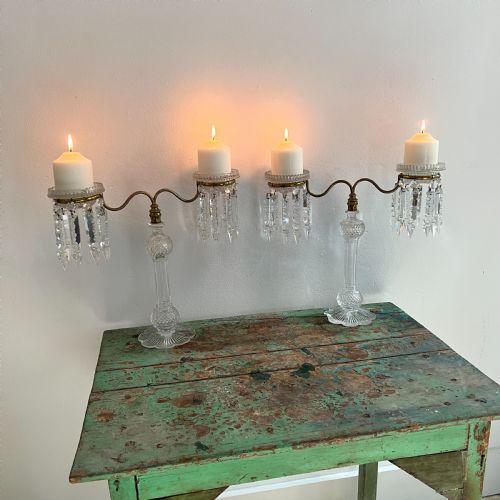


Antique Brass Lustre Candlestick
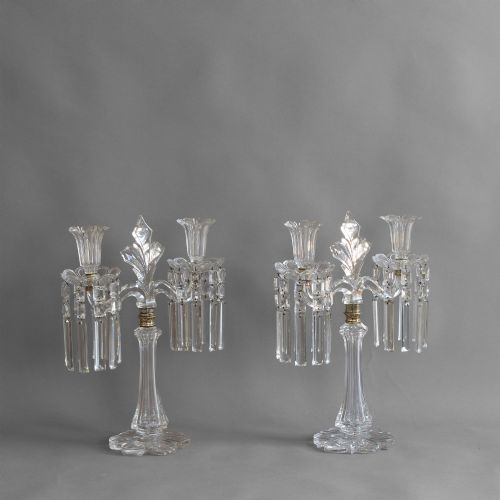
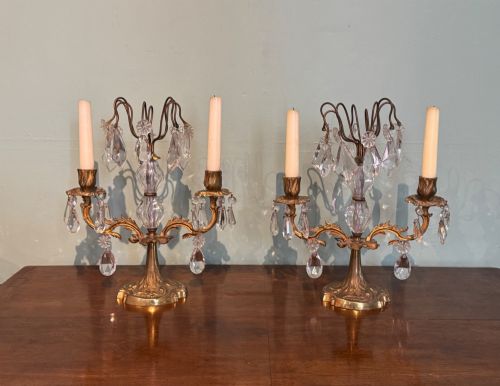
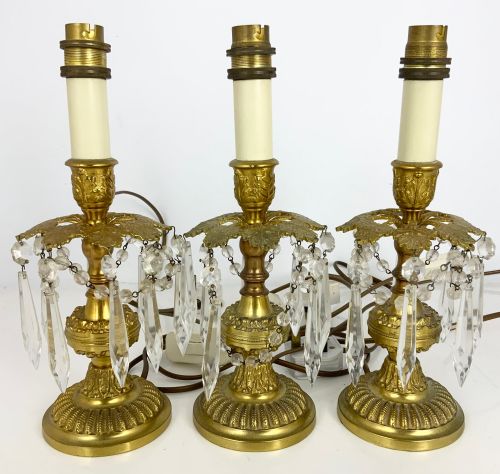
These antique brass lustre candlesticks catch the flickering room light through cut glass and crystal pendants, adding a warm traditional glow to any mantelpiece.
Antique Brass Lustre Candlestick
When you search for an antique brass lustre candlestick, you are looking for lighting fixtures designed to hold taper candles while suspended crystal or glass prisms refract the flame. These pieces frequently appear in pairs or sets, serving both a functional lighting purpose and a decorative role on dining tables or sideboards.
The selections available on this page span several distinct historical eras, including the Regency, Victorian, and later nineteenth century. You will encounter varied forms ranging from standard single-candle sticks to elaborate multi-branch candelabras and specialised candle-lamps.
Origin and styling vary across the inventory, with English Victorian examples sitting alongside French Rococo Revival and Empire designs. The integration of metal bases with glass drops remains the defining characteristic uniting these diverse domestic objects.
Materials and construction methods
The structural foundations rely primarily on cast brass, gilt bronze, and ormolu, providing sturdy metal bases and stems that support the weight of the upper candle sockets and hanging elements. Makers shaped these metal components through foundational foundry work and surface gilding.
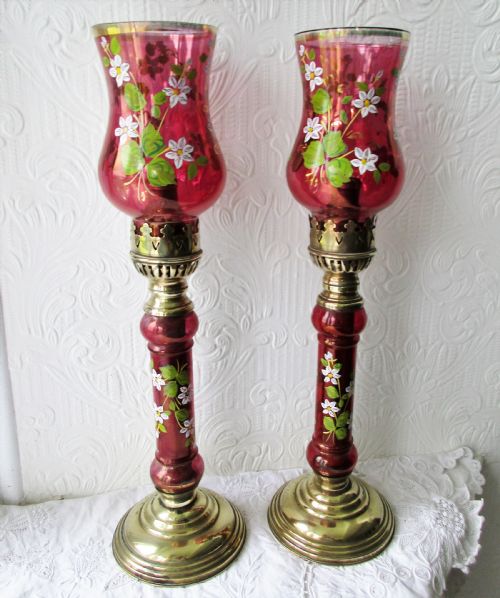
Some Victorian candle-lamps included clever glass storm shades to keep dining room drafts from extinguishing the flame mid-meal.
Distinguishing quality factors
Quality rests significantly in the precision of the metal casting and the depth of the original gilding on the brass, bronze, or ormolu surfaces. Finer examples display crisp relief work and well-balanced proportions across the stem and base.
The integrity of the hanging glass elements also dictates overall standard, where hand-cut crystal prisms with sharp facets and complete matching sets of drops elevate the piece above simpler moulded glass alternatives.
The Antique Brass Lustre Candlestick Glossary
- Lustre
- A candlestick or candelabra fitted with glass pendants or prisms designed to reflect light. These hanging drops add visual sparkle when the candle is lit.
- Ormolu
- Finely ground high-carat gold applied to a bronze or brass base through a mercury amalgamation process. This technique gives the metal a rich, durable golden finish.
- Cricklite
- A patented brand of table lamp popular in the Victorian era, often featuring cut glass shades and brass mounts. Clarkes produced notable examples of these domestic light fittings.
- Prism
- A cut glass or crystal pendant suspended from the upper rim of a candlestick. Prisms catch the light and disperse it around the room.
Antique Brass Lustre Candlestick: Frequently Asked Questions
How do I clean an antique lustre?
Wash the glass drops gently in lukewarm soapy water using a soft cloth, ensuring you remove them from the metal frame first to avoid moisture damage.
Dust the brass or gilt bronze base with a dry, soft brush rather than using harsh metal polishes that can strip historical surface finishes.
Were these used for everyday lighting?
Wealthy households utilised these pieces in principal reception rooms where the glittering glass drops enhanced the evening candle illumination.
They served as status symbols as well as functional light sources before the widespread adoption of domestic gas and electric lighting.
Can I still burn candles in them?
Standard taper candles fit securely into the metal sockets, allowing you to use them for dining or ambient room lighting just as their original owners did.
Ensure you trim the wicks properly to prevent excessive dripping onto the delicate glass prisms and brass bases below.
What is a French Rococo Revival style?
This decorative movement draws inspiration from eighteenth-century French design, featuring asymmetric scrollwork, natural motifs, and ornate moulding.
Pieces from this stylistic group often display exuberant curves and elaborate casting details compared to simpler classical forms.