

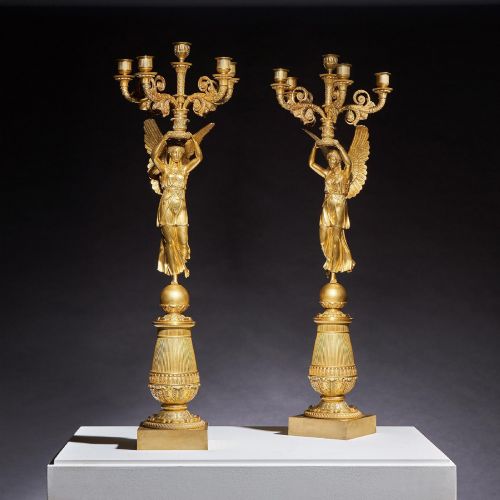
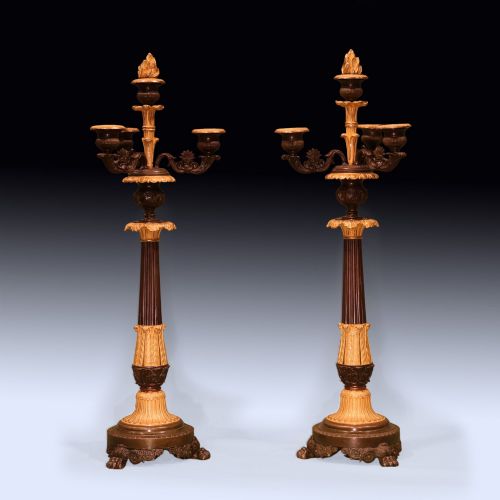
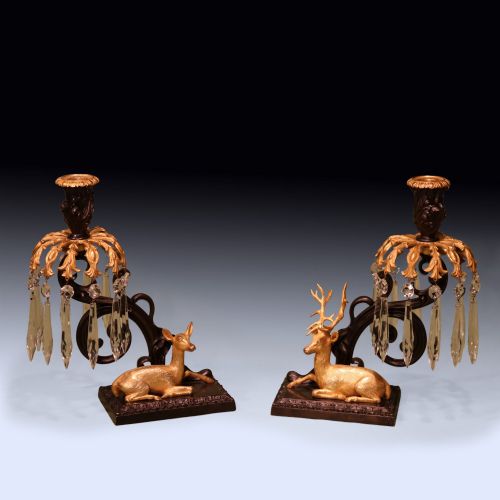
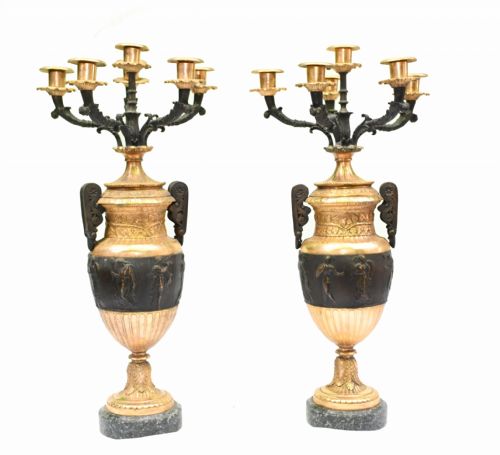


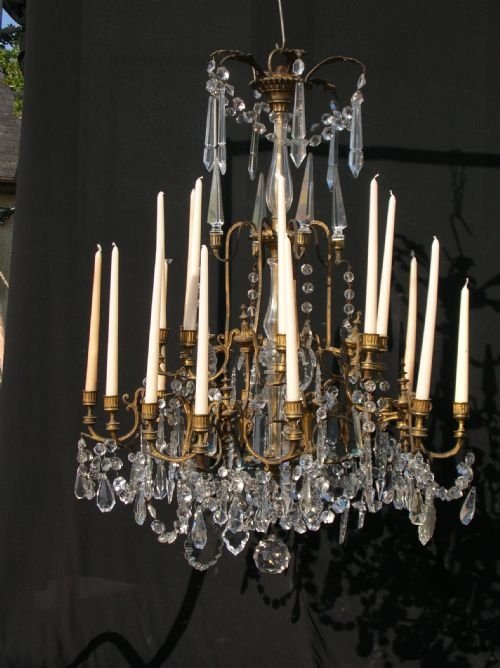
Regency Ormolu Candelabra
Regency ormolu candelabra bring striking neoclassical presence to a table, combining polished gilt surfaces with dark contrasting metal.
Regency Ormolu Candelabra
Regency ormolu candelabra span nineteenth-century production, incorporating French Empire, Swedish Empire, and Grand Tour influences alongside distinct English Regency designs. Most examples encountered are pairs featuring multiple branches for candles, though standard lamps and chandeliers also appear.
The form relies on a balanced interplay between gilded bronze elements and dark patinated bronze or metal bodies. Pieces range from two-light candlesticks to elaborate four-arm configurations adorned with figures, stags, and crystal lustres.
Origins stretch across English workshops and continental makers following Neoclassical and Egyptian Revival idioms. Buyers encounter these lighting pieces in varied candle counts, from simple twin-arm pairings to grander sets.
Materials and technique
Foundry work combined cast bronze and brass components finished through fire-gilding, creating the distinctive golden ormolu surface. This technique relied on an amalgam of mercury and gold applied to the bronze base and heated until the mercury vaporised.
Contrasting dark surfaces were achieved using patinated bronze or patinated metal, heightening the brilliance of the surrounding gilt work. Marble bases and cut glass or crystal lustres were integrated to catch and reflect candlelight.
Stag and doe figures occasionally support the candle sockets, bringing unexpected woodland wildlife into formal nineteenth-century lighting.
Standards of execution
The harmonious balance between the bright ormolu and the dark patinated bronze defines the visual success of a pair. Heavier cast weight, integrated marble elements, and original crystal components elevate the standing of an individual set.
Pierre Philippe Thomire
The Regency Ormolu Candelabra Glossary
- Ormolu
- Gilded bronze produced by applying a mercury and gold amalgam to a bronze object and firing it in a kiln. This historic technique yields a warm, matte golden lustre distinct from modern electroplating.
- Patinated bronze
- Bronze treated with chemical solutions to darken the surface, providing a dramatic contrast to bright ormolu mountings. This finish is typical of nineteenth-century French and English metalwork.
- Lustre
- A crystal or glass pendant hung from a candlestick or candelabra to refract candlelight. These elements add sparkle and movement when candles are lit.
- Neoclassical
- A style drawing inspiration from classical antiquity, featuring symmetrical forms, classical figures, and crisp geometric ornament. It dominates the design vocabulary of the period.
- Grand Tour
- Souvenirs and decorative objects acquired by travellers visiting continental cultural sites during the nineteenth century. These pieces often incorporate classical architectural and mythological motifs.
Regency Ormolu Candelabra: Frequently Asked Questions
How do I clean ormolu candelabra?
Dust gently with a soft dry brush, avoiding all abrasive cleaners and chemical polishes that can strip the historic gilt surface.
Moisture should be kept away from both the ormolu and the patinated bronze to prevent corrosion of the underlying metal.
Are these candelabra wired for electricity?
Most examples retain their original configuration for wax candles, preserving the authentic aesthetic intended by the maker.
Some standard lamps and conversion pieces do incorporate electrical wiring, which should be inspected by a qualified electrician.
How do I date a Regency candelabrum?
Dating relies on stylistic markers such as Neoclassical proportions, Egyptian Revival motifs, and the quality of the bronze casting and mercury gilding.
Nineteenth-century production encompasses both the Regency era proper and later revival periods like the late Victorian era.
Where should I place a pair in my home?
These pieces suit mantelpieces, sideboards, or large dining tables where their reflective gilt surfaces catch natural and artificial light.
Pairing them with appropriate nineteenth-century furniture enhances their architectural presence in a room.