


Victorian Crystal Prism Candlesticks
These Victorian crystal prism candlesticks and lustres bring dramatic refraction and period sparkle to a mantelpiece or table.
Victorian Crystal Prism Candlesticks
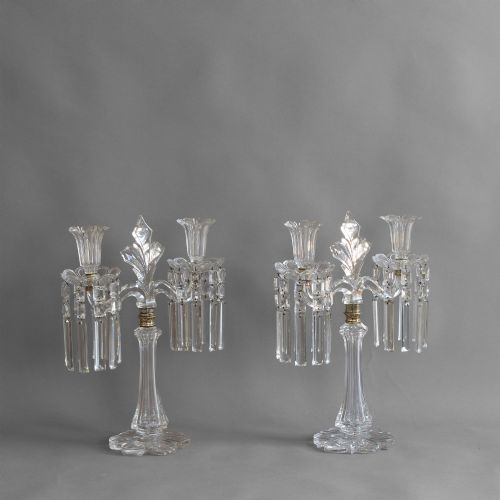
When you search for Victorian crystal prism candlesticks, you encounter lighting fixtures and mantel ornaments designed to catch and scatter candlelight through suspended glass drops. The examples appearing on this page take the form of mantel lustres, candelabra, table lustres, and standard candlesticks spanning the nineteenth century up to nineteen hundred.
The objects most frequently met here are pairs of lustres and candlesticks featuring glass, cut-glass, and crystal components paired with metal supports. Many incorporate hanging glass prisms, often referred to as drops, suspended from a sconce or rim above a central column and base.
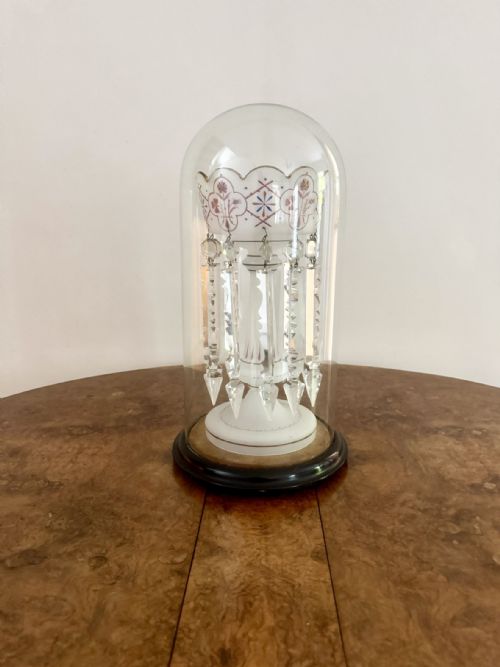
Origins and styles stretch beyond straightforward Victorian pieces to include Regency items alongside French Empire, French Chateau, and French Beaux-Arts influences. Formats range from single candlesticks to multi-branch candelabra and single lustres accompanied occasionally by glass domes.
How they were made
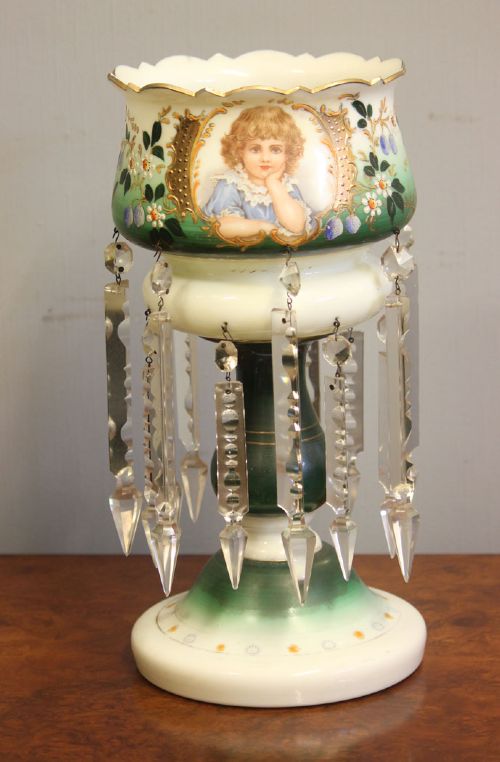
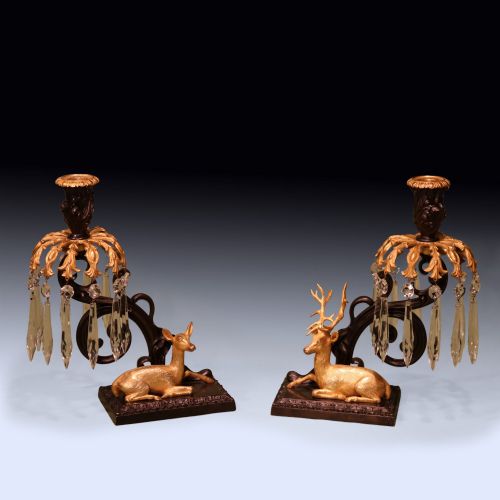
Makers constructed these pieces by combining glasswork with cast and gilt metals, utilising cut glass, crystal, and plain glass alongside brass, bronze, ormolu, and gilt bronze. Certain vessels also introduce coloured glass bodies in ruby, cranberry, green marble, and opaline hues.
Metal elements such as brass and ormolu form the structural bases, stems, and sconces, sometimes enhanced with gold leaf. Glass sections feature faceted cutting to maximise the play of light through the hanging prisms.
Listings here span the nineteenth century, Victorian, and Regency periods, incorporating cut glass, crystal, brass, ormolu, and ruby glass.
What varies in quality
Quality differences appear in the clarity and depth of the glass cutting, the weight and detail of the bronze or brass mountings, and the presence of rich coloured glass such as ruby or cranberry. Heavier metal castings and more intricate ormolu work separate standard examples from finer productions.
The completeness and cut of the suspended crystal prisms strongly influence the character of each piece. Pairs showing uniform glass drops, substantial marble or gilt bronze bases, and rich enamel or gilt decoration represent the upper end of the range.
The Victorian Crystal Prism Candlesticks Glossary
- Lustre
- An ornamental glass or porcelain vase fitted with hanging glass prisms designed to reflect candlelight.
- Ormolu
- Gilded bronze used for decorative mounts and structural elements on furniture and decorative objects.
- Prism
- A cut glass pendant or drop hung from the rim of a lustre to refract light.
- Candelabra
- A branched candlestick holding multiple lights, often incorporating hanging crystal drops.
- Sconces
- The cup or nozzle at the top of a candlestick that holds the candle in place.
Victorian Crystal Prism Candlesticks: Frequently Asked Questions
What are Victorian crystal prism candlesticks?
They are decorative lighting accessories and mantel ornaments made during the nineteenth century, featuring glass or crystal drops that hang around the candle nozzle to refract light.
Most surviving examples take the form of paired lustres or candelabra combining glass bowls and stems with brass, bronze, or ormolu mounts.
How were crystal lustres used?
They served primarily as decorative mantelpiece ornaments rather than purely functional light sources, placed on tables and mantel shelves to brighten rooms by reflecting candlelight.
The hanging prisms caught the flicker of candles or oil lamps, creating a sparkling effect that defined formal nineteenth-century interiors.
How do I clean Victorian glass lustres?
Cleaning requires removing the hanging crystal prisms carefully and washing them in warm, soapy water before drying them with a soft cloth to restore their sparkle.
Avoid submerging metal bases or gilded bronze parts in water to protect the gilt finish and any enamel work.
Are these pieces always antique?
The items listed on this page date from the nineteenth century up to nineteen hundred, encompassing Victorian and Regency periods alongside various French decorative styles.
Construction methods typically involve period techniques such as hand-cut glass and cast brass or ormolu mounts characteristic of those eras.
What colours do these candlesticks come in?
While many feature clear cut glass and crystal, various pieces incorporate coloured glass bodies including ruby, cranberry, green marble, and opaline.
These coloured glass vessels are frequently paired with gilt bronze, brass, or ormolu elements and decorated with enamel details.