

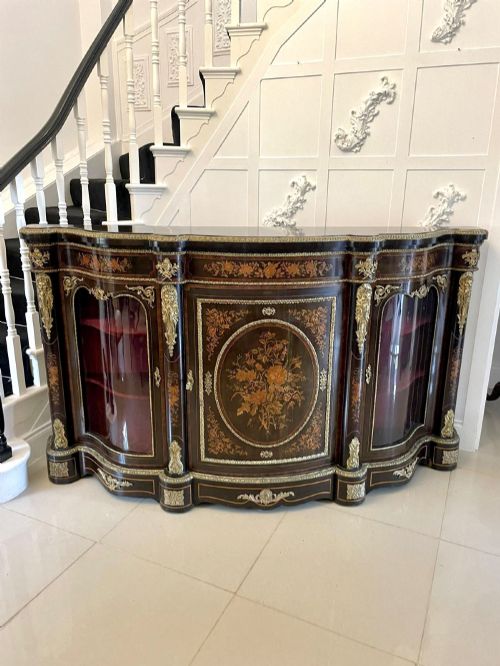
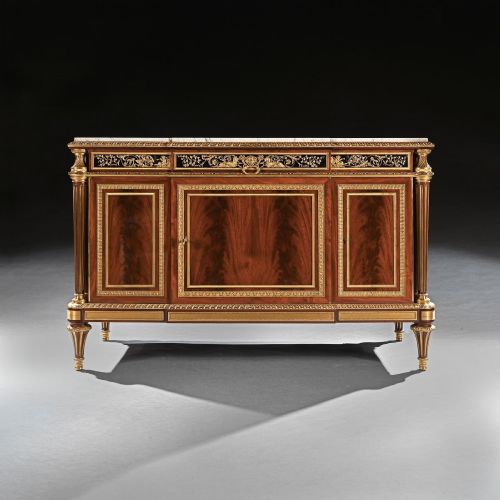
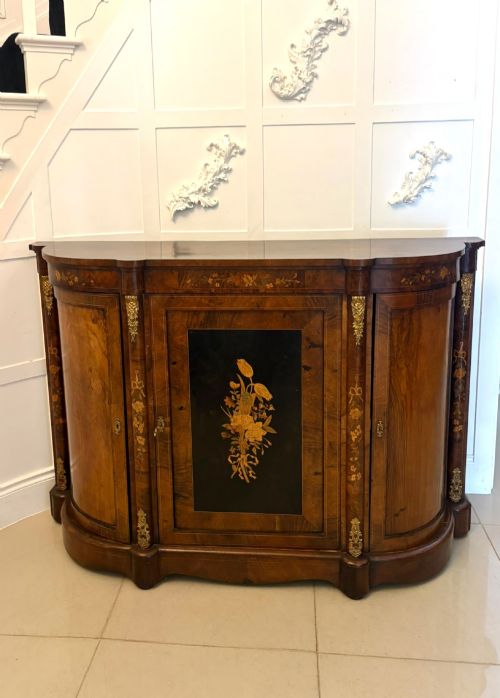
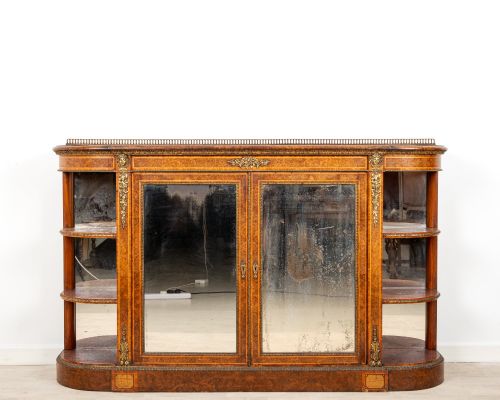



Gilt Bronze Mounted Sideboard
When you search for a gilt bronze mounted sideboard, you find substantial case furniture defined by cast metal mounts.
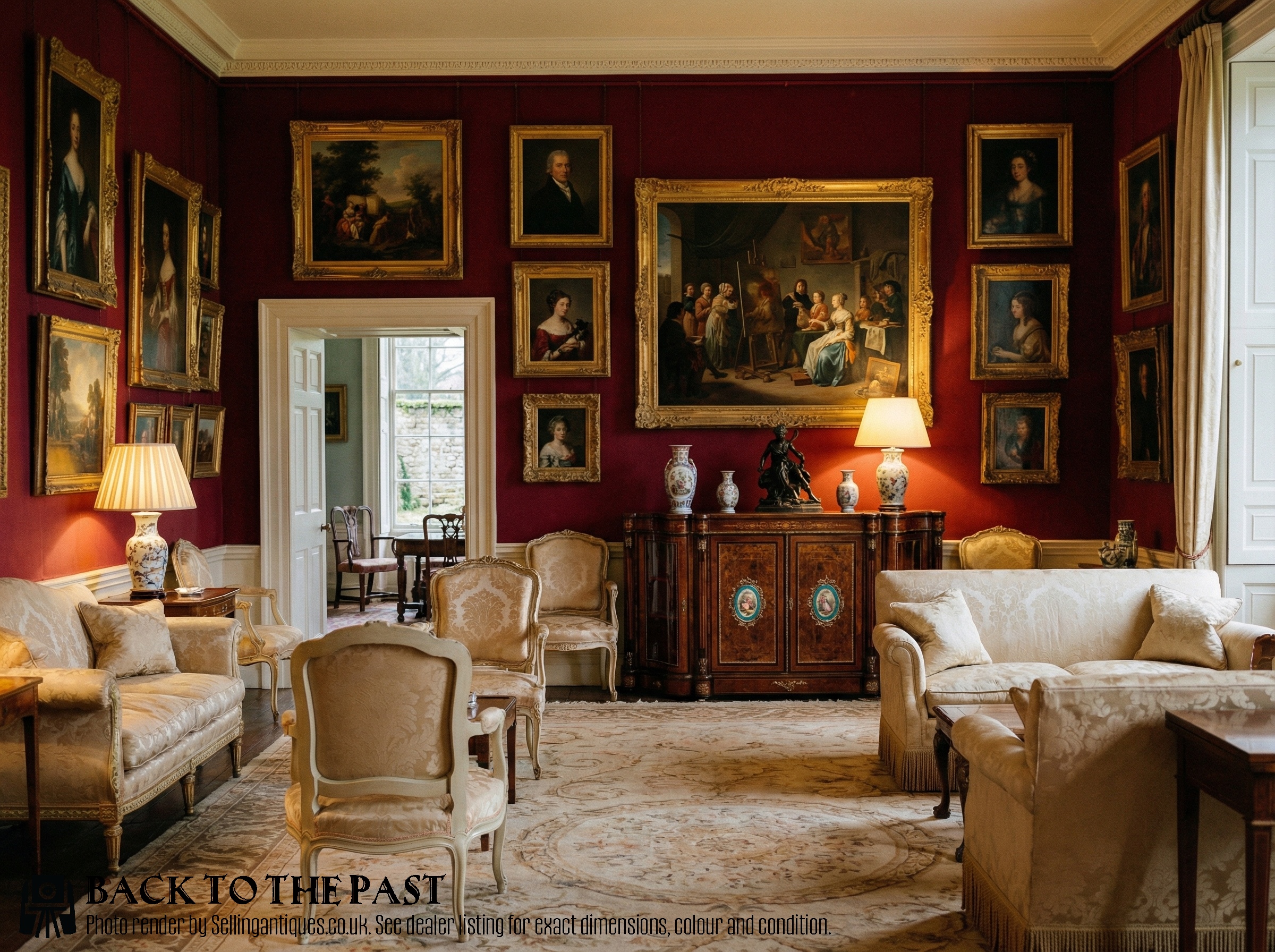
Gilt Bronze Mounted Sideboard
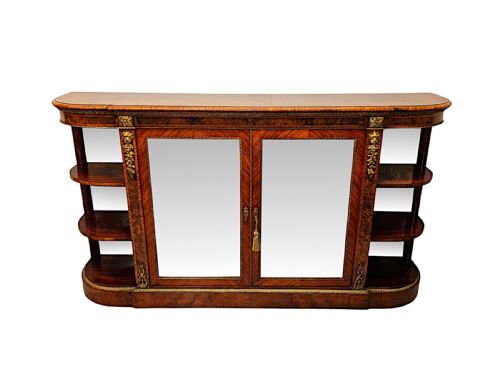
A gilt bronze mounted sideboard is a formal cabinet designed for display and storage in principal rooms, uniting timber carcasses with cast metal ornamentation. These forms incorporate credenzas, commodes, and side cabinets originating from nineteenth-century English and French workshops.
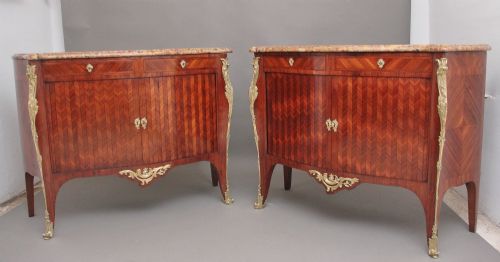
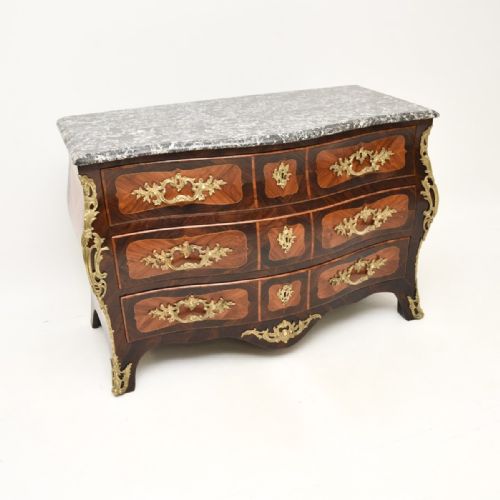
The version most commonly met on this page is the nineteenth-century credenza or commode, frequently rendered in burr walnut or kingwood and finished with marble tops. Such pieces reflect revival styles spanning Louis XV to Victorian aesthetics.
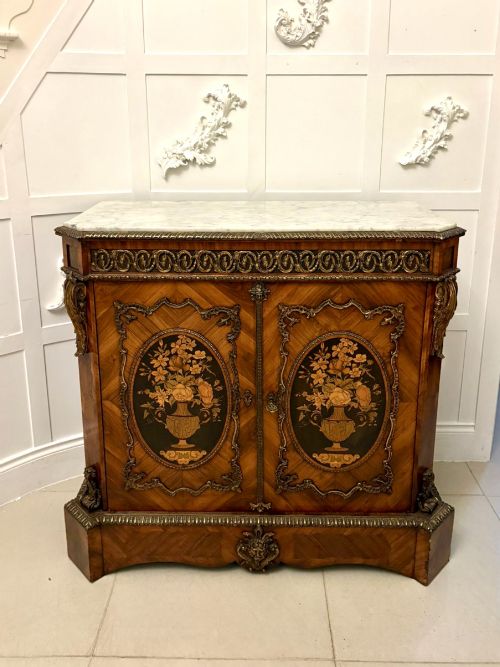
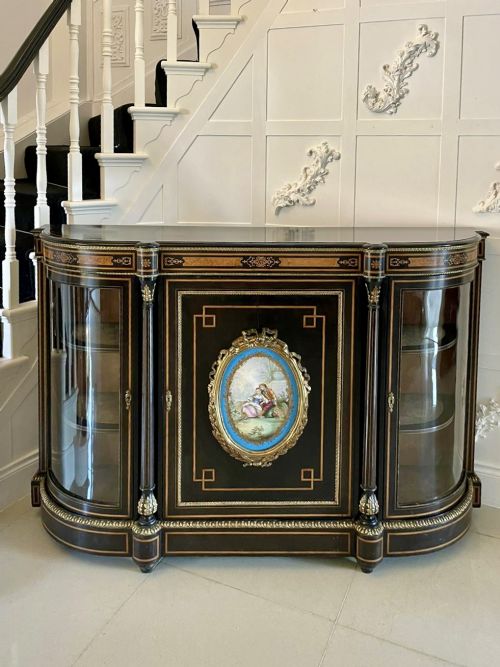
Makers integrated mirrors, glazed doors, and intricate marquetry into the carcass construction, producing heavy, decorative focal points for domestic interiors. The resulting furniture balances functional storage with high-status display surfaces.
How they were made
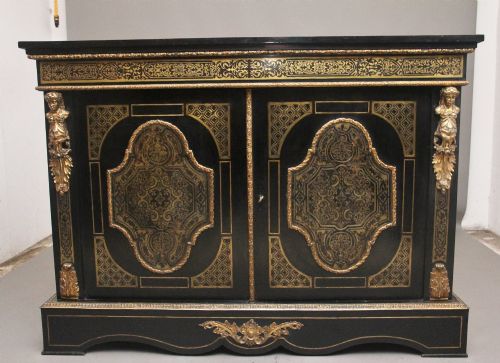
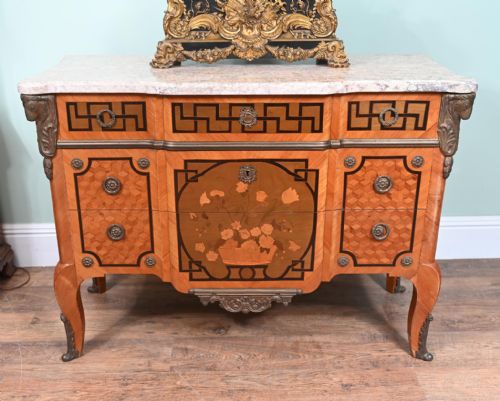
Carcasses utilise dense hardwoods including walnut, kingwood, and ebonised wood, often layered with complex floral marquetry or boulle work. Marble slabs rest upon the upper surfaces of commodes and cabinets as heavy, polished counters.
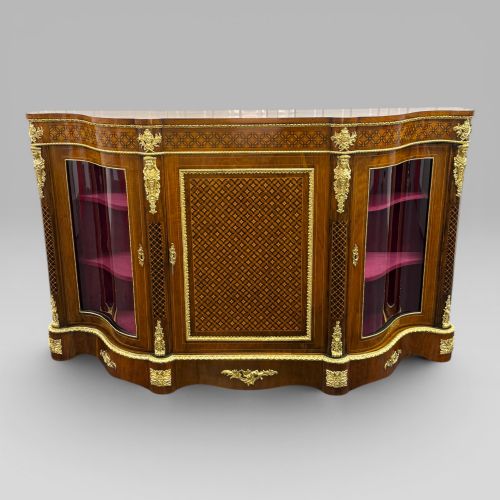
Mounts of ormolu and gilt bronze are cast, chased, and secured to corners, feet, and friezes to accentuate the architectural lines of the furniture. Glass doors and mirrored backplates are integrated into credenzas to lighten the heavy timber structures.
Several pieces squeeze mirrors and marble into the same frame, ensuring you can check your hair while admiring the bronze.
What varies in quality
Quality rests primarily on the crispness of the gilt bronze chasing and the precision of the timber veneers. Superior examples exhibit deeply sculpted mounts and meticulously matched marquetry patterns that maintain integrity across curved serpentine surfaces.
The weight and thickness of the marble top alongside the structural rigidity of the underlying cabinet carcass distinguish workshop standards. Finer pieces demonstrate superior joinery and integrated secondary timbers that support heavy decorative hardware without sagging.
Jacques Bircklé·Henry Dasson·Gillows·Maison Gagneau·Jean-Henri Riesener·Paul Sormani
The Gilt Bronze Mounted Sideboard Glossary
- Ormolu
- Gilded bronze used for decorative mounts on furniture. The technique involves applying a mercury and gold amalgam to cast bronze before heating.
- Credenza
- A low cabinet designed for display, typically featuring glazed or mirrored doors. This form evolved during the nineteenth century to incorporate elaborate marquetry.
- Marquetry
- Inlaid patterns of wood veneers applied to a carcass. Artisans assemble contrasting timbers to create floral or geometric pictorial designs.
- Commode
- A decorative chest of drawers standing on legs or a plinth. French examples from the eighteenth and nineteenth centuries frequently feature marble tops and gilt bronze mounts.
- Boulle
- A style of marquetry utilising tortoiseshell and brass inlay. Named after André-Charles Boulle, it appears on nineteenth-century ebonised cabinets.
Gilt Bronze Mounted Sideboard: Frequently Asked Questions
Where did people place these cabinets?
These pieces stood principally in formal reception rooms, dining spaces, and grand hallways as serving surfaces or display cabinets. Their finished backs and ornate fronts allowed them to sit prominently against walls or within architectural recesses.
Domestic interiors utilised the flat marble tops for serving dishes, lamps, or decorative ornaments. The enclosed cupboards provided secure storage for silver, glassware, and household linens.
How do I care for marble tops?
Clean polished stone surfaces using soft cloths and warm water, avoiding acidic solutions that etch the calcium carbonate structure. Protect the edges from impact to prevent chipping along the moulded profiles.
Apply neutral stone waxes periodically to maintain the sheen and guard against staining from liquids. Lift heavy objects rather than sliding them across the stone face.
What distinguishes a credenza from a commode?
Credenzas feature central cupboard doors flanked by curved glass end sections, designed primarily for display in Victorian and continental reception rooms. Commodes consist essentially of drawer stacks supported on legs, traditionally serving bedroom or parlour functions.
Both forms utilise gilt bronze mounts and marble surfaces, but their internal configurations serve distinct storage purposes. Cabinets emphasise shelving and glazed visibility, whereas commodes rely on sliding drawer boxes.
How can I identify revival styles?
Revival pieces replicate eighteenth-century French monarchical designs using nineteenth-century timber framing and machine-assisted veneer cutting. Look at the secondary woods inside the drawers to confirm the actual period of manufacture.
Louis XVI style items display straight tapered legs and neoclassical mounts, while Louis XV pieces favour asymmetrical curves and rococo scrolling. Nineteenth-century interpretations often combine these elements with heavier proportions.