


Exhibition Quality Credenza
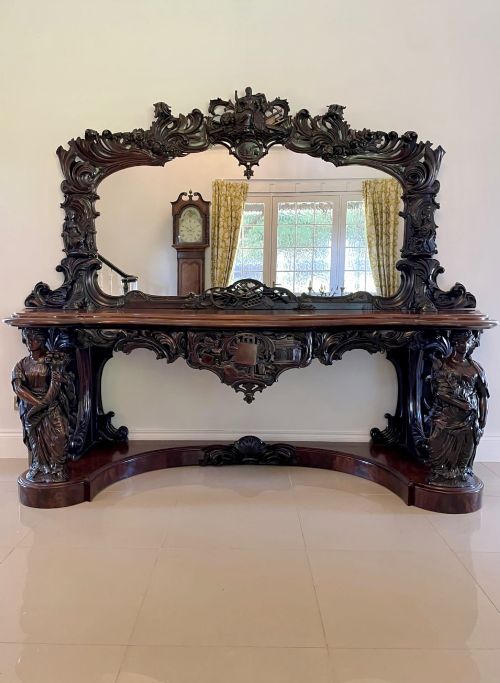
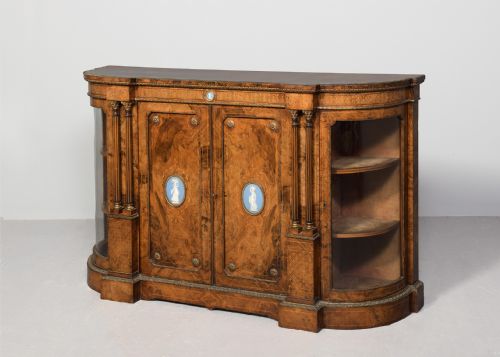
An exhibition quality credenza is a grand display cabinet built to showcase status through exceptional timber, ormolu mounts and fine marquetry.
Exhibition Quality Credenza
When you search for an exhibition quality credenza, you encounter large nineteenth century Victorian pieces alongside early twentieth century side cabinets and console tables. These substantial furniture items typically feature glazed central doors flanked by curved side cabinets or open shelving, designed primarily for the formal reception rooms of wealthy nineteenth century households.
The pieces appearing on this page span the Victorian period, including specific dates around eighteen fifty, eighteen sixty and eighteen eighty, alongside later pieces from nineteen twenty and nineteen thirty. Walnut, burr walnut, mahogany and satinwood dominate the construction, frequently accented with elaborate marquetry inlay, porcelain panels and gilt bronze mounts.
Forms vary from serpentine fronts and mirror back console tables to straightforward side cabinets and credenzas with four doors. The Victorian French Revival, Rococo Revival and Neoclassical styles appear regularly, showing how makers drew on historical continental designs to create striking statement furniture.
What varies in quality
The caliber of an exhibition quality credenza rests primarily on the depth and selection of the timber veneers, with highly figured burr walnut or meticulously matched satinwood setting the upper tier apart from plain walnut or standard mahogany. Finer examples display intricate, multi-timber marquetry with sharp, clean lines rather than simplified or stamped surface decoration.
Mounts and hardware also distinguish the range, as heavy, finely chased ormolu mounts fixed securely to the carcass indicate superior workshop standards compared to lighter, unchased brass alternatives. The precision of the joinery on curved serpentine doors and the integration of painted porcelain plaques reveal the level of artisan skill involved in the original construction.
Some credenza side doors curve so gently you might spend ten minutes trying to figure out how they managed to bend the glass.
Edwards & Roberts Of London·Pietro Ferrario
The Exhibition Quality Credenza Glossary
- Credenza
- A low cabinet or sideboard, historically used for displaying plate and serving food, which evolved in the nineteenth century into a glazed display piece for the parlour. It often incorporates curved glass end doors and a mirrored back.
- Ormolu
- Gilt bronze ornamentation applied to furniture, doors and clocks. The technique involves creating a mercury and gold amalgam on a bronze base, which is then heated to leave a rich golden coating.
- Marquetry
- The art of applying pieces of veneer to a structure to form decorative patterns and pictures. Craftsmen use contrasting woods to achieve naturalistic shading and intricate geometric designs.
- Burr walnut
- Wood taken from a walnut tree growth where the grain has grown in a deformed, swirling manner. This produces highly decorative patterns prized by cabinet makers for statement panels.
- Serpentine
- A furniture front or edge that curves outward at the centre and inward at the ends in an undulating shape. This form requires advanced woodworking skill to build accurately.
Exhibition Quality Credenza: Frequently Asked Questions
What is an exhibition quality credenza?
An exhibition quality credenza is a high status nineteenth century cabinet created to showcase exceptional cabinet making, fine veneers and decorative mounts. These pieces were often produced for domestic display or international exhibitions to demonstrate the skill of a particular workshop.
They combine practical storage with prominent display space behind glass doors, making them focal points in large reception rooms. The designation signifies a superior grade of construction compared to standard commercial furniture of the era.
How were credenzas used historically?
Historically, credenzas served as formal display furniture in drawing rooms and parlours to exhibit porcelain, silver and treasured ornaments behind locked glass doors. The flat top surface also provided additional space for arranging decorative objects during social gatherings.
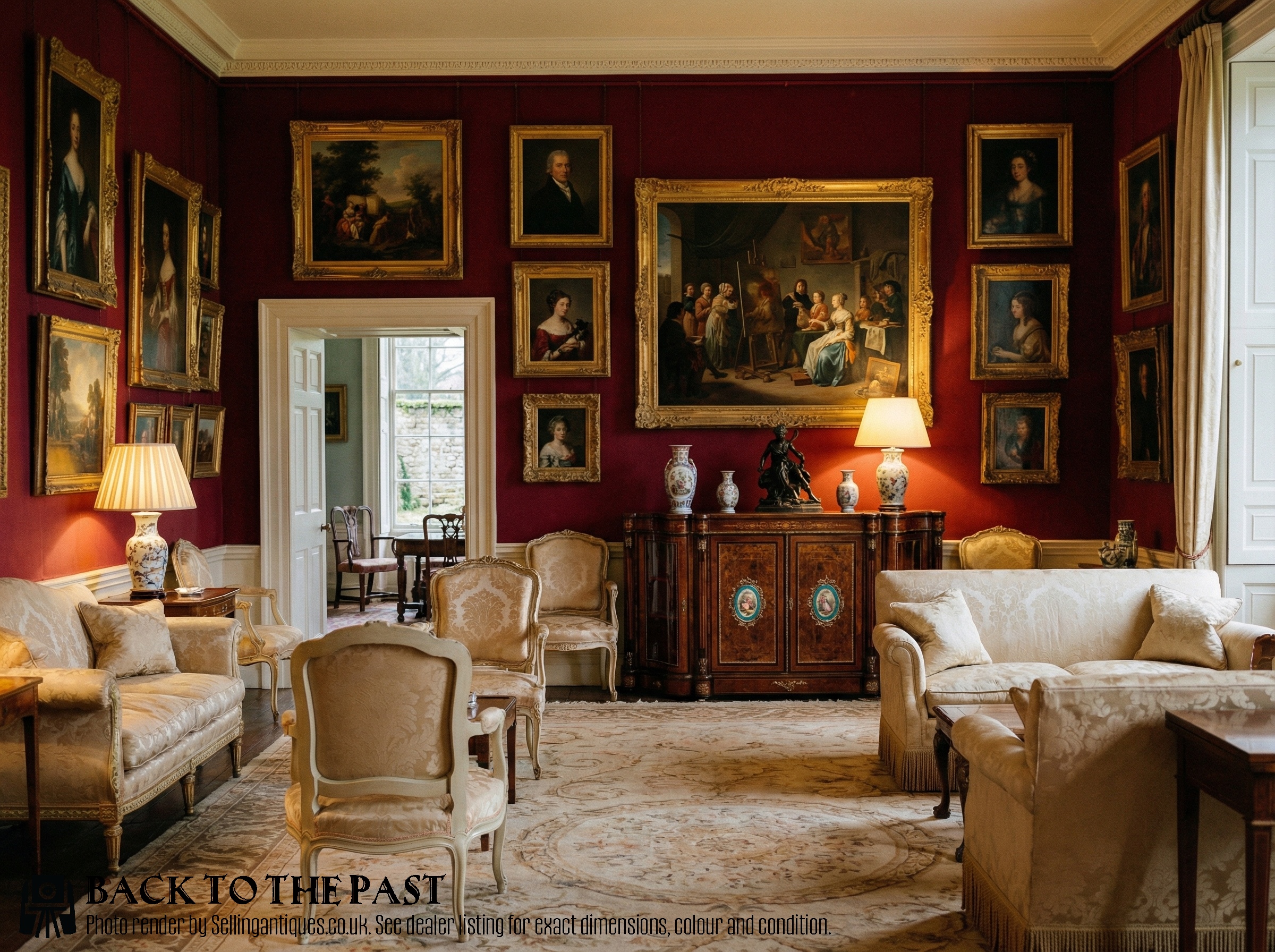
They occupied prominent positions against principal walls, often beneath large gilt mirrors or paired with matching console tables. Their imposing presence reflected the social standing and refined taste of the homeowner.
How do I place a credenza in a modern room?
A credenza works well in a contemporary interior as a focal point against a plain wall, allowing the figured burr walnut or marquetry to stand out. It provides practical surface space for lighting and art while offering concealed storage underneath.
Because these cabinets are deep and wide, ensure adequate clearance in hallways and dining areas for doors to open fully. Pairing the traditional wood tones with minimalist surroundings creates a striking contrast that highlights the craftsmanship.
How can I tell the difference between periods?
Victorian pieces from eighteen fifty to eighteen eighty frequently feature heavy carving, burr walnut veneers and ormolu mounts in Revival styles like Rococo or French Louis XVI. Later pieces from the early twentieth century often adopt Neoclassical lines with lighter satinwood or mahogany frames.
Examining the interior construction, drawer linings and backboards reveals manufacturing methods specific to nineteenth century hand production versus twentieth century workshop techniques.