
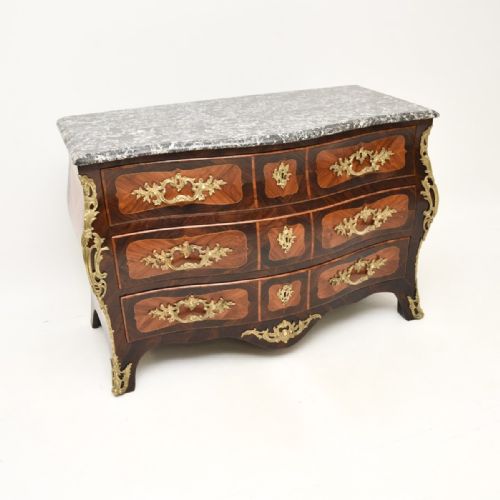
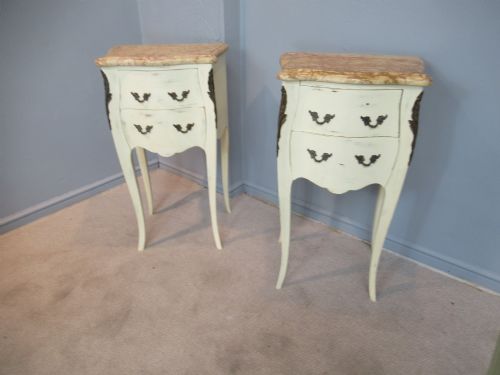
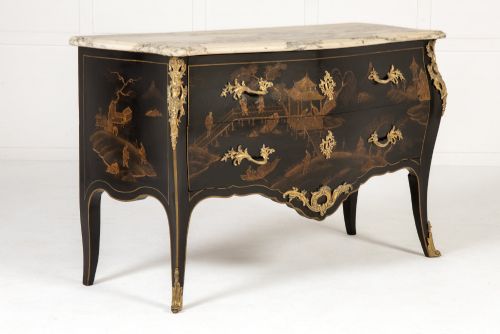


French Rococo Sideboard Cabinet
A french rococo sideboard cabinet brings extravagant continental flair to a room, offering both sculptural presence and practical storage.
French Rococo Sideboard Cabinet
When you search for a french rococo sideboard cabinet, you encounter a variety of forms rooted in eighteenth-century continental design, including commodes, sideboards, and side cabinets. These pieces often follow the Louis XV style or later revivals from the nineteenth and twentieth centuries.
The selection ranges from marble-topped commodes and bombes to larger buffets and credenzas. Pieces date from the eighteenth century through to the 1930s, showing enduring demand for serpentine shapes and decorative mounts.
Materials and construction
Cabinet makers utilised a foundation of woods such as walnut, kingwood, burr walnut, and oak, frequently embellished with intricate marquetry and parquetry patterns. Surfaces often feature japanned lacquer or painted finishes.
Designers incorporated heavy mounts of ormolu, gilt bronze, and brass to accent the sweeping contours of the cabinetry. Many examples are finished with heavy marble tops, fitted securely to the wooden carcass.
The inventory records marble tops, ormolu mounts, and bronze hardware across Louis XV and French Rococo Revival styles.
Assessing quality in execution
The refinement of the ormolu or bronze mounts distinguishes finer examples, as does the crispness of hand-chased details. Superior pieces display seamless integration between the cast metal mounts and the underlying woodwork.
The complexity of the timber work, particularly in matched veneers, marquetry, and bombe curving, dictates the grade of the cabinet. Attention to internal construction and secondary timbers further separates standard workshop production from master craftsmanship.
Jacques Bircklé·Gaudreaux·Gillows
The French Rococo Sideboard Cabinet Glossary
- Ormolu
- Gilded bronze mounts applied to furniture. This technique creates metallic highlights that complement polished wood surfaces.
- Bombe
- An outward-swelling, bulging contour found on the front and sides of furniture. It requires advanced woodworking skill to execute properly.
- Marquetry
- Inlaid wood veneers arranged to form decorative pictures or geometric patterns. Craftsmen select various coloured timbers to achieve tonal contrast.
- Commode
- A low chest of drawers or cabinet originating in France. These pieces typically feature prominent decorative mounts and stone tops.
- Parquetry
- Geometric wood inlay resembling a mosaic pattern. This technique decorates table and cabinet tops with precision-cut timber segments.
French Rococo Sideboard Cabinet: Frequently Asked Questions
How do I date a french rococo sideboard cabinet?
Dating relies on examining the secondary timbers, construction methods, and the style of the metal mounts. Eighteenth-century originals differ significantly in joinery from nineteenth-century revivals and twentieth-century interpretations.
Evidence on this page spans from the seventeen-fifties to the nineteen-thirties, capturing both period originals and later revivals inspired by Louis XV aesthetics.
Are marble tops original to these cabinets?
Many cabinets feature marble tops as an integral part of the original design, particularly commodes and sideboards from the eighteenth century onwards. The stone provides a durable, decorative surface that contrasts with the timber below.
Replacements do occur over centuries, so inspect the fit and edges where the marble meets the wooden frame.
How do I care for ormolu mounts?
Ormolu mounts require gentle dusting with a soft, dry cloth to prevent the accumulation of dirt in recessed areas. Avoid using harsh chemical cleaners or abrasive polishes, which can strip the original gilding.
Maintaining a stable room environment protects both the metal mounts and the underlying wood veneers from humidity damage.
What is the difference between a commode and a sideboard?
A commode is typically a low chest of drawers or cabinet with a decorative top, designed originally for bedroom or parlour use. Sideboards and buffets tend to be larger pieces intended for dining rooms to serve food and store tableware.
Both forms appear frequently in French revival styles featuring serpentine fronts and elaborate mounts.