


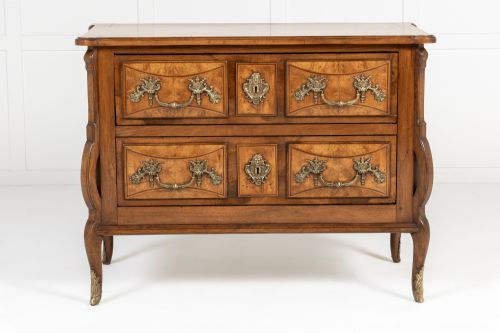

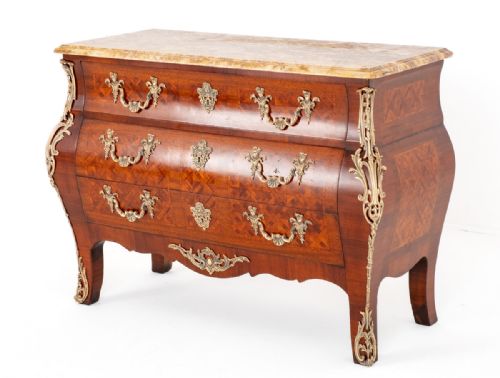

Ormolu Brass Mounted Commode
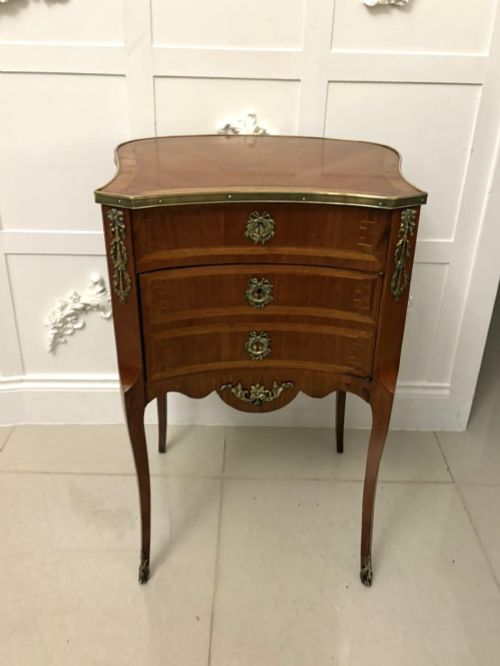
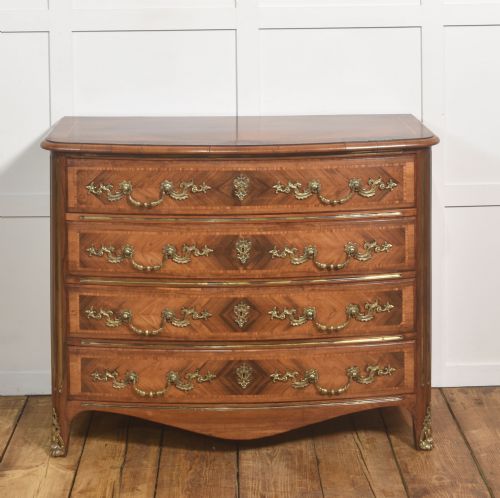
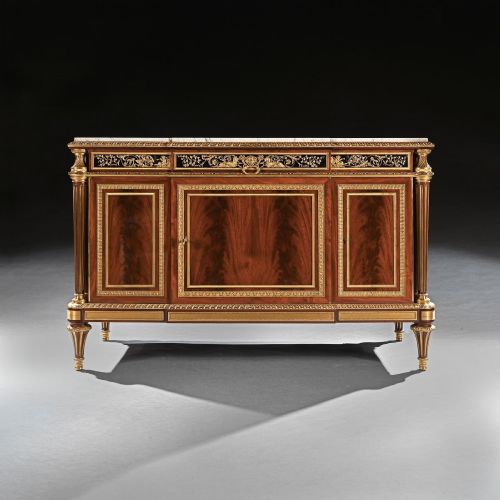
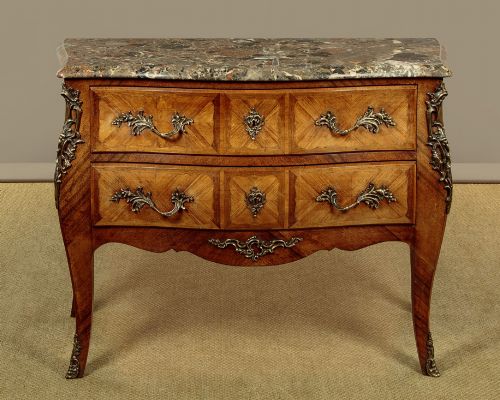
An ormolu brass mounted commode brings French cabinet-making splendour into a room through rich veneers and gilt metal mounts.
Ormolu Brass Mounted Commode
An ormolu brass mounted commode is a grand storage piece rooted in French decorative traditions, spanning periods from the eighteenth century to the early twentieth century. You will encounter forms styled in the manner of Louis XV and Louis XVI, alongside revival pieces from the nineteenth century.
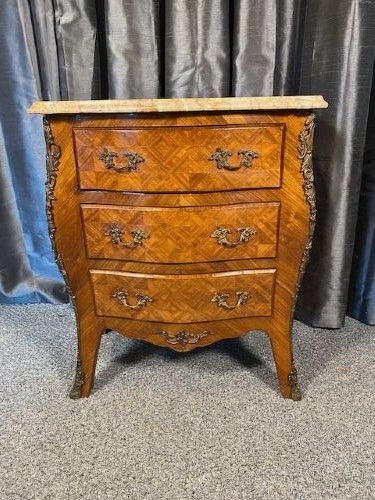
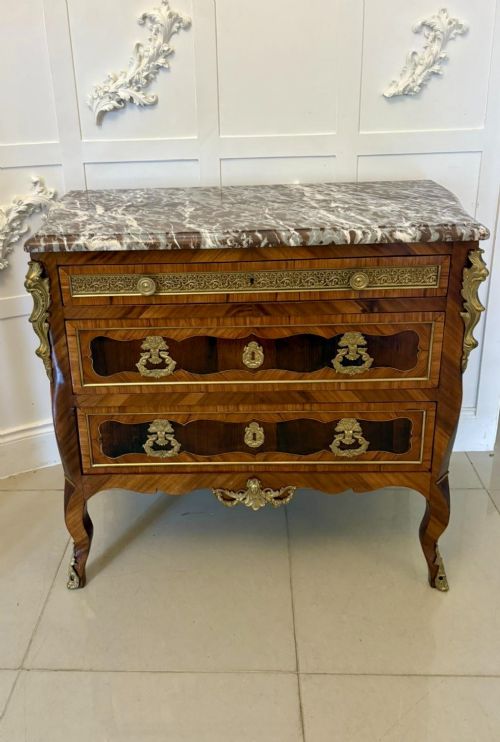
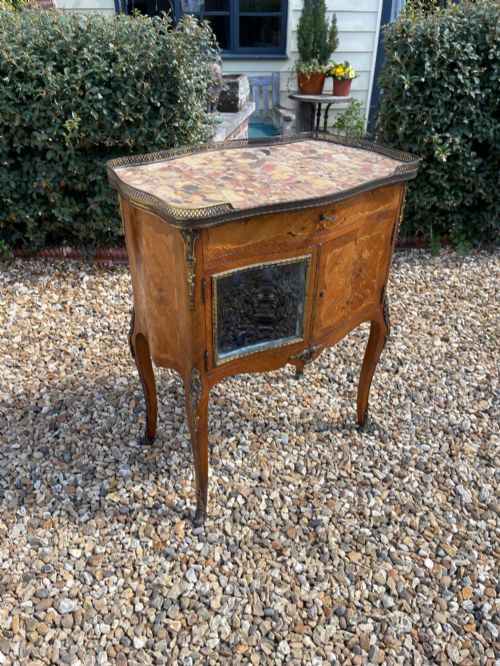
The category encompasses serpentine chests of drawers, bombe commodes, and side cabinets furnished with decorative mounts. These pieces function as statement storage items, frequently topped with marble in shades such as breche d'alep.
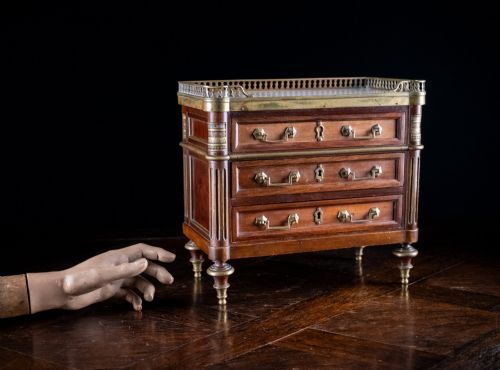
Most examples originate from French workshops, incorporating intricate marquetry and parquetry across timbers like walnut, kingwood, and mahogany. Miniature versions and bedside cabinets also appear within this group.
Materials and construction
Cabinet-makers built these carcasses using substantial timbers including walnut, mahogany, and burr walnut, overlaid with decorative veneers of kingwood for complex geometric and floral patterns. Fine brass and ormolu mounts were cast and applied to accentuate the curves and corners of the structure.
Marble slabs were shaped to fit the contours of the serpentine or oval tops precisely, providing a heavy and cool counterpoint to the timber below. Marquetry inlay techniques incorporated various contrasting woods to create detailed pictorial or geometric surfaces across the drawer fronts.
Listings feature pieces spanning the eighteenth century through to the 1930s, constructed in mahogany, walnut, and kingwood with marble tops.
Distinguishing quality
Quality rests in the crispness of the cast ormolu and bronze mounts, where finely chased details reveal the hand of skilled metalworkers rather than mass production. The integration of the marble top to the timber carcass indicates the level of bespoke attention given by the maker.
Superior execution shows in the precision of the marquetry and the seamless alignment of drawers within serpentine or bombe forms. The selection of figured veneers, such as burr walnut or kingwood, further separates standard production from exceptional pieces.
Henry Dasson·Weisweiler·Riesener
The Ormolu Brass Mounted Commode Glossary
- Ormolu
- Gilt bronze mounts applied to furniture to highlight corners, handles, and apron centres. This technique creates a rich golden contrast against dark timber veneers.
- Bombe
- A swelling, outward-curving convex shape characteristic of advanced cabinet-making. This silhouette requires considerable skill to veneer and fit successfully.
- Marquetry
- The art of forming decorative patterns using thin veneers of different coloured woods. It creates elaborate pictorial or geometric designs across drawer fronts and cabinet doors.
- Serpentine
- A front or top shaped with a central convex curve flanked by two concave curves. This fluid line defines much of the best French case furniture.
- Parquetry
- Geometric wood inlay work arranged in regular patterns like cubes or herringbone. It provides a structured textural contrast to freeform marquetry.
Ormolu Brass Mounted Commode: Frequently Asked Questions
What is an ormolu brass mounted commode?
An ormolu brass mounted commode is a decorative chest of drawers or cabinet featuring cast metal mounts and fine timber veneers.
Originating largely from French design traditions, these pieces combine functional storage with sculptural hardware and marble surfaces.
How do I date a commode?
Dating relies on examining the timber construction methods, the style of the mounts, and the overall silhouette.
Pieces range from eighteenth-century originals to nineteenth-century revival works and early twentieth-century interpretations.
What woods were used?
Cabinet-makers utilised a foundation of solid timbers overlaid with decorative veneers.
Common choices include walnut, mahogany, burr walnut, and kingwood, often paired with marquetry inlay.
Where should I place a commode?
These statement pieces suit reception rooms, grand hallways, or principal bedrooms as focal storage furniture.
Their finished backs and detailed sides allow many examples to sit away from plain walls.