

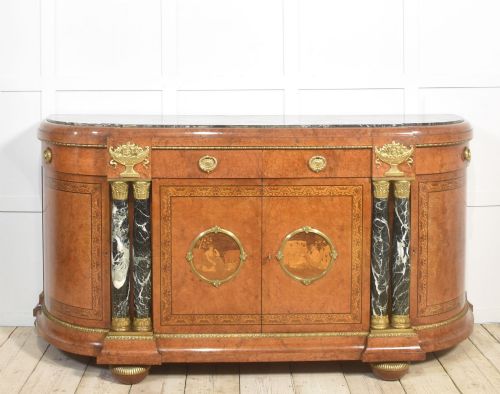
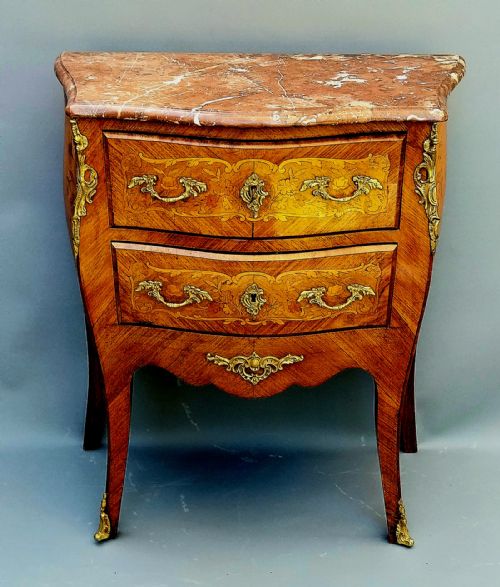


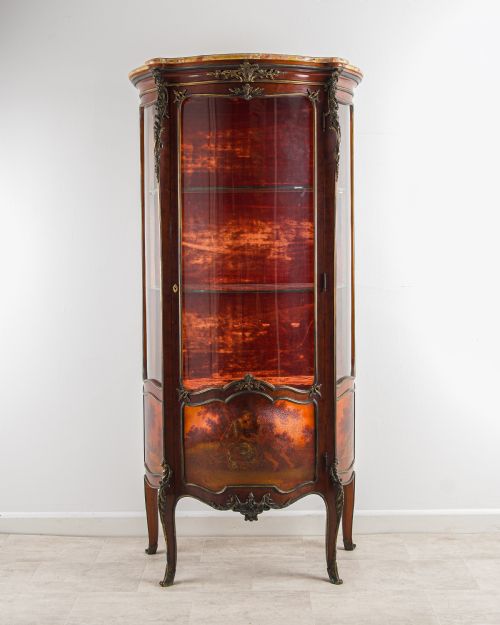


Curved Marble Top Cabinet
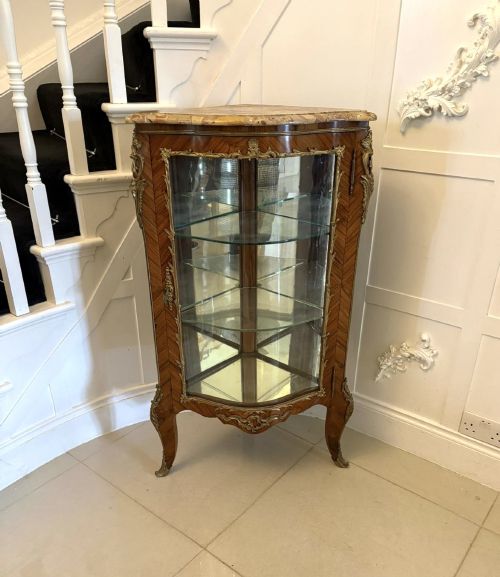
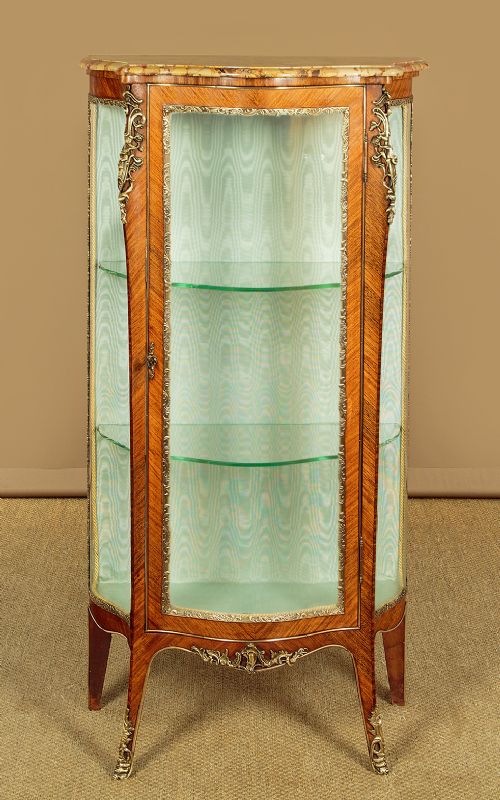
A curved marble top cabinet brings stone and timber together in pieces designed for display and storage.
Curved Marble Top Cabinet
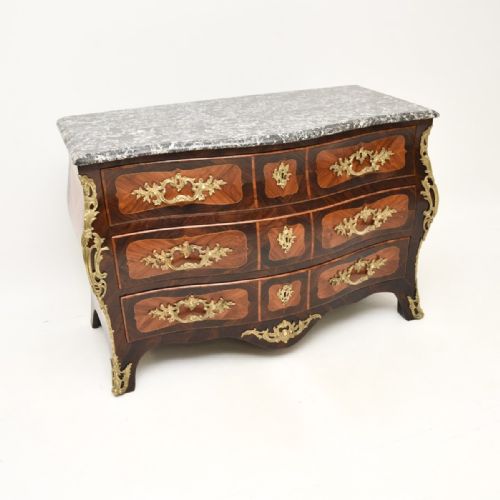
A curved marble top cabinet is a piece of furniture defined by its shaped stone surface and rounded wooden carcase, appearing across display cabinets, sideboards, commodes, and bedside tables. These items originate predominantly from nineteenth and early twentieth century French and Italian workshops, reflecting revival styles such as Louis XV and Louis XVI.
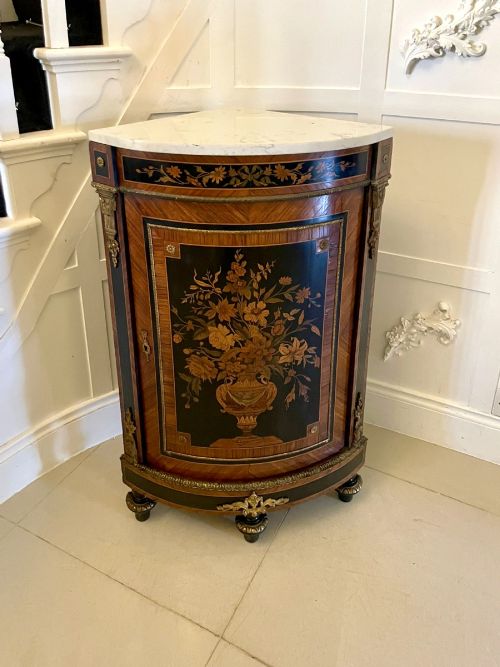
Buyers encounter forms ranging from large vitrines and credenzas to compact corner cabinets and bedside chests. The integration of a shaped marble slab over timber structures gives each piece its distinctive profile.
The category spans multiple centuries of design, with pieces manifesting serpentine fronts, bombé shapes, and inlaid marquetry or parquetry surfaces. Such furniture functioned historically as focal points in reception rooms, bedrooms, and salons.
How they were made
Cabinetmakers constructed the carcase using timbers like kingwood, walnut, mahogany, and maple, often applying complex marquetry and parquetry patterns. Surface decoration frequently incorporates painted panels or Vernis Martin techniques alongside the primary wood veneers.
Mounts cast in ormolu and gilt bronze embellish corners, feet, and key escutcheons, following the contours of the timber. Slabs of marble, cut and polished to match serpentine or bow front profiles, rest directly upon the wooden frames.
Several bedside tables hide their curves behind secretive serpentine doors.
What varies in quality
The distinction between ordinary and exceptional pieces rests in the handling of the materials and the precision of the joinery. Finer examples display fluid curvature in both the wooden carcase and the fitted marble, whereas lesser pieces exhibit rigid lines and simpler assembly.
Casting and chasing quality in the ormolu and gilt bronze mounts separate standard workshop production from master cabinetmaker output. The complexity of the veneer work, from detailed floral marquetry to geometric parquetry, dictates the standing of the piece.
Jacques Bircklé·François Linke·Mercier Frères
The Curved Marble Top Cabinet Glossary
- Ormolu
- Gilded bronze mounts applied to furniture. This technique adds metallic highlights to the wooden framework.
- Marquetry
- Veneer pieces arranged in pictorial or decorative patterns. Artisans cut different woods to create intricate surface designs.
- Vernis Martin
- A type of translucent varnish used to simulate Japanese lacquer. It appears on painted panels of cabinet doors.
- Bombé
- A swelling, outward-curving furniture shape. This profile requires skilled carpentry to match the stone top to the carcase.
Curved Marble Top Cabinet: Frequently Asked Questions
Where did these cabinets go?
These cabinets sat in salons, drawing rooms, and bedrooms to display porcelain, hold linens, or serve as decorative surfaces.
Owners utilised them for storage while placing decorative objects or lamps upon the stone tops.
How do I clean marble?
Marble requires gentle wiping with a damp cloth and mild soap to preserve the polished surface. Avoid acidic cleaners that etch the stone.
Dry the surface thoroughly after cleaning to prevent water marks.
Are the marble tops original?
Most pieces retain their fitted stone tops, shaped specifically to follow the curves of the wooden carcase beneath. Inspecting the underside reveals matching contours.
Replacements typically show less wear or slight discrepancies in edge profiling.
How to date these cabinets?
Dating relies on timber choices, mounting styles, and construction methods characteristic of specific periods like the nineteenth century or the nineteen twenties. Revival movements often emulate eighteenth-century aesthetics.
Examining secondary woods inside drawers provides further clues to age.