



Gilt Bronze Mantel Garniture
A gilt bronze mantel garniture brings matched French elegance to a room, pairing a central clock with flanking urns or candelabra.
Gilt Bronze Mantel Garniture
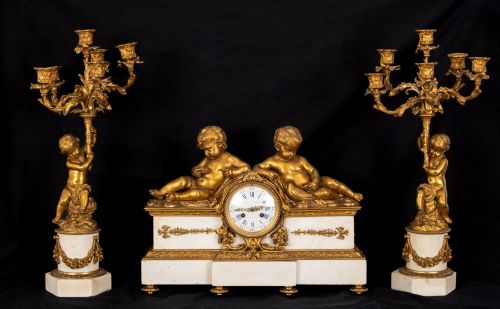
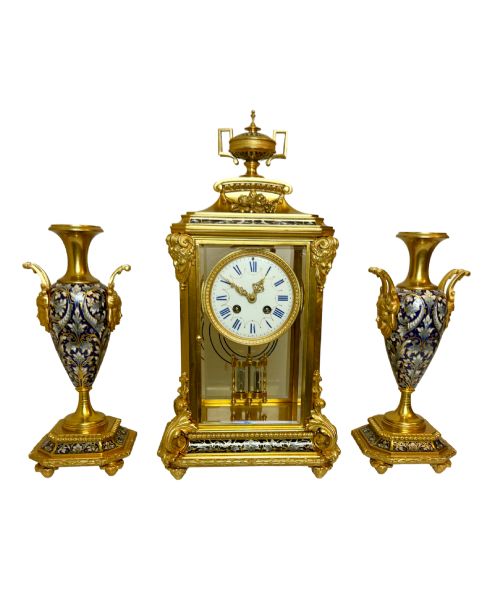
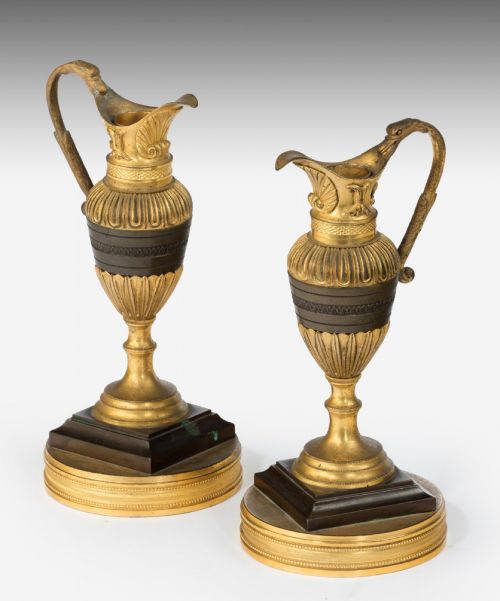
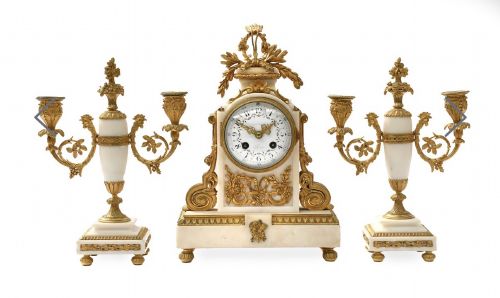
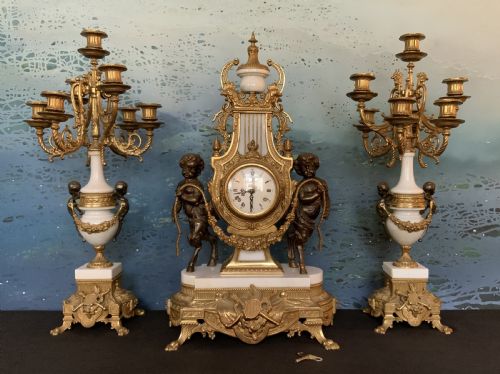
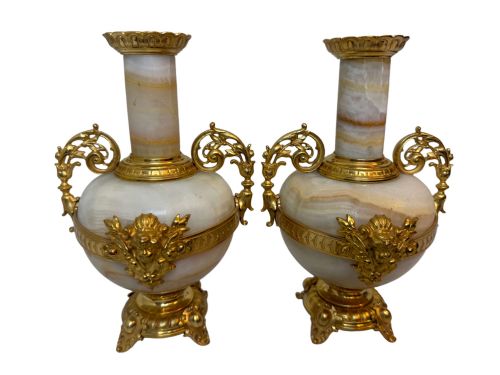
When you search for a gilt bronze mantel garniture, you are looking at matched three-piece or multi-piece sets designed to sit symmetrically on a fireplace mantel or console table. These ensembles typically comprise a striking clock flanked by a pair of matching decorative urns, candelabra, or vases.
On this page, you will most frequently meet nineteenth-century French examples produced during the Victorian era and under various revival movements like Louis XVI and French Empire. These pieces reflect grand interior decoration schemes from the eighteen-fifties onwards, combining timekeeping with ornate display.
Materials and construction
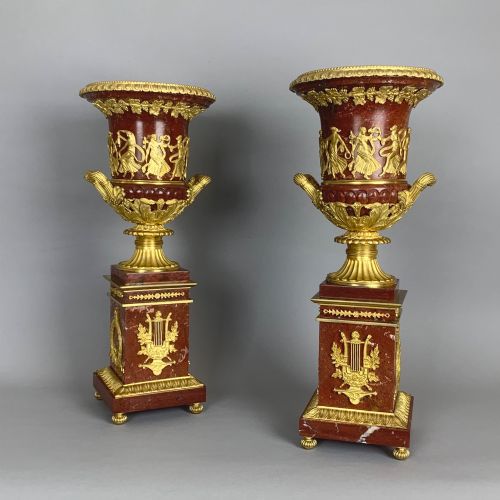
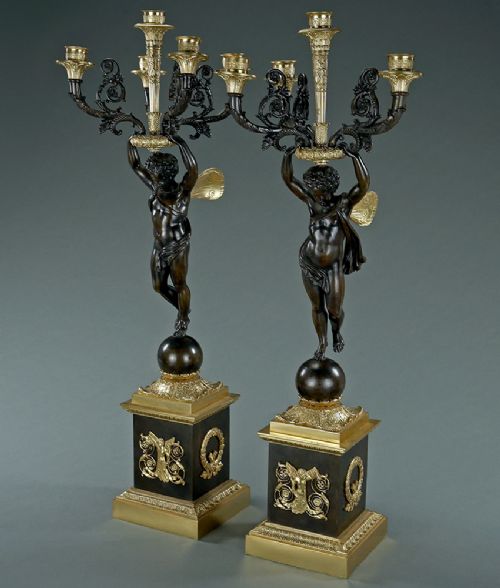
Maker workshops built these sets using cast bronze finished with mercury gilding or ormolu, often paired with contrasting natural materials such as white marble, red marble, onyx, or Bleu de Roi porcelain. Metal components were cast in sections, chased by hand to sharpen details, and gilded to achieve a rich metallic lustre.
Many garnitures incorporate delicate decorative elements like champlevé enamel work, glass domes for protection, or patinated bronze details to contrast against the bright gilded surfaces. Clock movements were mechanical eight-day mechanisms, frequently supplied by specialist French movement makers.
Listings for gilt bronze mantel garniture sets span periods from eighteen-fifty to nineteen-sixty, featuring materials like ormolu, white marble, onyx, and champlevé enamel.
What separates the finest examples
Quality in these garnitures rests heavily on the crispness of the bronze casting and the depth of the hand-chasing work following the cast. Superior sets display sharp relief on figures, foliage, and architectural mounts, whereas lower-tier examples show softer details and shallower surface work.
The choice and integration of secondary materials also dictate standing. Sets incorporating substantial carved marble bases, hand-painted porcelain panels, or complex enamel work require higher craftsmanship than simpler cast metal bodies.
Henry Dasson·A.D Mougin·H Luppens Paris
The Gilt Bronze Mantel Garniture Glossary
- Garniture
- A set of matched decorative objects designed to be displayed together on a mantelpiece or sideboard. They usually consist of a central clock flanked by two urns, vases, or candelabra.
- Ormolu
- Finely chopped gold and mercury amalgam applied to a bronze base, then heated to drive off the mercury and leave a gold coating. It provides the characteristic rich metallic finish seen on these pieces.
- Cassolette
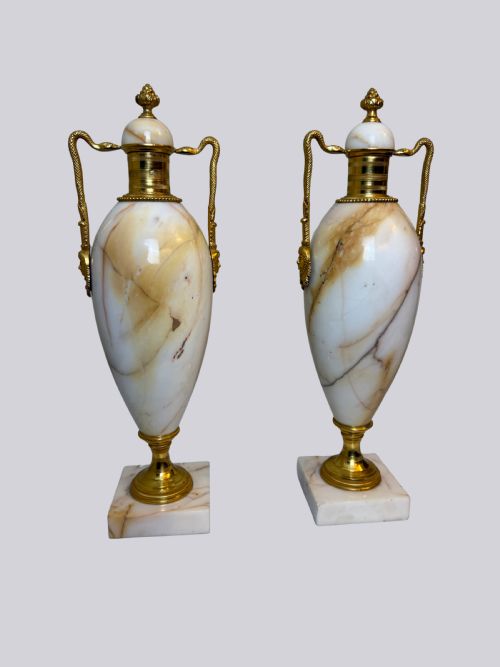
- A decorative vase or urn designed with a reversible lid that can function either as a closed vessel or as a candleholder. They frequently appear as the sidepieces in a clock set.
- Champlevé
- An enamelling technique where troughs or cells are hollowed out of the metal surface and filled with vitreous enamel powder before firing. This adds colourful decorative patterns to the bronze mountings.
- Portico clock
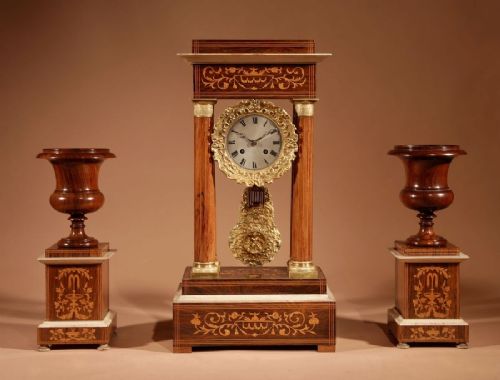
- A architectural clock style shaped like a temple with supporting columns, often featured as the central timepiece in nineteenth-century French garniture sets.
Gilt Bronze Mantel Garniture: Frequently Asked Questions
What is included in a complete garniture set?
A standard garniture set includes a central mantel clock accompanied by two matching side pieces, such as urns, vases, or candelabra. These side pieces balance the display visually across a mantel.
Some larger nineteenth-century configurations expanded this arrangement to include matching cassolettes or multi-light candelabra designed to hold numerous candles.
How do I date a nineteenth-century clock set?
Dating relies on examining the stylistic revival period, such as Louis XVI, Empire, or Rococo, combined with the materials used and any maker marks stamped on the brass clock movements.
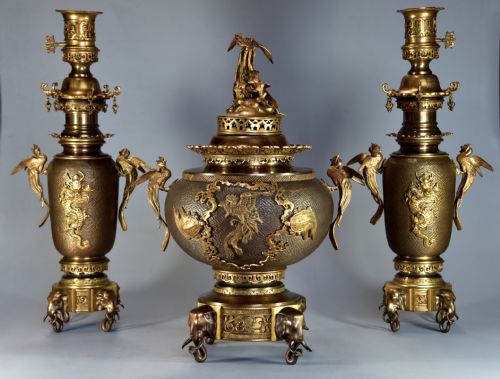
Architectural clues, casting techniques, and the presence of specific decorative details like champlevé enamel or Japonisme motifs help narrow the decade of production.
Where should I place a heavy marble garniture?
These sets require a sturdy, level surface capable of supporting considerable weight from the marble bases and cast bronze components. A deep mantelpiece or a strong console table provides a secure foundation.
Keep them away from direct heat sources like working fireplaces to protect the delicate marble, gilt surfaces, and internal clock mechanisms.
How do French and Italian garnitures differ?
French sets dominate the surviving market from the nineteenth century, typically featuring refined ormolu mounts, champlevé enamel, and classical revival styles. Italian pieces occasionally appear with similar neoclassical influences.
Both traditions utilised high-quality bronze casting and contrasting marble bodies, though French workshops set the dominant aesthetic standards for the period.