


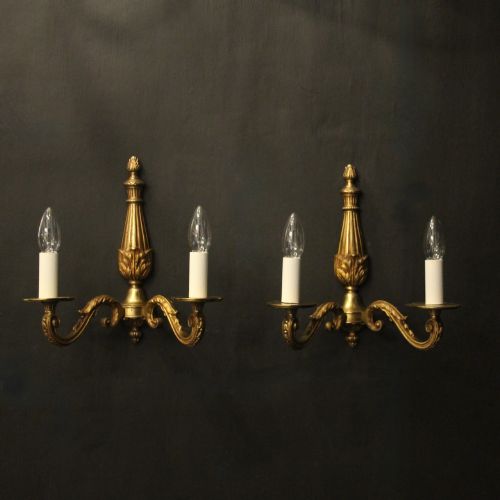
Gilt Bronze Lighting
Gilt bronze lighting brings warmth and substance to a room through heavy cast metal and rich surface gilding.
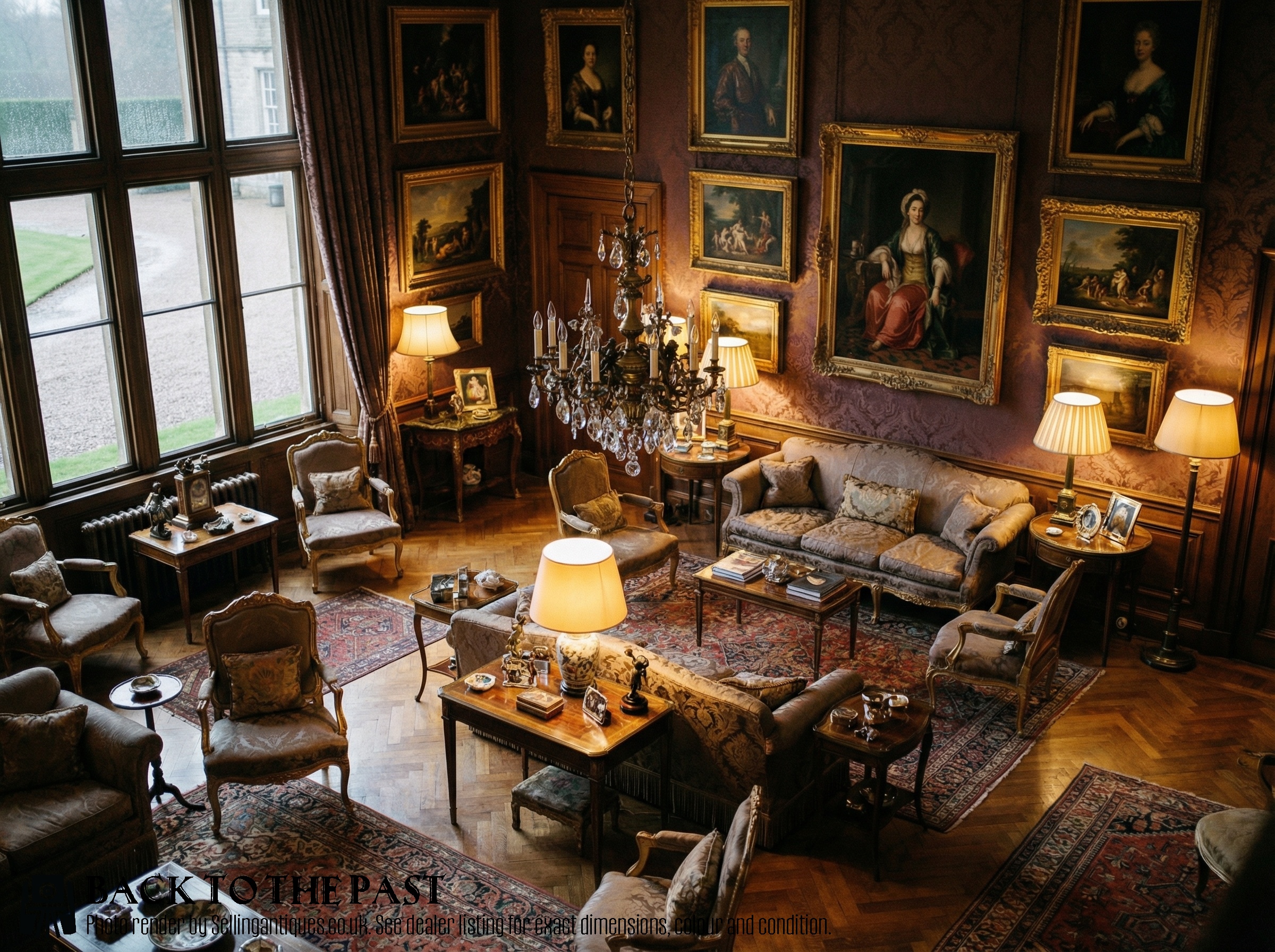
Gilt Bronze Lighting
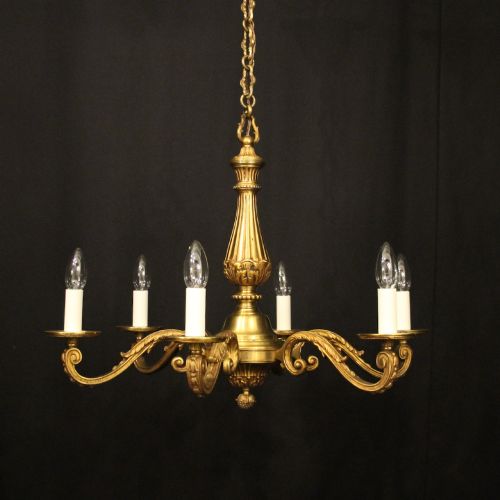
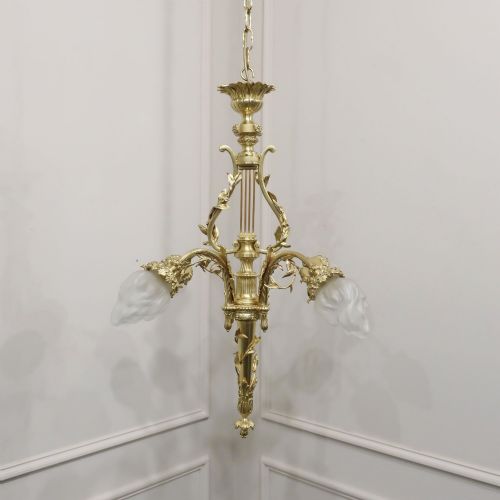
Gilt bronze lighting encompasses French chandeliers, wall lights, candelabra, and table lamps cast in heavy metal and finished with gold surface treatments. These pieces date from the eighteenth century through the early twentieth century, spanning styles from Louis XVI and Empire to Rococo Revival and Art Deco.
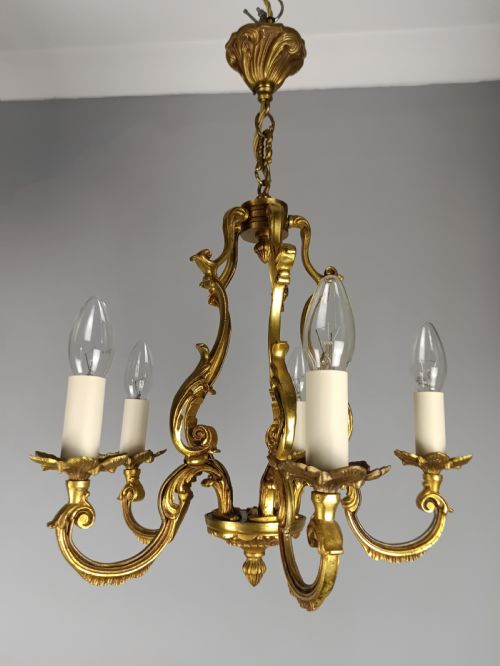
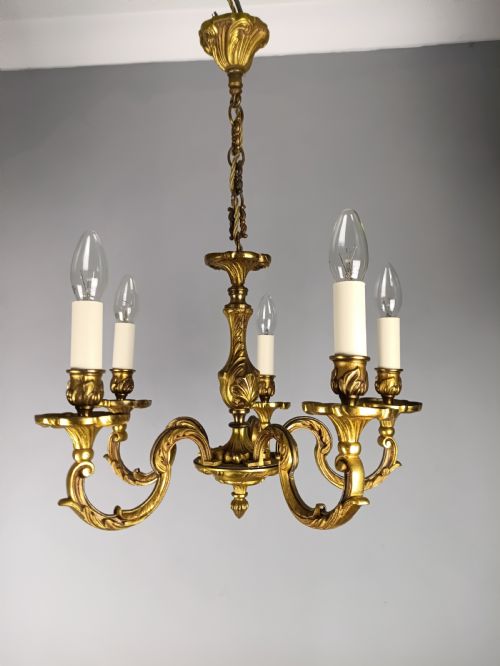
The most common examples on this page are French wall lights and multi-light chandeliers from the early twentieth century, alongside nineteenth-century candelabra and candlesticks featuring bronze and ormolu mounts.

How they were made
Foundries shaped these pieces using metal casting techniques, working primarily with bronze, brass, and ormolu, often combining the metalwork with marble, glass, crystal, onyx, porcelain, and fluorite. Artisans applied mercury gilding or surface gilding to the bronze base, creating a durable golden sheen.
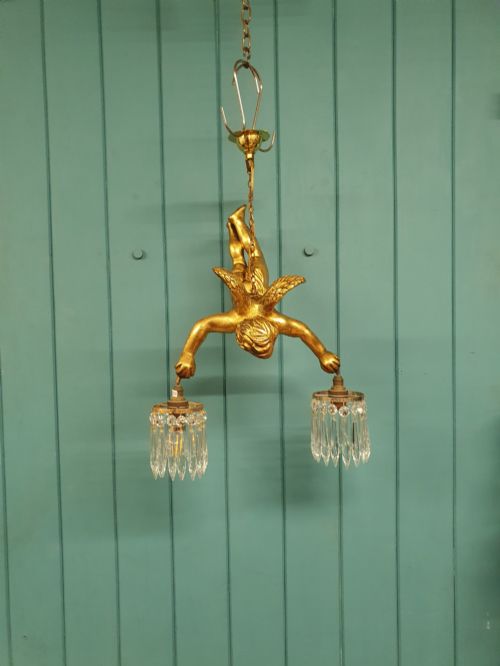
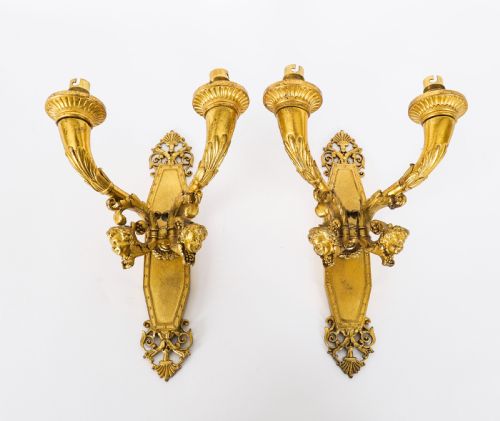
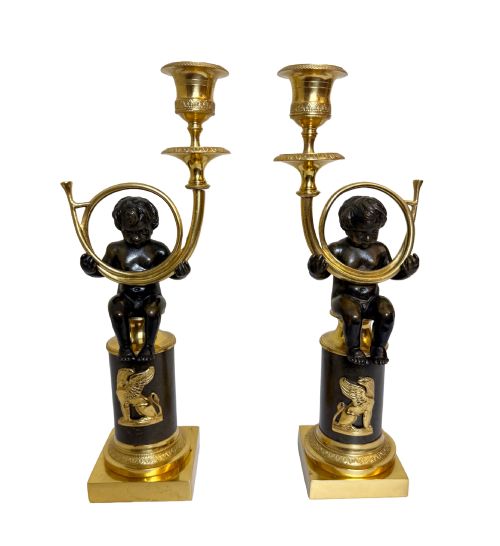
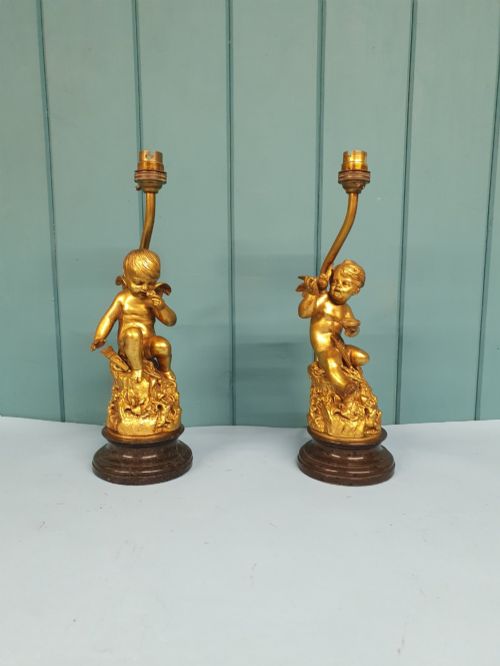
Many fixtures incorporate detailed cast elements such as cherubs, putti, ribbons, and floral motifs, sometimes pairing patinated bronze with bright gilt sections for contrast.
Listings feature items spanning from the eighteenth century to the 1930s, utilising bronze, brass, marble, crystal, and porcelain.
What varies in quality
The precision of the metal casting dictates the sharpness of detail in ornamental motifs like acanthus leaves, figures, and floral garlands. Crisp definition in the chasing work separates standard production from finer foundry output.
The preservation of the original gilding or ormolu surface, alongside the integration of secondary materials like rock crystal, marble bases, and cut glass elements, determines the visual depth of the fixture.
Barbedienne·Francois Redmond·E Rousseau·Dugourc
The Gilt Bronze Lighting Glossary
- Ormolu
- Finely ground high-carat gold applied to a bronze base using a mercury amalgamation technique. This historic process yields a distinct, deep golden lustre.
- Champleve
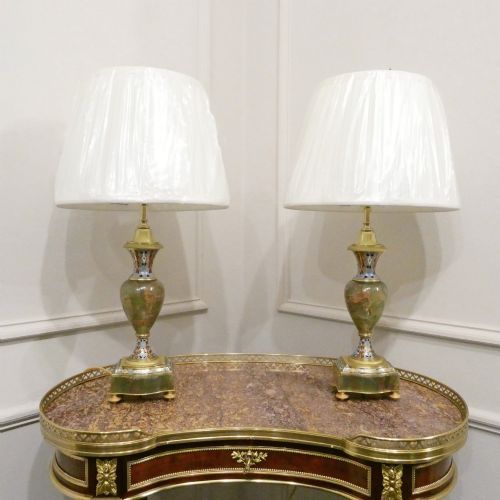
- An enamelling technique where troughs are dug into a metal surface and filled with vitreous enamel before firing. It frequently appears on nineteenth-century table lamp bases.
- Candelabra
- A branched candlestick designed to hold multiple candles. These metal fixtures often feature removable branches or central figural columns.
- Hall Lantern
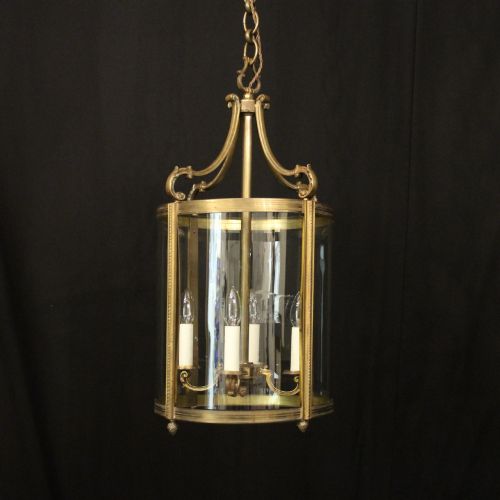
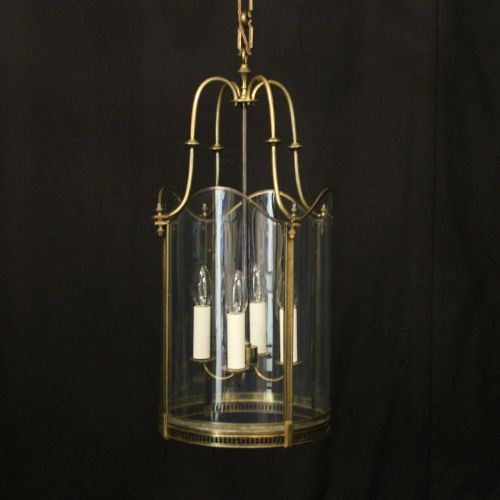
- An enclosed hanging light fixture suspended by chains or a rod. Examples in this category often feature convex glass panels within a gilt bronze framework.
- Lyre Chandelier
- A ceiling light structured around the symmetrical, curved frame of a classical lyre. This Neoclassical form uses vertical brass or bronze strings to shape the silhouette.
Gilt Bronze Lighting: Frequently Asked Questions
How do I wire an antique gilt bronze chandelier?
Electricians thread internal wiring through the hollow central channels and arms of the metal frame. Modern transparent or braided flex replaces older perished cloth cords.
Professional installation is necessary to support the weight of heavy bronze and crystal fixtures safely from ceiling joists.
What is the difference between ormolu and gilt bronze?
Ormolu specifically describes objects gilded with a mercury-gold amalgam during the eighteenth and early nineteenth centuries. Gilt bronze is a broader term encompassing any bronze object with a gold-coloured surface finish.
Both materials deliver a durable metallic golden tone when cast and chased by skilled metalworkers.
How do I clean gilt bronze lighting?
Dust surfaces gently with a soft, dry artist brush to clear debris from recessed chased details. Avoid commercial liquid metal cleaners, which strip away historic gilt layers.
Warm water on a damp cloth suffices for removing surface grime without harming the underlying metal.
Are wall lights sold as pairs?
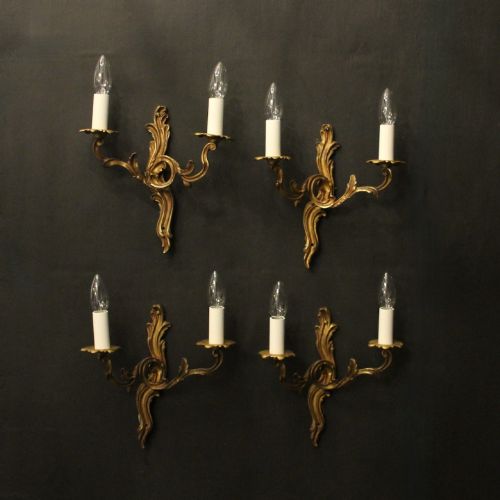
Many wall sconces and appliques survive and trade in matched pairs or sets of four. Individual pieces also appear depending on how the original interior layout was dismantled.
Checking the branch count and casting details confirms whether mismatched singles form a matching set.