



Gilt Bronze Horses
Gilt bronze horses are sculptural works and decorative objects bringing metallic lustre and classical form to a room.
Gilt Bronze Horses
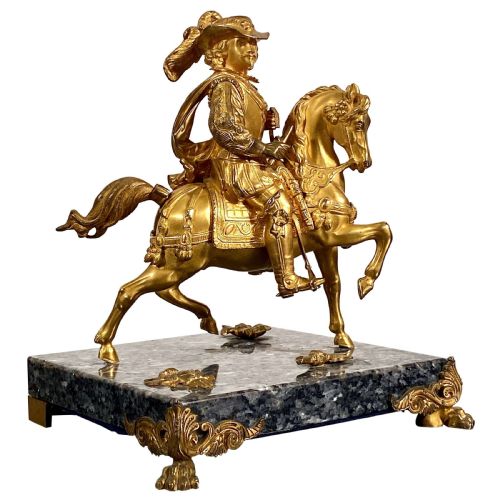
Gilt bronze horses encompass a range of decorative objects and sculptural pieces found in nineteenth-century homes, spanning from grand statues to intricate functional items. Buyers searching for gilt bronze horses encounter French Palais Royal sewing companions, Austrian cold-painted figures, and substantial mantel clocks depicting historical figures on horseback.
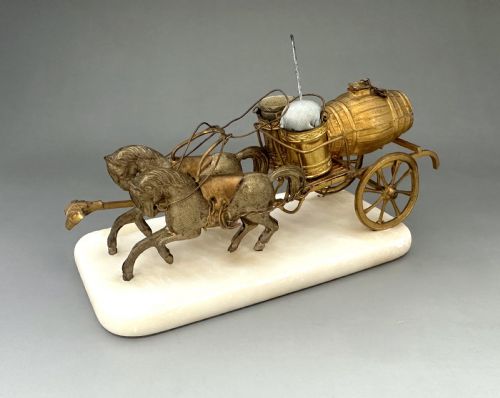
The selection includes figures mounted on olive wood bases, pairs of Italian casts, and Grand Tour souvenirs from the nineteenth century. Alongside standalone figures, the form extends to trinket boxes featuring miniature coaches and horses, as well as Regency ormolu lustre candlesticks.
Originating predominantly from French, Italian, and Viennese workshops, these pieces draw upon neoclassical aesthetics and Renaissance revival themes. The Marly horse motif appears frequently among the offerings, reflecting popular monumental sculptures of the period.
Materials and construction
Makers utilised bronze, brass, and ormolu, often applying a layer of gilding over cast metal to achieve a bright, reflective finish. Selected examples incorporate cold-painted detailing, alabaster, wood bases, and silver plating to add contrast and texture to the equine subjects.
Casting techniques captured anatomical detail in the horses and harness work, while secondary materials like olive wood provided sturdy plinths for pairs of figures. Assembly methods joined sculpted riders, carriages, and bases using traditional metal pins and fixings.
The site's selection spans periods from the Regency era through to the early twentieth century.
Evaluating quality and execution
Quality in these pieces rests on the crispness of the metal chasing and the depth of the gilding across the horse's musculature and harness. Finer examples display precise anatomical modelling and careful finishing on secondary elements like bases or mounted figures.
Signatures, marks, or attribution to notable workshops distinguish standard production items from superior studio casts. The preservation of the original gilt surface and any integrated elements, such as opaline glass or wood mounts, directly influences the character of the object.
Franz Bergman·Guillaume Coustou the Elder
The Gilt Bronze Horses Glossary
- Gilt bronze
- Metal cast in bronze and treated with a gold wash or leaf application to impart a bright metallic finish. This surface treatment was widely used in nineteenth-century decorative arts to simulate solid gold.
- Ormolu
- Finely ground high-carat gold applied to a bronze base using a mercury amalgamation process common in French manufacturing. The technique yields a distinct warm lustre that differs from standard modern electroplating.
- Cold-painted bronze
- Sculptural metalwork painted with natural pigments that are allowed to dry without high-temperature firing. This method preserves delicate detail on small animal figures.
- Grand Tour
- Extended travels across continental Europe undertaken by nineteenth-century collectors to acquire art and antiquities. Souvenirs from these journeys included small bronzes and architectural models.
- Palais Royal
- A Parisian shopping district known during the nineteenth century for luxury novelties and specialised vanity items. Items from this origin often combine utility with decorative metalwork.
Gilt Bronze Horses: Frequently Asked Questions
How were gilt bronze horses displayed?
These pieces sat upon mantelpieces, desks, and cabinet tops as decorative focal points within nineteenth-century interiors. Their metallic surfaces caught the flickering light of lamps and candles during evening hours.
Larger figures often occupied prominent positions on tables or specialised wood bases, while smaller boxes and sewing companions served both decorative and practical functions in private rooms.
What is a Marly horse?
Marly horses refer to sculptural depictions inspired by monumental marble groups created for the royal watering place at Marly. The imagery typically shows rearing horses restrained by handlers, embodying dynamic movement and power.
Nineteenth-century founders produced reduced bronze versions of these famous sculptures for domestic display, satisfying a demand for classical art in private homes.
How do I care for gilt bronze?
Maintenance requires gentle dusting with a soft, dry brush to prevent accumulation in the recesses of the casting. Avoid chemical cleaners and abrasive cloths that can strip the historic gilt layer from the bronze surface.
Stable indoor humidity levels help protect any integrated organic materials like wood bases or alabaster mounts from warping or cracking over time.
What distinguishes Grand Tour bronzes?
Grand Tour bronzes are nineteenth-century souvenirs purchased by travellers visiting historical sites in Italy and France. They frequently replicate famous classical sculptures, monuments, or animal subjects in a reduced scale.
These pieces reflect the educated tastes of collectors who wished to bring reminders of classical antiquity and European culture back to their homes.