
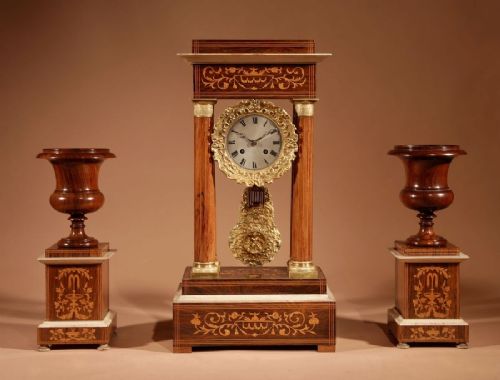
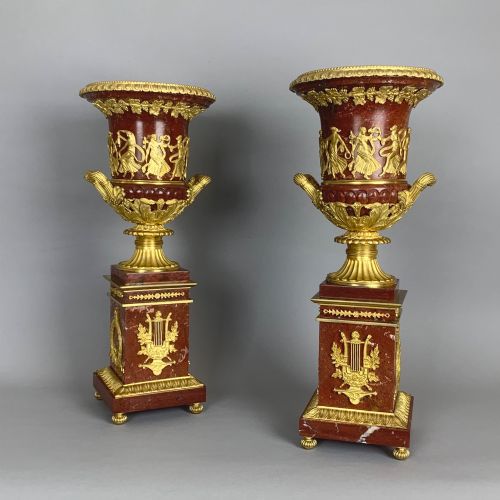
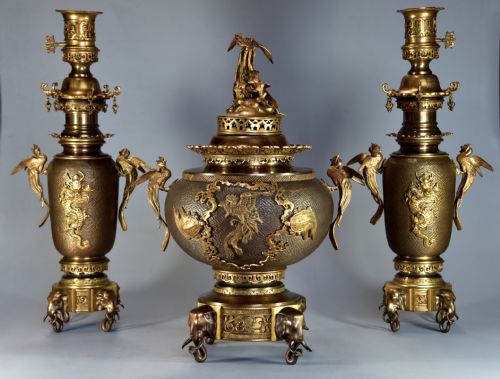
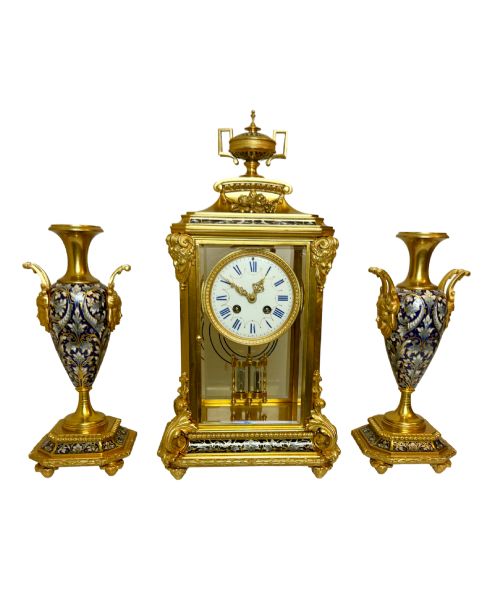


Gilt Bronze Garniture Urns
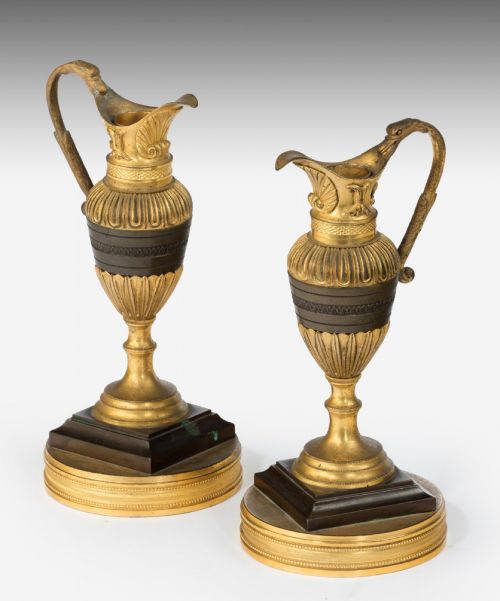
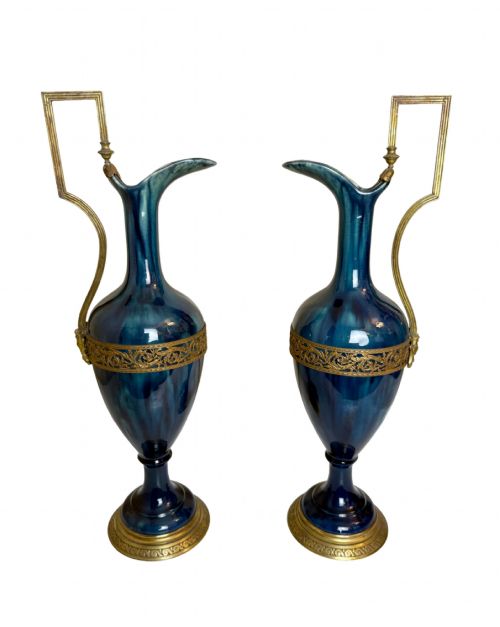
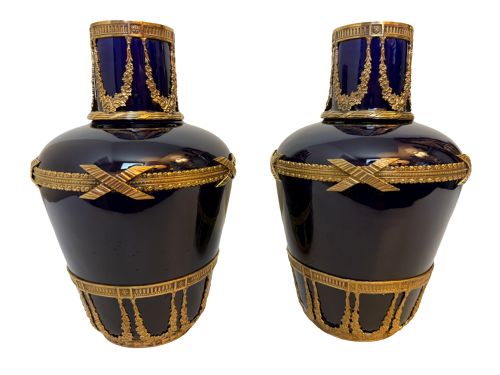
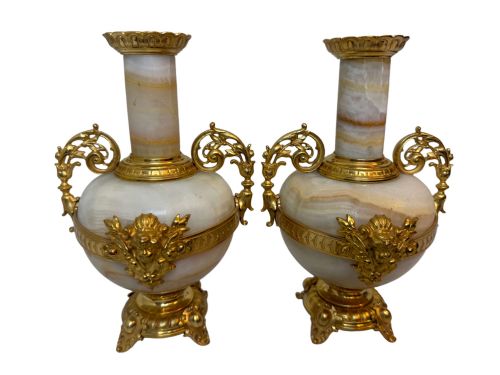
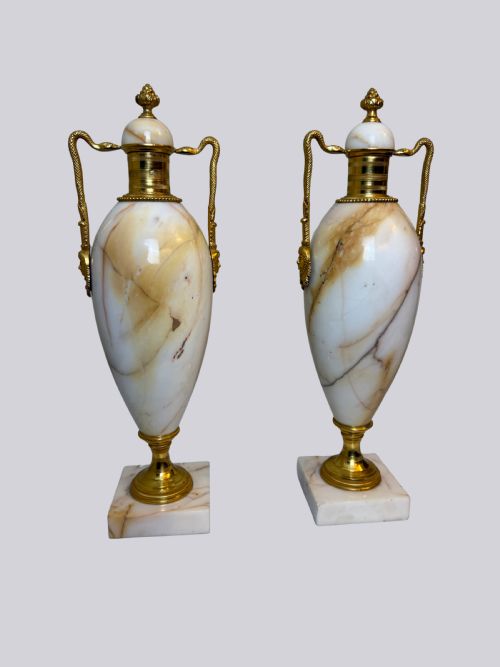
These gilt bronze garniture urns are decorative centrepieces cast in metal and mounted with porcelain, marble, or enamel, brought out to anchor a mantelpiece with heavy nineteenth-century French symmetry.
Gilt Bronze Garniture Urns
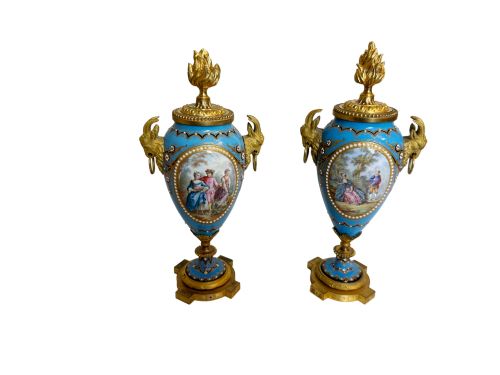
When searching for gilt bronze garniture urns, a buyer encounters matching sets designed to sit alongside a central mantel clock, creating a balanced scheme for a nineteenth-century interior. The most common format on this page is a pair of flanking vases or cassolettes, often styled in the French taste.
The selections span the Victorian era, utilising styles that look back to the Louis XVI period, the Empire, and the Rococo revival. These objects function both as standalone decorative vessels and as the lateral components of three-piece or multi-piece clock garnitures.
How they were made
The manufacture relies on cast metal frames finished in gilt bronze or ormolu, combined with carved white marble, onyx, or moulded porcelain bodies. Artisans applied mercury gilding or electroplating to achieve the surface shine on the bronze mounts.
Many items incorporate champlevé enamel or painted porcelain panels depicting classical scenes, fitted securely into the metal framework with pins and screws. Glass domes frequently accompany the sets to protect the delicate gilding and ceramic surfaces from dust.
Some nineteenth-century cassolettes hide a secret dual personality, flipping their lids to transform from solemn urns into cheerful incense burners.
What varies in quality
Quality rests in the crispness of the bronze chasing and the depth of the fire gilding rather than the mere presence of metal trim. Superior examples display sharply defined acanthus leaves and scrolls carved into the metal before gilding.
The integration of the materials dictates the tier of the piece, where fine-grained marble bases and hand-painted porcelain with clean glaze lines mark out the exhibition-grade work from standard workshop output.
A.D Mougin·VINCENTI of PARIS
The Gilt Bronze Garniture Urns Glossary
- Garniture
- A set of decorative objects designed to be displayed together, typically comprising a mantel clock and a matching pair of vases or urns. They coordinate materials to unify the decor of a room.
- Cassolette
- A dual-purpose vessel featuring a reversible lid that transforms an urn from a closed vase into an incense burner or candle holder. The top often reverses to show a solid finial on one side and a cup on the other.
- Ormolu
- Finely chopped gold applied to a copper or bronze base using a mercury amalgam, then fired to leave a rich metallic skin. The technique was widely replaced by safer electroplating methods during the nineteenth century.
- Champlevé
- An enamelling technique where troughs are dug into the surface of a metal object and filled with coloured glass paste before firing. The resulting design sits flush with the surrounding metal partitions.
- Portico clock
- A clock housed within a architectural frame supported by columns, frequently forming the central element of a larger garniture set. These architectural cases are commonly carved from marble or wood.
Gilt Bronze Garniture Urns: Frequently Asked Questions
What is a garniture set?
A garniture set is a matching group of ornamental objects meant for display on a mantelpiece or sideboard. They typically include a central clock flanked by two matching urns, vases, or cassolettes.
The arrangement creates visual symmetry in formal nineteenth-century interiors. Each piece shares the same materials, such as gilt bronze mounts and porcelain bodies.
How do you use cassolettes?
Cassolettes function as decorative urns with reversible lids that serve two distinct purposes. One side of the lid presents a finished decorative top, while flipping it reveals a small receptacle for burning incense or holding a taper.
This versatility made them popular ornamental items in French drawing rooms. They combine display value with functional utility.
How are these urns dated?
Dating relies on stylistic clues, casting techniques, and material combinations seen across nineteenth-century production. Pieces referencing the Louis XVI revival or Napoleon III styles often date from the middle to late Victorian decades.
Maker marks stamped onto the clock movements within a garniture provide a reliable chronological anchor. The integration of specific ceramic bodies like Sèvres-style porcelain also points to particular decades of manufacture.
Where should I place a garniture?
These sets find their traditional home centred on a mantelpiece above a fireplace, flanked evenly to maintain architectural balance. They also sit effectively on deep console tables, credenzas, or dedicated pedestals.
Because many sets include glass domes, placement requires a stable surface out of high-traffic walkways. Ambient light helps highlight the gilt bronze surfaces and painted porcelain details.