

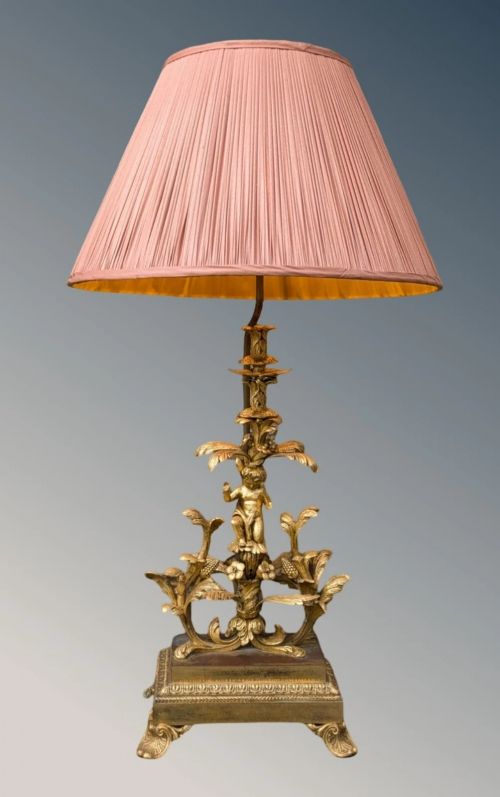
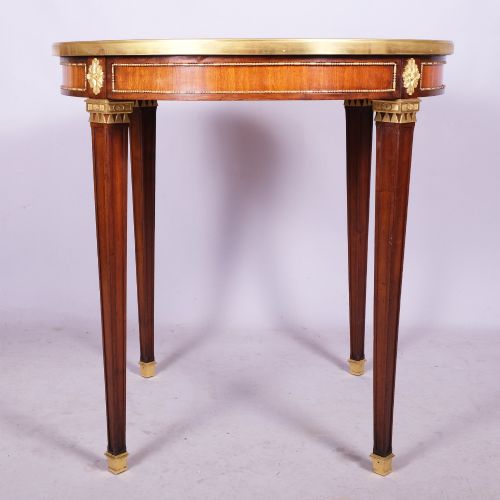
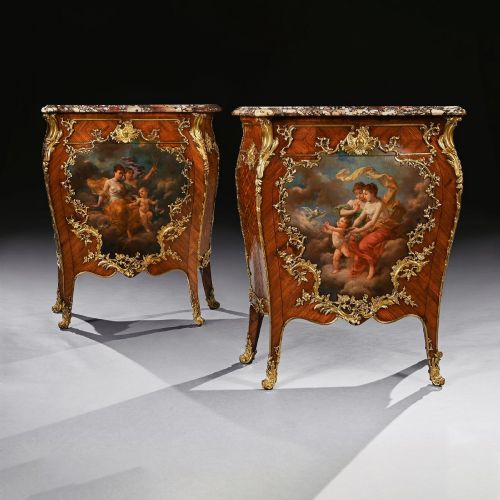
Gilt Bronze Accent Table
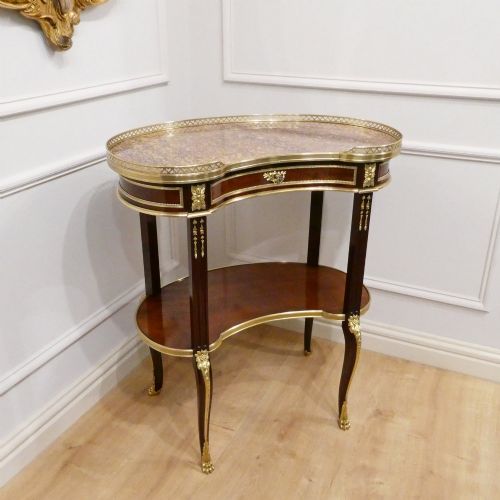
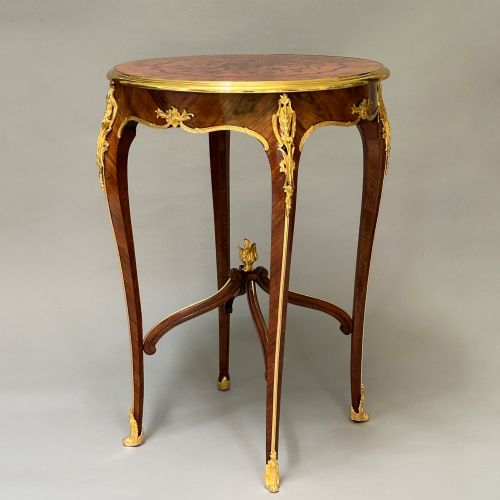
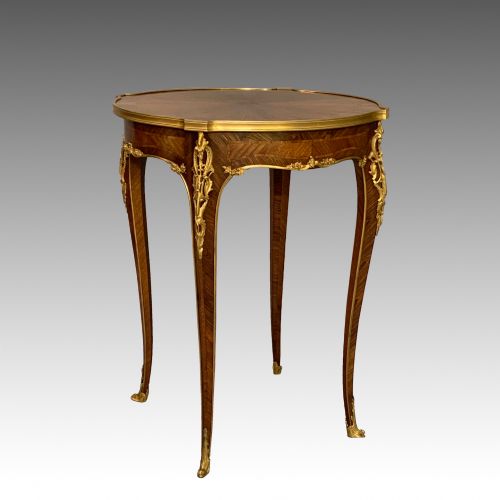
A gilt bronze accent table brings warmth and weight to a room, offering a surface of marble or marquetry framed in chased metal.
Gilt Bronze Accent Table
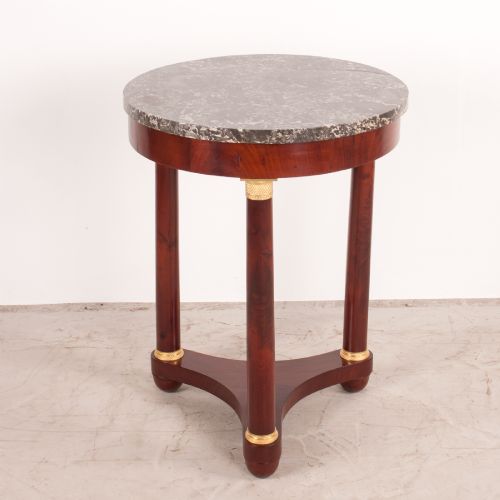
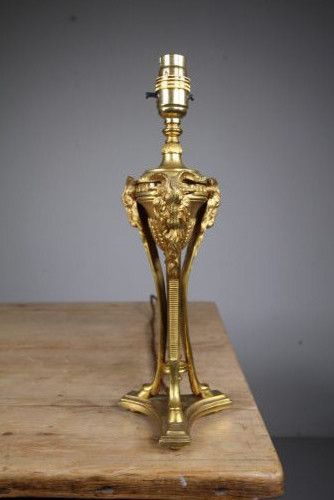
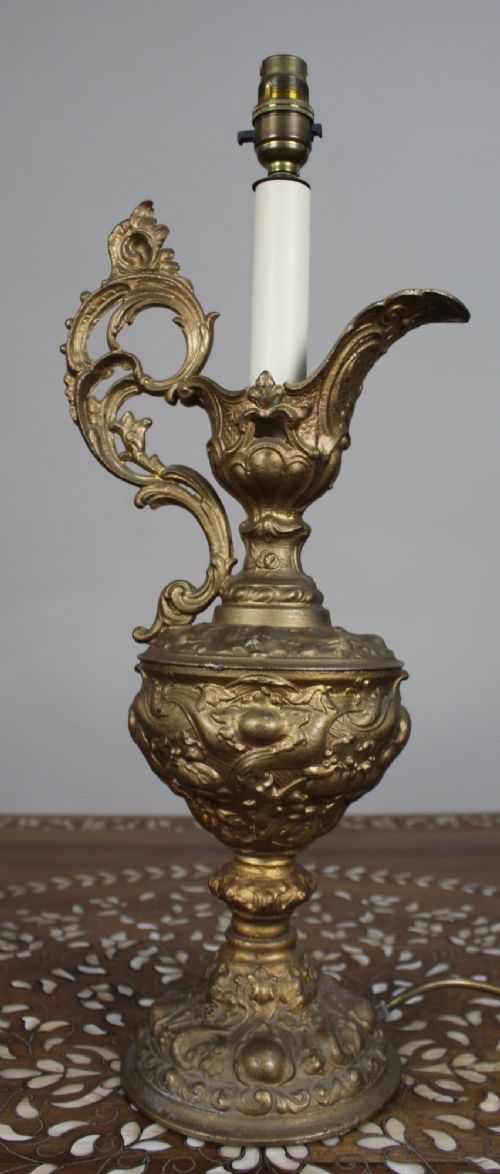
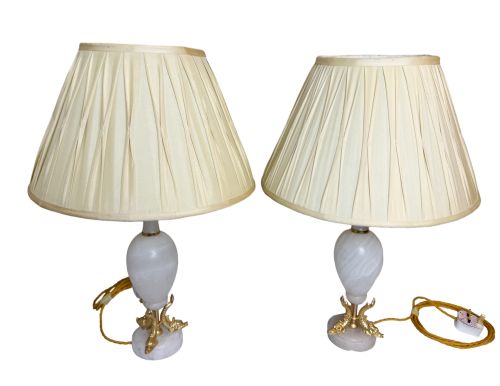
When you search for a gilt bronze accent table, you find a range of occasional tables, bouillotte tables, and table lamps originating from nineteenth-century France and England. These pieces draw heavily on Louis XV Revival, Louis XVI Style, and French Empire designs, often featuring marble tops supported by finely cast bronze.
The selection on this page leans toward side tables, centre tables, and gueridons alongside lighting of the same period. They serve to punctuate a room with the heavy gleam of ormolu and the rich grain of kingwood or mahogany.
Materials and construction
Makers built these pieces using solid timbers such as mahogany and walnut, frequently veneered with kingwood and laid with intricate marquetry and parquetry patterns. Surfaces often integrate white or variegated marble slabs inset into the wooden frame, secured with brass and ormolu mouldings.
The metallic elements rely on cast bronze, chased by hand to sharpen details before receiving a layer of mercury gilt or ormolu. Secondary woods such as oak appear in the interior framing of drawers and carcases.
Gilt Bronze Accent Table Retail Price Guide 2026
Typical asking prices for gilt bronze accent table among the pieces listed under this phrase on Sellingantiques today, from the lower quarter to the upper quarter. They describe what is for sale here now, not the wider market.
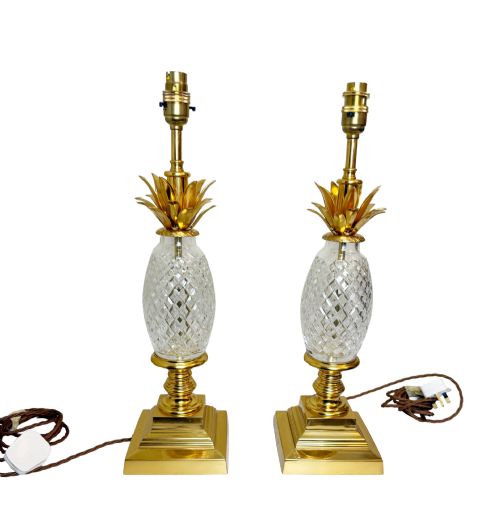
Pineapple mounts brought tropical luxury into nineteenth-century drawing rooms, standing as heavy bronze sentries of hospitality.
Distinctions in quality
The fineness of a gilt bronze accent table rests upon the crispness of the metal chasing and the depth of the fire-gilding. Superior mounts display sharp relief and individual hand-tooling rather than the soft edges of a hurried cast.
Cabinetwork quality separates ordinary workshop output from pieces bearing signatures of notable makers. The alignment of veneers, the tightness of parquetry joints, and the weight of the underlying marble denote higher ambition.
Maison Millet·Joseph Emmanuel Zwiener·Francois Linke
The Gilt Bronze Accent Table Glossary
- Ormolu
- Gilded bronze, applied to mounts and decorative details through a mercury amalgamation process that produced a durable, deep yellow lustre.
- Guéridon
- A small round occasional table supported on a central column or tripod base, frequently topped with marble.
- Marquetry
- Inlaid wood veneers arranged to form pictorial or geometric designs across the surface of a table top or frieze.
- Bouillotte table
- A small round occasional table with a raised gallery edge around the marble top, designed for card playing.
- Vernis Martin
- A European lacquer technique mimicking Asian lacquerwork, applied in translucent coloured varnishes to furniture panels.
Gilt Bronze Accent Table: Frequently Asked Questions
How do I identify a true ormolu mount?
True ormolu exhibits a heavy weight and a dull, rich golden tone beneath the surface dirt, showing crisp chisel marks on the reverse where it was finished by hand. Modern brass substitutes feel lighter and lack this depth of colour.
Examine the mounting pins and screws holding the metal to the wood, as period pieces use hand-threaded fasteners rather than modern slotted screws.
Where should I place a gueridon table?
A gueridon with a marble top suits an entrance hall as a centre table for a vase of flowers, or beside a reading chair as an occasional surface.
Keep them away from direct heat sources to protect the underlying timber veneer and the traditional polish on the wood.
How do I care for marble tops?
Wipe marble surfaces with a damp cloth and mild soap, avoiding acidic cleaners like vinegar or citrus that etch the polished stone.
Use coasters under glasses to prevent liquid rings from soaking into porous sections of the marble.
What distinguishes Louis XV from Louis XVI style?
Louis XV style embraces asymmetric curves, naturalistic floral scrolling, and the exuberant shapes of the Rococo movement.
Louis XVI style returns to symmetry, straight fluted legs, and neoclassical restraint inspired by archaeological discoveries.