

Gilt Brass Side Table
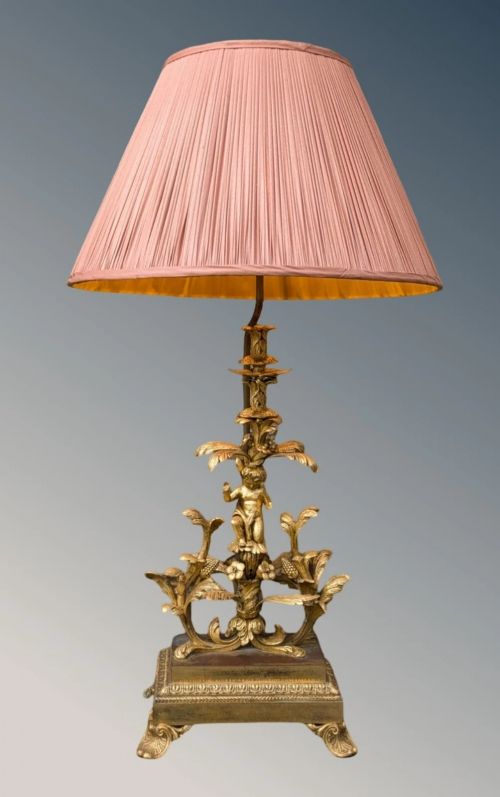
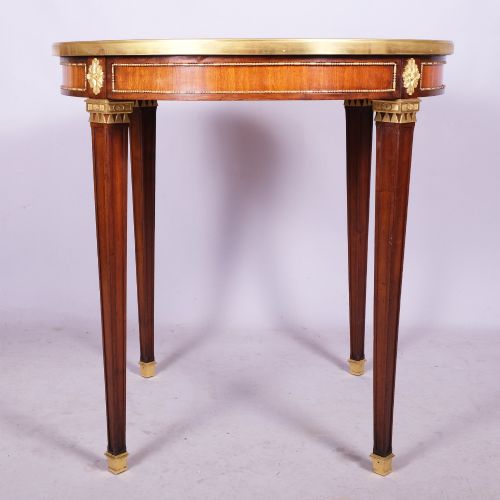
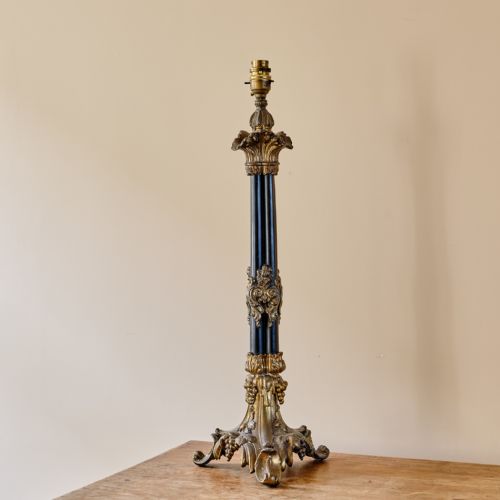
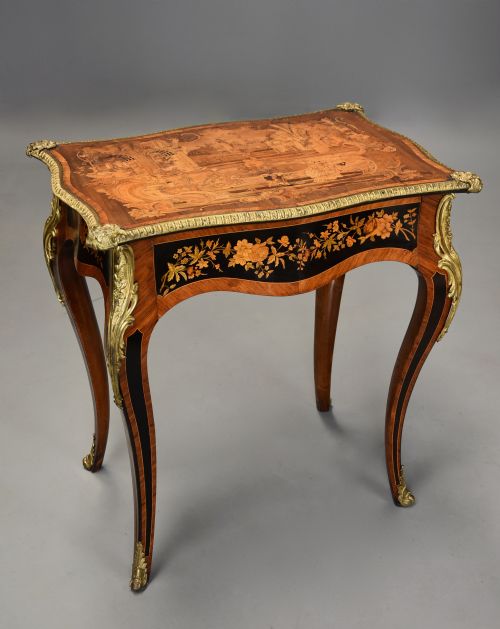
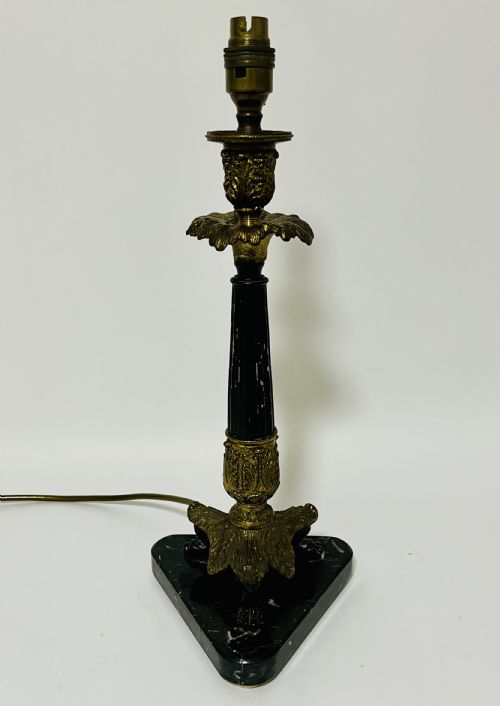
These gilt brass side table pieces bring together nineteenth and twentieth-century French and Italian metalwork, marble, and mahogany for practical display.
Gilt Brass Side Table
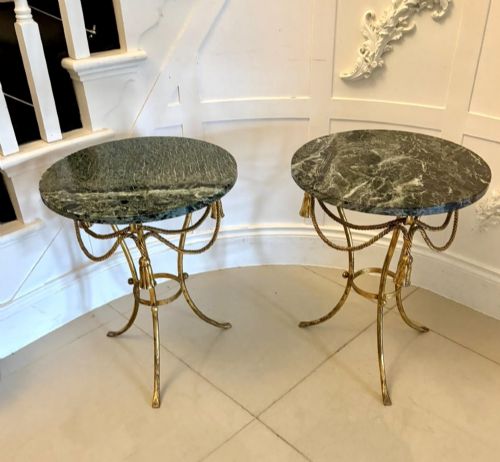
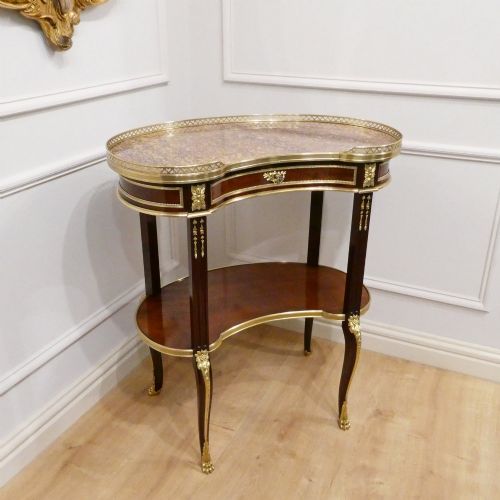
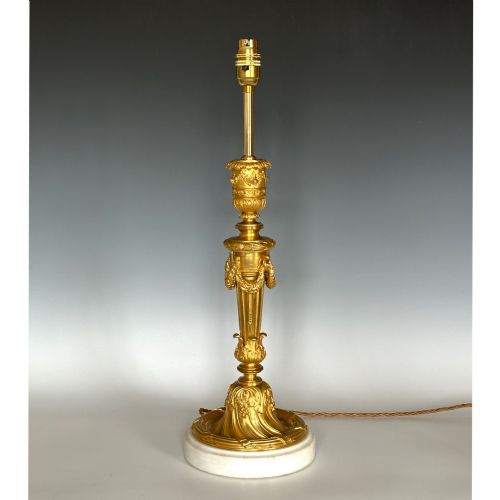
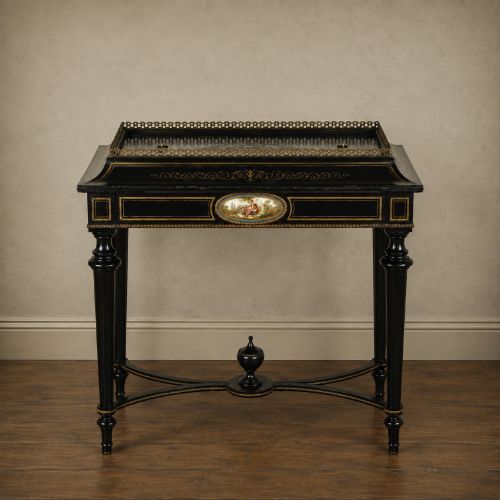
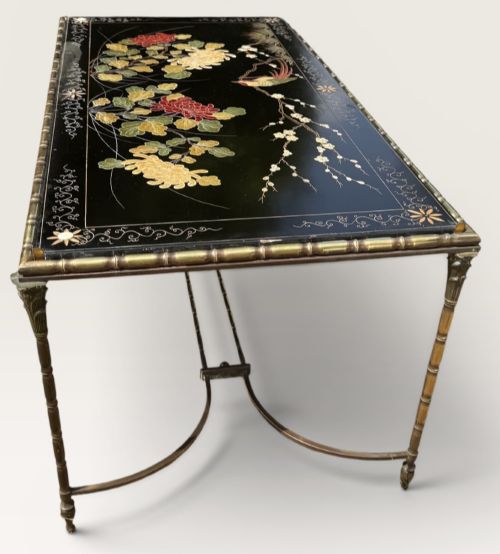
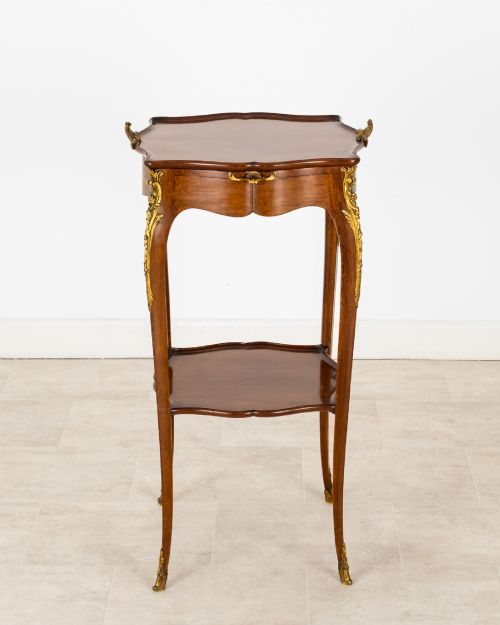
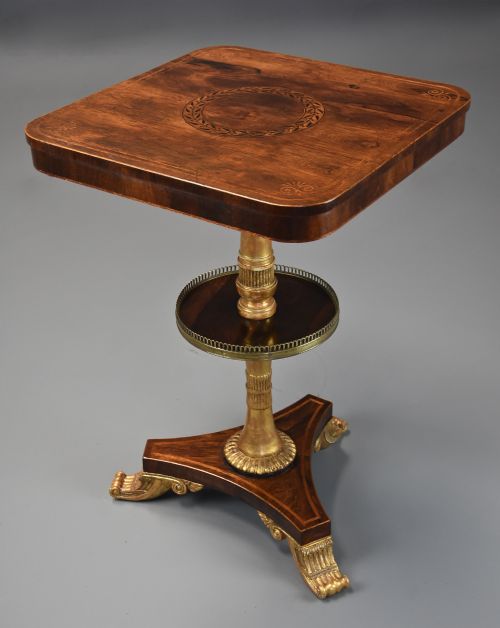
A gilt brass side table provides a small surface for lamps, clocks, or decorative objects, frequently taking the form of an occasional, lamp, or coffee table. The selection relies heavily on French designs from the nineteenth century into the 1930s, spanning styles from Rococo Revival and Louis XV to Empire and Neoclassical. Makers and workshops produced these forms in mahogany, kingwood, and walnut, often mounting them with ormolu, gilt metal, and marble tops.
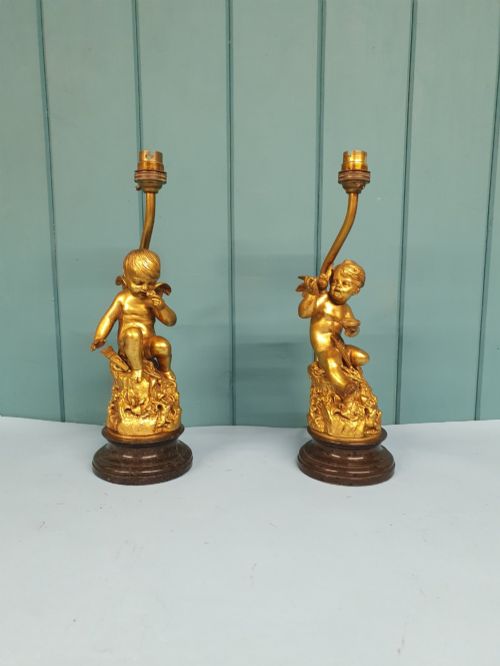
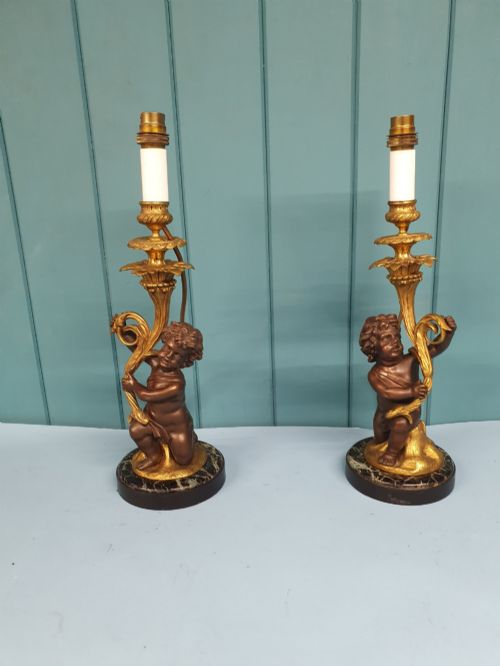
Buyers encounter frequent variations including gueridons, console tables, and tiered occasional tables alongside table lamps and jardiniere stands. Pieces often reflect specific revivals such as Louis XVI Style or French Chateau aesthetics, incorporating marquetry, inlay, and cast brass elements. Origins lean towards French and Italian ateliers, utilising marble tops in white, verde, or onyx alongside ebonised wood and gilt bronze mounts.
How they were made
Craftsmen built these tables using hardwoods such as mahogany, walnut, kingwood, and rosewood, frequently applying marquetry, inlay, or ebonisation to the surfaces. Metal components rely on brass, gilt bronze, ormolu, and gilt metal, cast and chased to form mounts, galleries, and legs.
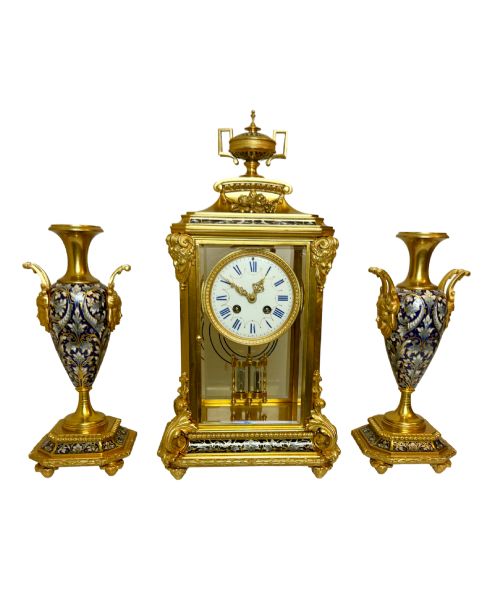
Tops incorporate inset slabs of marble, white onyx, or verde marble, supported by frames constructed with traditional joinery. Ormolu mounts are pinned or screwed to wooden carcases, while lamp bases and clock garnitures combine cast metal figures with porcelain plaques, champleve enamel, or glass panels.
Listings combine nineteenth-century French ebonised wood, mahogany, and kingwood with gilt brass, ormolu, and marble.
What varies in quality
Quality rests upon the crispness of the bronze casting and chasing, where sharper detail in acanthus leaves, cherubs, or rococo scrolls separates finer atelier work from simpler production. The weight and thickness of the gilt metal or ormolu mounts, together with the depth of the mercury gilding, dictate the visual richness of the surface.
The selection of materials marks another division, such as figured mahogany, kingwood, or burr walnut paired with substantial, well-veined marble or onyx tops rather than plain timber and thin veneers. Construction standards show in the snugness of joints, the precision of marquetry inlay, and attribution to documented makers.
Maison Millet·Maison Bagues·François Linke·George Bullock·Masion Ramsay
The Gilt Brass Side Table Glossary
- Ormolu
- Gilded bronze, where a gold amalgam is applied to a cast bronze base through heat. This technique creates a durable, warm metallic finish common on nineteenth-century French mounts.
- Guéridon
- A small, round occasional table supported by one or more central columns or legs. Originating in seventeenth-century France, these tables frequently feature marble tops and gilt bronze mounts.
- Bouillotte table
- A small neoclassical occasional table with a raised gallery rim around the edge of the top, designed for card games. They commonly feature marble tops and brass or gilt bronze legs.
- Champlevé enamel
- An enamelling technique where troughs or cells are hollowed out of a metal surface and filled with vitreous enamel before firing. It appears frequently on nineteenth-century clock garnitures and decorative objects.
- Vernis Martin
- A simulated Japanese lacquer developed in eighteenth-century France using copal varnish layers. It provides a glossy, translucent finish seen on decorative furniture panels.
Gilt Brass Side Table: Frequently Asked Questions
What is a gueridon table?
A gueridon is a small circular table, usually supported by a central pillar or a set of slender legs. These pieces were designed for multiple domestic uses, including holding lamps or serving drinks.
In the current selection, they frequently appear with marble tops and gilt bronze mounts, reflecting French nineteenth-century styling.
How do I identify Louis XV style?
Louis XV style furniture relies heavily on asymmetry, natural curves, and rococo motifs such as scrolling foliage, C-scrolls, and floral carvings. You will notice a lack of straight lines, with cabriole legs ending in scroll feet.
On these tables, the style is expressed through cast ormolu mounts that trace the contours of the apron and legs.
Where were these tables made?
The majority of these pieces originate from French workshops and ateliers in Paris, dating from the nineteenth and early twentieth centuries. Italian makers also produced comparable gilt metal and marble tables during the same periods.
French makers frequently exported their work or influenced regional European cabinetmakers working in revival styles.