

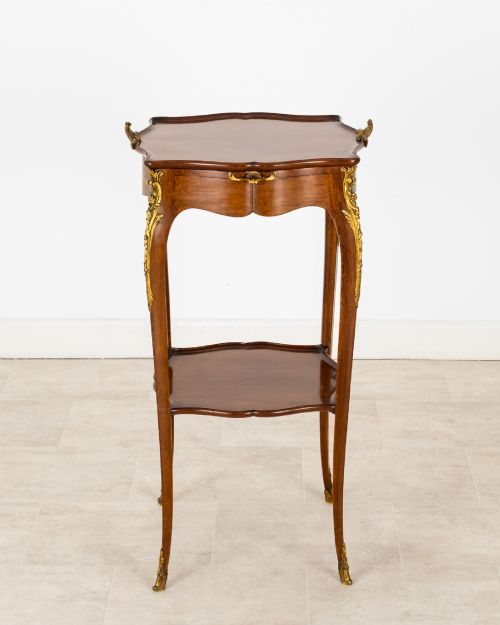


Brass Mounted Accent Table
A brass mounted accent table brings refined metal detailing and rich timber to a room, offering both a functional surface and a decorative anchor.
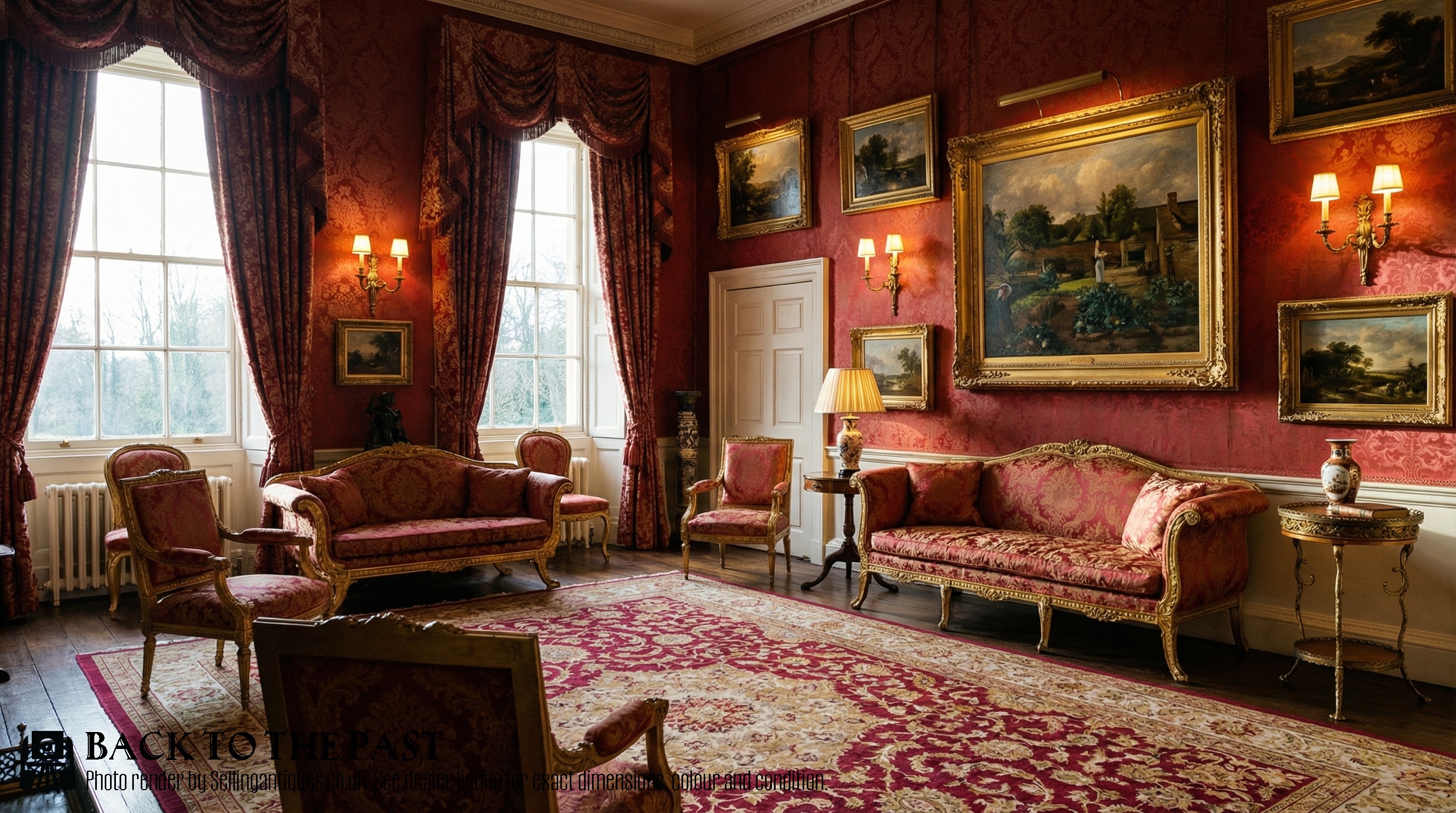
Brass Mounted Accent Table
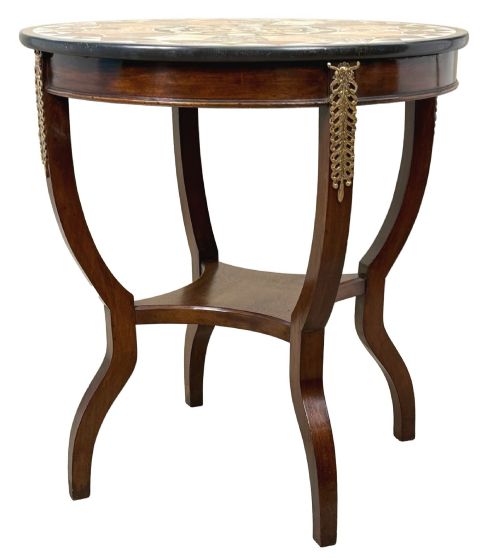
A brass mounted accent table combines a timber or stone body with cast metal mounts, serving as a functional surface for lamps, books, or display. When searching for a brass mounted accent table, buyers encounter a range of forms including side tables, occasional tables, centre tables, and gueridons.
The pieces on this page span the Victorian era, the nineteenth century, and the early twentieth century, with French revival styles dominating the selection. Makers and designers of the period often drew on Louis XV, Louis XVI, and Empire designs to shape these compact tables.
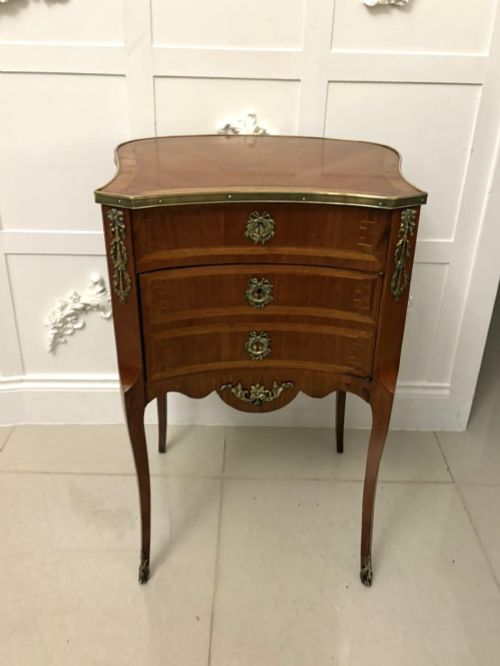
Most examples rely on timbers such as mahogany, walnut, kingwood, rosewood, and amboyna, paired with marble or onyx tops. The metalwork acts as both a structural reinforcement and a decorative border along edges, legs, and aprons.
How They Were Made
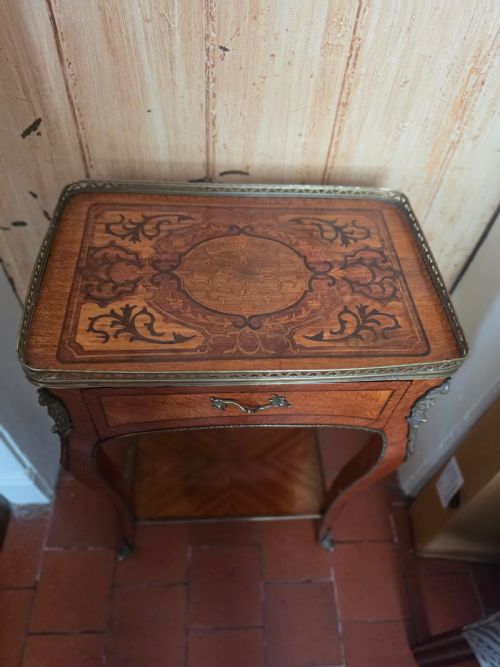
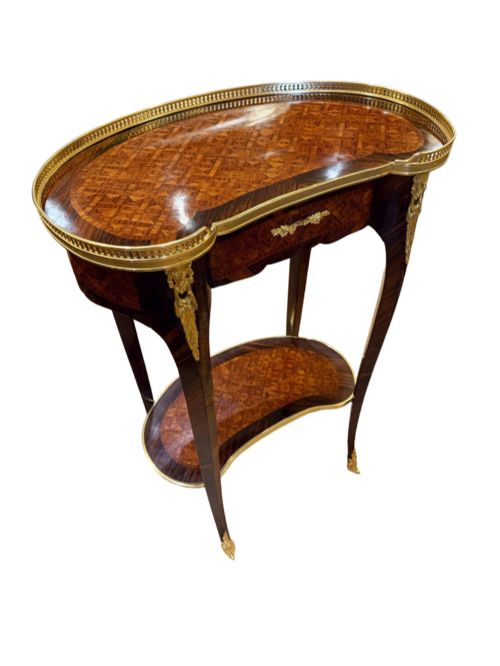
Cabinetmakers constructed the frames of dense hardwoods like mahogany and walnut, frequently applying veneers of kingwood, rosewood, or amboyna in intricate marquetry and parquetry patterns. Surfaces were often shaped into serpentine or kidney forms requiring precise woodworking techniques.
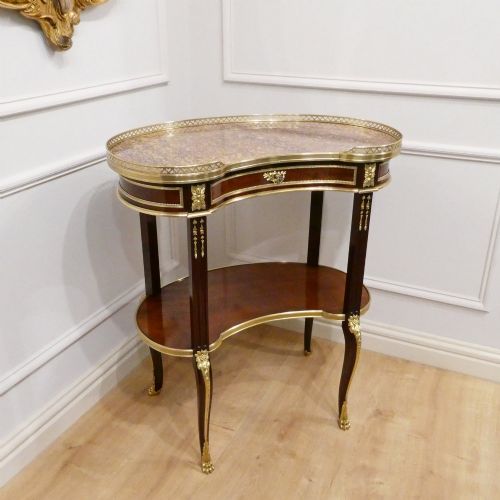
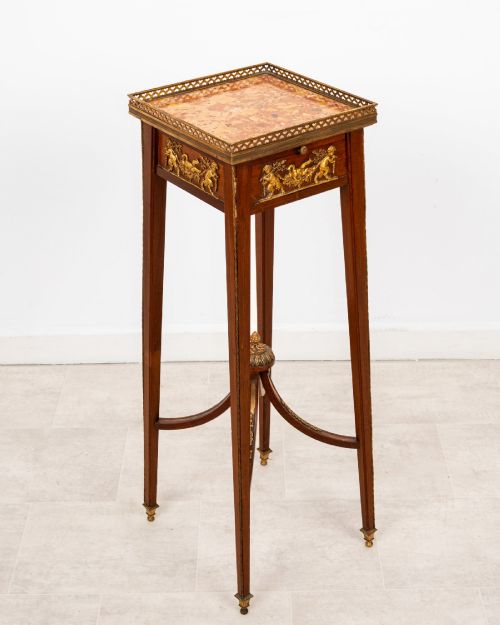
Mounts of brass, ormolu, or gilt bronze were cast and hand-chiseled before being fitted to the corners, legs, and aprons of the tables. Marble and onyx tops were slabbed, polished, and inset into the wooden frames, occasionally secured with raised brass galleries.
Some tables were built with kidney-shaped tops specifically designed to tuck neatly into the curve of a welcoming armchair.
What Varies in Quality
The refinement of the cast metal mounts distinguishes standard production from exceptional work, as finer pieces display crisp hand-chased detail rather than soft casting edges. The complexity of the timber veneers, from simple mahogany boards to elaborate floral marquetry and geometric parquetry, signals the skill invested by the maker.
Structural integrity relies on the precision of the joinery and the harmonious integration of stone tops with the wooden frame. Superior examples maintain tight joints and balanced proportions without relying on heavy restoration to compensate for warping.
James Shoolbred·Maison Millet·François Linke
The Brass Mounted Accent Table Glossary
- Ormolu
- Gilded bronze applied to the mounts and decorative elements of furniture. This technique provides a bright, durable metallic finish that emulates solid gold.
- Gueridon
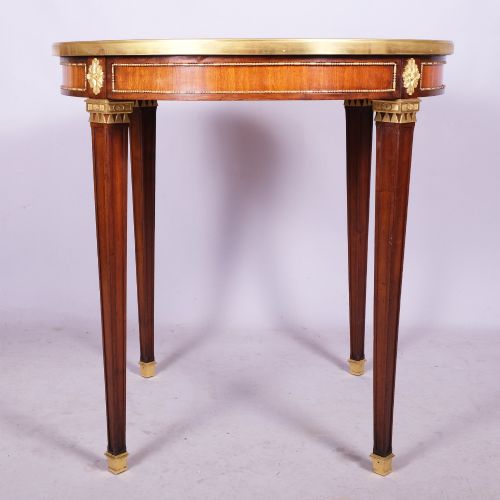
- A small circular occasional table supported by a central column or multiple legs. French makers frequently produced these with marble tops and metal mounts.
- Marquetry
- The art of applying decorative veneer pieces in wood, shell, or metal to form pictorial or floral patterns. Craftsmen cut these elements precisely to fit flush into the furniture surface.
- Parquetry
- Geometric wood inlay forming repeating patterns such as cubes, chevrons, or squares. It adds subtle texture and visual depth to table tops.
- Galleries
- Low metal or wooden railings fitted around the edges of a table top. They prevent small items from sliding off the surface.
Brass Mounted Accent Table: Frequently Asked Questions
What rooms suit these tables?
These compact tables fit comfortably beside seating in a drawing room or function as bedside stands. Their decorative mounts and polished stone tops allow them to stand alone as display surfaces in hallways.
Because they occupy a small footprint, they integrate easily into various interior layouts without overwhelming the surrounding space.
How should I clean marble tops?
Wipe marble and onyx surfaces with a soft, damp cloth using mild, neutral soap. Avoid abrasive cleaners and acidic substances that can etch the polished stone.
Dry the surface thoroughly with a lint-free cloth to maintain its natural sheen.
What is a bouillotte table?
A bouillotte table is a small occasional table featuring a raised brass gallery around a marble top, traditionally used for card games. They often include small pull-out slides beneath the rim for drinks or stakes.
These versatile pieces gained popularity during the eighteenth century and continued to be produced through the nineteenth century in various French revival styles.
How do I care for wood veneers?
Keep veneered surfaces away from direct sunlight and strong heat sources to prevent the wood from drying out and cracking. Dust regularly with a soft, dry cloth.
Apply a quality furniture wax sparingly when the wood appears dry, buffing it gently to preserve the finish.