



Parquetry Tier Lamp Table
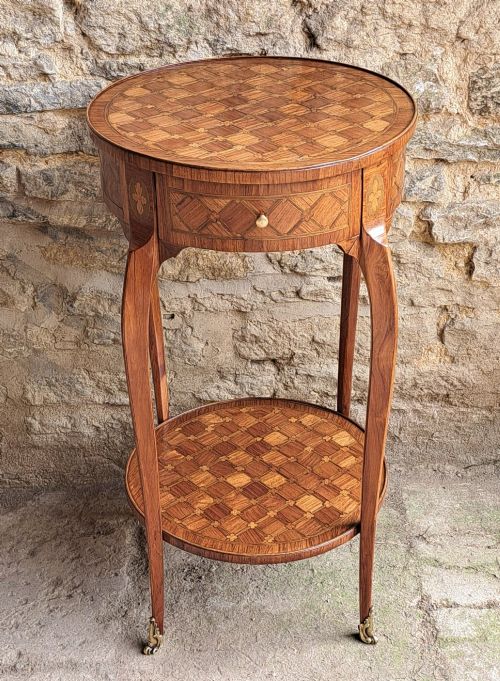
A parquetry tier lamp table brings geometric woodwork and tiered surfaces together, offering a compact stage for a bedside or corner light.
Parquetry Tier Lamp Table
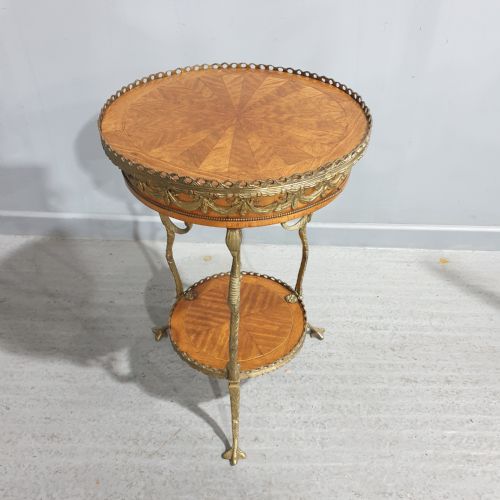
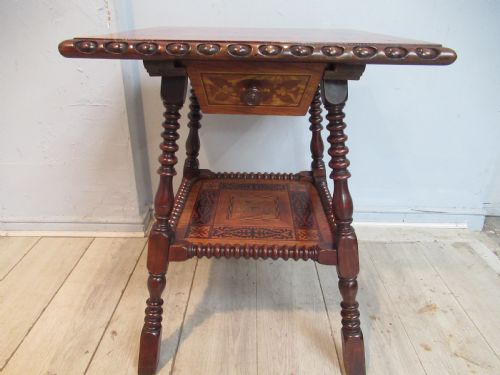
When you search for a parquetry tier lamp table, you are looking at small occasional and side tables designed with multiple levels and geometric wood patterns. The examples met on this page span the Victorian era, the nineteenth century, and twentieth-century decades up to nineteen-thirty, drawing heavily on French Louis XV and Louis XVI styles.
Forms include round, kidney-shaped, and rectangular silhouettes arranged in two tiers, often fitted with galleries. These pieces function primarily as bedside or corner tables where surface area and patterned timber take precedence over storage.
Origins stretch from nineteenth-century workshops to twentieth-century revivals, utilising rich hardwood veneers and decorative inlays. They represent a tradition of compact, decorative furniture built to hold small lamps and decorative objects.
How they were made
Cabinetmakers constructed these tables using solid carcase woods overlaid with finely cut veneers of kingwood, walnut, rosewood, and coromandel. Geometric parquetry patterns were meticulously assembled and glued to the surfaces before being polished.
Metal mounts in brass and ormolu were cast and applied to corners, legs, and galleries to accentuate the French revival styling. Raised rims or brass galleries were pinned to the upper tiers to secure items placed upon them.
Parquetry Tier Lamp Table Retail Price Guide 2026
Typical asking prices for parquetry tier lamp table among the pieces listed under this phrase on Sellingantiques today, from the lower quarter to the upper quarter. They describe what is for sale here now, not the wider market.
Some tables feature tiny kidney-shaped tiers designed specifically to tuck neatly against the curved arm of a Victorian sofa.
What varies in quality
Quality rests in the precision of the parquetry geometry and the selection of the timber veneers. Finer examples display harmonious grain matching and crisp, hand-fitted brass ormolu mounts rather than mass-cast replacements.
The integrity of the tiered structure and the crispness of the inlay define the upper end of the range. Exhibition quality pieces show superior attention to detail in secondary timbers and refined edge treatments.
Collingson & Lock
The Parquetry Tier Lamp Table Glossary
- Parquetry
- A geometric mosaic of wood veneers arranged in repeating patterns such as cubes or chequers. This technique decorates the top and tiers of the table.
- Kingwood
- A dense, richly figured timber native to Brazil, prized for its dark violet-brown colour and golden streaks. It frequently appears in nineteenth-century decorative furniture.
- Ormolu
- Gilded bronze mounts applied to the edges and legs of furniture. The finish provides a bright contrast against dark walnut and kingwood veneers.
- Gallery
- A raised pierced metal or wooden rim fitted around the edge of a table tier. Its purpose is to stop small items from sliding off the surface.
- Tier
- A stacked secondary level positioned below the main top surface. Tables with multiple tiers provide additional display space within a compact footprint.
Parquetry Tier Lamp Table: Frequently Asked Questions
What is a parquetry tier lamp table used for?
These tables provide a decorative surface for a small reading lamp, pocket watch, or trinket dish in a sitting room or bedroom. The multiple tiers allow for display and placement without taking up excessive floor space.
The compact proportions and flat upper surfaces make them particularly suited to corners or beside upholstered armchairs where wide furniture will not fit.
How do I date a French style occasional table?
Dating relies on examining the timber veneers, construction methods, and hardware beneath the polish. Nineteenth-century examples often use oak or mahogany as secondary woods beneath walnut and kingwood veneers.
Twentieth-century iterations from the nineteen-twenties and nineteen-thirties adopt lighter internal construction while maintaining historical French revival silhouettes.
Are these tables sturdy enough for daily use?
Most occasional and side tables from this tradition are built to support lamps and light decorative objects rather than heavy loads. The slender legs and tiered structures require gentle placement.
Placing the table away from direct sunlight and sudden temperature changes protects the underlying veneer and glued parquetry joints from movement.
What timber species are common in these pieces?
Makers relied heavily on exotic hardwoods valued for their colour and grain pattern, including kingwood, rosewood, walnut, and coromandel. These were sliced into thin veneers for geometric parquetry.
Brass and ormolu were frequently added as structural and decorative accents around the edges and feet of the tables.