


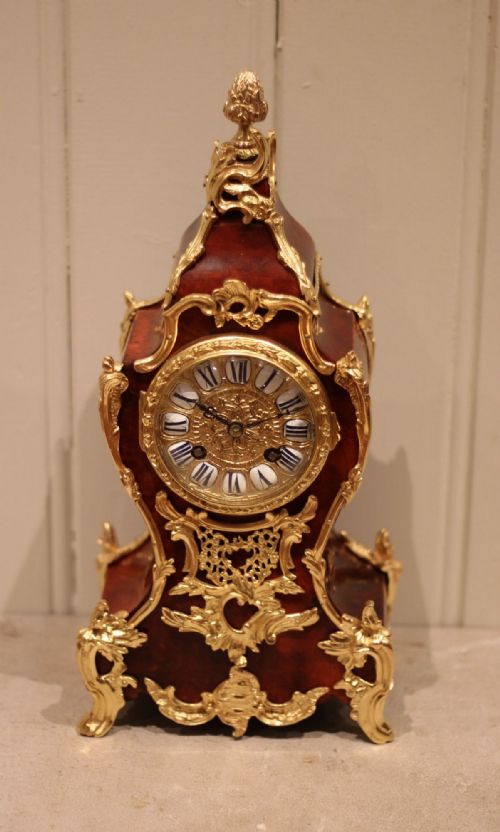


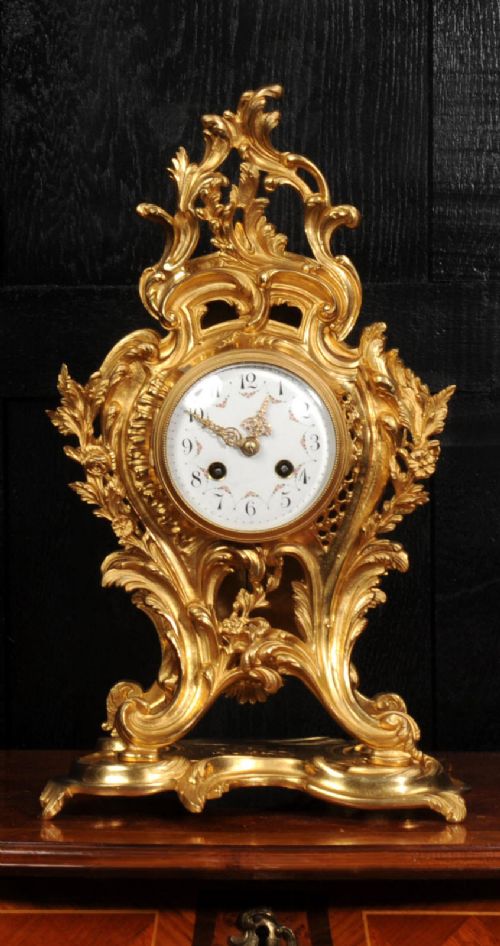
Gilt Bracket Clock
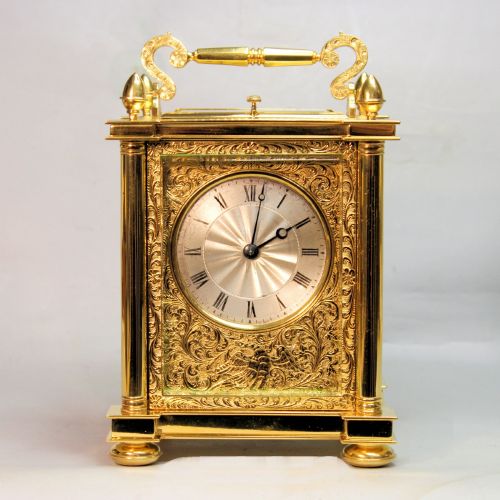
A gilt bracket clock brings sculptural presence and precise mechanical engineering into a room, combining rich surface gilding with dependable timekeeping.

Gilt Bracket Clock
When searching for a gilt bracket clock, buyers encounter sophisticated domestic timepieces designed to sit on a bracket, table, or mantel. These pieces bridge the gap between architectural furniture and functional art.
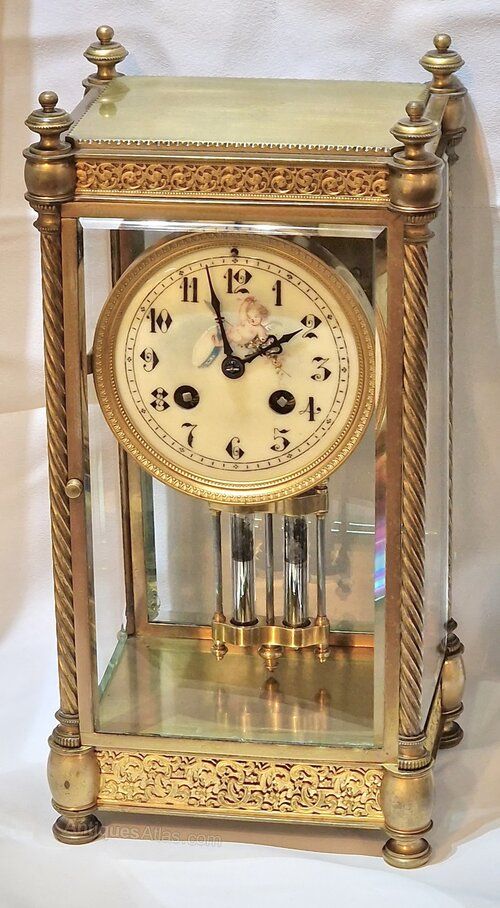
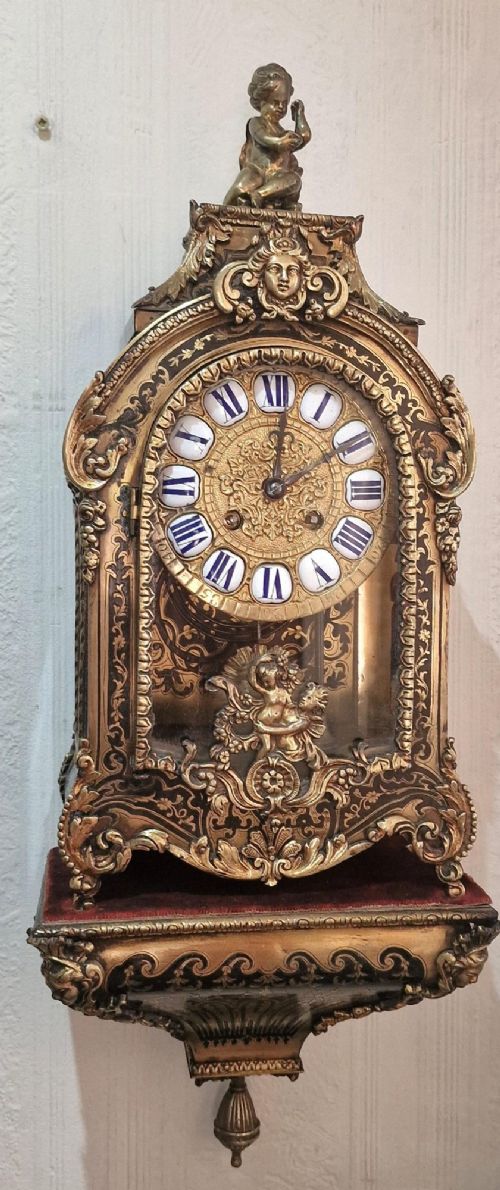
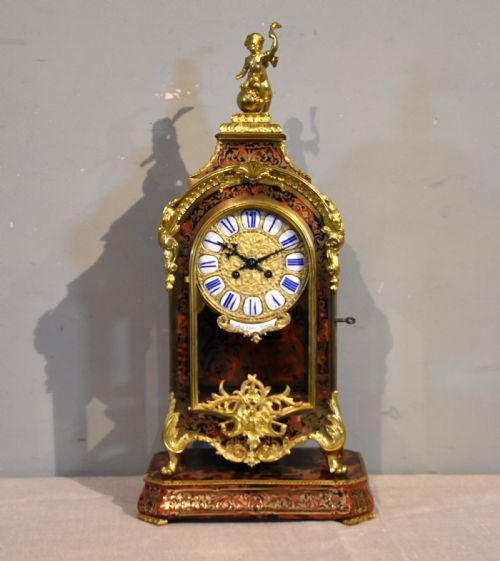
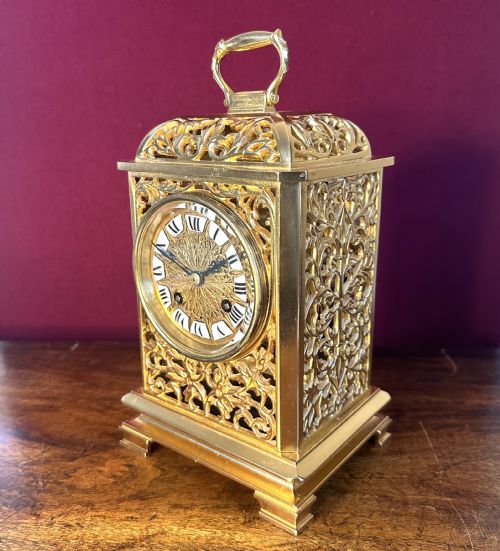
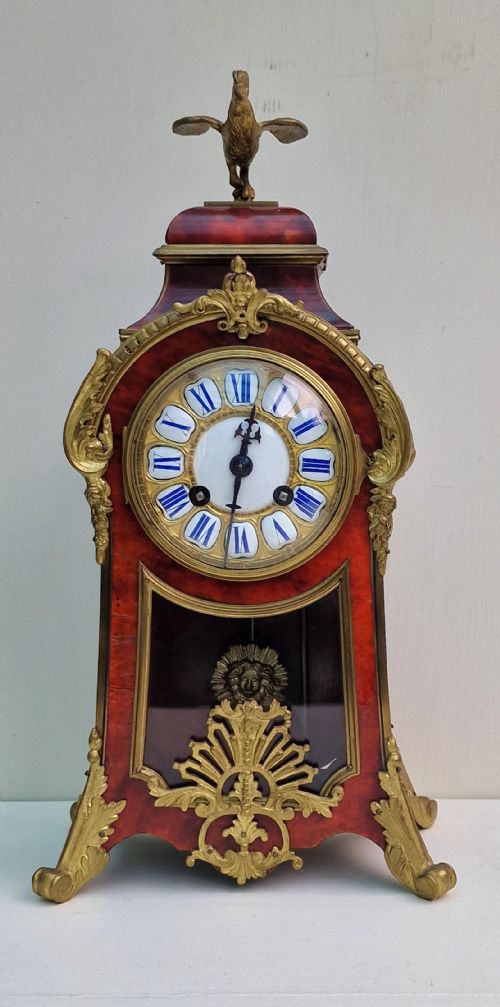
The versions met most frequently on this page span the nineteenth century, including Victorian interpretations and French Louis-style revivals. Makers combined traditional housing formats with ornate metal mounts and enamel dials.
Early seventeenth-century English examples with ebony and brass basket tops appear alongside nineteenth-century French ormolu rococo models. Each period contributes distinct proportions and decorative vocabulary to the bracket clock category.
How They Were Made
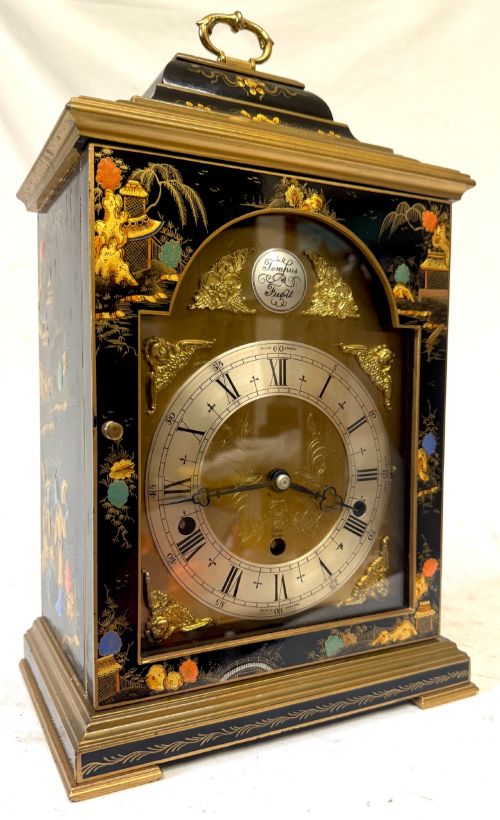
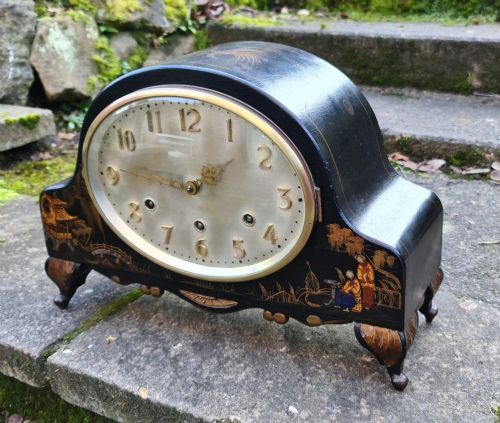
Craftsmen utilised foundational timber carcases of ebony, mahogany, walnut, or oak, which were then veneered in tortoiseshell or finished with black lacquer and Chinoiserie decoration. Metal components such as brass, gilt bronze, and ormolu were cast, chased, and fire-gilt to create luminous mounts and bezels.
Intricate mechanical movements, including fusee and spring-driven mechanisms with enamel dials and glass panels, were fitted directly into these decorated housings. Specialised workshops integrated chiming or striking trains, allowing decorative exterior cases to enclose complex internal gear trains.
Listings feature French Rococo Revival, Chinoiserie, and William and Mary styles executed in brass, tortoiseshell, and ormolu.
What Varies in Quality
The standard of a gilt bracket clock depends upon the crispness of the gilt bronze or ormolu chasing and the depth of the wood or tortoiseshell veneer. Superior examples display sharply defined rococo scrolls, unblemished enamel dials, and harmonious proportions between the case and its decorative mounts.
Mechanical execution dictates the upper tier of the range, marked by refined fusee movements signed by notable makers and workshops. Superior interior engineering matches the exterior ornamentation, ensuring the clock operates with mechanical integrity.
Cousens And Whiteside·Jonathon Lowndes·Joseph Windmills·William Speakman·Leon Message·Jollet Et Cie·William Payne·Samuel Marti·Lenzkirch·Payne And Co·Arnold And Frodsham
The Gilt Bracket Clock Glossary
- Bracket clock
- A portable household clock originally designed to stand upon a wall bracket to project sound effectively. These mechanical timepieces feature enclosed movements and decorative wooden or metal cases.
- Ormolu
- Finely ground high-carat gold mercury-gilded onto a bronze base. This technique produces a durable, rich golden surface finish seen on decorative mounts.
- Fusee
- A conical pulley used within clock movements to maintain even driving force as the mainspring unwinds. This device ensures consistent timekeeping accuracy throughout the running cycle.
- Boulle work
- Marquetry technique utilising tortoiseshell and brass inlaid in counter-changed patterns. Developed in France, this method decorates cabinetwork and clock cases.
- Enamel dial
- A metal disc coated with fused glass powder and fired in a kiln to create a smooth, white reading surface. Numerals are subsequently painted and fired onto the finished face.
Gilt Bracket Clock: Frequently Asked Questions
Where should a gilt bracket clock be placed?
These clocks suit sturdy surfaces such as mantelpieces, side tables, or dedicated wall brackets where their detailed ornamentation can be observed at close range. Positioning them away from direct sunlight and drafts protects delicate finishes like tortoiseshell and ormolu.
Because many examples were originally designed to project sound from a wall shelf, placing them securely on a level bracket allows the striking train to resonate properly throughout the room.
How do fusee movements differ from standard clockwork?
A fusee movement incorporates a conical drum and a cord or chain to regulate the pull of the mainspring. As the spring loses tension, the chain moves to a wider section of the cone, maintaining steady power to the escapement.
This mechanical refinement prevents the timekeeping from slowing down as the clock runs down between windings, distinguishing higher-grade English and French table clocks.
How do you distinguish nineteenth century French styles?
French mantel clocks from the nineteenth century frequently borrow decorative vocabulary from earlier royal reigns, such as Louis XIV or Louis XV. Rococo Revival pieces emphasise asymmetric scrolls, naturalistic foliage, and cast ormolu mounts, while Louis XIV styles favour symmetry and grand architectural presence.
Boulle pieces from this era utilise inlaid brass and tortoiseshell across waisted or bracketed timber carcases, often paired with visible pendulum windows or ornate enamel dials.
What is the difference between a bracket clock and a mantel clock?
Historically, bracket clocks were portable spring-driven timepieces equipped with handles or designed to rest upon a matching wall bracket to improve acoustic projection. Mantel clocks evolved later as domestic ornaments intended to sit directly on fireplace mantelpieces.
Over time, collectors and makers began using both terms interchangeably for portable table clocks housed in architectural or decorative wooden and metal cases.