





Gilt Black Accent Chairs
Gilt black accent chairs bring striking contrast to a room through dark polished frames and luminous metallic highlights.
Gilt Black Accent Chairs
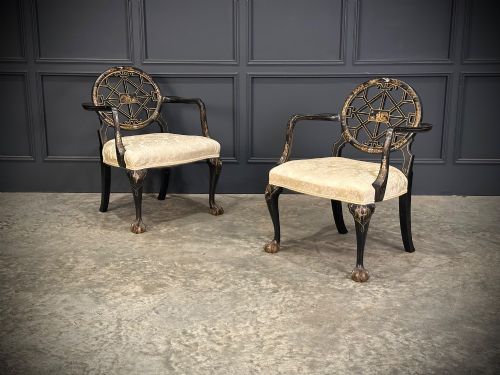
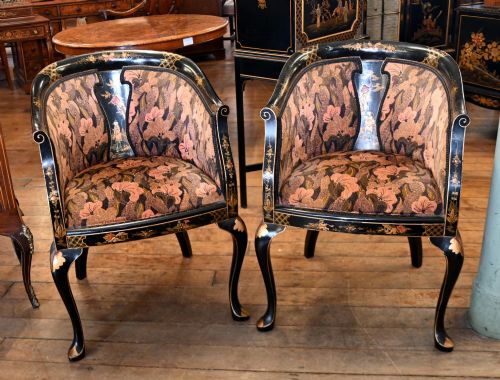
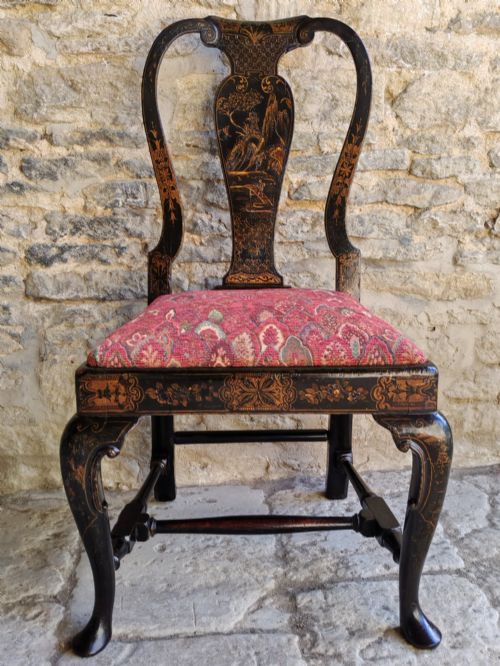
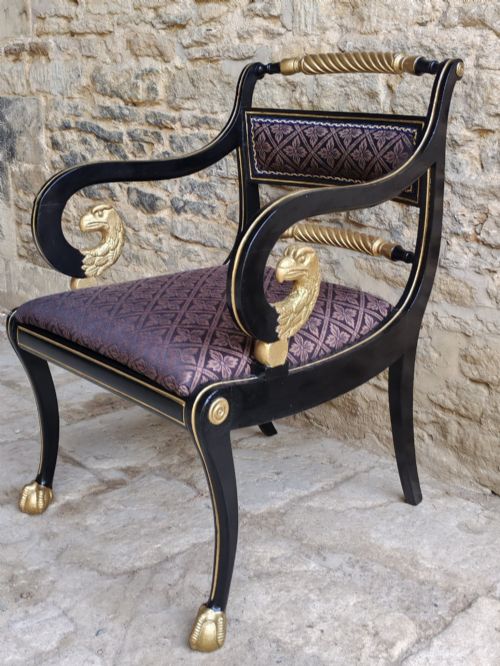
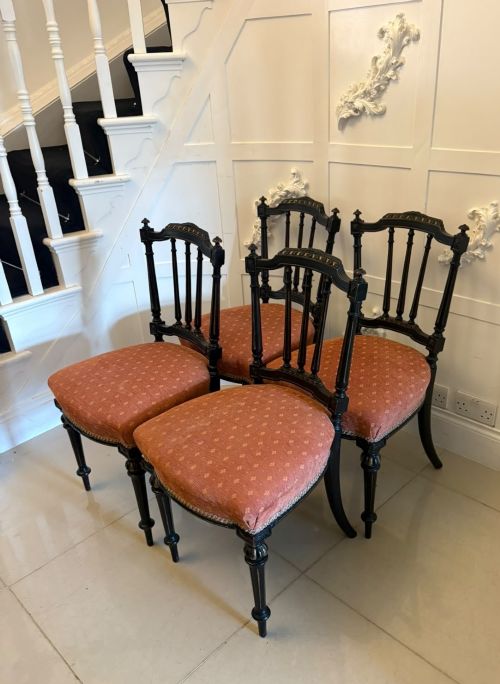
When you search for gilt black accent chairs, you encounter seating built across several centuries, from early eighteenth century examples to pieces from the early twentieth century. The selection spans distinct forms including armchairs, side chairs, slipper chairs, and nursing chairs.
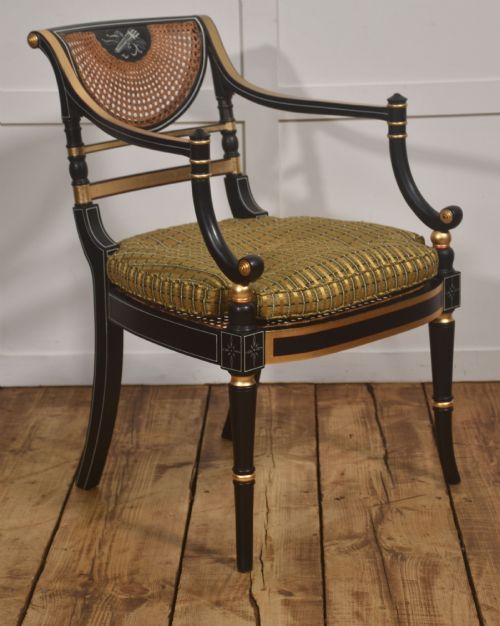
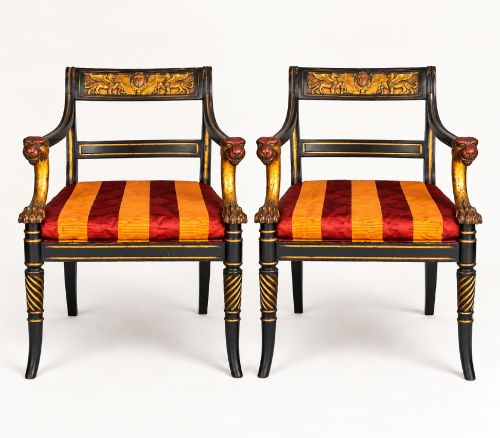
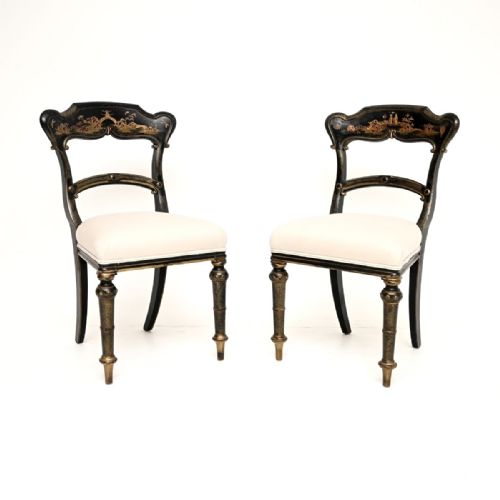
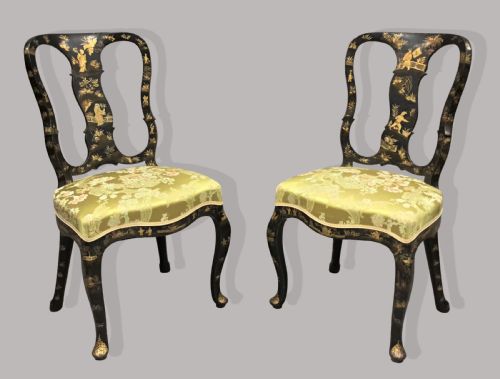
The versions met most frequently on this page draw upon Regency style, Victorian manufacture, and Chinoiserie decoration. These seating pieces function as focal points in a scheme, combining dark wood or lacquered surfaces with bright gilding.
Materials and construction
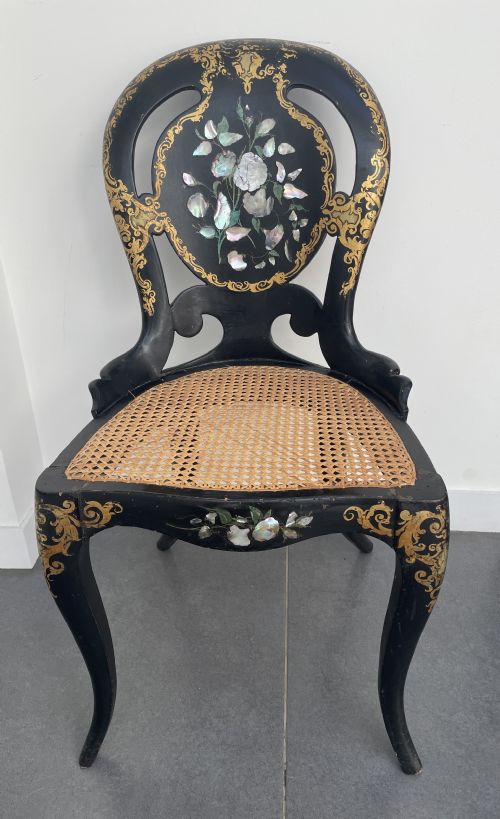
Frames rely primarily on ebonised wood, lacquered wood, and papier mâché, providing a deep dark ground for ornamentation. Artisans applied gold leaf and parcel gilt details by hand to catch the light.
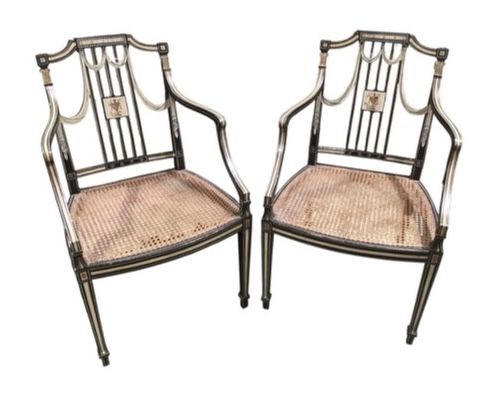
Seating areas incorporate cane and various fabrics, alongside brass mounts or mother of pearl inlay. Joinery methods reflect the period of origin, from eighteenth century cabinet making to industrial era production.
Gilt Black Accent Chairs Retail Price Guide 2026
Typical asking prices for gilt black accent chairs among the pieces listed under this phrase on Sellingantiques today, from the lower quarter to the upper quarter. They describe what is for sale here now, not the wider market.
Among the small chairs made for children and nurseries, tiny gilt details survived the bumps of childhood.
Quality differences
The standard of craftsmanship shows in the depth and preservation of the surface finish, whether deep lacquer or ebonised wood. Hand-applied gilt decoration displays varying degrees of precision and wear over time.
Structural integrity of the timber frame and the quality of applied ornamentation distinguish finer examples. Original decorative details, such as intact cane panels or mother of pearl work, elevate the piece.
The Gilt Black Accent Chairs Glossary
- Ebonised wood
- Timber treated to resemble ebony, creating a dark, uniform surface finish. This technique gives the frames their characteristic black coloration.
- Parcel gilt
- A decorative method where only specific portions of an object receive gold leaf or gilt treatment. It highlights carved details against the dark background.
- Bergère
- An enclosed upholstered armchair with wooden framing and cane sides or back panels. These appear in period seating with gilt and ebonised finishes.
- Chinoiserie
- European interpretations of Chinese artistic motifs, popular in furniture decoration. Lacquered surfaces often feature characteristic painted scenes in gold.
- Ormolu
- Gilded bronze mounts applied to furniture for decorative effect. These metal ornaments accent the dark wooden frames of nineteenth century seating.
Gilt Black Accent Chairs: Frequently Asked Questions
How do I style these chairs?
These chairs work well as standalone statement pieces in living spaces, bedrooms, or hallways. Their dark frames and gilt highlights pair easily with both traditional and contemporary interiors.
Position a single armchair or a matching pair where the contrasting colours can stand out against neutral walls.
Are these chairs comfortable for daily use?
Comfort varies depending on the specific form, such as upholstered armchairs versus firmer wooden side or hall chairs. Slipper and nursing chairs offer lower seating positions designed for specific tasks.
Consider how the piece will be used when selecting between cushioned armchairs and rigid dining or side chairs.
How do I clean ebonised and gilt surfaces?
Dust surfaces regularly with a soft, dry cloth to prevent dirt buildup on the dark wood and gilt highlights. Avoid using harsh chemical polishes that can damage the underlying finish.
Consult a professional restorer if the lacquered or gilded surface requires deeper cleaning or maintenance.
How do I identify the period of a chair?
Dating relies on examining the construction methods, materials, and stylistic cues present in the woodwork and decoration. Regency and Victorian pieces often display distinct turning, carving, and mounting styles.
Comparing the decorative motifs, such as Chinoiserie scenes or Aesthetic Movement lines, helps place the chair within its historical context.