





Pair of Chinoiserie Chairs
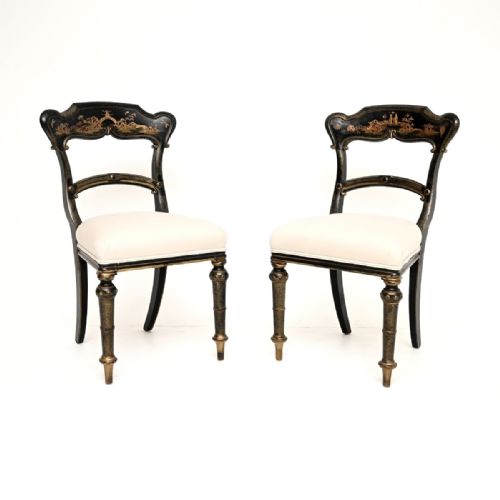
A pair of chinoiserie chairs brings hand-painted lacquer and striking Oriental motifs into a room.
Pair of Chinoiserie Chairs
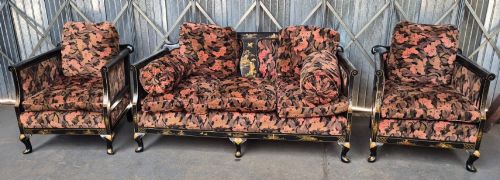
A pair of chinoiserie chairs encompasses seating forms created in distinct historic periods, predominantly spanning the nineteenth and early twentieth centuries alongside Regency and Victorian interpretations. Buyers encounter side chairs, armchairs, hall chairs, tub chairs and occasional day seats executed in this decorative style.
The selections on this page demonstrate the enduring popularity of painted and lacquered finishes applied to wood frames, cane panels and rush seats. These matched pairs provide balanced visual accents for interior schemes, drawing upon historic Chinese motifs interpreted through European craftsmanship.
How they were made
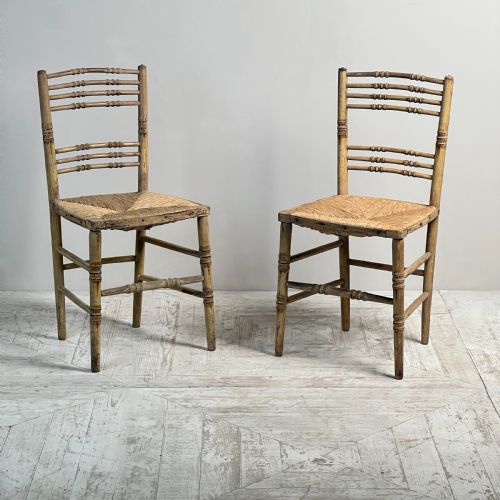
Makers utilised timber substrates including mahogany, satinwood, walnut and beech, often shaping them into simulated bamboo forms or traditional structural frames. Surfaces received coats of paint or lacquer, frequently finished with hand-applied gilt decoration depicting figures, landscapes and botanical patterns.
Seating areas incorporate woven cane work, rush or upholstered pads covered in various fabrics to complete the construction. The integration of painted artistry with solid timber joinery defines the technical execution of these pieces.
Materials recorded across the inventory include mahogany, walnut, satinwood, cane, rush, paint, lacquer and gilt.
What varies in quality
The standard of these chairs depends largely on the preservation and execution of the surface ornamentation. Crisp, detailed hand-painted lacquer and original gilt work distinguish finer examples from later or more simply decorated alternatives.
Structural integrity and the quality of the underlying timber framing also dictate the grade of the piece. Well-preserved joinery, intact canework and balanced proportions elevate the execution across different periods.
Ince and Mayhew
The Pair of Chinoiserie Chairs Glossary
- Chinoiserie
- European decorative art imitating Chinese artistic styles. This aesthetic relies heavily on motifs of landscapes, figures and pagodas applied to furniture.
- Japanned
- European work imitating Japanese and Chinese lacquerwork. It involves layering resin varnishes on wood before decoration.
- Canework
- Woven rattan split into strips used for chair seats and backs. This technique provides lightweight, resilient support.
- Faux bamboo
- Wood turned and carved to resemble natural bamboo stalks. It appears frequently in Regency and Victorian seating.
- Rush
- Woven marsh plants used to create traditional seating mats. This material offers a textured, organic surface for chair pads.
Pair of Chinoiserie Chairs: Frequently Asked Questions
Where should I place these chairs?
These chairs suit reception rooms, bedrooms or hallways where a matched pair can frame a fireplace or console table. Their decorative surfaces add visual interest without requiring large floor areas.
Because they arrive in pairs, positioning them symmetrically creates a formal arrangement. They function equally well as occasional seating or decorative accents.
How do I clean lacquered wood?
Dust surfaces gently with a soft, dry cloth to prevent scratching the delicate finish. Avoid modern chemical sprays or excessive moisture which can damage aged lacquer.
Maintaining a stable room temperature prevents the timber and lacquer from expanding or contracting. Regular gentle care preserves the original decorative painting.
Are these chairs comfortable for daily use?
Historic seating designs often prioritise formal posture and decorative impact over deep cushioning. Tub chairs and upholstered variants offer softer seating while wooden side and hall chairs provide firmer support.
Selecting the correct chair type depends on whether the intended use is long sitting or decorative display. Many examples feature cane or rush panels which flex slightly under weight.
How can I date a pair?
Dating relies on observing the timber species, construction methods and the specific characteristics of the painted decoration. Regency examples often feature simulated bamboo turning while later Edwardian or 1920s pieces display distinct palette choices.
Comparing the wear patterns and the type of lacquer against known historical periods helps establish the age of the frames. Archival records and stylistic markers provide further context for verification.