



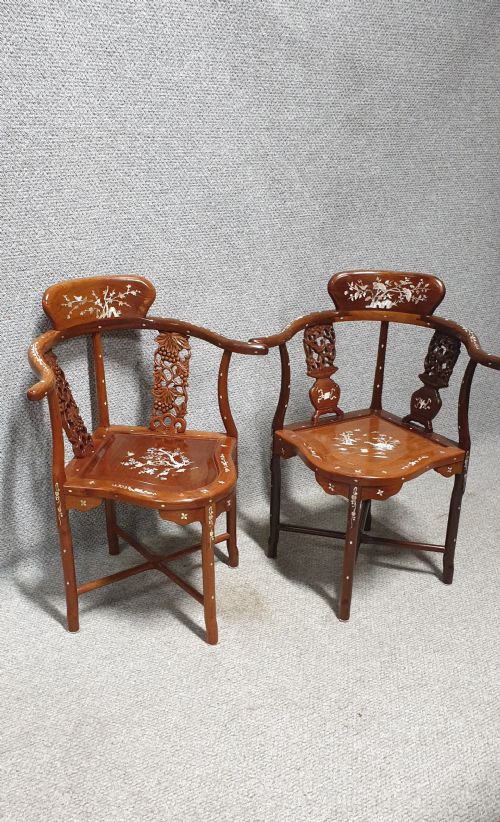


Oriental Style Armchair
An oriental style armchair brings sculptural presence and rich historical character into a room through carved timber and graceful horseshoe or throne silhouettes.
Oriental Style Armchair
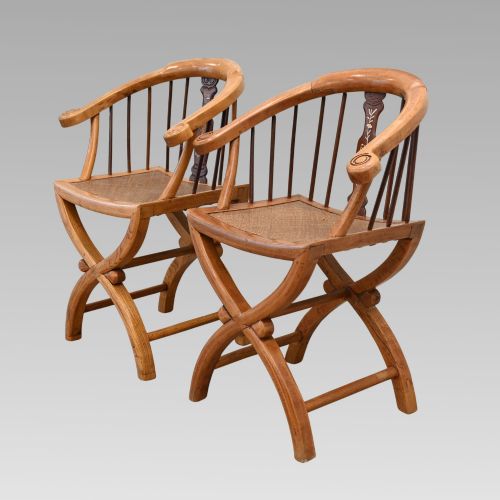
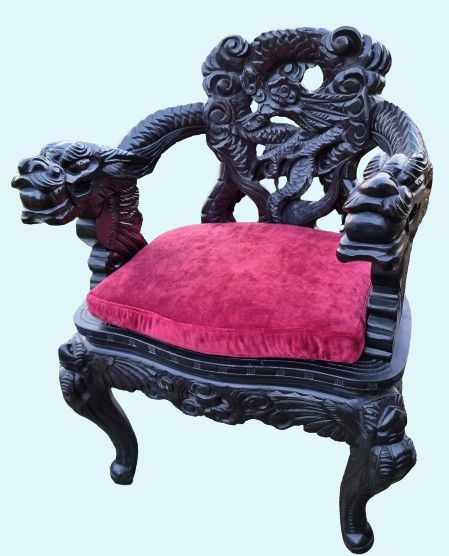
When you search for an oriental style armchair, you encounter seating originating primarily from Chinese export workshops and regional traditions, spanning from the eighteenth century through to the early decades of the twentieth century. These pieces encompass substantial horseshoe armchairs, low corner chairs, and imposing throne chairs fashioned from dense timber.
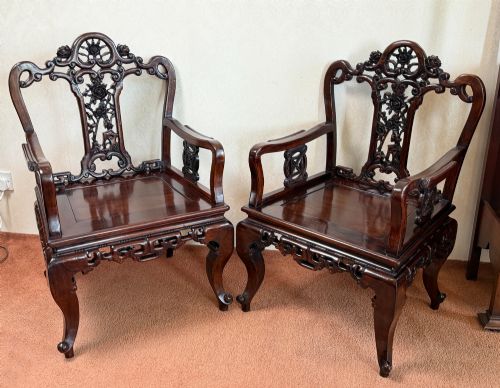
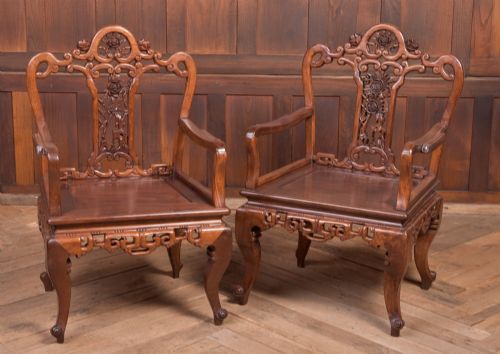
The selections on this page are dominated by nineteenth century hardwood examples, alongside significant Victorian interpretations and Edwardian lacquered pieces. Buyers frequently find paired seating sets or individual armchairs displaying distinct regional characteristics from Chinese and Anglo-Indian makers.
Materials and construction methods
Carpenters utilised dense tropical timbers such as hardwood, Hongmu, teak, rosewood, and pickled elm to build durable frames capable of supporting intricate surface carving. These woods provided the necessary tensile strength for sweeping horseshoe backs and complex joinery without relying on metal fasteners.
Surface decoration incorporated deep relief carving, brass inlay, cane seat panels, and dark lacquer finishes applied over wooden substrates. Artisans combined structural joinery with decorative elements like Japanned surfaces and woven cane inserts to achieve contrasting textures.
Oriental Style Armchair Retail Price Guide 2026
Typical asking prices for oriental style armchair among the pieces listed under this phrase on Sellingantiques today, from the lower quarter to the upper quarter. They describe what is for sale here now, not the wider market.
Listings incorporate multiple timber varieties, including teak, rosewood, Hongmu, and elm, spanning from the eighteenth century to the 1930s.
Assessing craftsmanship and execution
The distinction between standard examples and the finest items rests in the crispness and depth of the woodcarving, alongside the integrity of the original timber frame. Superior pieces demonstrate fluid lines in curved components like wishbone backs and corner frames, executed with precise joinery.
Quality also depends on the preservation of original surfaces, whether polished hardwood grain or intact lacquer and brass inlay work. Pieces retaining authentic structural proportions and uncompromised cane work represent the upper tier of this seating category.
The Oriental Style Armchair Glossary
- Hardwood
- Dense, slow-growing timber utilised for durable furniture construction, including species like rosewood and Hongmu. It resists heavy wear and allows for sharp, detailed relief carving.
- Horseshoe back
- A continuous curved arm and back rail forming a circular or horseshoe shape on seating. This ergonomic design supports the arms and back simultaneously.
- Lacquered
- Coated with resin layers that harden into a smooth, protective surface often finished with decorative painting or pigment. This technique protects the underlying wood while providing deep visual sheen.
- Cane
- Woven material made from the peeled bark of rattan palms, utilised for seat panels. It offers flexible, breathable support within a wooden frame.
- Japanned
- European imitation of East Asian lacquerwork achieved through layers of varnish and metallic dusting on furniture. It mimics traditional Asian surface treatments using Western techniques.
Oriental Style Armchair: Frequently Asked Questions
How do I date an antique oriental armchair?
Dating relies on examining the timber species, joinery techniques, wear patterns, and stylistic markers recorded in the piece. Nineteenth century examples frequently display dense hardwoods and deep hand carving.
Earlier eighteenth century items may show more eccentric proportions or specific export characteristics, while twentieth century pieces often incorporate simpler construction methods.
Where should I place an oriental style armchair?
These armchairs function effectively as focal points in studies, living rooms, or hallways where their carved silhouettes and dark timbers contrast with plain walls. Paired armchairs suit formal seating arrangements or fireside placement.
Their substantial presence allows them to stand alone as statement furniture without needing matching suites.
What is the difference between Chinese export and domestic furniture?
Chinese export furniture was specifically manufactured for Western markets, often blending traditional Chinese structural forms with European aesthetic preferences. This exchange produced distinct hybrid designs.
Domestic pieces adhered strictly to regional local tastes, whereas export items occasionally incorporated brass inlay or specific proportions tailored to Western interiors.