
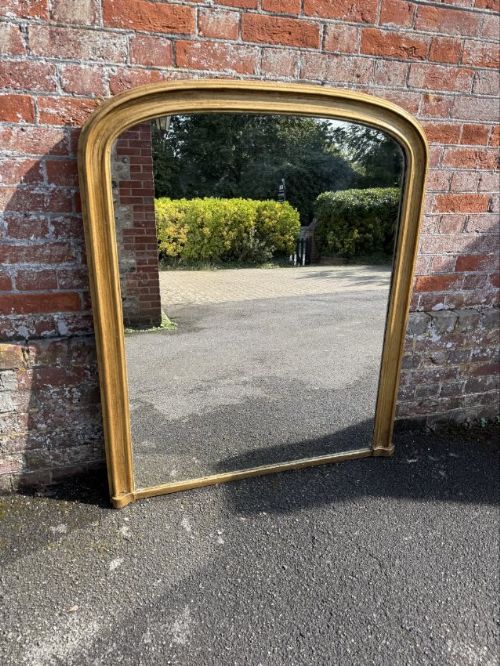

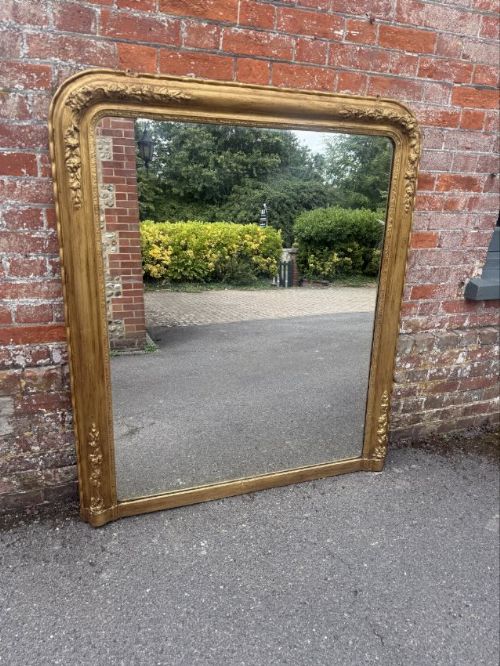
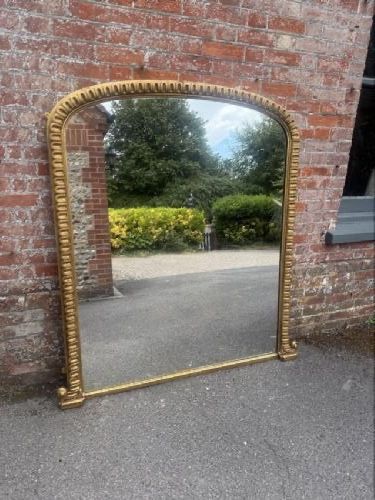
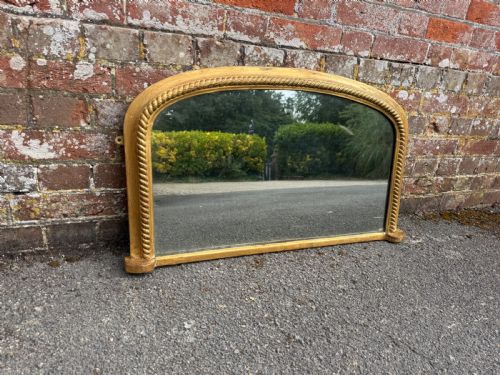
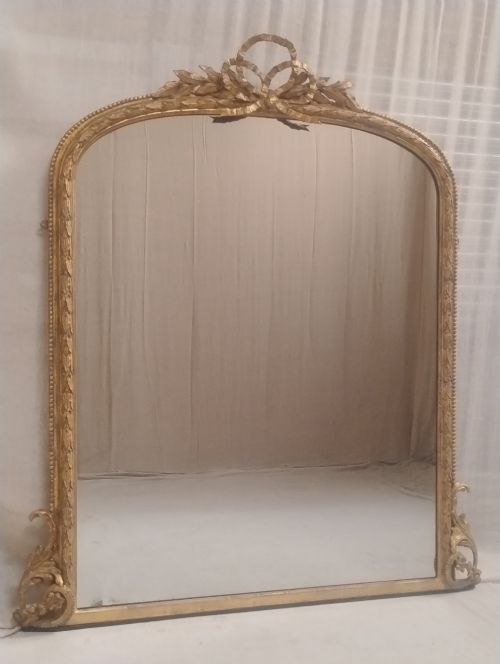
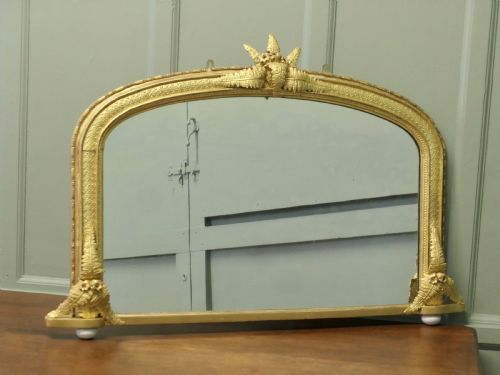
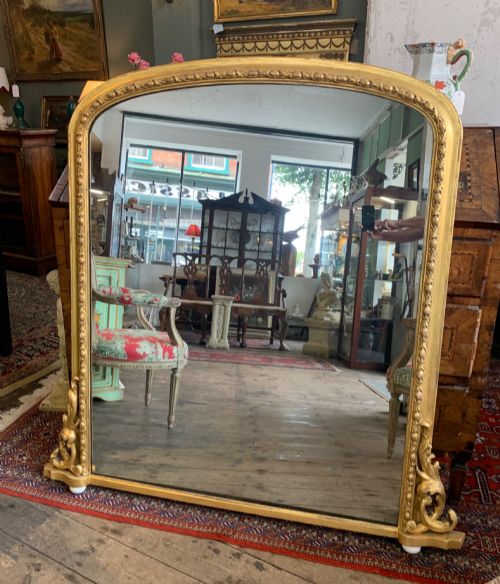
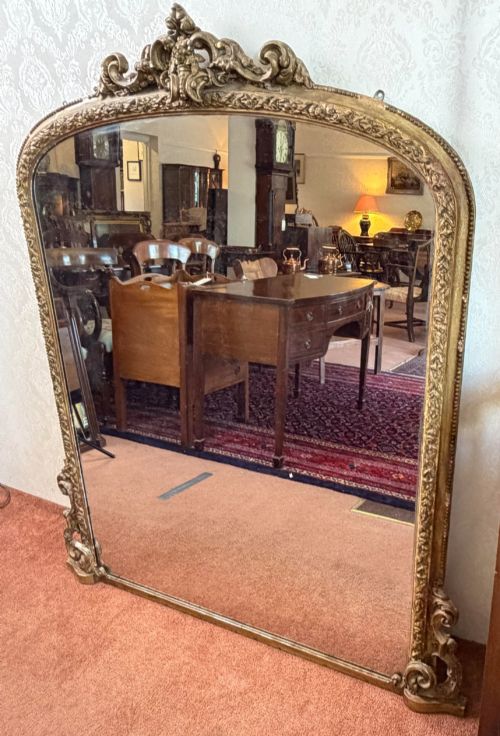
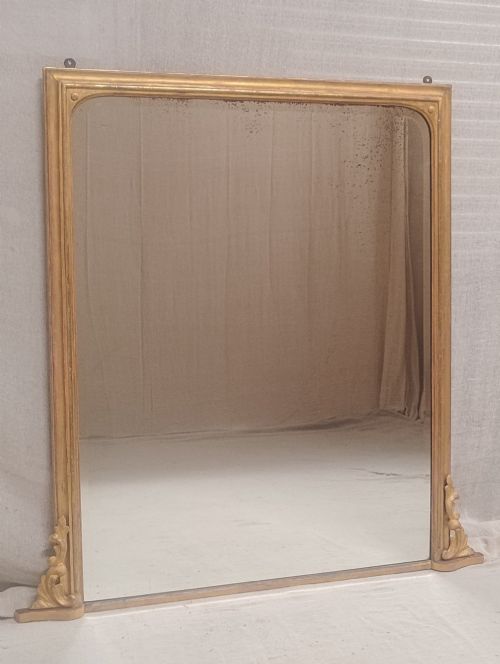
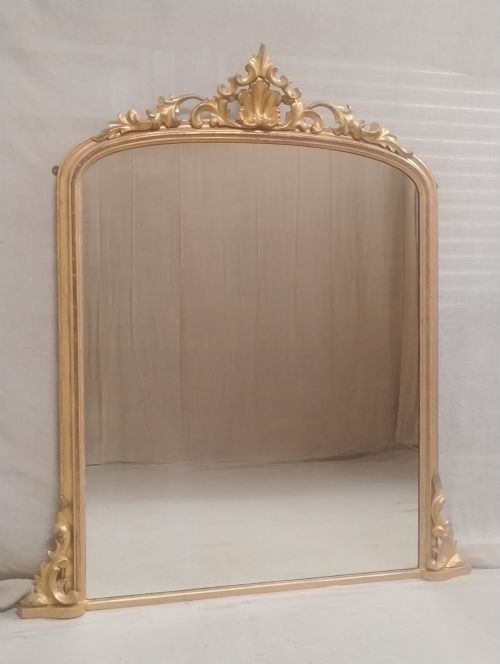
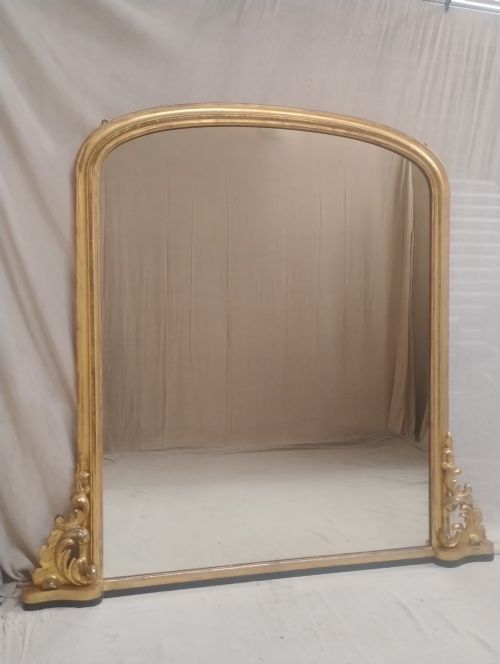
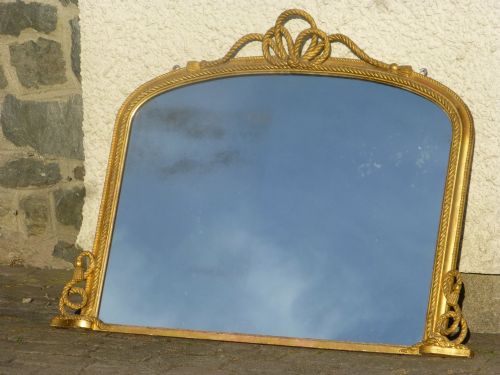
Gilt Arched Fireplace Mirror
These large nineteenth century pieces provide a grand architectural focus above a fireplace, combining reflective glass with ornate gilded frames.
Gilt Arched Fireplace Mirror
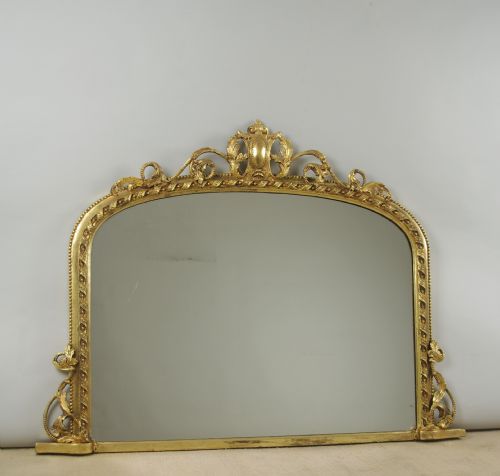
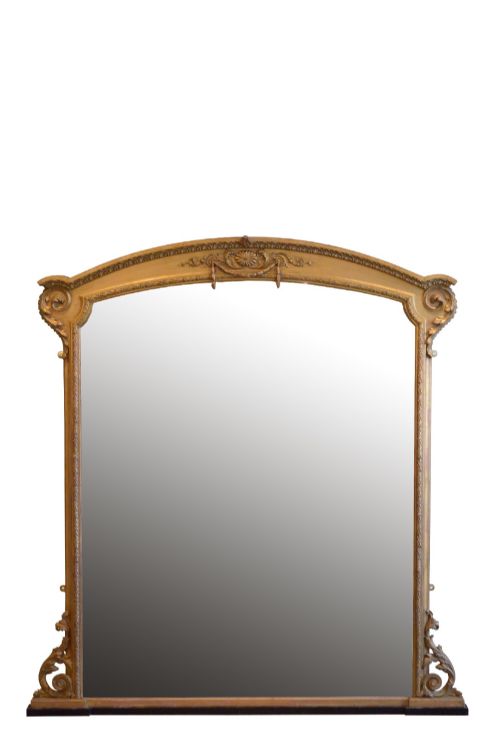
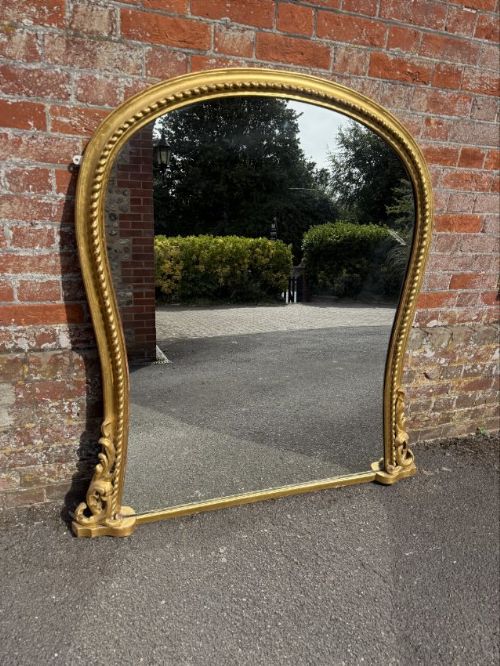
A gilt arched fireplace mirror primarily takes the form of a substantial overmantle glass designed to sit low down upon a mantelpiece and command the chimney breast wall. Most examples found here stem from the Victorian period, spanning decades from eighteen fifty to nineteen hundred, with English and French stylistic influences prevailing.
The dominant format is a large horizontal or vertical wall mirror with an arched or shaped top, frequently featuring decorative crests, central cartouches, or rope twist details. These objects were originally proportioned to reflect light from opposing windows around nineteenth century drawing rooms and parlours.
Construction and gilding
Makers built the structural carcase from carved wood, applying layers of gesso and plaster to build up crisp relief ornament such as tulip patterns and hour glass ribbing before finishing the surface. Gold leaf or gilding was then applied over the prepared ground to achieve a bright reflective metallic sheen.
Frames often combine solid timber construction with moulded composition ornamentation to create elaborate architectural detail without excessive weight. The heavy glass plates are secured within the rebated wooden frames behind protective backing boards.
The inventory highlights overmantle forms incorporating rope twist frames, tulip motifs, and central cartouches dating from eighteen fifty onward.
Quality and proportion
The distinction between standard domestic mirrors and exceptional statement pieces lies in the crispness of the hand carved wooden enrichment and the depth of the gesso mouldings. Finer examples display meticulous detailing along the arched frames and well executed decorative cresting.
Condition of the original gilding and the clarity of the antique mirror glass also dictate the standing of a piece. Original components, stable frames, and untouched patination on the gold leaf separate superior survivals from heavily restored alternatives.
The Gilt Arched Fireplace Mirror Glossary
- Overmantle mirror
- A large wall glass specifically proportioned to hang or stand directly above a fireplace mantelpiece. These pieces often incorporate flat bases designed to rest safely on wooden chimney shelves.
- Gesso
- A plaster based mixture applied to carved wooden frames to provide a smooth, absorbent surface for subsequent gilding. It allows craftsmen to model sharp, intricate decorative reliefs.
- Giltwood
- Timber that has been coated with thin leaves of gold or metallic leaf. This technique gives the appearance of solid gold while utilising a more workable wooden base.
- Cartouche
- An ornamental framed tablet or shield motif, often placed centrally on the crest of a mirror frame. It provides a focal point for carved detailing.
- Rococo Revival
- A nineteenth century design movement that reinterprets eighteenth century asymmetrical scrolls, naturalistic curves, and shell motifs. Mirrors in this style display exuberant, flowing ornamentation.
Gilt Arched Fireplace Mirror: Frequently Asked Questions
How do I secure an overmantle mirror safely?
These heavy nineteenth century objects require secure wall fixings capable of supporting substantial weight, even when resting partially on a mantel shelf. Professional mirror brackets or concealed wall straps anchor the wooden frame firmly to masonry studs.
Ensuring the weight is properly distributed prevents the mirror from tipping forward. Weight-bearing brackets placed beneath the lower corners provide additional stability for large framed glass.
What periods do these mirrors represent?
The pieces available predominantly date from the Victorian era, spanning the mid to late nineteenth century between eighteen fifty and nineteen hundred. Earlier Regency and William IV influences also appear among the architectural forms.
Stylistic markers such as French Rococo Revival curves or Louis Philippe framing help distinguish particular decades of production. Each period brings distinct decorative motifs to the carved wooden crests and frames.
How do I clean antique gilt frames?
Dusting gently with a soft dry brush or feather duster preserves the delicate gold leaf and gesso surfaces without causing abrasion. Moisture and chemical cleaners should be kept away from nineteenth century gilding to prevent lifting.
Glass panels can be cleaned using standard glass cleaner applied sparingly to a cloth rather than sprayed directly onto the mirror plate. This protects the antique wooden rebate from moisture damage.
Where should an arched mirror be placed?
Traditionally positioned above a fireplace opening, these large mirrors also function effectively on principal salon walls where they maximise natural daylight. Their arched proportions draw the eye upward and enhance the vertical scale of a room.
Placing them opposite windows allows the antique glass to reflect light deeper into the interior space. Hallways and principal reception rooms provide suitable architectural proportions for such statement pieces.