

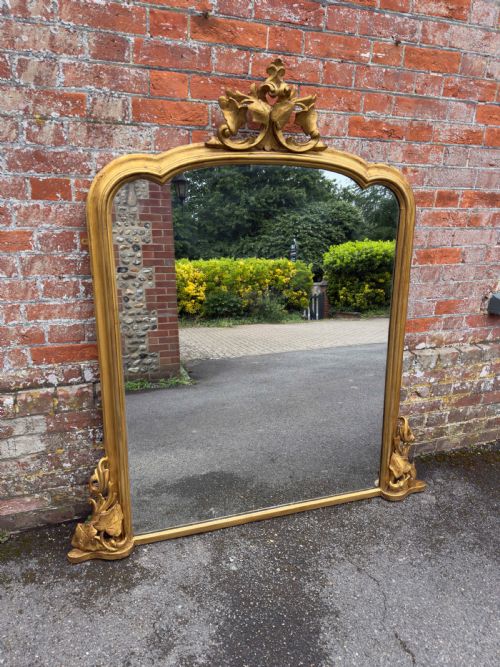
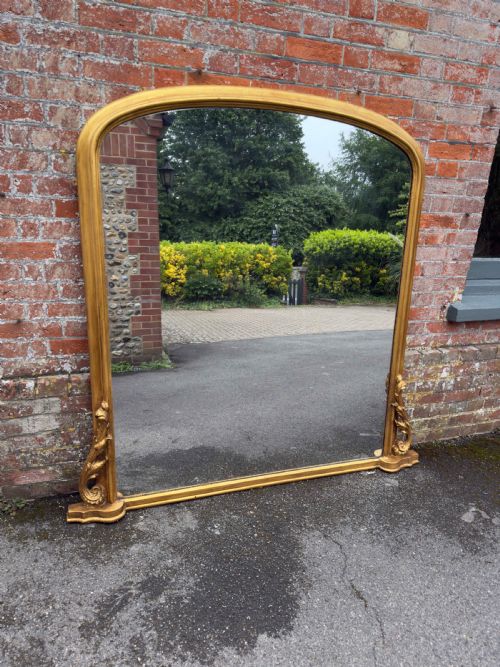
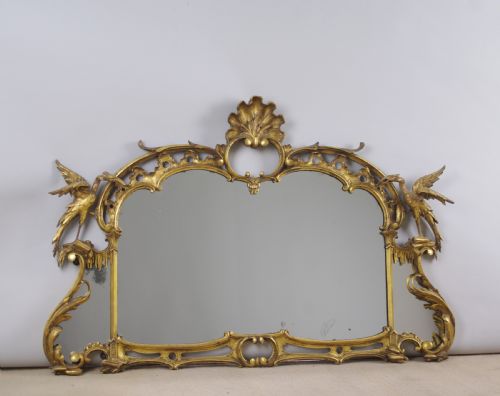

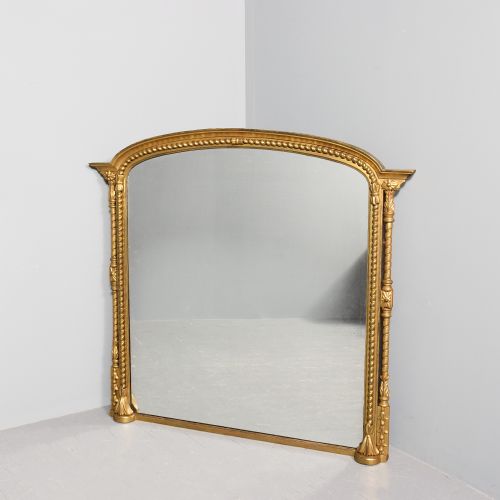


Gold Mantelpiece Mirror
A gold mantelpiece mirror centres the room, reflecting light and adding grandeur above a fireplace through substantial gilt frames.
Gold Mantelpiece Mirror
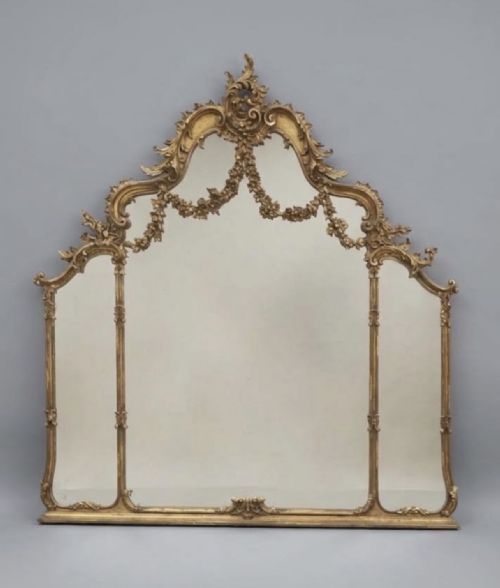
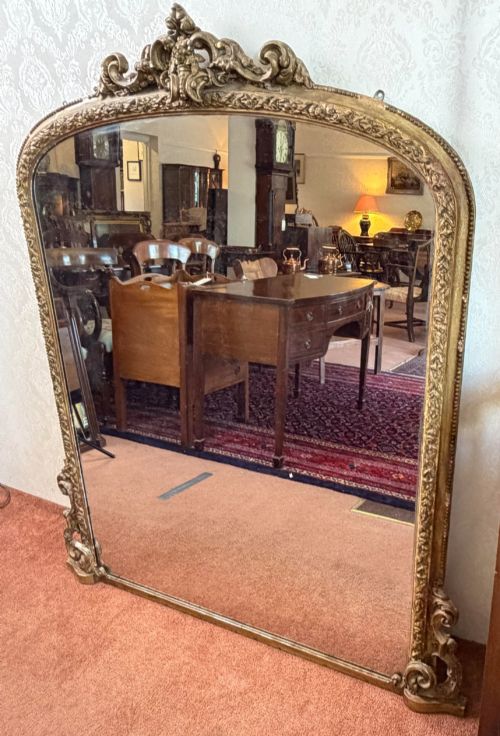
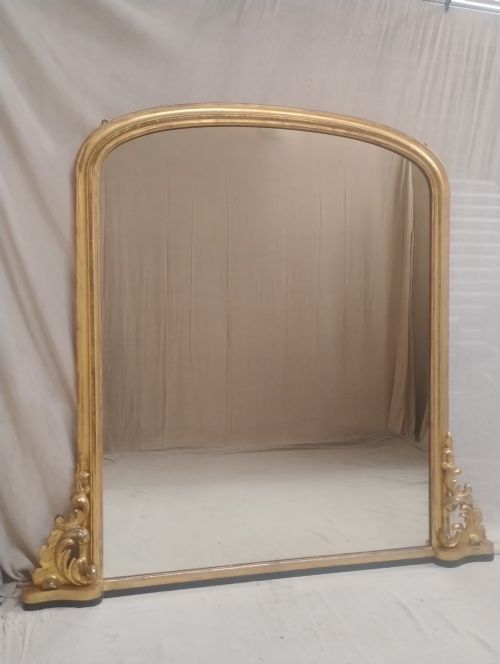
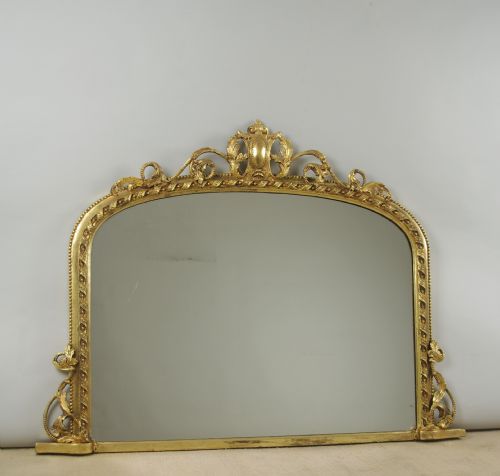
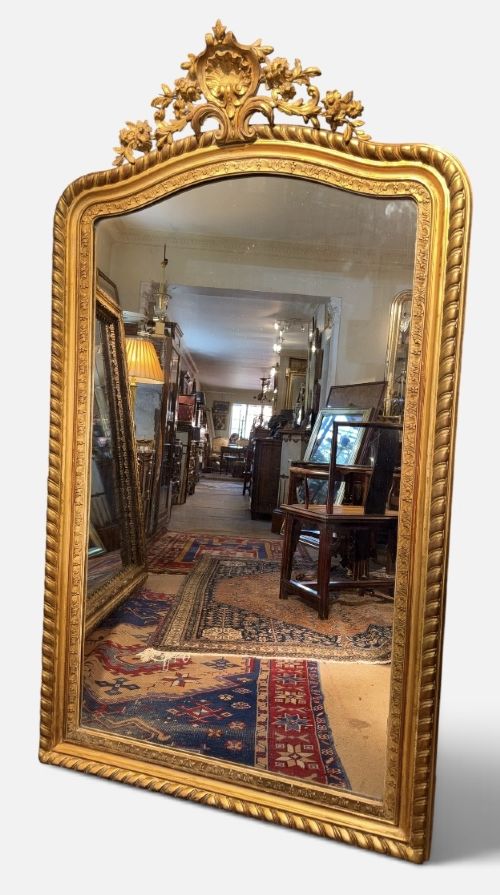
A gold mantelpiece mirror primarily takes the form of an overmantel mirror designed to sit directly above a fireplace breast. The selection draws heavily from Victorian and 19th century British and French workshops, encompassing arched tops, rectangular formats, and grand proportions.
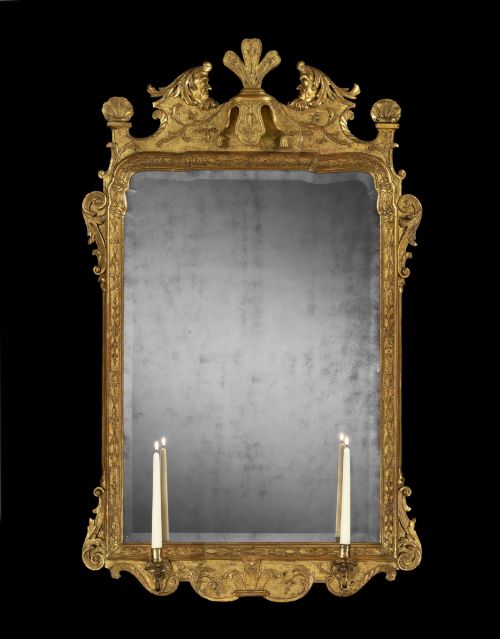
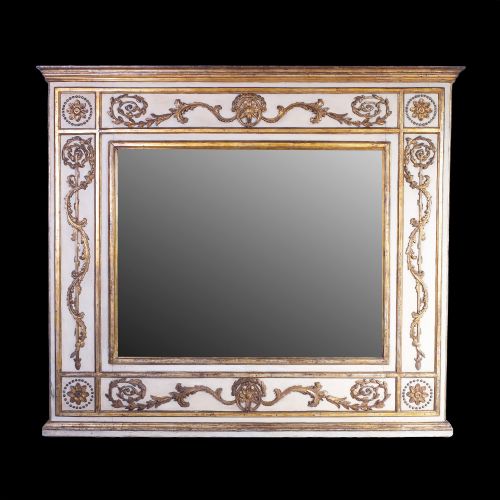
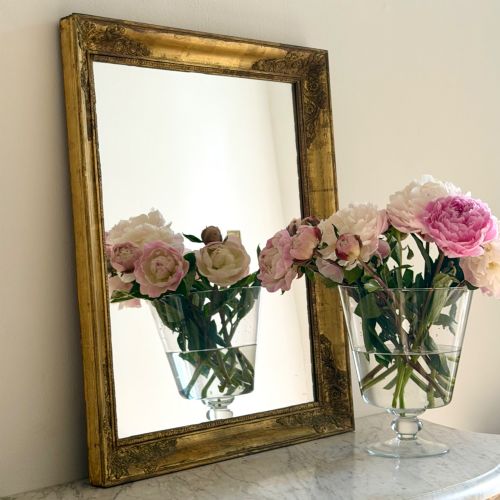
Buyers encounter substantial carved wooden frames finished with intricate gesso and bright gold leaf or paint. These pieces range from restrained Regency triple plate designs to heavily ornamented Rococo Revival and Neoclassical styles featuring shaped pediments.
Materials and Construction
Makers built the structural carcases using carved wood, applying layers of gesso to build up intricate relief ornaments such as scrolls, foliage, and architectural moulding before gilding. Gold leaf or paint was then laid over the prepared surfaces to achieve a luminous finish.
The glazing utilised heavy mirror glass, frequently segmented into multiple plates in Regency and compartmental formats, held securely within the rebated wooden frames.
Several mirrors include historical narratives within their frames, such as a 19th-century piece depicting the Biblical story of Anania and her chariot.
Distinctions in Quality
Quality depends on the crispness of the hand-carved wooden details and the depth of the gesso relief work beneath the gilding. Superior examples display sharply defined ornamentation without the softening of details often seen in later or massed composition mouldings.
The integrity of the original mercury or silvered mirror plates and the richness of the genuine gold leaf application distinguish high-grade period pieces from standard decorative alternatives.
The Gold Mantelpiece Mirror Glossary
- Giltwood
- Timber that has been coated with gold leaf. This material provides the primary luminous surface for traditional mantel mirrors.
- Gesso
- A plaster-like mixture applied to wood frames and carved into relief designs before gilding. It allows for intricate decorative motifs.
- Overmantel
- A large mirror specifically proportioned to hang above a fireplace mantelpiece. These pieces often feature wide horizontal or arched formats.
- Composition
- A moulded mixture of whiting, resin, and oil pressed into ornament strips. It was used as a cost-effective alternative to hand-carved wood.
- Triple Plate
- A mirror glass divided into three separate vertical sections within a single frame. This configuration is typical of Regency designs.
Gold Mantelpiece Mirror: Frequently Asked Questions
How do I hang a heavy gold mantelpiece mirror safely?
These mirrors carry substantial weight due to their dense wooden frames, gesso ornamentation, and thick glass plates. Secure the hanging wire or brackets directly into the structural wall studs rather than relying solely on standard plaster anchors.
Position the base securely so that it rests safely on the mantel shelf itself, which helps distribute the heavy vertical load evenly.
What is the difference between an overmantel and a wall mirror?
An overmantel mirror is specifically dimensioned to span the horizontal width of a fireplace breast. Its proportions are engineered to anchor the visual weight above a hearth.
Standard wall mirrors are typically designed for general vertical placement on flat walls and rarely match the specific landscape proportions required for mantel use.
How should I clean the antique gilt frame?
Dust the ornate carved gesso and giltwood surfaces gently using a very soft, dry brush or feather duster. Avoid applying liquid cleaners or chemical sprays directly to the frame, as moisture can lift the historic gold leaf and gesso.
For the mirror glass itself, apply a mild glass cleaner sparingly to a cloth rather than the glass directly to prevent seepage behind the historic plates.
Are all these mirrors from the Victorian period?
While a significant proportion of the available selection dates from the Victorian era and the 19th century, the range also includes earlier Regency designs and occasional 20th-century pieces. Stylistic markers such as neoclassical symmetry or rococo scrolls help distinguish the specific manufacturing period.
French workshops also contributed distinct cartouche and Louis Philippe forms alongside traditional British overmantel pieces.