

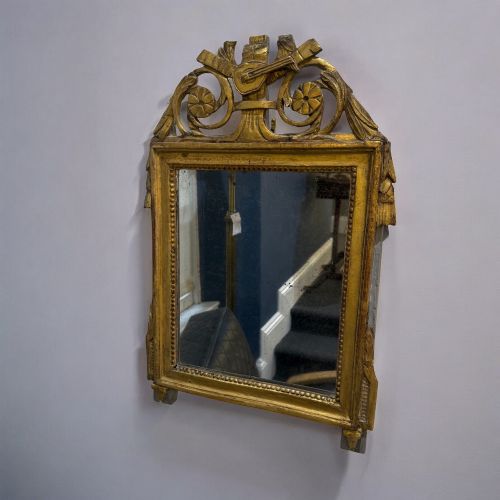
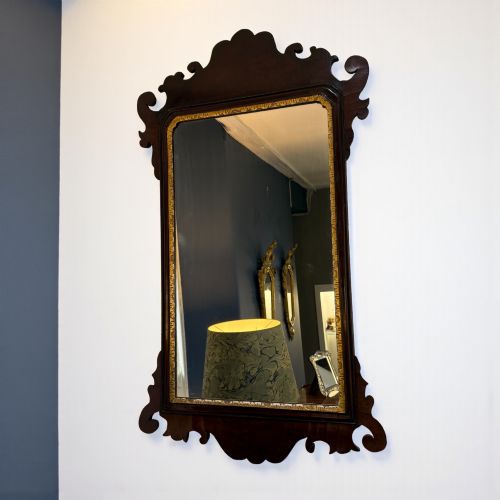
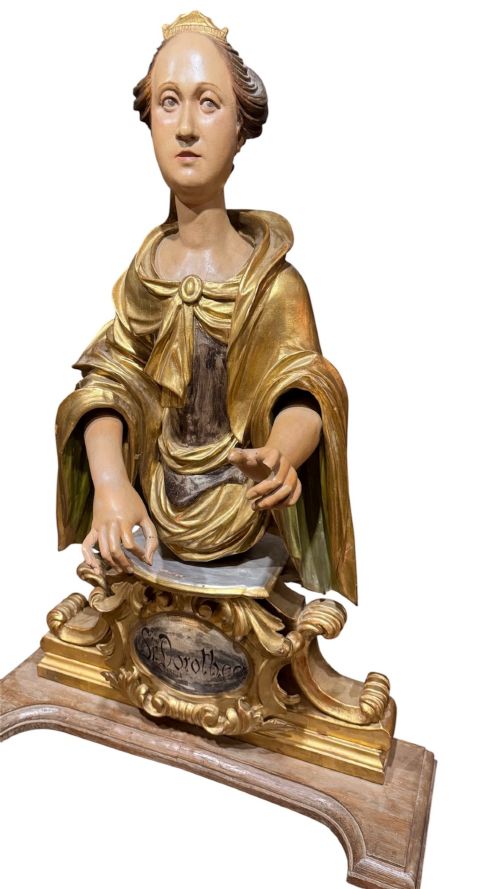
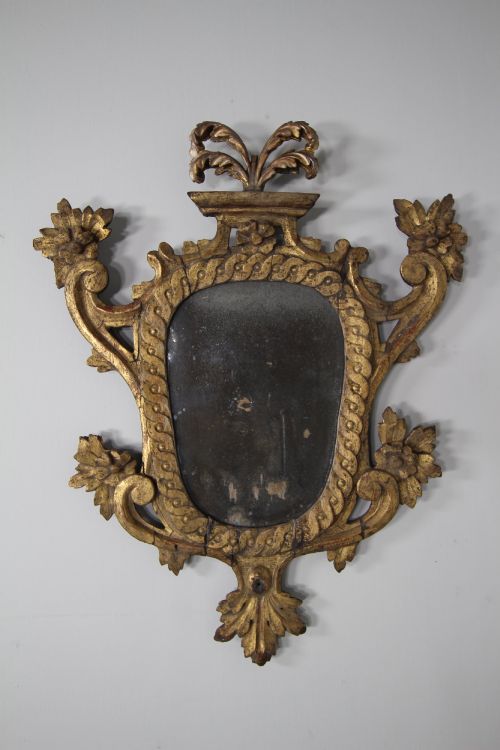

Gilded Wooden Carving
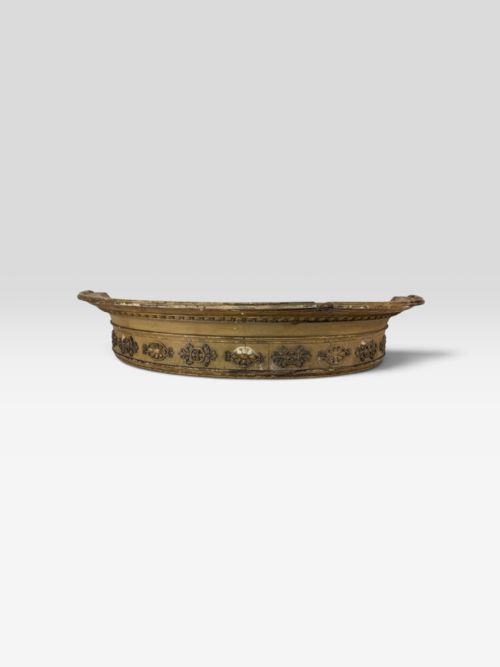
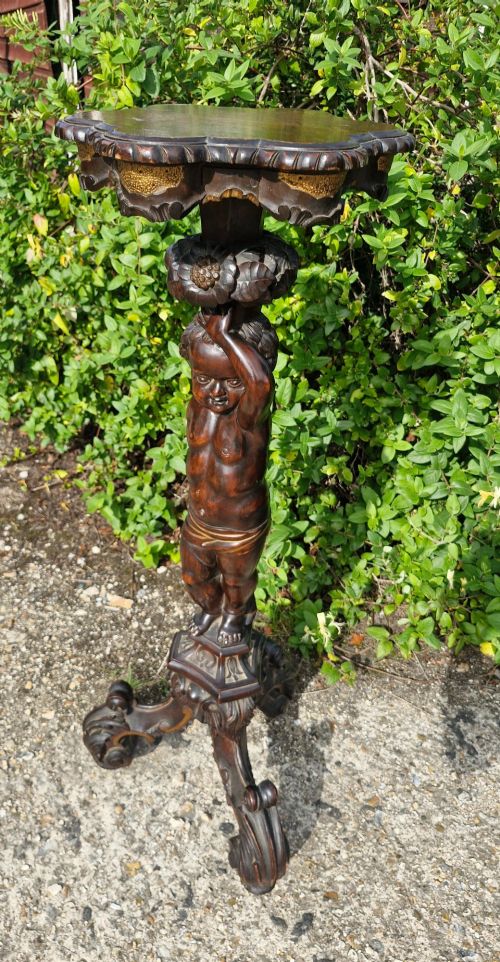
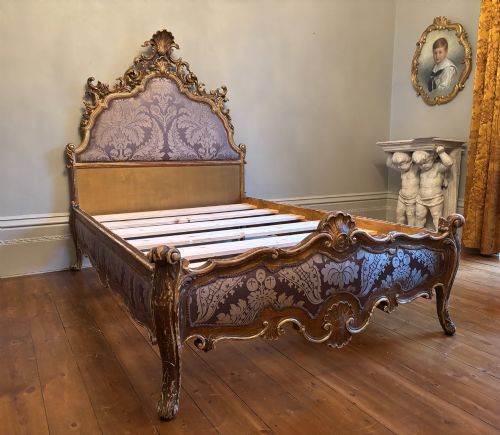
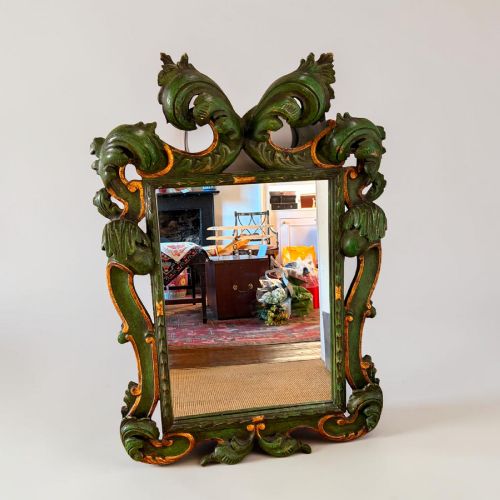
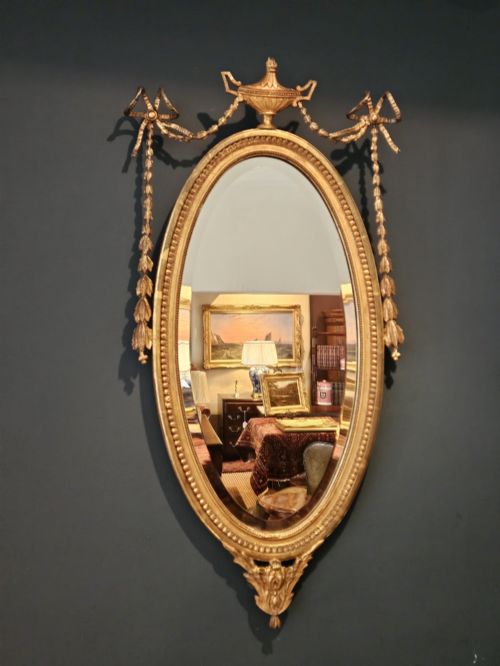
These gilded wooden carving pieces bring ornate historical craftsmanship and brilliant surface reflection into domestic interiors.
Gilded Wooden Carving
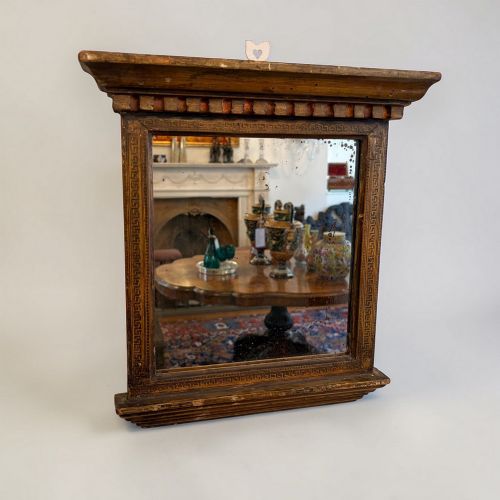
A gilded wooden carving brings together structural woodwork and applied surface metal leaf across centuries of decorative output. When someone searches for gilded wooden carving, they find items ranging from functional mirrors and lighting to figurative sculptures and architectural fragments.
The versions most common on this page span the seventeenth through the nineteenth centuries, drawing on Baroque, Rococo, Neoclassical and Victorian design idioms. European workshops dominate the selection, particularly through Italian wall lights, French mirrors and religious figures.
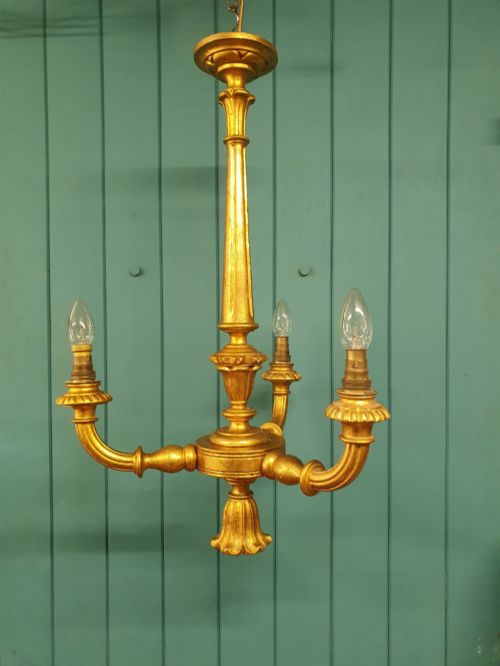
Forms include wall sconces, armchairs, chandeliers, floor-standing lamps and decorative panels. Each piece relies on carved timber foundations transformed through traditional surface application methods.
How they were made
The creation of these objects begins with timber such as oak, mahogany, walnut or limewood, shaped through hand carving to achieve intricate relief details. Artisans then apply gesso, a prepared chalk and glue mixture, to smooth the wood grain and provide a crisp base for subsequent layers.
Gold leaf or silver-gilt is laid meticulously over the prepared surface, sometimes complemented by paint, polychrome decoration or ebonised accents. This layered construction secures the metal leaf while preserving the sharpness of the underlying wood carving.
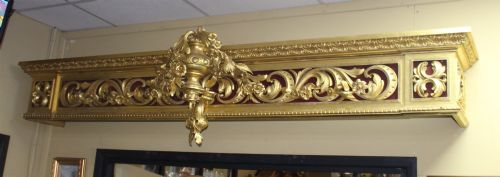
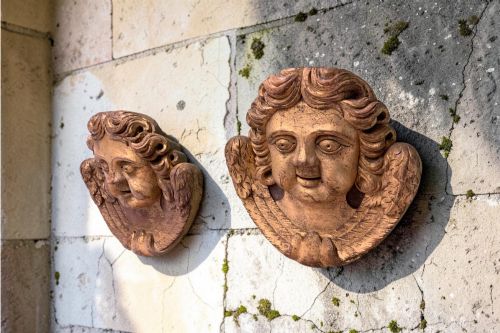
A smiling cherub peers out from a wide wooden over door, frozen mid-thought above the room.
What varies in quality
Quality rests in the crispness and depth of the manual carving, where chisel work remains sharp rather than softened by excessive preparation layers. Superior examples show confident handling of anatomical or botanical motifs without stiffness or hesitation.
The integrity of the surface application also distinguishes finer examples, where gold leaf retains its luminosity and adhesion to the gesso foundation. Lesser execution often shows heavy repairs, flattening of detail or unsympathetic over-gilding that obscures the original wooden substrate.
Jacob Desmalter
The Gilded Wooden Carving Glossary
- Giltwood
- Timber that has been decorated with gold leaf or metal leaf applied over a prepared ground. It forms the primary surface treatment for many decorative frames and architectural fittings.
- Gesso
- A mixture of binder and chalk used to coat wooden carvings before gilding. This smooth layer creates the ideal foundation for burnishing metal leaf.
- Rococo
- An artistic style characterised by asymmetry, scrollwork and organic C-scroll and S-scroll motifs. It appears frequently on eighteenth-century Italian and French mirrors and sconces.
- Baroque
- A theatrical design style marked by bold relief, dramatic movement and rich ornamentation. It underpins many seventeenth-century ecclesiastical and domestic carvings.
- Pricket
- A sharp metal spike on a candlestick or sconce designed to hold a candle in place. They are typical of older religious and ecclesiastical lighting fittings.
Gilded Wooden Carving: Frequently Asked Questions
How do I clean a gilded wooden carving?
Dust these surfaces gently using a soft, dry brush without applying moisture or chemical cleaning agents. Liquid cleaners can lift delicate gold leaf from the underlying gesso.
Keep pieces away from direct sunlight and fluctuating humidity to protect the wood and metal layers over time.
Were these pieces always gilded?
Most items were designed from inception to receive gold leaf, gesso, or paint to project status and reflect candle or daylight. Some elements combine exposed timber with partial gilding to create tonal contrast.
Subsequent interventions sometimes introduced new surface layers, which physical inspection under magnification can reveal.
How can I tell the period of a carved frame?
Examine the timber species, tool marks left by the carver, and the composition of the gesso ground beneath the metal leaf. Stylistic traits such as Baroque symmetry or Rococo asymmetry also anchor pieces to specific decades.
Wear patterns and fastener types offer further clues to the manufacturing era of each object.
Where were these carvings used originally?
Many items originated in grand salons, churches, palaces, and townhouses as mirrors, lighting fixtures, or devotional sculptures. Religious figures often stood in altarpieces, while mirrors and sconces decorated formal reception rooms.
Their current domestic utility adapts these historical ornaments to contemporary living spaces as focal art pieces.