


Gilded Wall Shelves
Gilded wall shelves bring a gleaming architectural accent to any room, offering a display surface that catches the light and elevates your objects.
Gilded Wall Shelves
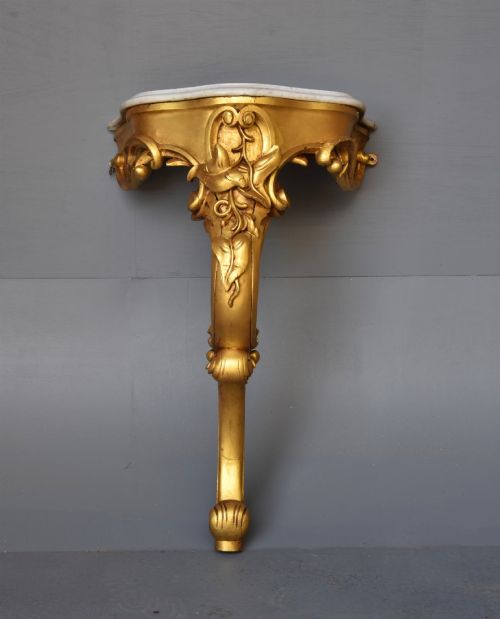
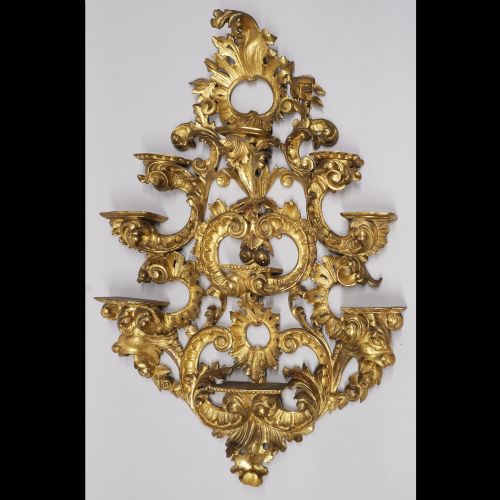
Gilded wall shelves encompass a diverse range of wall-mounted display furniture designed to hold small objects, figures or clocks while adding metallic warmth to an interior. You will frequently encounter Victorian pieces, alongside Italian and French revivals that date from the nineteenth and early twentieth centuries.
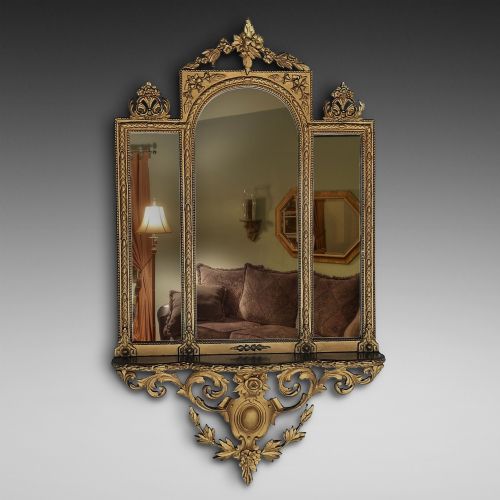
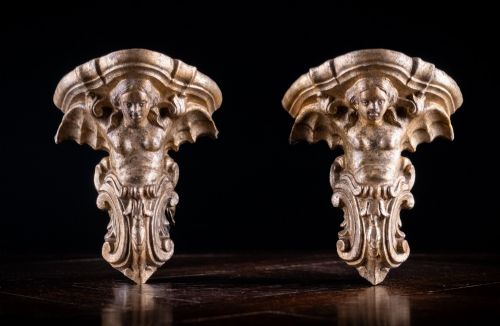
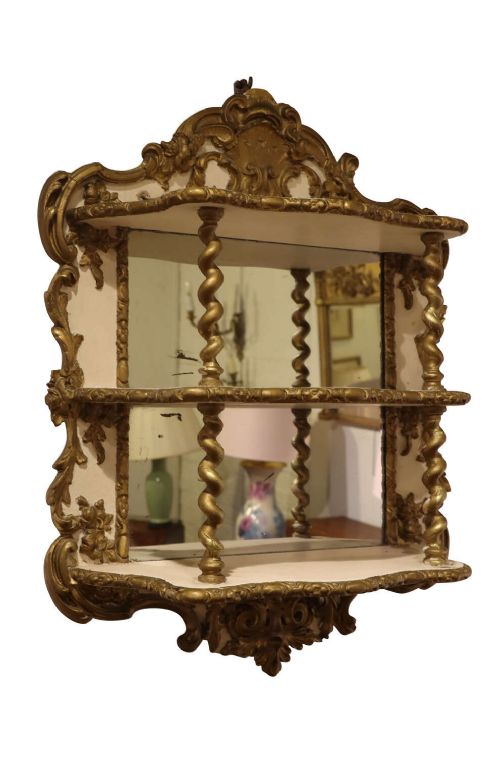
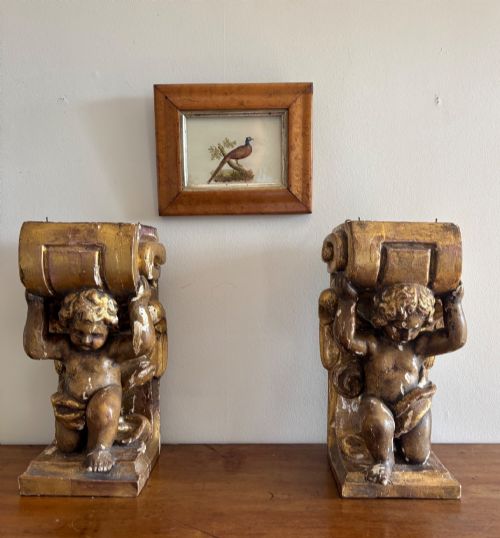
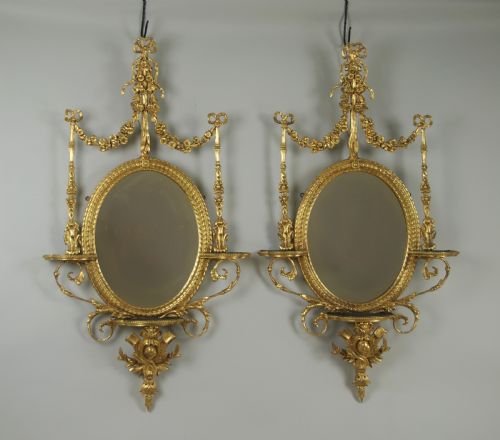
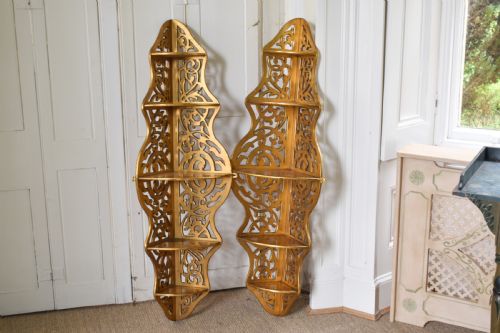
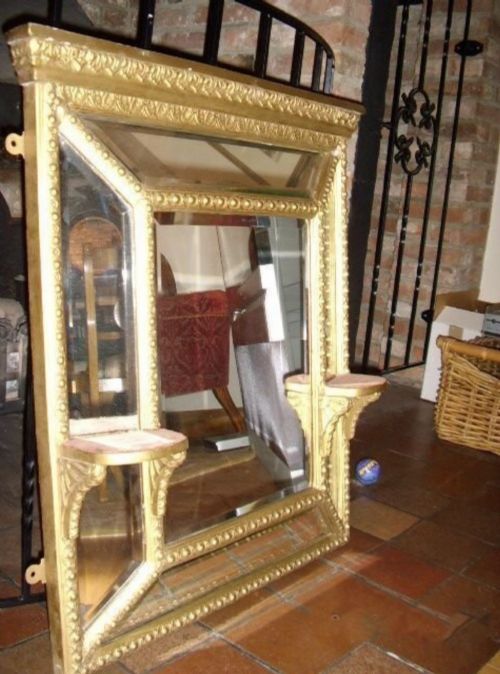
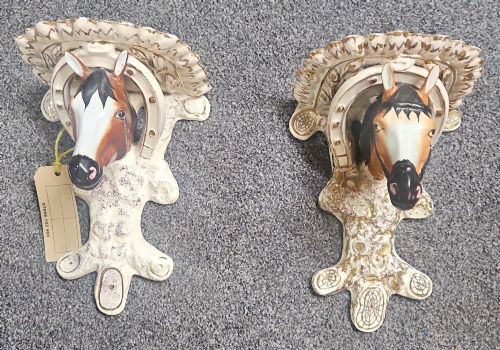
The selection ranges from carved wooden wall brackets and corner shelves to elaborate console tables with integrated mirrors, étagères and overmantel mirrors fitted with display ledges. Many examples survive in pairs, originally intended to flank a fireplace, window or architectural mirror.
Origins stretch across English, French and Italian workshops, pulling from stylistic revivals that include Rococo, Baroque and Neoclassical influences. These pieces merge practical surface area with sculptural form, serving as functional focal points on panelled or papered walls.
Materials and construction
Maker's workshops relied primarily on carved wood, gesso and applied gold leaf to achieve their brilliant metallic surfaces. Carvers worked timber bases, often pine or hardwoods, before laying fine layers of gesso to create smooth grounds for gilding.
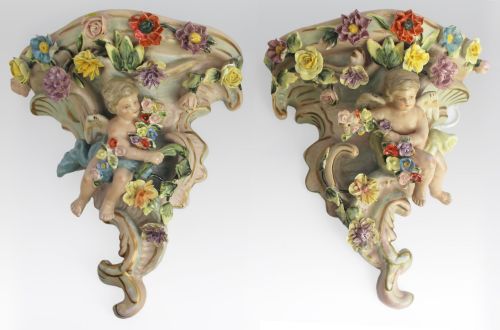
Many items incorporate mirror glass, marble tops, terracotta or porcelain elements alongside the primary gilded frames. Ormolu mounts, ceramic details and painted accents frequently supplement the carved woodwork to create richly textured wall fixtures.
Judging quality and craftsmanship
Quality rests upon the crispness of the hand-carving and the depth of the gesso work beneath the gold leaf. Superior pieces exhibit sharp botanical or scroll motifs where every leaf and volute is cleanly defined rather than softened by thick layers of later paint or careless regilding.
The choice of secondary materials also separates standard production from exceptional examples, such as the inclusion of inset marble tops, bevel-cut mirror glass or finely modelled porcelain and terracotta figures. Structural integrity in the fixing points and joints ensures that the shelf can safely support decorative items over time.
Henri Dasson·Meissen
The Gilded Wall Shelves Glossary
- Giltwood
- Timber carved and coated with gold leaf. This material forms the primary structure for many traditional wall brackets and decorative frames.
- Gesso
- A plaster mixture applied to wood surfaces as a preparation for gilding. It allows carvers to model intricate low-relief details before applying gold leaf.
- Ormolu
- Gilded bronze or brass mounts used for decorative enrichment. French and English cabinet makers applied these metal details to highlight architectural joints and shelves.
- Étagère
- A piece of furniture with open shelves for displaying small objects. Wall-mounted versions combine hanging brackets with multiple display tiers.
- Girandole
- A branched candleholder or sconce mounted on a mirrored backplate. The reflective glass multiplies the candlelight within the room.
Gilded Wall Shelves: Frequently Asked Questions
How do I hang a heavy gilded wall shelf?
Check the weight of the carved wood and ensure your wall fixings anchor directly into solid masonry or studwork rather than plaster alone. Most antique wall brackets feature integrated hanging loops or plates designed for secure wall attachment.
Distribute weight evenly across the shelf surface once mounted, avoiding heavy objects placed solely on the outer edges to maintain stability.
What items look best displayed on these shelves?
Small porcelain figures, pocket watches, miniature bronzes and small framed photographs complement the scale of nineteenth-century wall brackets. The gilded backdrop enhances reflective surfaces and small metallic objects.
Keep arrangements uncluttered to allow the carved woodwork and gold leaf to remain the visual focus of the wall.
How do I tell Victorian pieces from earlier ones?
Victorian interpretations often draw heavily on Rococo Revival and Neoclassical styles, frequently utilising machine-sawn timber elements alongside hand-finishing. Eighteenth-century examples tend to show deeper, entirely hand-chiselled wood carving and heavier gesso layers.
Examine the backboards, fixing points and types of screws or nails used, as these construction methods shift noticeably between the Georgian and Victorian eras.