





Gilded Temple Statue
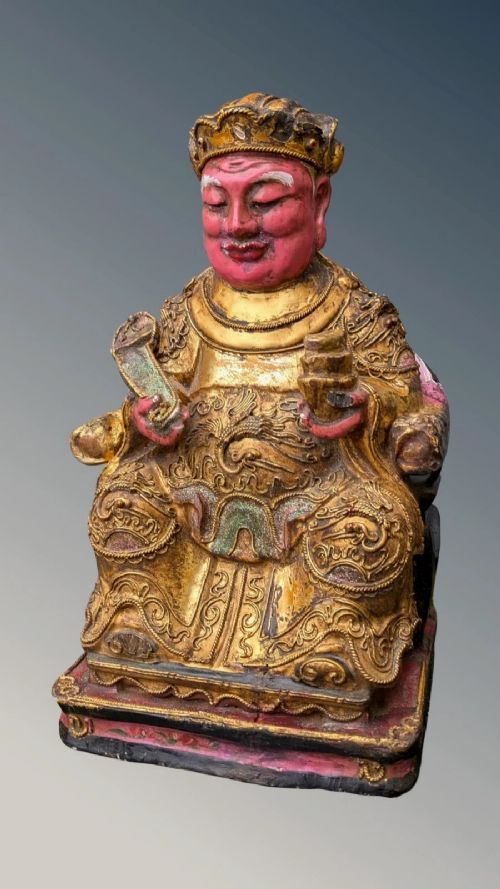
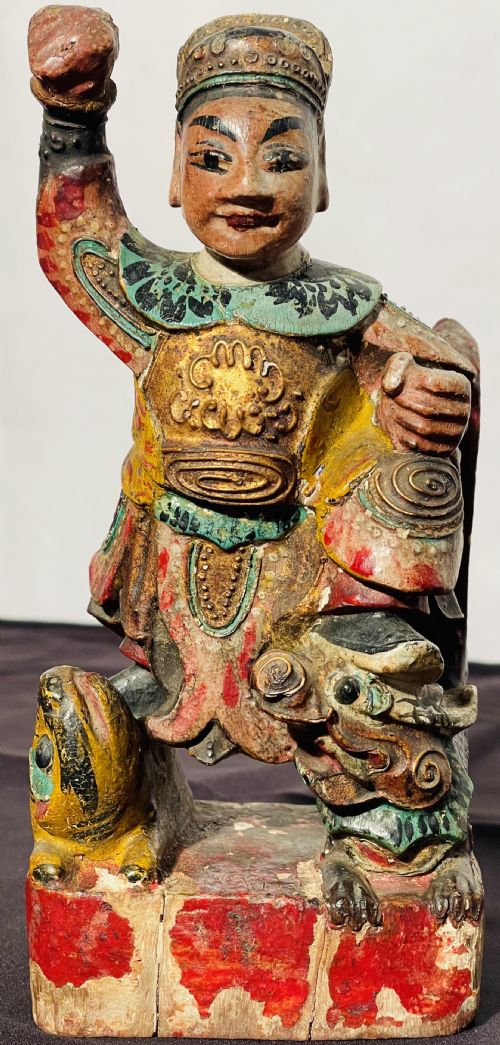
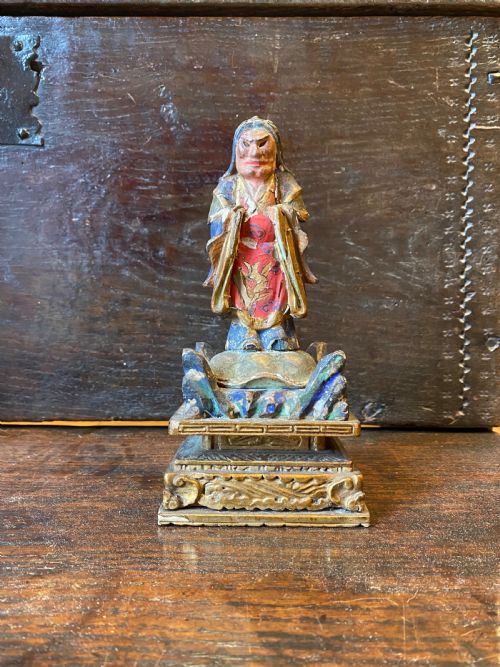
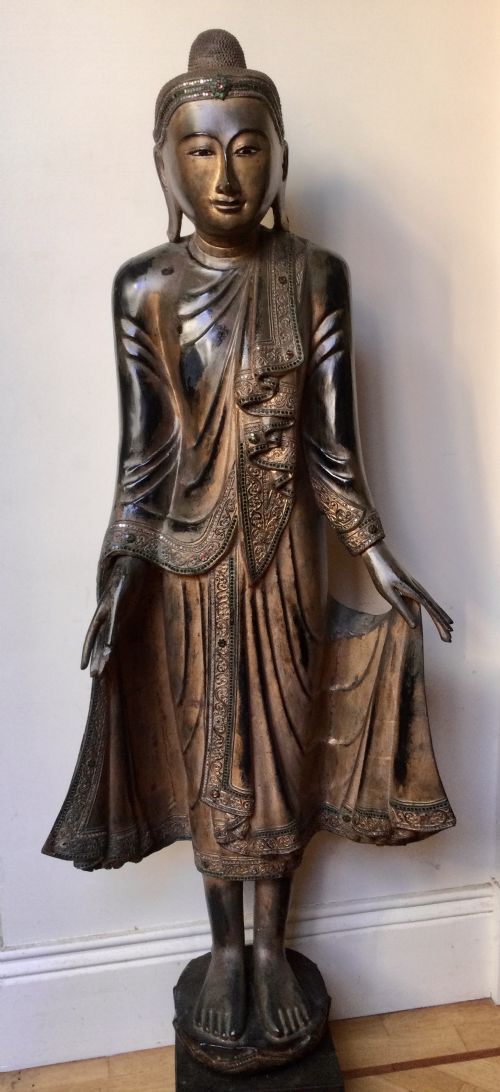
These gilded temple statue pieces bring historic ritual art into a modern room, offering layered gilding and carved detail.
Gilded Temple Statue
A gilded temple statue brings together centuries of devotional craft from Asian traditions, ranging from Chinese dynastic figures to Burmese and Tibetan sacred art. When you examine a gilded temple statue on this page, you encounter figures carved for shrines and monastic spaces, including deities, officials, temple guardians, and mythical beasts.
The selection leans heavily towards Chinese Qing and Ming period woodcarvings alongside Southeast Asian Buddhist representations. These range from monumental temple guardians to domestic medicine figures, each carrying traces of sacred ritual use.
Regional variations span the serene contours of Ayutthaya style bronzes, the ornate detailing of Burmese Mandalay Buddhas, and the robust forms of Japanese shishi lions. Every piece reflects the specific aesthetic of its origin, whether Tibetan, Chinese, or Japanese.
Materials and construction
Carved wood forms the core for the majority of these figures, overlaid with gesso to create a smooth bedding layer for subsequent decoration. Artisans applied thin sheets of gold leaf or gilt directly onto this prepared surface to achieve a brilliant metallic sheen.
Judging quality and execution
The integrity of the surface decoration determines much of the visual impact, as undisturbed layers of gold leaf and polychrome pigment reveal the true age and hand of the maker. Retained surface patination without aggressive modern intervention marks the superior surviving objects.
The Gilded Temple Statue Glossary
- Gilt
- A thin covering of gold applied to wood, bronze, or other surfaces. This finish provides the characteristic shimmer seen on sacred figures.
- Polychrome
- The practice of decorating architectural elements, sculpture, or pottery in a variety of colours. Pigments were often applied over gesso grounds.
- Gesso
- A plaster mixture used as a smooth base for painting and gilding on wood. It allows the final gold leaf layer to adhere evenly.
- Shishi
- A mythical Japanese guardian lion or dog derived from Chinese temple traditions. These figures traditionally protect sacred spaces.
- Qing Dynasty
- The final imperial dynasty of China, lasting from the seventeenth to the early twentieth century. Many carved wooden figures originate from this era.
Gilded Temple Statue: Frequently Asked Questions
How were these statues used?
These figures served as focal points for prayer, meditation, and offerings in religious settings. Worshippers directed their devotions toward these representations of sacred beings.
Over time, exposure to incense smoke, ritual handling, and changing environments imparted distinct patinas and wear patterns onto the surfaces of the wood and metal.
How do I care for a gilded wooden statue?
Gilded wood requires stable environmental conditions away from direct sunlight, high humidity, and rapid temperature fluctuations. These factors can cause the underlying wood to expand and the gesso layer to crack.
Dusting should be performed gently with a dry, soft brush, avoiding any moisture, chemical cleaners, or abrasive cloths that might disturb fragile gold leaf.
How can I tell different regional styles apart?
Regional styles reveal themselves through distinct facial structures, posture, and iconography. Chinese figures often display formal robes and dynastic attributes, while Southeast Asian representations focus on serene meditative postures.
Examining the underlying materials, such as the specific bronze alloy or local wood species, also helps point toward the geographical origin of the sculpture.