

Gilded Salon Chairs
Gilded salon chairs are decorative seats designed for formal reception rooms, bringing eighteenth-century French grandeur and nineteenth-century revival craftsmanship into domestic interiors.
Gilded Salon Chairs
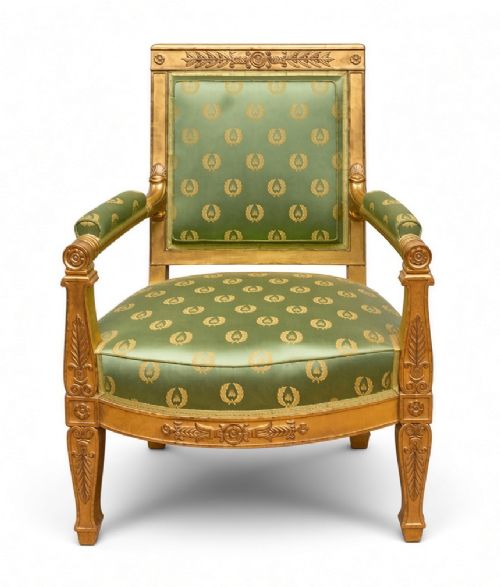
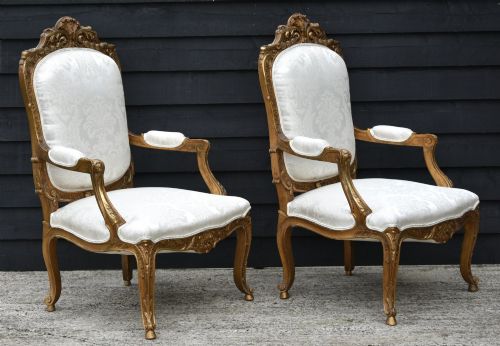
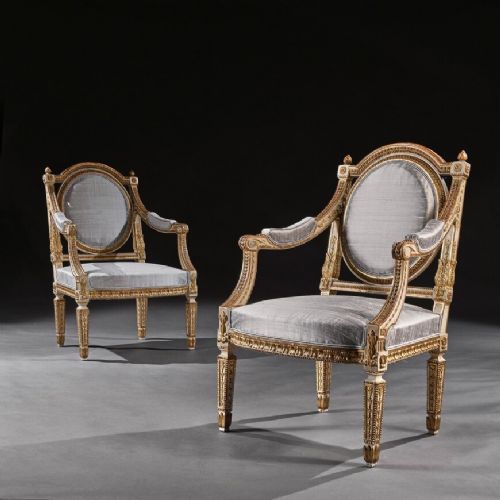
Gilded salon chairs comprise seating forms built for formal entertaining spaces, spanning armchairs, bergères, fauteuils, and side chairs. These pieces originate predominantly from the nineteenth century, drawing heavily on French aesthetic movements such as Louis XVI, Rococo, and subsequent revival periods.
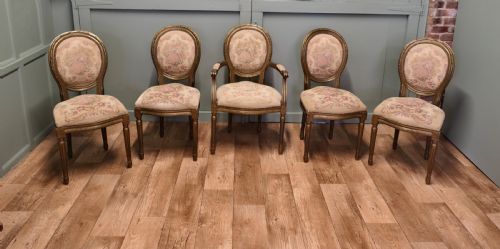
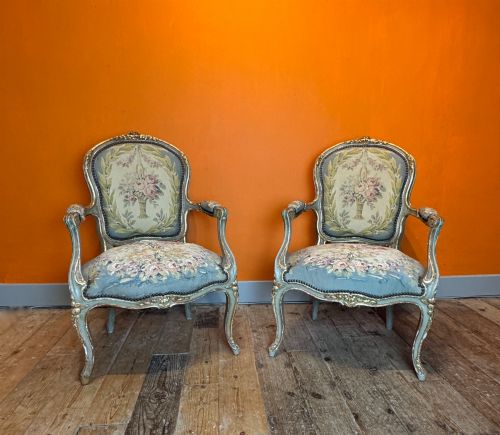
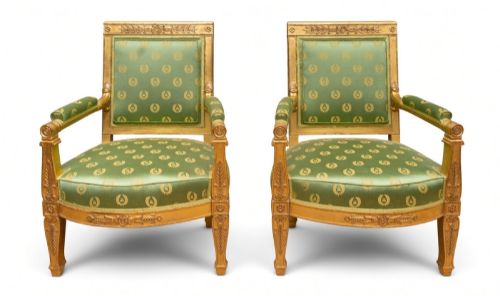
The items found here frequently manifest as matched pairs or larger sets, constructed for drawing rooms, boudoirs, and reception spaces. French models dominate the selection, though English Regency and Italian pieces also appear within the records.
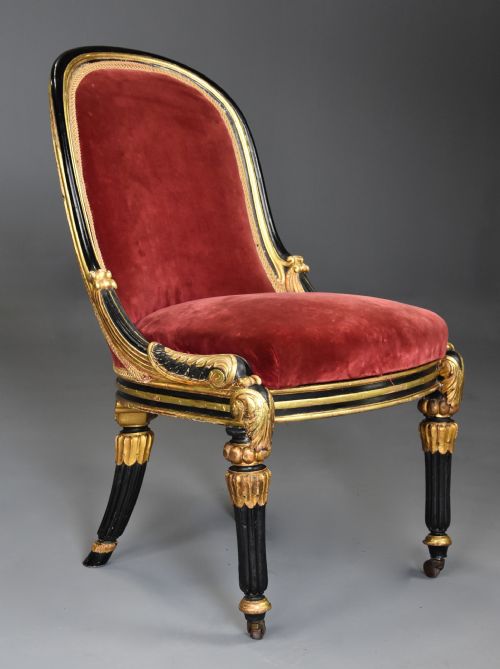
Makers and designers of note, including Jacob-Desmalter and Holland & Sons, occasionally anchor specific historical pieces. Buyers encounter everything from caned-seat side chairs to deeply upholstered throne chairs and children's salon seats.
Materials and Construction
Wood serves as the primary structural skeleton, with beech and walnut utilised for their strength in supporting intricate carved details. Carvers shape these timbers into frames that receive surface decoration.
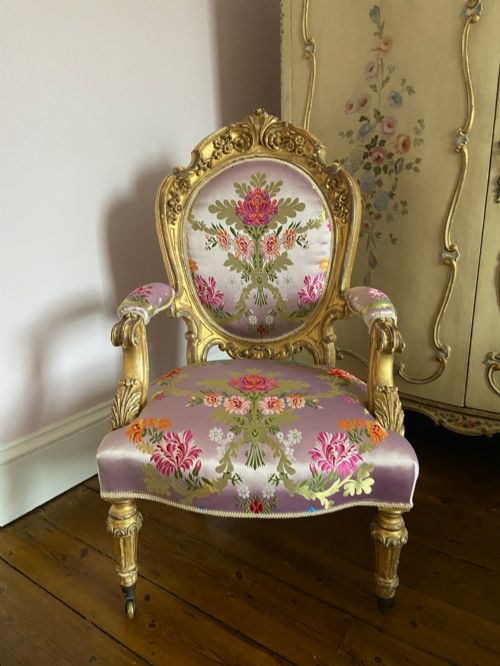
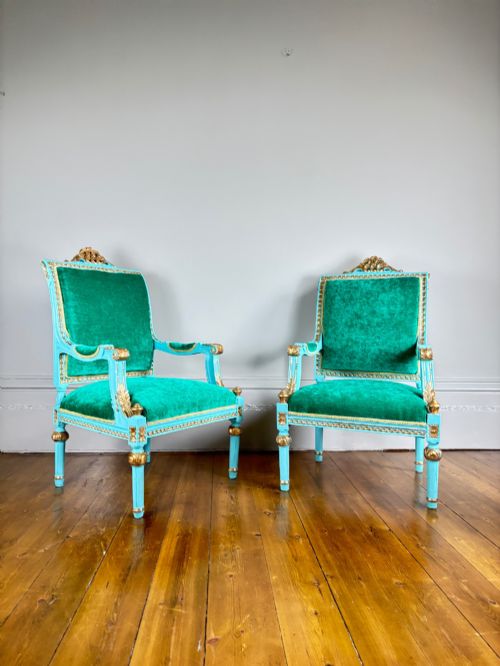
Gold leaf and parcel gilt finishes coat the wood substrate, applied over preparatory grounds to catch ambient light within a room. Artisans also combine paint with partial gilding to emphasise specific carved motifs.
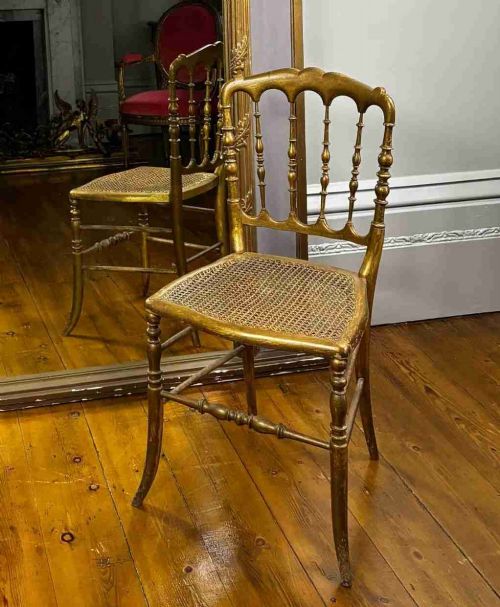
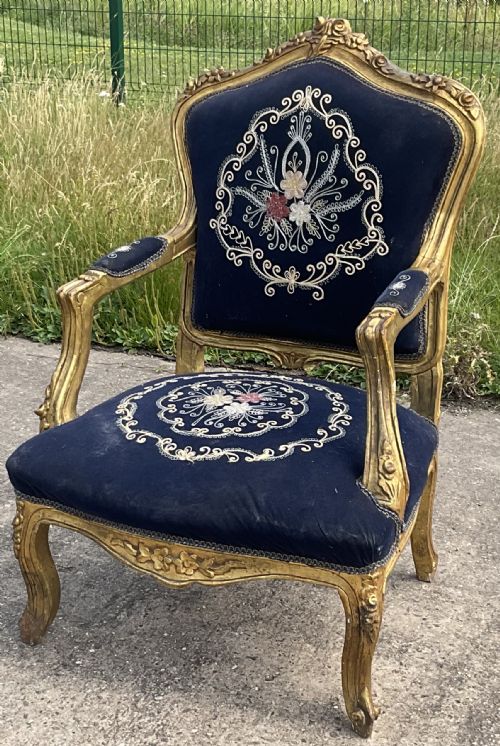
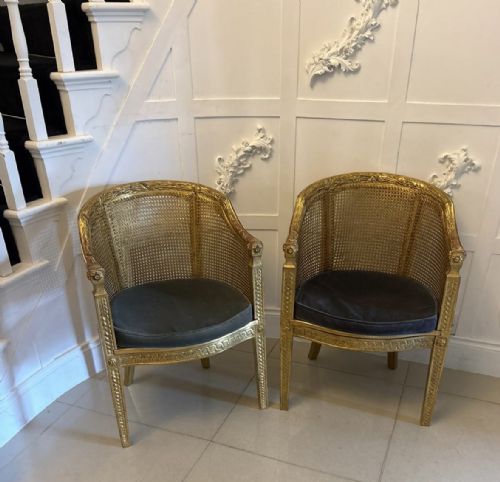
Upholstery materials range from traditional silk and velvet fabrics to tapestry and woven textiles. Caning provides a lighter seating alternative on specific open-frame side chairs.
Listings feature beech and walnut frames finished in gold leaf, alongside upholstered selections in velvet, silk, and tapestry.
Evaluating Quality and Craftsmanship
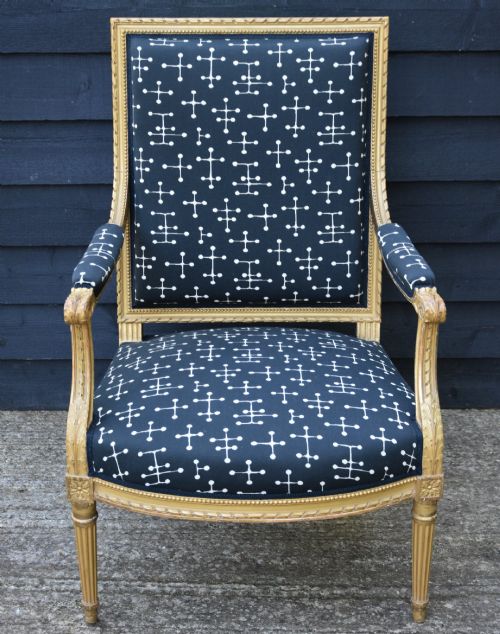
Depth and crispness of the wood carving distinguish superior frames from simpler production pieces. Skilled hands shape floral swags, fluted legs, and acanthus leaves with sharp definition rather than soft contours.
The application and preservation of the gold leaf reveal the standard of workshop execution. Thicker leafing and balanced burnishing endure better across centuries than flat, painted metallic substitutes.
Structural integrity rests on traditional joinery methods that hold rigid under weight without relying on modern hardware. Original upholstery techniques and period textile choices further elevate historical authenticity.
Jacob Desmalter·Holland And Sons·Blaise Maucuy
The Gilded Salon Chairs Glossary
- Giltwood
- Timber coated with thin sheets of gold leaf over a prepared base. This finish provides a luminous surface that resists tarnishing.
- Fauteuil
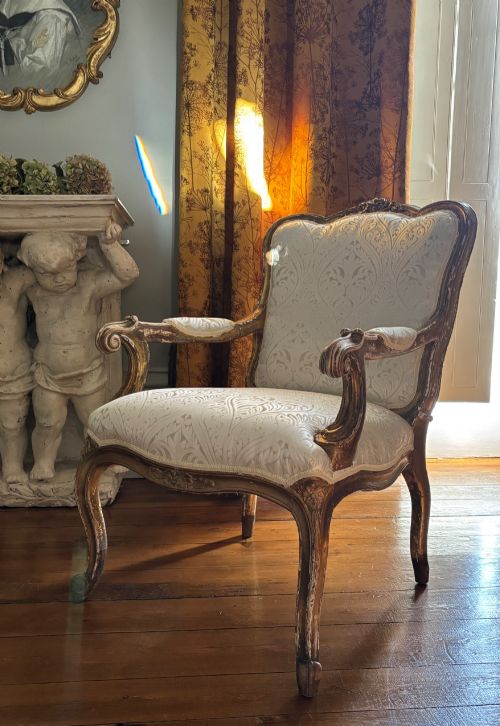
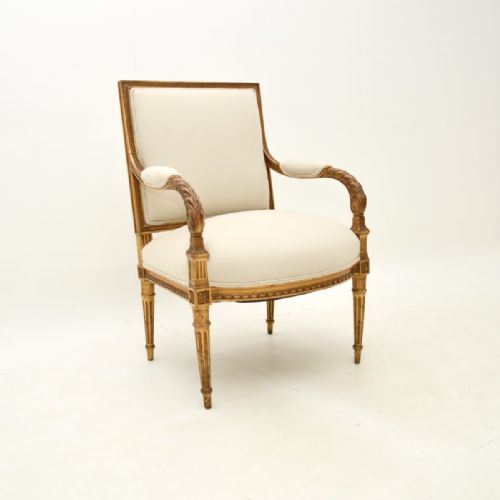
- An open-arm armchair with upholstered back and seat, developed in France. The exposed wooden frame is typically carved and gilded.
- Bergère
- An enclosed armchair featuring upholstered sides padded and integrated into the frame. These pieces often include loose seat cushions.
- Parcel Gilt
- A decorative treatment where only specific carved elements or details receive gold leaf against a painted wood background. This technique creates visual contrast.
- Caning
- Woven rattan or split cane used to form resilient seat panels or backs. It offers a lightweight, breathable surface popular on nineteenth-century frames.
- Rococo Revival
- A nineteenth-century design movement mimicking the asymmetrical, fluid curves and ornamentation of the mid-eighteenth century. Makers adopted these flowing lines for salon suites.
Gilded Salon Chairs: Frequently Asked Questions
How do I identify a true period frame?
Examine the timber construction beneath the gilding, looking for hand-cut joinery and signs of age such as shrinkage and oxidation. Tool marks left by woodcarvers indicate manual shaping rather than modern machine routing.
Compare the carving style against documented historical motifs from the eighteenth and nineteenth centuries. Authentic pieces display consistent wear patterns around high-contact touchpoints like armrests.
Were these chairs used for daily sitting?
These seats were originally built for formal entertaining, light social gatherings, and reception rooms rather than heavy family lounging. Their delicate carved frames and gilded surfaces demanded careful domestic use.
Living with them today requires a similar mindfulness regarding placement and weight. Placing them away from direct sunlight protects both the delicate fabrics and the underlying gold leaf.
Can I mix different revival styles in one room?
Mixing Louis XVI style frames with Rococo revival pieces works successfully when unified by a shared gilt finish or complementary upholstery tones. Nineteenth-century interior design frequently combined these historical references within a single salon suite.
Balance heavier throne chairs with lighter side chairs or caned seats to maintain visual variety. Keeping the overall palette of the textiles grounded helps disparate periods converse comfortably together.