


French Medallion Back Chairs
French medallion back chairs bring classical poise to a room, offering rounded upholstered frames that recall eighteenth-century salons.
French Medallion Back Chairs
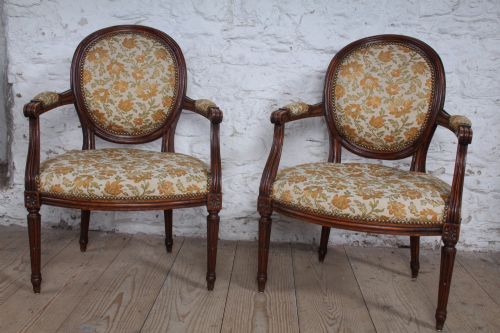
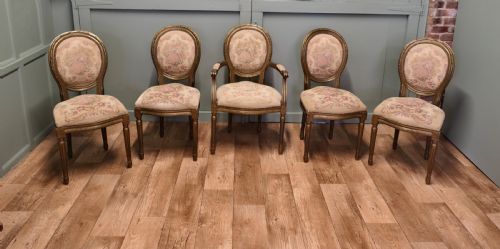
French medallion back chairs are seating forms defined by their distinctive circular or oval padded backs, originating in neoclassical design and continuing through later revivals. When you search for french medallion back chairs, you encounter pieces spanning from the eighteenth century through the Edwardian era and the early twentieth century. The selection includes individual salon chairs, dining sets, pairs of bedroom chairs, and expansive suites.
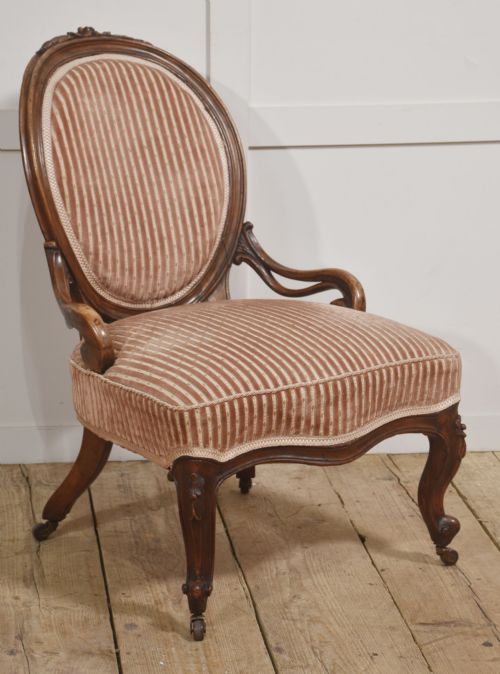
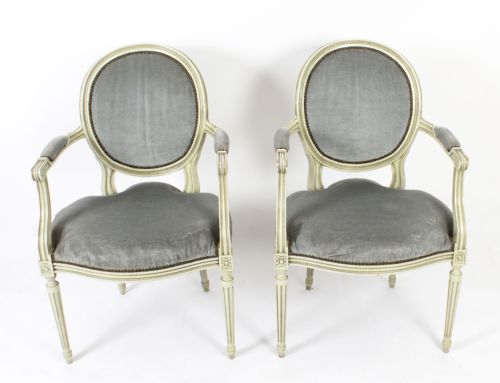
The prevalent iterations on this page draw heavily on Louis XVI style and French Neoclassical aesthetics, alongside Victorian rococo revival interpretations. Forms range from open armchairs and fauteuils to side chairs and larger dining arrangements. These pieces function historically as formal seating, retaining their structural elegance in modern interiors.
How they were made
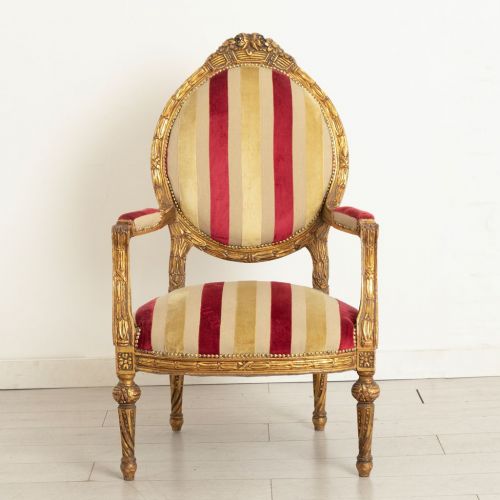
Makers shaped the distinctive oval and round frames primarily from wood, applying finishes such as giltwood, gold paint, or traditional painted wood surfaces. Carved details often reflect classical restraint, echoing neoclassical motifs along the crest rail and frame borders.
Upholstery forms an essential component of construction, utilising traditional textiles like silk damask, velvet, and various decorative fabrics secured within the open or closed wooden framework.
One grand suite on record once provided forty-two matching seats, ensuring that an entire royal assembly could sit in identical oval-backed splendour.
What varies in quality
Quality in these chairs rests upon the crispness of the carved woodwork and the integrity of the giltwood or painted finish. Superior examples display precise joinery and refined proportions in the curved backrest.
The choice and execution of upholstery also distinguish individual pieces, with higher-grade textiles and traditional stuffing methods elevating the overall standard of the seating.
The French Medallion Back Chairs Glossary
- Fauteuil
- An open-arm armchair with upholstered back and seat, typically featuring exposed wooden arms.
- Giltwood
- Wood that has been treated with gold leaf or a gold-colored gilt finish.
- Louis XVI style
- A neoclassical design movement characterised by straight lines, symmetry, and classical motifs, directly inspiring the medallion back form.
- Silk damask
- A reversible patterned fabric often used for formal upholstery on period seating.
- Neoclassical
- An artistic revival drawing inspiration from the classical art and culture of ancient Greece and Rome.
French Medallion Back Chairs: Frequently Asked Questions
How do I style these chairs at a dining table?
These chairs work effectively around a formal dining table when paired with matching side or armchairs. Their upright posture and defined backs provide distinct visual structure in a dining space.
Mixing painted or gilt finishes with simpler wooden tables creates an intentional contrast that highlights the classical silhouette of the frames.
Can I use these in a bedroom?
Smaller salon or bedroom chairs fit comfortably in a corner or beside a dressing table. Their decorative oval backs serve as a visual focal point without dominating smaller floor plans.
Pairs of these chairs work well placed opposite each other or flanking a fireplace or chest of drawers.
What is the difference between Louis XVI and rococo styles here?
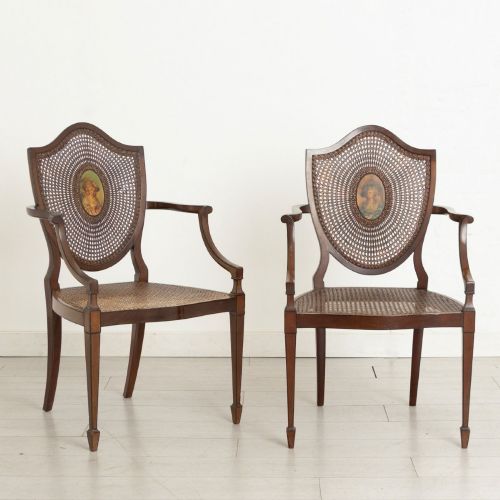
Louis XVI pieces rely on geometric restraint, straight tapered legs, and symmetrical oval or shield-shaped medallion backs. Rococo revival pieces feature more exuberant, asymmetrical curves and flowing ornamentation.
Examining the frame geometry and leg shape helps clarify which revival period a particular chair represents.
How do I identify the period of my chair?
Dating relies on examining construction methods, wood types, and the specific characteristics of the revival style employed. Eighteenth-century originals differ in joinery and wear patterns from nineteenth-century revivals and early twentieth-century copies.
Looking closely at the paint or gilding layers also offers clues regarding the age and history of the piece.