

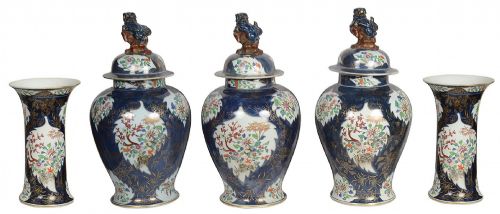


Gilded Porcelain Garniture
A gilded porcelain garniture brings balance and shimmering presence to a mantelpiece or side table.
Gilded Porcelain Garniture
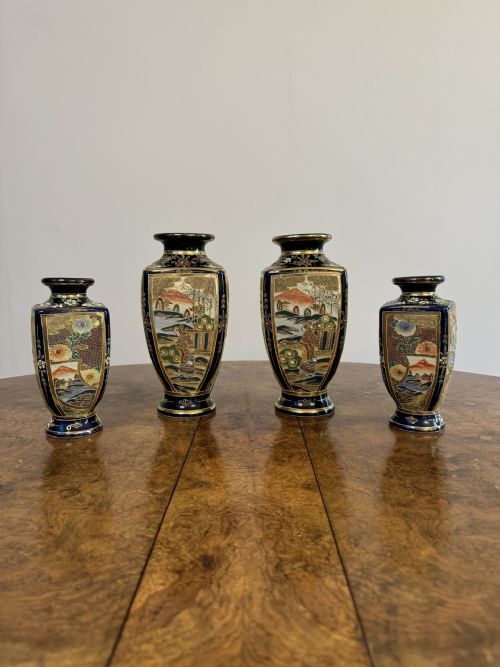
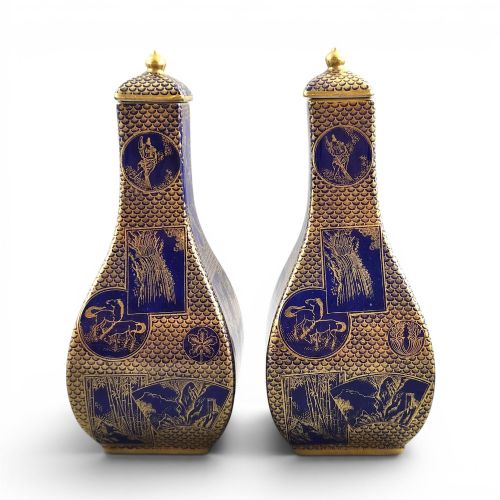
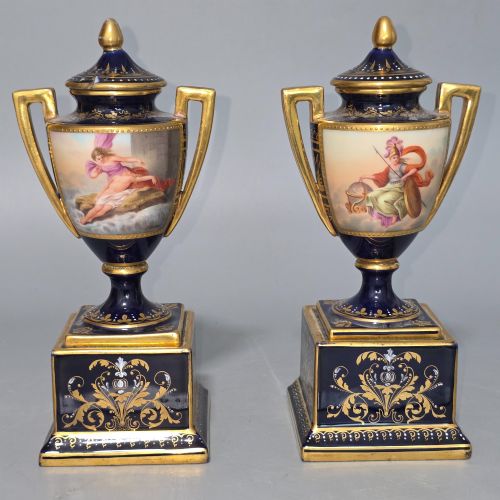
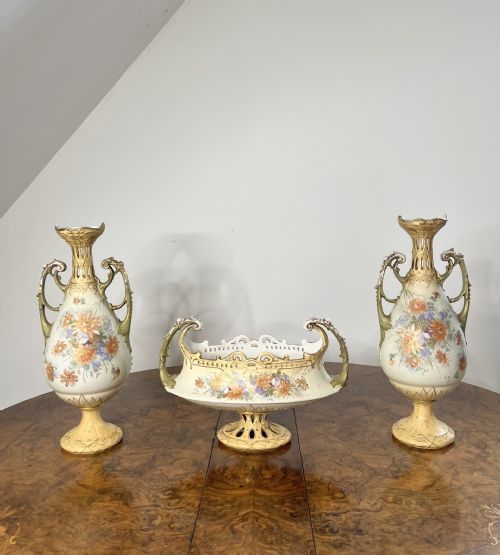
When you search for a gilded porcelain garniture, you are looking at matched sets of three or more decorative vessels, clock sets, and urns designed to be displayed together as a symmetrical centrepiece. These displays typically comprise a central vase or clock flanked by matching side vases, urns, or candlesticks.
The versions you are most likely to meet on this page span the nineteenth century, drawing heavily on French Rococo Revival, Empire, and Neoclassical styles alongside Japanese Satsuma and Imari pieces. European manufactories such as Vienna, Sevres, and Paris dominate the offerings, frequently incorporating mounts of ormolu or gilt bronze.
How they were made
Potters shaped the ceramic bodies from fine porcelain and ironstone before applying hand-painted enamel decoration and detailed gold leaf or liquid gilding. Many pieces required multiple firings in the kiln to set the base colours, intricate patterns, and rich gilt highlights securely.
Metalworkers then cast ormolu, gilt bronze, and brass mounts to frame the ceramic vessels, often incorporating elaborate scrollwork, handles, and bases. Skilled artisans assembled these mixed-media objects with pins and screws, uniting ceramic and metal components into heavy, stable decorative sets.
Listings feature nineteenth-century European porcelain alongside Japanese Satsuma and Imari works, often incorporating ormolu mounts and clock sets.
What varies in quality
The refinement of the hand-painted enamelwork and the thickness of the applied gilding separate standard production from exceptional pieces. Superior examples feature crisp, finely detailed brushwork by named artists or major factories, whilst lesser pieces rely on simpler transfer prints and thinner gilt washes.
The precision and weight of the metal mounts also dictate the tier of the garniture. Heavy, hand-chased ormolu or gilt bronze mounts signify a higher grade of manufacture than lightweight pressed brass or plain gilded metal.
Mason's Patent Ironstone·KPM Berlin·Meissen·Vincenti of Paris
The Gilded Porcelain Garniture Glossary
- Garniture
- A matched set of three or more vases, urns, or figures designed for symmetrical display on a mantelpiece or sideboard.
- Ormolu
- Finely ground high-carat gold applied in a mercury amalgam to bronze mounts, creating a rich and durable golden finish.
- Imari palette
- A traditional Japanese decorative style utilising deep cobalt blue, iron red, and abundant gold on a white ceramic ground.
- Famille rose
- A Chinese ceramic palette characterised by opaque pink enamel colours introduced during the Qing dynasty.
- Amphora vase
- A two-handled ceramic vessel with an oval body, modelled after classical Greek and Roman wine storage jars.
Gilded Porcelain Garniture: Frequently Asked Questions
What is a garniture set?
A garniture set is a coordinated grouping of ornamental vessels, usually numbering three or five pieces, designed to fill a architectural space like a mantel shelf.
The central piece is typically the tallest, with smaller matching companion pieces placed symmetrically on either side to create visual balance.
How were garnitures displayed?
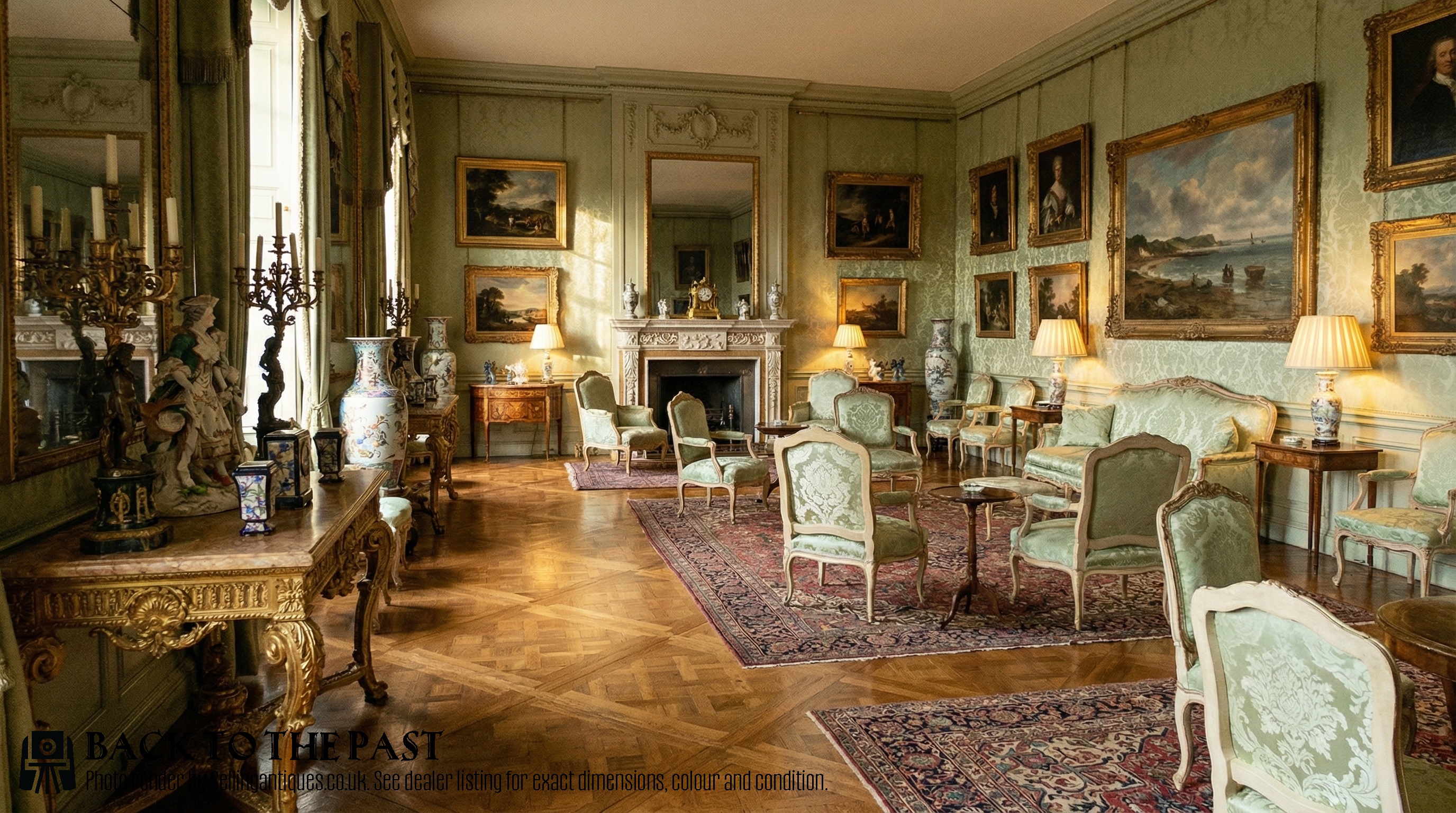
These sets were placed across fireplace mantels, large console tables, and grand chest tops in formal nineteenth-century reception rooms.
Their reflective gilded surfaces and bright enamel colours caught the candlelight and daylight of period interiors, adding symmetry and luxury to the room.
How do I care for gilded porcelain?
Dust these decorative pieces gently with a soft, dry brush to protect the delicate hand-painted enamel and fragile gold leaf layers.
Avoid using water, chemical cleaners, or abrasive cloths on the surface, as moisture and friction can easily wear away old gilding.
How do I date a porcelain garniture?
Dating relies on examining factory backstamps, ceramic body types, mounting styles, and the specific artistic influences of the period.
Nineteenth-century pieces often combine neoclassical or rococo revival forms with distinct hand-brushed signatures or impressed factory marks on the base.